





water horsetail
Equisetum fluviatile
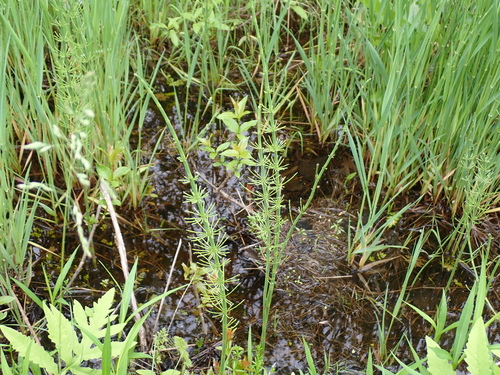
Water horsetail is a tall, green plant that grows in wet places like ponds and marshes. It has jointed stems that look like little green tubes and can grow quite tall, making it fun to spot in nature!
Habitat: Wetlands
The water horsetail has distinctive, bright green, hollow stems that are typically unbranched or sparsely branched. These jointed stems often feature black bands at each node, giving it a segmented, reed-like appearance that makes it stand out from typical leafy plants.
Category
PlantsRarity
Common
Danger
1/5 · Very low
Snaps
3
It can absorb heavy metals from the soil, acting like nature's tiny clean-up crew!
Its rough stems contain tiny glass-like crystals, making them feel like sandpaper!
People once used its gritty stems to scrub pots and pans, earning it the nickname "scouring rush"!
Wow! Water horsetail's ancient relatives grew into giant trees, forming vast forests millions of years ago!
Water horsetail can reproduce using tiny spores, an ancient method that helped it thrive before flowering plants existed.
Water horsetail has hollow, air-filled stems that help it float and grow upright even in deep, submerged environments.
Water horsetail has silica crystals in its cell walls, making its stems rough and strong to resist damage.
Castor canadensis
Beavers munch its succulent, nutritious stems.
Anas platyrhynchos
Mallard ducks occasionally graze its green shoots.
Gerris remigis
Water striders rest on its stems above the water.
Pimephales promelas
Young minnows hide from predators within its stands.
Grass-like plants are herbaceous plants that visually resemble true grasses, typically having long, narrow leaves.
Edible plants are those parts of a plant that are considered safe for human consumption.
This trait signifies organisms belonging to a very old evolutionary group with ancestors dating back millions of years.
This habitat trait identifies species found in wetlands, which are areas of land saturated with water, either permanently or seasonally, including marshes, swamps, and bogs.

Freshwater habitats include non-saline aquatic environments such as rivers, lakes, ponds, and wetlands, vital for numerous species.

Describes a species whose presence and role have a disproportionately large effect on its environment.

Aquatic habitats encompass environments where organisms live predominantly in water, including oceans, rivers, lakes, and wetlands.
No aliases listed yet.
Danger
1/5 · Very low
Always stay on paths and don't touch plants unless you know they are safe.
The easiest way to identify water horsetail is to use the Snappit nature identifier app.
30-150 cm
Yes
None
Perennial
Wetlands
Zoom in to split clusters and explore where this object has been snapped.
May 17, 2025
Medfield RhododendronsPhoto attribution
(c) John Baur, some rights reserved (CC BY)
License: CC BY 4.0 ↗
Image may be shown cropped inside the card frame.
Take the discovery with you
Snap it with Snappit to identify it, learn what makes it special, and add the discovery to your collection.










.jpg&width=800)



_001.jpg&width=800)



