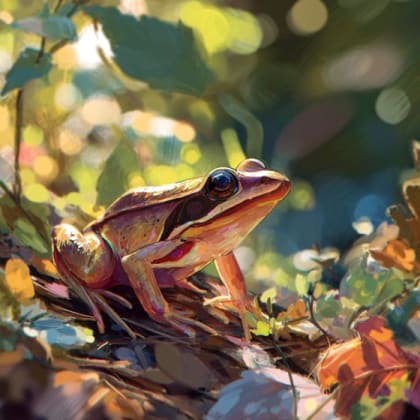





Wood Frog
Discover a unique natural haven at Medfield Rhododendrons, home to a rare and spectacular native plant.
Discover a unique natural haven at Medfield Rhododendrons, home to a rare and spectacular native plant. This 196-acre nature reserve in Medfield, Massachusetts, managed by The Trustees of Reservations, protects the largest and easternmost population of *Rhododendron maximum* in the state. Visitors can immerse themselves in serene woodland trails and witness the impressive blooms of these majestic rosebay rhododendrons, a species listed as threatened in Massachusetts.
The star attraction is undoubtedly the *Rhododendron maximum*, also known as the great laurel or rosebay rhododendron, one of only three evergreen rhododendron species native to eastern North America. These stately plants can grow quite large, forming dense thickets and producing showy flowers that range from purple to pink to white. The reserve features a quarter-mile trail that leads directly to these magnificent rhododendron stands, offering an intimate experience with this significant botanical treasure. Efforts, such as fencing, have been implemented to protect these fragile plants from deer.
Visiting Medfield Rhododendrons offers a tranquil escape and a valuable opportunity to connect with a vital piece of New England's natural heritage. It's a place where the grandeur of native flora is preserved and celebrated, providing a memorable experience for nature lovers and conservationists alike. The serene environment and the sheer scale of the rhododendron thickets make it a truly special destination. Wondering what that bird or insect is? Find out on your visit using the Snappit nature app.
The Medfield Rhododendrons nature reserve was established in 1934, marking its beginning as a protected area under The Trustees of Reservations. The original acreage was purchased in 1934, with additional land acquired in 1938 and further gifts received in 1936, 1937, 1961, and 1971, expanding the reservation to its current 196 acres. The primary reason for its establishment was to protect a significant population of *Rhododendron maximum*. This native species, while abundant in the southern Appalachian Mountains, reaches its northernmost range in New England. Around the turn of the 20th century, the plant's popularity for its showy flowers led to extensive over-collecting, nearly wiping out the species in the wild, making its preservation at sites like Medfield Rhododendrons crucial.
Enjoy a peaceful walk through the woodlands, photograph the unique native rhododendrons, and appreciate the conservation efforts to protect this rare species. The reserve offers a quiet natural setting for reflection.
Late Spring/Early Summer (Late June-Early July): Prime blooming season for the *Rhododendron maximum*, displaying its white to pinkish-purple flowers.
Fall/Winter (October-December): Authorized seasonal bow hunting is permitted; visitors should wear blaze orange for safety during these months. The evergreen foliage of the rhododendrons provides year-round greenery.
General: The trail can be wet underfoot, so appropriate footwear is recommended.
The main trail to the rhododendrons is described as "easy walking," but it can be wet underfoot. There is no mention of paved paths or specific wheelchair accessibility, suggesting it may not be suitable for all mobility devices. Dogs and bicycles are not permitted on the reservation.
The main highlight is the extensive stand of *Rhododendron maximum*, a threatened native species. The quarter-mile trail leads directly to these impressive plant formations.
Each card links to a full Explore page with photos, traits, and fun facts.
Start with the big picture, then zoom in to explore individual wildlife observations around this place.
Visit in late June/early July
Plan your trip during this window to experience the rhododendrons in full bloom.
Wear appropriate footwear
The trail can be wet, so waterproof or sturdy shoes are advisable.
Respect private property
The trail traverses public easements across private land, so please stay on marked paths.
Leave no trace
Help preserve this fragile ecosystem by staying on trails and taking out everything you bring in.
Be aware during hunting season
If visiting between October and December, wear blaze orange as seasonal bow hunting is permitted.
Photography for portrait sessions
If planning a professional portrait session, note that The Trustees of Reservations requests photographers or their clients become Contributing Level Members and request permission.
May 23, 2025
Photo attribution
(c) John Baur, some rights reserved (CC BY)
License: CC BY 4.0 ↗
Image may be shown cropped inside the card frame.
May 23, 2025
Photo attribution
(c) John Baur, some rights reserved (CC BY)
License: CC BY 4.0 ↗
Image may be shown cropped inside the card frame.
May 23, 2025
Photo attribution
(c) John Baur, some rights reserved (CC BY)
License: CC BY 4.0 ↗
Image may be shown cropped inside the card frame.
May 23, 2025
Photo attribution
(c) John Baur, some rights reserved (CC BY)
License: CC BY 4.0 ↗
Image may be shown cropped inside the card frame.
May 17, 2025
Photo attribution
(c) John Baur, some rights reserved (CC BY)
License: CC BY 4.0 ↗
Image may be shown cropped inside the card frame.

Maryland, US
You might spot White-Tailed Deer and Eastern Gray Squirrel.
View guide →
.jpg)
District of Columbia, US
You might spot Eastern Gray Squirrel, Duck, and House Sparrow.
View guide →

Illinois, US
You might spot American Robin, Canada Goose, and House Sparrow.
View guide →

Virginia, US
You might spot Spotted Lanternfly and Northern Cardinal.
View guide →
Take the discovery with you
Identify the wildlife you spot, learn as you go, and keep a collection of the adventure.