





Waterlily Leaf Beetle
Galerucella nymphaeae
The Waterlily Leaf Beetle is a small, shiny bug that loves to munch on waterlily leaves. They are bright green and can be found floating on ponds and lakes, making them fun to spot!
Habitat: Wetlands
The Waterlily Leaf Beetle is a small, oval-shaped insect, typically brownish-yellow to dull olive-green. It has a slightly flattened body and is often found clinging to the surface of waterlily leaves, which it visually resembles. Its dull coloration helps it blend in.
Category
InsectsRarity
Common
Danger
1/5 · Very low
Snaps
1
Adults can live for several weeks after emerging, constantly eating waterlily leaves!
Female beetles lay eggs on the underside of waterlily leaves, safe from above-water threats!
Their larvae chew hidden tunnels inside waterlily leaves, munching away unseen!
Waterlily Leaf Beetles have special claws that help them grip slippery waterlily surfaces!
Waterlily Leaf Beetle can breathe underwater by trapping a bubble of air under its wings, helping it hide from predators.
Waterlily Leaf Beetle has strong mandibles that help them chew through tough waterlily leaves for food and shelter.
Waterlily Leaf Beetle has a hard, shiny exoskeleton that helps protect its soft body from damage and predators.
Waterlily Leaf Beetle can fly between ponds and wetlands, helping them find new food sources and mates.
This beetle munches on the leaves of waterlilies and other aquatic plants, both as larvae and adults.
Age differences: Larvae feed inside or on waterlily leaves, while adults feed on the leaf surface.
Nymphaea odorata
Primary food source for both larval and adult stages.
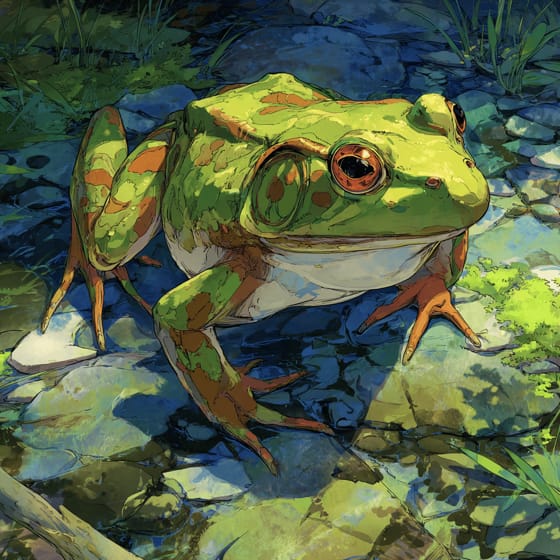
Lithobates catesbeianus
Adult beetles can be prey for larger frogs near water.
Anas platyrhynchos
Ducks may consume larvae or adult beetles on aquatic plants.
Solitary animals live alone for most of their lives, only interacting with others for mating or parental care.
Camouflaged describes organisms that possess coloring or patterns that allow them to blend into their environment.
Colorful describes organisms or objects displaying a wide range of bright and distinct colors.
This trait characterizes organisms whose diet consists entirely or primarily of plant material.

This habitat trait identifies species found in wetlands, which are areas of land saturated with water, either permanently or seasonally, including marshes, swamps, and bogs.

Diurnal animals are primarily active during daylight hours, typically resting or sleeping at night.

Describes a species whose presence and role have a disproportionately large effect on its environment.

Describes organisms that transfer pollen, enabling the fertilization and reproduction of plants.
No aliases listed yet.
Danger
1/5 · Very low
Be gentle if you see one, and don't touch them too much, as they are small and delicate.
The easiest way to identify Waterlily Leaf Beetle is to use the Snappit nature identifier app.
10-15 mm
5-8 mm
30-60 days
This beetle munches on the leaves of waterlilies and other aquatic plants, both as larvae and adults.
Wetlands
Grazing
6
Zoom in to split clusters and explore where this object has been snapped.
Take the discovery with you
Snap it with Snappit to identify it, learn what makes it special, and add the discovery to your collection.








.jpg&width=800)


