_California_USA_male.jpg&width=800)





Western Eyed Sphinx
Smerinthus ophthalmica
The Western Eyed Sphinx is a beautiful moth with big, eye-like spots on its wings. These spots help scare away predators! It loves to fly around at night and is often found near flowers.
Habitat: Forests
The Western Eyed Sphinx is a large moth with a fuzzy, thick body and narrow forewings that are typically mottled grey or brown. Its most striking feature are the bright pink hindwings, each bearing a large, blue-ringed black 'eyespots' that resemble an owl's eyes.
Category
InsectsRarity
Common
Danger
1/5 · Very low
Snaps
1
Adult moths cannot eat solid food; they drink flower nectar through a straw-like tongue!
Its scientific name, *ophthalmica*, means 'eye-like,' referring to its amazing wing spots!
Some people call them 'hummingbird moths' because they hover like birds while feeding!
The caterpillar has a horn-like tail on its rear, but it's completely harmless to touch!
Western Eyed Sphinx can flash its bright hindwing eyespots to startle predators, making them think it's a much larger animal.
This moth has patterned forewings that perfectly blend with tree bark, helping it hide from predators during the day.
Western Eyed Sphinx has strong wing muscles allowing it to hover like a hummingbird while drinking nectar from flowers.
Adults drink flower nectar, while caterpillars munch on leaves from various trees and shrubs.
Age differences: Larvae eat leaves; adults exclusively drink nectar from flowers.
Lonicera involucrata
Feeds on nectar from its trumpet-shaped flowers.
Salix scouleriana
Its caterpillars feed on the leaves of this tree.
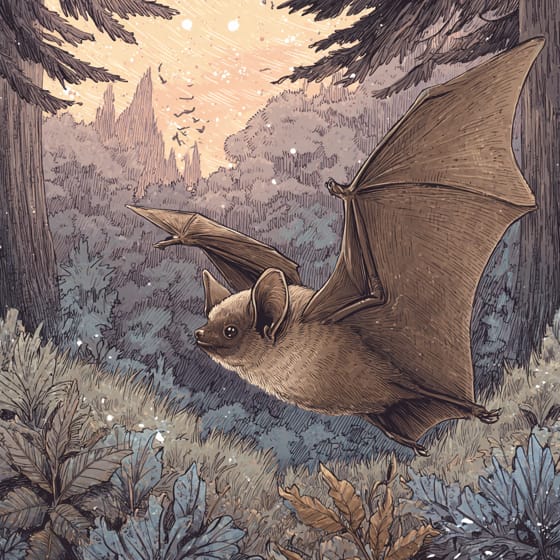
Myotis lucifugus
Adult moths are hunted by bats during their nighttime flights.
Marked with spots or patches of a different color.
Colorful describes organisms or objects displaying a wide range of bright and distinct colors.
This trait characterizes organisms whose diet consists entirely or primarily of plant material.
Describes plants that are particularly attractive and beneficial to a wide range of pollinating organisms.

Forest habitats are terrestrial environments dominated by dense tree cover, supporting a high diversity of plant and animal life.

This trait identifies organisms that exhibit exceptional swiftness in movement for hunting, escape, or travel.

Nocturnal animals are primarily active during the nighttime hours, typically resting or sleeping during the day.

Describes organisms that transfer pollen, enabling the fertilization and reproduction of plants.
No aliases listed yet.
Danger
1/5 · Very low
Don't touch moths, as they can be delicate and may fly away quickly.
The easiest way to identify Western Eyed Sphinx is to use the Snappit nature identifier app.
70-90 mm
35-50 mm
7-14 days
25-45 km/h
Adults drink flower nectar, while caterpillars munch on leaves from various trees and shrubs.
Forests
Foraging
Zoom in to split clusters and explore where this object has been snapped.
Take the discovery with you
Snap it with Snappit to identify it, learn what makes it special, and add the discovery to your collection.









.jpg&width=800)


