





Western Lily of the Valley
Maianthemum dilatatum
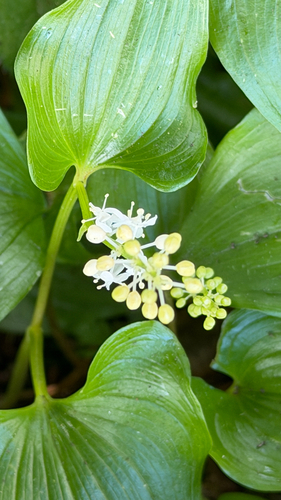
The Western Lily of the Valley is a lovely flower that grows in shady places. It has small, white, bell-shaped flowers that smell sweet and attract bees and butterflies.
Habitat: Forests
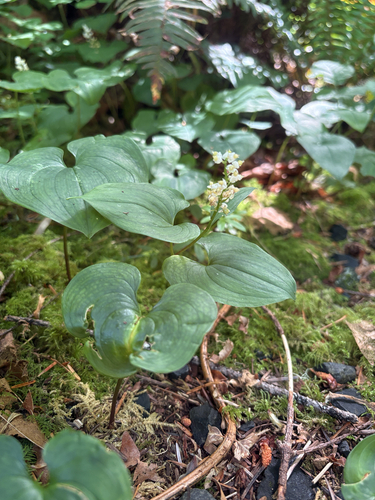
The Western Lily of the Valley has broad, glossy, heart-shaped green leaves. It produces small clusters of tiny, star-shaped white flowers, followed by bright, translucent red berries. Its striking red berries stand out against the deep green foliage.
Category
PlantsRarity
Common
Danger
3/5 · Moderate
Snaps
20
Each tiny flower has six star-like petals!
Its shiny red berries look like tiny jewels in the forest!
Sometimes it's called 'False Lily of the Valley' because it looks similar!
This plant is surprisingly related to asparagus!
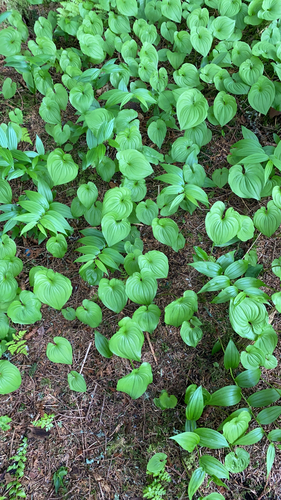
Western Lily of the Valley can spread quickly using underground stems (rhizomes) that help it colonize new areas efficiently.
Western Lily of the Valley has large leaves that capture faint sunlight, allowing it to thrive in dimly lit forest environments.
Western Lily of the Valley has bright red berries that contain mild toxins, helping to deter most hungry animals from eating them.
Bombus vosnesenskii
Feeds on nectar and carries pollen between flowers.
Apis mellifera
Honey bees visit flowers for nectar, aiding in reproduction.

Syrphus ribesii
Flies are attracted to flowers, helping to spread pollen.
Bell-shaped flowers possess petals fused or arranged to form a cup-like or campanulate structure resembling a bell.
Deciduous plants periodically shed all their leaves, typically during autumn or dry seasons.
Flowering plants are any plants that produce flowers as part of their reproductive cycle.
Shade tolerant plants are adapted to grow and thrive in areas with low light levels, requiring less direct sunlight.

Spring blooming plants produce their flowers during the spring season, often signifying the end of winter and the start of new growth.

Fragrant flowers emit a pleasant aroma, often to attract pollinators or for defense.

Describes plants that are particularly attractive and beneficial to a wide range of pollinating organisms.

Rapid growing plants exhibit accelerated growth rates, quickly increasing in size and biomass within a short period.

Forest habitats are terrestrial environments dominated by dense tree cover, supporting a high diversity of plant and animal life.
No aliases listed yet.
Danger
3/5 · Moderate
Do not eat any part of this plant, as it can be harmful.
The easiest way to identify Western Lily of the Valley is to use the Snappit nature identifier app.
10-30 cm
0.3-0.5 cm
Late spring to early summer
No
Mild
Perennial
Insect
Zoom in to split clusters and explore where this object has been snapped.
May 29, 2026
Saxman Totem ParkPhoto attribution
no rights reserved
License: CC0 1.0 ↗
Image may be shown cropped inside the card frame.
May 28, 2026
Capitol State ForestPhoto attribution
(c) Lindsey Salmonson, some rights reserved (CC BY)
License: CC BY 4.0 ↗
Image may be shown cropped inside the card frame.
May 26, 2026
Sitka National Historical ParkPhoto attribution
(c) ashevillebirder, some rights reserved (CC BY)
License: CC BY 4.0 ↗
Image may be shown cropped inside the card frame.

Alaska, US
You might spot Bald Eagle, Salmonberry, and Ochre Sea Star.
View guide →

US
You might spot Variable Carpet Moth, Bald Eagle, and Red Huckleberry.
View guide →

California, US
You might spot Harbor Seal, Ochre Sea Star, and Sea Thrift.
View guide →

California, US
You might spot Western Azalea, Pacific Trillium, and Western Columbine.
View guide →

Washington, US
You might spot Wood Duck, Rough-Skinned Newt, and Pacific Trillium.
View guide →

Washington, US
You might spot Pacific Banana Slug, Western Sword Fern, and Elk.
View guide →
Take the discovery with you
Snap it with Snappit to identify it, learn what makes it special, and add the discovery to your collection.






.jpg&width=800)


_001.jpg&width=800)



