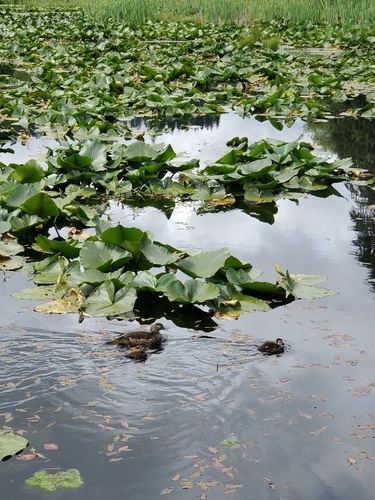
Wood Duck

Capitol State Forest offers diverse outdoor adventures amidst a rich natural landscape.
Capitol State Forest offers diverse outdoor adventures amidst a rich natural landscape.
Just southwest of Olympia, Capitol State Forest encompasses over 110,000 acres, providing a vast playground for nature enthusiasts and a working timber forest. It stands as a testament to the Pacific Northwest's natural beauty, featuring dense evergreen forests, serene creeks, and rolling hills. The forest is renowned for its extensive network of multi-use trails and scenic vistas, inviting visitors to explore its depths on foot, bike, or horseback.
Among its many treasures, the McLane Creek Nature Trail is a highlight, offering accessible boardwalks through wetlands where visitors can observe migrating Chum salmon in late fall/early winter and a resident beaver pond, alongside various avian wildlife like Canadian geese, kingfishers, and mallards. For more challenging pursuits, trails lead to Mima Falls, a charming waterfall nestled within a fern-rich forest, and Capitol Peak, which, on clear days, rewards climbers with breathtaking panoramic views of Mount Rainier, Mount Baker, Mount Adams, the Olympic Mountains, and the Pacific Ocean. Unique and quirky features, such as remnants of old railroad grades and even reports of carved gnomes, add an unexpected layer of discovery to the forest's natural appeal.
This expansive forest offers a dynamic escape, seamlessly blending recreational opportunities with ecological importance and a glimpse into the region's history. Whether you seek peaceful wildlife observation, exhilarating trail adventures, or stunning natural panoramas, Capitol State Forest promises memorable experiences for every visitor. Its dedication to both recreation and sustainable forest management makes it a vital and cherished resource in Washington. Enhance your adventure: download the Snappit app to identify the local species you encounter.
The history of Capitol State Forest is deeply intertwined with the development of Washington State. Timber claims in the area began as early as 1870, and by 1880, a utopian society even attempted to establish a settlement within the forest. However, large-scale logging soon became the dominant activity, leading to significant degradation of the landscape by the 1930s. Recognizing the need for conservation, the state began purchasing logged and burned-over land in 1933, officially establishing Capitol State Forest in 1955. That same year, the forest opened its gates permanently for public recreational use, a practice that has steadily grown. It has since been managed by the Washington State Department of Natural Resources (DNR) to provide both recreational opportunities and sustainable timber revenue for public services.
Hiking, trail running, mountain biking, horseback riding, off-road vehicle (ORV) riding, camping, wildlife viewing, photography, and picnicking.
Spring: Enjoy blooming wildflowers, especially in regenerated clear-cut areas. Non-motorized trails are generally clear, and ORV/horse trails open May 1.
Summer: Peak season for all activities; trails can be busy and dusty. Be prepared for warm weather.
Fall: Excellent for hiking in cooler temperatures and vibrant foliage. Watch for migrating Chum salmon at McLane Creek.
Winter: Trails remain open for foot traffic. Higher elevations may have snow or ice.
The McLane Creek Nature Trail includes ADA-accessible portions, offering boardwalks and flat pathways suitable for wheelchairs.
An easy, 1.5-mile loop with boardwalks, beaver ponds, and platforms for wildlife and salmon viewing.
A picturesque waterfall found after a hike through lush, fern-filled forest.
Offers extensive views of the Cascade and Olympic Mountains, and on clear days, even the Pacific Ocean.
A rare stand of old-growth trees, providing a glimpse into the forest's past.
Each card links to a full Explore page with photos, traits, and fun facts.
Start with the big picture, then zoom in to explore individual wildlife observations around this place.
Obtain a Discover Pass
This pass is required for vehicle access and can be purchased online or at various retailers.
Download a Map
Use the Avenza PDF Maps Mobile app with the Capitol State Forest georeferenced map to navigate the extensive trail system, as cell service can be spotty.
Pack Out All Trash
Help keep the forest pristine by carrying out everything you pack in, including all food waste and garbage.
Leash Your Dogs
Dogs are allowed but must be kept on a leash to protect wildlife and ensure a pleasant experience for all visitors.
Be Wildlife Aware
The forest is home to bears and cougars. Be aware of your surroundings, make noise on trails, and know what to do in an encounter.
Check for Closures
Before visiting, check the official DNR website for any trail or campground closures, as some areas may be temporarily closed due to hazard trees or timber operations.
Jun 6, 2026
Photo attribution
no rights reserved
License: CC0 1.0 ↗
Image may be shown cropped inside the card frame.
Jun 6, 2026
Photo attribution
no rights reserved
License: CC0 1.0 ↗
Image may be shown cropped inside the card frame.
May 28, 2026
Photo attribution
(c) Lindsey Salmonson, some rights reserved (CC BY)
License: CC BY 4.0 ↗
Image may be shown cropped inside the card frame.
May 28, 2026
Photo attribution
(c) Lindsey Salmonson, some rights reserved (CC BY)
License: CC BY 4.0 ↗
Image may be shown cropped inside the card frame.
Jun 5, 2026

Maryland, US
You might spot White-Tailed Deer and Eastern Gray Squirrel.
View guide →
.jpg)
District of Columbia, US
You might spot Eastern Gray Squirrel, Duck, and House Sparrow.
View guide →

Illinois, US
You might spot American Robin, Canada Goose, and House Sparrow.
View guide →

Virginia, US
You might spot Spotted Lanternfly and Northern Cardinal.
View guide →
Take the discovery with you
Identify the wildlife you spot, learn as you go, and keep a collection of the adventure.