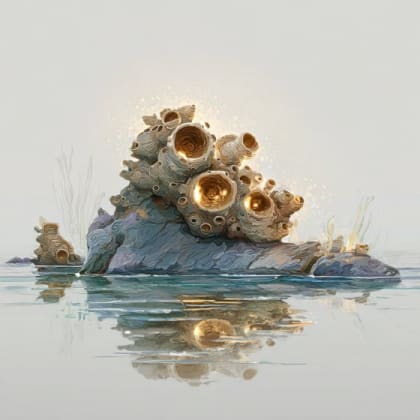
White Dendronotus
Dendronotus albus
The White Dendronotus is a beautiful sea slug that lives in the ocean. Its soft, white body has lovely frills that look like flowers. These creatures are fun to find while exploring tide pools!
Habitat: Coastal areas
The White Dendronotus is a delicate, moth-like insect with a snow-white body and large, translucent wings. Its antennae are uniquely branched, resembling tiny frosted tree branches, making it visually distinct from common white moths or butterflies.
Category
InvertebrateRarity
Common
Danger
1/5 · Very low
Snaps
1
Its name means "tree-backed," fitting its branched antennae!
The White Dendronotus glows under UV light!
They can smell flowers from a kilometer away!
They only live for about a month as adults!
White Dendronotus can perfectly blend into snowy environments or white flowers because of its pale, frilly wings that mimic ice crystals.
White Dendronotus has intricate, tree-like antennae that help them detect faint pheromones from far away, even in windy conditions.
White Dendronotus can fly silently through moonlit nights because of its soft, feathery wing scales that absorb sound, helping avoid predators.
Feeds on sweet flower nectar to power its delicate flight.
Age differences: Larvae feed on specific leaf types before pupating.
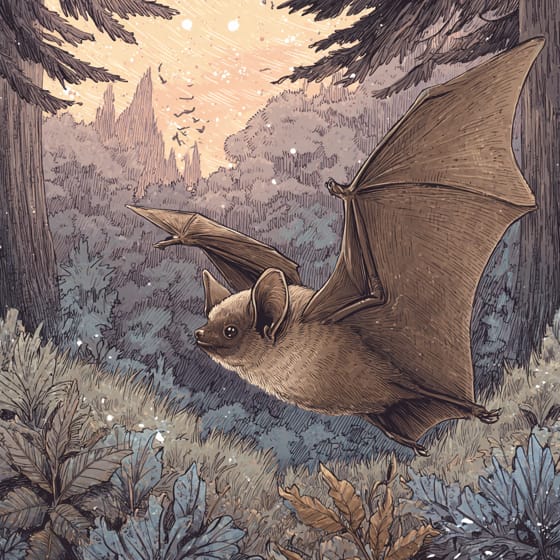
Myotis lucifugus
Bats hunt them as they fly at night.

Picea glauca
Adults forage on flowers from coniferous trees.
Lanius borealis
This bird preys on insects caught on branches.
Solitary animals live alone for most of their lives, only interacting with others for mating or parental care.
Camouflaged describes organisms that possess coloring or patterns that allow them to blend into their environment.
Colorful describes organisms or objects displaying a wide range of bright and distinct colors.
This trait characterizes organisms whose diet consists entirely or primarily of plant material.

Coastal habitats are dynamic environments located along the interface between land and sea, influenced by tides, waves, and saltwater.

This trait identifies organisms whose diet consists entirely or primarily of animal tissue.

Diurnal animals are primarily active during daylight hours, typically resting or sleeping at night.

Marine habitats encompass all saltwater environments of the Earth's oceans, supporting an immense diversity of aquatic life.
No aliases listed yet.
Danger
1/5 · Very low
Always look but don't touch sea creatures in tide pools to keep them safe.
The easiest way to identify White Dendronotus is to use the Snappit nature identifier app.
25-40 mm
12-20 mm
25-60 days
8 km/h
Feeds on sweet flower nectar to power its delicate flight.
Coastal areas
Foraging
Zoom in to split clusters and explore where this object has been snapped.
Take the discovery with you
Snap it with Snappit to identify it, learn what makes it special, and add the discovery to your collection.