





White Wood Aster
Eurybia divaricata
The White Wood Aster is a lovely flower that blooms in the fall. It has pretty white petals and bright yellow centers, making it a favorite among butterflies and bees!
Habitat: Forests
The White Wood Aster has delicate white ray petals surrounding a bright yellow center, giving it a star-like appearance. Its thin, dark stems and heart-shaped leaves help it stand out in shady woodland areas.
Category
PlantsRarity
Common
Danger
1/5 · Very low
Snaps
7
Also called 'heart-leaved aster' because of its distinctive, jagged, heart-shaped leaves.
Even in the shadiest spots, its bright white flowers can light up a dim forest path.
Its scientific name, divaricata, means 'spreading widely' — just like its cheerful blooms!
Many tiny insect visitors rely on its nectar for energy as summer turns to fall.
White Wood Aster can grow well in deep shade, soaking up sunlight others miss on the forest floor.
This plant has late-season blooms that provide vital nectar for pollinators when other flowers are scarce.
White Wood Aster has underground stems that help it spread and form colonies, making it a strong survivor.
Apis mellifera
collects nectar and pollen

Bombus impatiens
visits its flowers for food
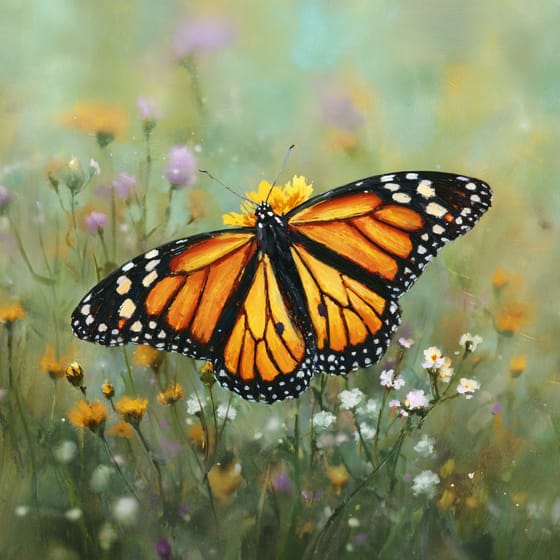
Danaus plexippus
fuels up before migration

Odocoileus virginianus
browses on its leaves and stems
Deciduous plants periodically shed all their leaves, typically during autumn or dry seasons.
Flowering plants are any plants that produce flowers as part of their reproductive cycle.
Shade tolerant plants are adapted to grow and thrive in areas with low light levels, requiring less direct sunlight.
Fall color refers to the seasonal change in foliage pigmentation, primarily in deciduous plants, displaying vibrant hues.

Describes plants that are particularly attractive and beneficial to a wide range of pollinating organisms.

Forest habitats are terrestrial environments dominated by dense tree cover, supporting a high diversity of plant and animal life.

Describes organisms that transfer pollen, enabling the fertilization and reproduction of plants.
No aliases listed yet.
Danger
1/5 · Very low
Always look but don't touch flowers without asking an adult first.
The easiest way to identify White Wood Aster is to use the Snappit nature identifier app.
30-90 cm
30-60 cm
1-2 cm
Late summer to fall
No
None
Perennial
Zoom in to split clusters and explore where this object has been snapped.

Connecticut, US
You might spot Osprey, Diamondback Terrapin, and Monarch.
View guide →

Virginia, US
You might spot Canada Goose, Duck, and Great Blue Heron.
View guide →
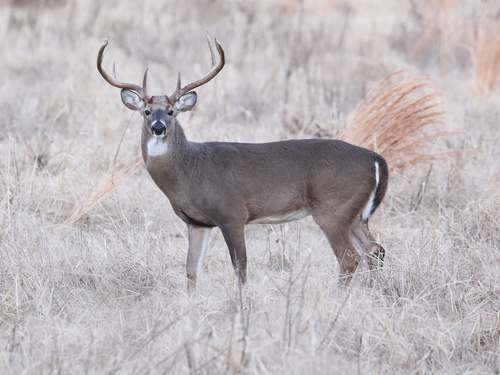
Ohio, US
You might spot White-Tailed Deer, Mayapple, and American Beech.
View guide →

Connecticut, US
You might spot Eastern Gray Squirrel, Red Fox, and Northern Cardinal.
View guide →

Virginia, US
You might spot Duck, Canada Goose, and Red Deadnettle.
View guide →

North Carolina, US
You might spot Virginia Heartleaf, Dwarf Crested Iris, and Galax.
View guide →
Take the discovery with you
Snap it with Snappit to identify it, learn what makes it special, and add the discovery to your collection.






.jpg&width=800)



_001.jpg&width=800)



