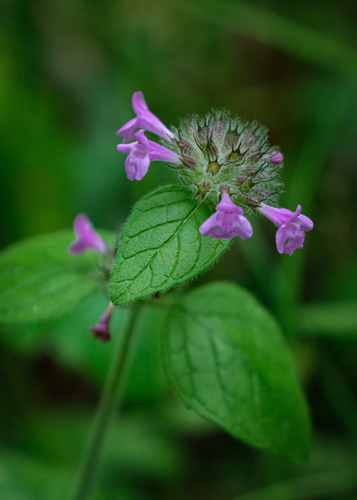


Wild Basil
clinopodium vulgare
Wild Basil (Clinopodium vulgare) is a perennial herbaceous plant belonging to the mint family, Lamiaceae. While its name suggests a close relationship to the culinary sweet basil, Wild Basil is a distinct woodland and grassland native with its own unique, subtle fragrance reminiscent of thyme and mint. Historically, it has been valued in traditional herbalism for its astringent, cardio-tonic, and expectorant properties. Today, it is highly appreciated by ecologists and gardeners alike for its resilience and its outstanding ability to attract and support a diverse array of native pollinators, including bees, butterflies, and hoverflies.
Habitat: Found in dry grasslands, hedge banks, open woodland borders, and limestone-rich soils.
This erect perennial grows between 30 and 80 centimeters tall, sporting square, densely hairy stems characteristic of the mint family. Its oval, slightly tooth-edged leaves grow in opposite pairs, covered in soft, velvety hairs that emit a mild herbal scent when crushed. The flowers are the most distinctive feature, arranged in dense, crowded, cushion-like whorls (verticillasters) at the leaf axils and the top of the stem. Each small, tubular flower ranges from rose-pink to deep purple, featuring a hairy calyx and a two-lipped petal structure that curves outward.
Category
PlantsRarity
Common
Danger
1/5 · Very low
Snaps
3
Despite being called 'Wild Basil', its scent and flavor are actually much closer to marjoram, savory, or thyme than sweet basil.
In traditional dye-making, the leaves and stems of Wild Basil can be used to produce a subtle, earthy yellow or brown dye for wool.
The generic name Clinopodium comes from the Greek 'klino' (bed) and 'podion' (little foot), referencing the flower's resemblance to a bedpost.
The flower's shape and nectar placement are specifically adapted to facilitate pollination by long-tongued insects, such as bees and butterflies, while deterring less efficient creeping insects with its hairy calyx.
Produces a rich mix of volatile organic compounds, including thymol, which act as a powerful natural deterrent against insect herbivores and pathogens.
Utilizes a creeping underground rhizome system to survive harsh winters, allowing the plant to rapidly regenerate and expand into tight colonies during the spring.
As an autotrophic plant, Wild Basil generates its own organic energy using sunlight, water, and carbon dioxide through the process of photosynthesis.
Apis mellifera
Wild Basil provides essential high-quality nectar during the mid-summer months for foraging honey bees.
Coleophora albitarsella
The larvae of this case-bearing moth feed directly on the leaves of Wild Basil, utilizing it as an essential nursery plant.

Pyrgus malvae
The caterpillars of this butterfly species feed on Lamiaceae species, including Wild Basil, in dry meadows.
No trait badges are assigned for this object yet.
No aliases listed yet.
Collections for this object will appear here as more themes are added.
Danger
1/5 · Very low
No special safety notes yet.
The easiest way to identify Wild Basil is to use the Snappit nature identifier app.
30-80 cm
3-10 years
As an autotrophic plant, Wild Basil generates its own organic energy using sunlight, water, and carbon dioxide through the process of photosynthesis.
Found in dry grasslands, hedge banks, open woodland borders, and limestone-rich soils.
Photosynthesis
Zoom in to split clusters and explore where this object has been snapped.

Pennsylvania, US
You might spot Spotted Lanternfly, Duck, and Asian Lady Beetle.
View guide →

Washington, US
You might spot Bigleaf Maple, Mule Deer, and Oregon Grape.
View guide →
Virginia, US
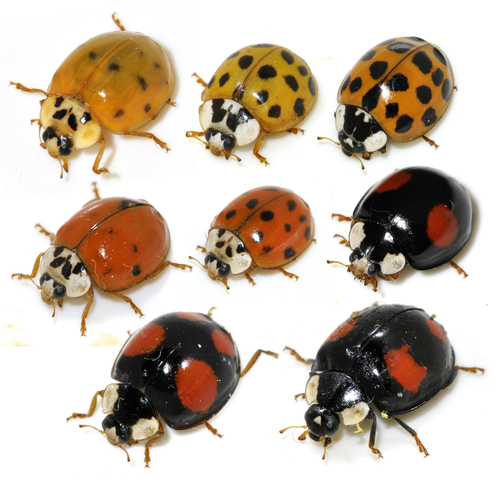
You might spot Asian Lady Beetle and Eastern Tiger Swallowtail.
View guide →

New York, US
You might spot Sensitive Fern, Garter Snake, and Eastern White Pine.
View guide →
Take the discovery with you
Snap it with Snappit to identify it, learn what makes it special, and add the discovery to your collection.











.jpg&width=800)



_001.jpg&width=800)




