




Wing-Leaf Monkeyflower
erythranthe ptilota
The Wing-Leaf Monkeyflower has beautiful, wing-like leaves that look like they are ready to take off! It blooms with bright, cheerful flowers that attract lots of friendly pollinators.
Habitat: Wet meadows and stream banks.
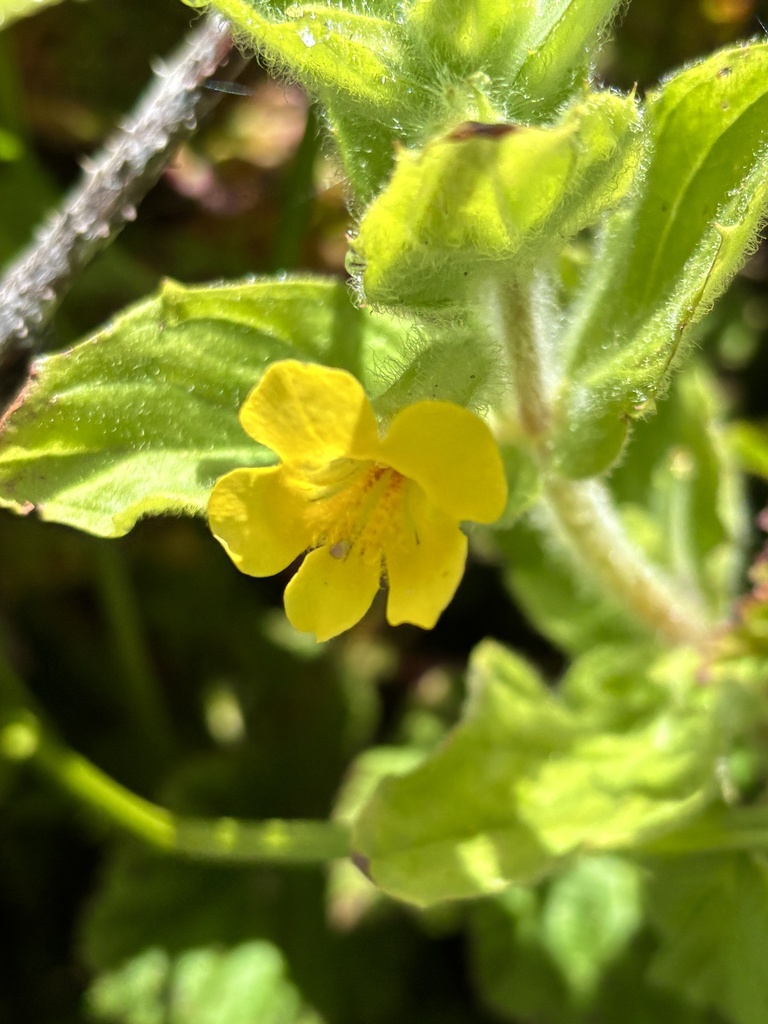
The Wing-Leaf Monkeyflower has unique square stems with prominent 'wings' or ridges, supporting vibrant yellow, snapdragon-like flowers, often with reddish spots. Its bright blooms are contrasted by its lance-shaped green leaves, creating a distinctive wetland appearance.
Category
PlantsRarity
Common
Danger
0/5 · No known danger
Snaps
Be the first to snap!
Each tiny flower can create hundreds of even tinier seeds, ready to float away and find new homes!
Its square stems have cool 'wings' that aren't just for show—they help the plant stand strong!
Look closely! Some people think the flower's shape looks exactly like a monkey's happy, smiling face!
This plant is a water-lover, often growing with its 'feet' soaking wet in shallow streams or ditches!
Wing-Leaf Monkeyflower has unique winged stems that help channel rainwater down to its roots, making the most of moisture in its wet habitats.
Wing-Leaf Monkeyflower can thrive in waterlogged soils due to specialized roots, allowing it to colonize soggy areas where other plants can't survive.
Wing-Leaf Monkeyflower's bright yellow, tubular flowers are perfectly shaped to attract specific bee pollinators, ensuring successful reproduction.
Apis mellifera
collects nectar and pollen
Bombus impatiens
an important native pollinator

Odocoileus virginianus
occasionally browses its leaves
Colorful describes organisms or objects displaying a wide range of bright and distinct colors.
This trait characterizes organisms whose diet consists entirely or primarily of plant material.
Forest habitats are terrestrial environments dominated by dense tree cover, supporting a high diversity of plant and animal life.
Diurnal animals are primarily active during daylight hours, typically resting or sleeping at night.
Describes organisms that transfer pollen, enabling the fertilization and reproduction of plants.
Danger
0/5 · No known danger
No special safety notes yet.
Start with the whole plant, then compare leaf arrangement, leaf edges, stems and any flowers or fruit. Opposite leaves grow in pairs; alternate leaves come one at a time along the stem. These details tell you far more together than a single green leaf does. Plant Identifier: upload a photo and compare the visible details.
30-90 cm
30-60 cm
2-3 cm
Summer-fall
No
None
Perennial
Zoom in to split clusters and explore where this object has been snapped.
Recent snaps will appear here as new observations are added.
Take the discovery with you
Snap it with Snappit to identify it, learn what makes it special, and add the discovery to your collection.