

Winter Aconite
eranthis hyemalis
Winter Aconite (Eranthis hyemalis) is a charming, low-growing perennial herb famous for being one of the earliest heralds of spring. Often emerging while snow still blankets the ground, this resilient plant covers woodland floors in a vibrant carpet of golden-yellow flowers. Native to the damp deciduous forests of Southern Europe, it has become widely naturalized across temperate regions of North America and Europe, appreciated by gardeners for its ability to spread and form dense, cheerful colonies.
Habitat: Found in deciduous woodlands, forest edges, and shaded gardens with moist, well-draining soils.
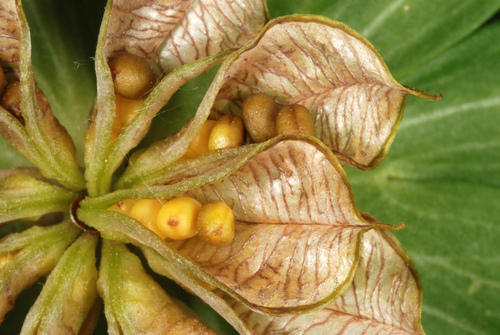
This diminutive plant typically grows between 5 to 15 centimeters tall. It features bright, buttercup-like yellow flowers that sit atop a distinctive collar of deeply lobed, leaf-like green bracts, giving the appearance of a flower wearing a ruff. The flowers are cup-shaped, composed of five to eight showy sepals, and arise from dark, knobby tuberous roots before the true basal leaves fully develop.
Category
PlantsRarity
Common
Danger
1/5 · Very low
Snaps
Be the first to snap!
Its genus name Eranthis comes from the Greek words 'er', meaning spring, and 'anthos', meaning flower.
The plant goes completely dormant by mid-summer, disappearing entirely underground until the following winter.
Winter Aconite belongs to the buttercup family, Ranunculaceae, and shares their characteristic shiny yellow petals.
It can push through frozen soil and snow, utilizing its early seasonal window to photosynthesize before canopy trees block out the sunlight.
The flowers dynamically open in response to warm sunlight and close tightly during overcast, rainy, or freezing conditions to protect their pollen.
Produces toxic cardiac glycosides throughout all tissues, rendering it highly unpalatable and safe from foraging deer, rabbits, and rodents.
As a photosynthetic plant, it synthesizes its own food using sunlight, water, and carbon dioxide while drawing essential minerals from the soil.
Bombus terrestris
Provides critical, early-season nectar and pollen for queen bumblebees emerging from winter hibernation.

Galanthus nivalis
Competes directly for light, space, and early-season pollinators in the deciduous understory.
No trait badges are assigned for this object yet.
No aliases listed yet.
Collections for this object will appear here as more themes are added.
Danger
1/5 · Very low
No special safety notes yet.
Start with the whole plant, then compare leaf arrangement, leaf edges, stems and any flowers or fruit. Opposite leaves grow in pairs; alternate leaves come one at a time along the stem. These details tell you far more together than a single green leaf does. Plant Identifier: upload a photo and compare the visible details.
5-15 cm
5-20 years
As a photosynthetic plant, it synthesizes its own food using sunlight, water, and carbon dioxide while drawing essential minerals from the soil.
Found in deciduous woodlands, forest edges, and shaded gardens with moist, well-draining soils.
Zoom in to split clusters and explore where this object has been snapped.
Recent snaps will appear here as new observations are added.
Take the discovery with you
Snap it with Snappit to identify it, learn what makes it special, and add the discovery to your collection.