





Yellow-banded Bumble Bee
Bombus terricola
The Yellow-banded Bumble Bee is a fuzzy insect that loves to buzz around flowers. They are important helpers in nature because they pollinate plants, helping them grow and produce fruits.
Habitat: Grasslands
The Yellow-banded Bumble Bee has a mostly black body with two distinct bright yellow bands across its fuzzy thorax. It also features a clear yellow band on the first segment of its abdomen, which is otherwise black. Its tail can appear reddish-brown or orange.
Category
InsectsRarity
Common
Danger
2/5 · Low
Snaps
2
A bumble bee's wings beat super fast, up to 200 times every single second!
Bumble bee queens can live for an entire year, hibernating alone through the winter!
Bumble bees mix pollen and nectar into "bee bread" to feed their growing young!
Despite their size, bumble bees can hover and fly straight up like tiny helicopters!
Yellow-banded Bumble Bees can buzz pollinate flowers, shaking pollen loose to gather more efficiently for their colony.
Yellow-banded Bumble Bees can generate their own body heat, which helps them fly and forage even on cool days.
Yellow-banded Bumble Bees have a medium-long tongue that helps them reach nectar deep inside many different kinds of flowers.
They drink nectar from flowers for energy and eat pollen for protein to grow strong.

Trifolium pratense
Helps this plant reproduce by carrying pollen.
Araneus diadematus
A spider might catch a bee in its web.
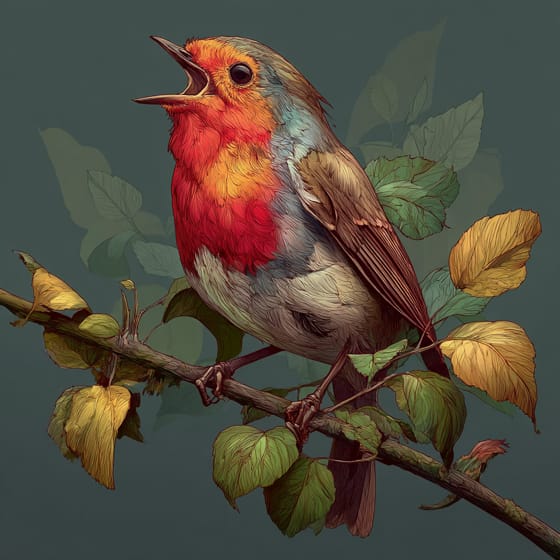
Turdus migratorius
Robins eat various insects, including bees.
Bombus ashtoni
Lays eggs in their nests and uses their workers.
Furry describes animals possessing a dense covering of soft hair or fur.
Social animals live in organized groups, cooperating for survival benefits such as foraging, defense, and raising offspring.
Grassland habitats are terrestrial biomes dominated by grasses and herbaceous plants, supporting a variety of grazing animals.
This trait characterizes organisms whose diet consists entirely or primarily of plant material.

Describes plants that are particularly attractive and beneficial to a wide range of pollinating organisms.

Diurnal animals are primarily active during daylight hours, typically resting or sleeping at night.

Describes a species whose presence and role have a disproportionately large effect on its environment.

Describes organisms that transfer pollen, enabling the fertilization and reproduction of plants.
Danger
2/5 · Low
If you see a bee, watch it from a distance. Don't try to touch it, as it might sting if scared.
The easiest way to identify Yellow-banded Bumble Bee is to use the Snappit nature identifier app.
25-35 mm
10-16 mm
14-365 days
15 km/h
They drink nectar from flowers for energy and eat pollen for protein to grow strong.
Grasslands
Foraging
Zoom in to split clusters and explore where this object has been snapped.

Quebec, CA
You might spot Alder Buckthorn, Common Blue, and Eastern Gray Squirrel.
View guide →

West Virginia, US
You might spot Eastern Red-Backed Salamander and Wehrle's Salamander.
View guide →

Connecticut, US
You might spot Black Bear, Song Sparrow, and Monarch.
View guide →
Take the discovery with you
Snap it with Snappit to identify it, learn what makes it special, and add the discovery to your collection.





.jpg&width=800)



