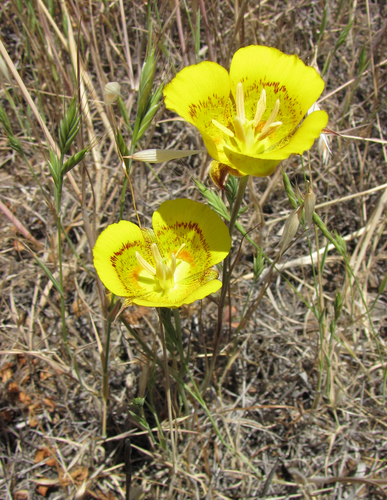


Yellow Mariposa Lily
calochortus luteus
The Yellow Mariposa Lily (Calochortus luteus) is a striking perennial wildflower endemic to California, where it graces grasslands, oak woodlands, and chaparral with its vibrant golden blooms. Rising from a hardy underground bulb, this member of the lily family showcases a remarkable resilience to dry Mediterranean summers, lying dormant during the hottest months before bursting into color in late spring. Its elegant, cup-shaped flowers not only delight hikers and nature enthusiasts but also serve as vital nectar sources for local pollinators, making it an ecological cornerstone of its native habitats.
Habitat: Found in open grasslands, oak woodlands, and chaparral slopes throughout California, often in heavy clay or gravelly soils.
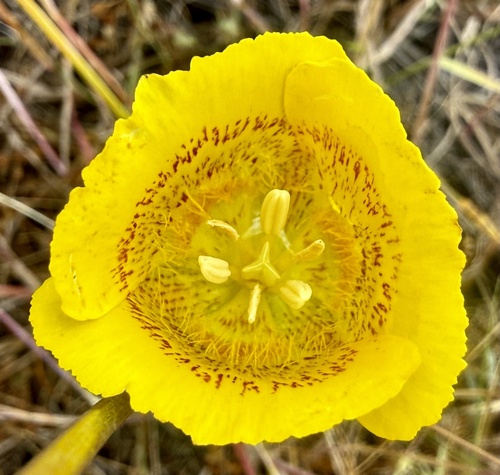
This plant features upright, slender stems reaching 15 to 50 centimeters tall, bearing one to several upright, bell-to-cup-shaped flowers. The petals are a deep, brilliant yellow, intricately decorated on the inside with reddish-brown spots, lines, and a dense, hairy, crescent-shaped nectary gland near the base. The narrow, grass-like leaves are sparse, often drying up by the time the bright golden flowers fully open in late spring or early summer.
Category
PlantsRarity
Common
Danger
1/5 · Very low
Snaps
2
Indigenous peoples of California, such as the Miwok and Maidu, historically harvested and roasted the nutritious bulbs as a seasonal food source.
The common name 'Mariposa' is the Spanish word for butterfly, which describes how the flowers seem to flutter like colorful wings in the grassland breeze.
The genus name Calochortus is derived from Greek words meaning 'beautiful grass', referring to its elegant grass-like leaves and stunning flowers.
The plant survives harsh, dry Mediterranean summers by dying back to an underground bulb, conserving energy and water until winter rains return.
Petals feature complex, UV-reflecting yellow-and-red patterns and hairy glands that act as precise maps to guide pollinating insects directly to nectar.
This species is well-adapted to wildfire-prone ecosystems, using deep-seated bulbs that remain unharmed by surface fires and quickly sprout in nutrient-rich post-burn soil.
As a photosynthetic plant, the Yellow Mariposa Lily produces its own food by converting sunlight, water, and carbon dioxide into sugars.
Bombus vosnesenskii
The bumblebee visits the flowers for nectar, acting as a primary pollinator for the species.

Thomomys bottae
Pocket gophers burrow underground and feed on the nutrient-rich bulbs of the plant.
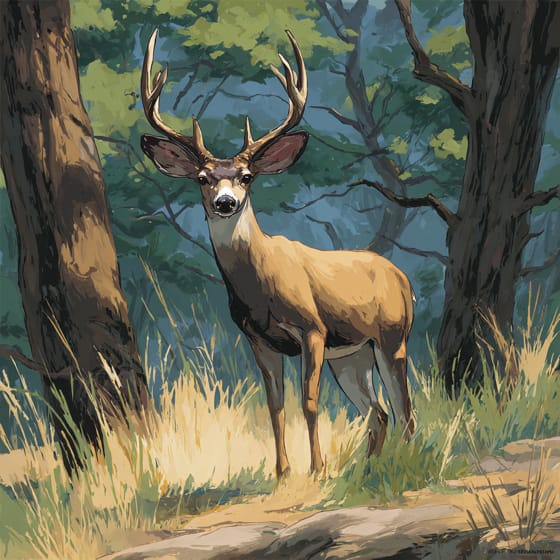
Odocoileus hemionus
Deer graze on the fresh green leaves and tender flower buds in early spring.
No trait badges are assigned for this object yet.
No aliases listed yet.
Collections for this object will appear here as more themes are added.
Danger
1/5 · Very low
No special safety notes yet.
The easiest way to identify Yellow Mariposa Lily is to use the Snappit nature identifier app.
15-50 cm
3-10 years
As a photosynthetic plant, the Yellow Mariposa Lily produces its own food by converting sunlight, water, and carbon dioxide into sugars.
Found in open grasslands, oak woodlands, and chaparral slopes throughout California, often in heavy clay or gravelly soils.
Zoom in to split clusters and explore where this object has been snapped.
May 28, 2026
Monte Bello Open Space PreservePhoto attribution
no rights reserved
License: CC0 1.0 ↗
Image may be shown cropped inside the card frame.
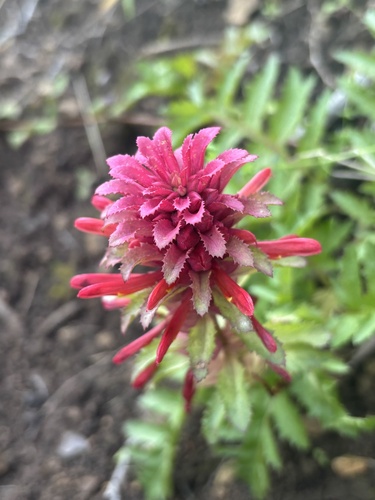
California, US
You might spot Warrior's Plume, Western Leatherwood, and White Globe Lily.
View guide →

California, US
You might spot Checkerbloom and Fuchsiaflower Gooseberry.
View guide →

US
You might spot Western Gull, Brandt's Cormorant, and Pride Of Madeira.
View guide →
Take the discovery with you
Snap it with Snappit to identify it, learn what makes it special, and add the discovery to your collection.











.jpg&width=800)



_001.jpg&width=800)




