





goldwire
Hypericum concinnum
Goldwire is a bright and cheerful plant with lovely yellow flowers. It grows in sunny places and can be found in fields and meadows, adding a splash of color to nature's palette.
Habitat: Fields and meadows
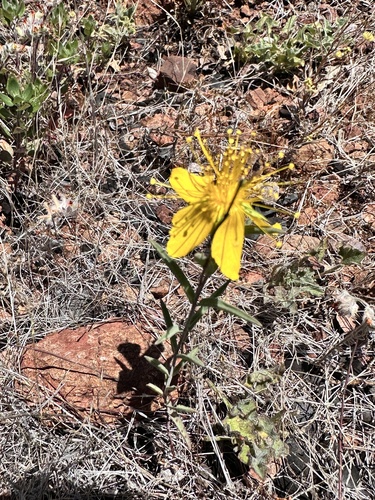
The goldwire has slender, wiry stems with small, oval leaves. Its bright yellow, star-shaped flowers bloom in clusters, featuring many showy stamens that make them look fuzzy and golden. The overall plant appears delicate yet vibrant, brightening its habitat.
Category
PlantsRarity
Common
Danger
1/5 · Very low
Snaps
1
Despite its sunny look, some parts of this plant glow under a UV light!
Goldwire's delicate stems can feel surprisingly like thin, tough wires!
Look closely, its leaves have tiny see-through dots, like secret windows!
The plant's scientific name means 'very beautiful,' just like its stunning flowers!
Goldwire has bright, star-shaped yellow flowers that act like a beacon, helping it attract busy bees and other insects for pollination.
Goldwire can thrive in dry, rocky soils, thanks to its tough root system that helps it find water where other plants struggle.
Goldwire produces small capsules filled with tiny seeds, which helps it spread its offspring to new sunny spots.
Apis mellifera
Drinks nectar and collects pollen.
Bombus vosnesenskii
Visits flowers for nectar and pollen.

Pieris rapae
Sips nectar from the bright flowers.
Deciduous plants periodically shed all their leaves, typically during autumn or dry seasons.
Flowering plants are any plants that produce flowers as part of their reproductive cycle.
Summer blooming plants produce their flowers during the summer season, often providing vibrant color when many other plants have finished.
Medicinal plants possess chemical compounds that can be used for therapeutic purposes to treat illnesses or maintain health.

Colorful describes organisms or objects displaying a wide range of bright and distinct colors.

Grassland habitats are terrestrial biomes dominated by grasses and herbaceous plants, supporting a variety of grazing animals.

Describes plants that are particularly attractive and beneficial to a wide range of pollinating organisms.
No aliases listed yet.
Danger
1/5 · Very low
Always look but don't touch plants unless you're sure they are safe.
The easiest way to identify goldwire is to use the Snappit nature identifier app.
10-50 cm
15-30 cm
1-2 cm
Late spring to summer
No
Mild
Perennial
Zoom in to split clusters and explore where this object has been snapped.
Jun 2, 2026
Armstrong Redwoods State Natural ReservePhoto attribution
no rights reserved
License: CC0 1.0 ↗
Image may be shown cropped inside the card frame.
Take the discovery with you
Snap it with Snappit to identify it, learn what makes it special, and add the discovery to your collection.








.jpg&width=800)



_001.jpg&width=800)




