
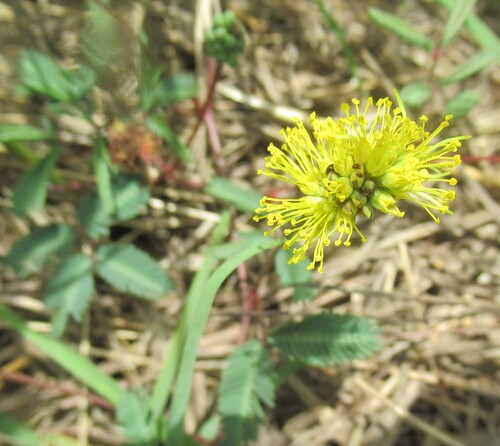


Yellow Puff
neptunia lutea
The Yellow Puff (Neptunia lutea) is a charming perennial herb native to the southern United States. Belonging to the pea family (Fabaceae), this prostrate wildflower is known for its sprawling stems that blanket the ground and its fuzzy, bright yellow flower heads. These globe-like blooms appear from spring to fall, adding vibrant splashes of color to prairies, open woodlands, and roadsides. A fascinating feature of the Yellow Puff is its sensitive leaves, which gently fold together when touched or during the dark of night. This plant is not only beautiful but also ecologically beneficial, functioning as a nitrogen-fixer that improves soil quality and serves as a vital resource for local pollinators.
Habitat: Typically found in open prairies, savannas, roadsides, and disturbed fields with sandy or clay soils.
Yellow Puff is easily recognized by its prostrate, trailing stems that can spread up to 150 centimeters, covered in fine hairs. Its leaves are bipinnately compound, resembling tiny fern fronds with numerous small, oblong leaflets that fold inward upon physical contact. The most distinctive feature is the spherical flower head, measuring about 1.5 to 2.5 centimeters across, consisting of numerous tiny yellow flowers with prominent, thread-like stamens that give the bloom its signature 'puff' appearance. Following pollination, it produces flat, oblong seed pods that turn brown as they mature.
Category
PlantsRarity
Common
Danger
1/5 · Very low
Snaps
Be the first to snap!
Because it belongs to the legume family, it acts as a natural fertilizer, enriching poor soils with nitrogen that benefits neighboring plants.
The common name 'Yellow Puff' perfectly describes its fuzzy, golden, pom-pom-like flower heads that look like miniature fireworks.
While not as rapid as the famous Sensitive Plant (Mimosa pudica), the leaves of the Yellow Puff will noticeably fold up when touched or when darkness falls.
The leaves fold inward when touched or exposed to wind, which helps reduce water loss and deters herbivores by making the foliage appear wilted and less appetizing.
Forms a symbiotic relationship with rhizobia bacteria in its root nodules to convert atmospheric nitrogen into a usable organic form, enriching the surrounding soil.
Features a deep taproot system that allows the plant to access moisture far below the soil surface, helping it survive hot, dry summers.
As a photoautotrophic plant, the Yellow Puff produces its own energy through photosynthesis, utilizing sunlight, carbon dioxide, and water while absorbing essential nutrients and minerals from the soil.
Age differences: As a seedling, it relies on energy stored within the seed cotyledons before developing true leaves and roots to begin full photosynthesis and soil nutrient absorption.

Bombus pensylvanicus
Provides nectar and pollen, attracting native bees for pollination.
Pyrisitia lisa
Serves as a host plant and food source for the caterpillars.
Rhizobium leguminosarum
Undergoes a mutualistic relationship in the root nodules to fix atmospheric nitrogen.
No trait badges are assigned for this object yet.
No aliases listed yet.
Collections for this object will appear here as more themes are added.
Danger
1/5 · Very low
No special safety notes yet.
Start with the whole plant, then compare leaf arrangement, leaf edges, stems and any flowers or fruit. Opposite leaves grow in pairs; alternate leaves come one at a time along the stem. These details tell you far more together than a single green leaf does. Plant Identifier: upload a photo and compare the visible details.
30+ cm
0.05+ kg
3+ years
As a photoautotrophic plant, the Yellow Puff produces its own energy through photosynthesis, utilizing sunlight, carbon dioxide, and water while absorbing essential nutrients and minerals from the soil.
Typically found in open prairies, savannas, roadsides, and disturbed fields with sandy or clay soils.
4+
10+ days
Zoom in to split clusters and explore where this object has been snapped.
Recent snaps will appear here as new observations are added.
Mississippi, US
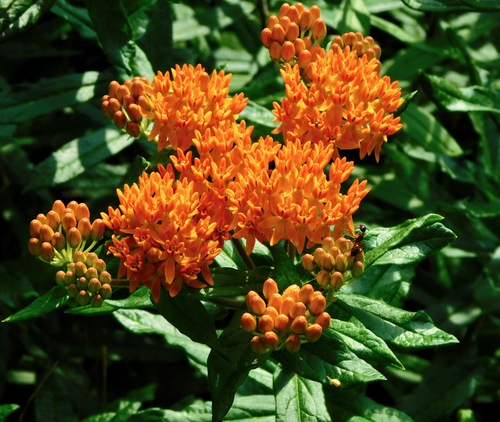
You might spot Butterfly Milkweed, Rattlesnake Master, and Yellow Puff.
View guide →

Alabama, US
You might spot Creek Chub, Western Mosquitofish, and Striped Shiner.
View guide →
Take the discovery with you
Snap it with Snappit to identify it, learn what makes it special, and add the discovery to your collection.

















