

Yellow Shore Crab
hemigrapsus oregonensis
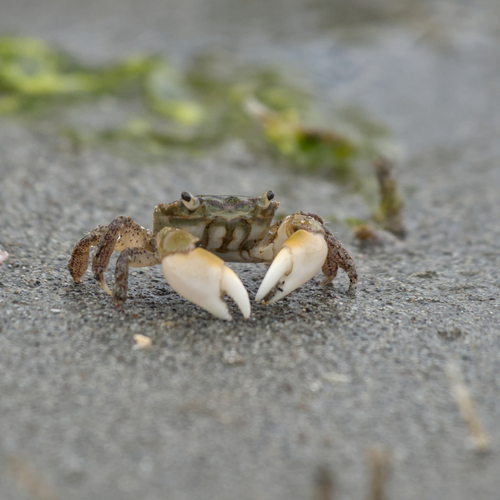
The Yellow Shore Crab, also known as the Oregon shore crab or hairy shore crab, is a tiny but vital crustacean found extensively along the Pacific coast of North America. Favoring muddy bays, estuaries, and protected rocky shores, these small crabs act as the ultimate coastal cleanup crew, tirelessly scavenging for detritus and grazing on algae. Their remarkable physiological ability to tolerate significant fluctuations in water salinity allows them to thrive where freshwater streams meet the salty ocean—an environment that proves too harsh for many other marine species. While they might easily go unnoticed by the casual beachgoer due to their cryptic coloration and small size, simply flipping over a rock in an estuary during low tide often reveals a scurrying community of these crustaceans. They are an essential ecological linchpin, serving as a crucial food source for shorebirds, fish, and coastal mammals while simultaneously recycling nutrients to keep the shoreline clean.
Habitat: Found in muddy coastal estuaries and mudflats, often hiding under rocks or burrowing in the intertidal zone.
The Yellow Shore Crab features a somewhat square, flattened carapace that spans just a few centimeters across, ranging in color from yellowish-green and pale brown to darker grey, which helps it camouflage seamlessly into mudflats. Its most definitive visual trait is the presence of prominent, dense bristles—called setae—covering its walking legs, earning it the nickname 'hairy shore crab'. Unlike the closely related purple shore crab, its claws are generally devoid of distinct purple spots and instead match the muted, greenish-yellow tones of its shell. Males typically have noticeably larger, bulkier claws than females.
Category
AnimalRarity
Common
Danger
1/5 · Very low
Snaps
2
Despite their name, 'Yellow' Shore Crabs can sometimes be a surprisingly dark brownish-grey to match the specific mud in their local estuary.
If they are attacked by a predator, they can autonomously drop a leg or claw to escape—a process called autotomy—and will regenerate it during subsequent molts.
They are uniquely adapted to withstand very low oxygen levels (hypoxia) by using the water trapped in their gill chambers to continue breathing while stranded at low tide.
When a female carries her thousands of developing eggs beneath her abdomen, the egg mass looks like a tiny, colorful sponge, prompting biologists to call such females 'berried'.
They can actively regulate their internal salt and water balance, allowing them to survive extreme fluctuations in salinity found in tidal estuaries.
The dense bristles covering their walking legs act as highly sensitive mechanoreceptors and chemoreceptors, helping them detect food and subtle water movements.
They use their flattened bodies and strong walking legs to quickly bury themselves backward into soft mud to escape predators and avoid drying out at low tide.
They are primarily opportunistic scavengers and grazers that feed on decaying organic matter, algae, and microscopic organisms in the sediment.
Age differences: As microscopic zoeae (larvae), they are planktonic filter feeders consuming phytoplankton, before settling into their benthic adult lives as scavengers.

Ardea herodias
Heavily preys upon shore crabs during low tide foraging.
Hemigrapsus nudus
Competes for space and resources under rocks in overlapping intertidal zones.

Procyon lotor
Forages for these crabs extensively along muddy shorelines.
Ulva lactuca
Acts as a primary food source for grazing shore crabs.
No trait badges are assigned for this object yet.
No aliases listed yet.
Collections for this object will appear here as more themes are added.
Danger
1/5 · Very low
No special safety notes yet.
Look for fins, arms, tentacles, shells and body symmetry. Underwater light shifts colors, so structure and markings usually matter more than shade. Sea Creature Identifier: upload a photo and compare the visible details.
1-5 cm
0.002-0.02 kg
2-4 years
They are primarily opportunistic scavengers and grazers that feed on decaying organic matter, algae, and microscopic organisms in the sediment.
Found in muddy coastal estuaries and mudflats, often hiding under rocks or burrowing in the intertidal zone.
Foraging
4000-100000
Zoom in to split clusters and explore where this object has been snapped.

California, US
You might spot Snowy Egret, Great Blue Heron, and Willet.
View guide →

Washington, US
You might spot Bigleaf Maple, Mule Deer, and Oregon Grape.
View guide →
Washington, US
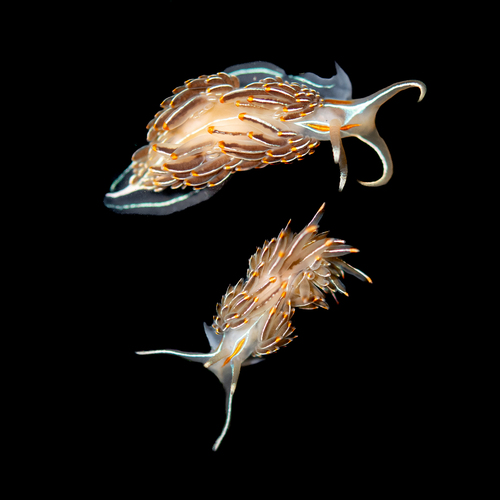
You might spot Horned Nudibranch and Madrone Skin Miner.
View guide →
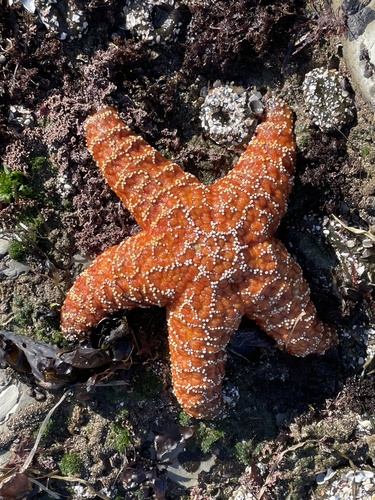
British Columbia, CA
You might spot Ochre Sea Star, Fringe Cups, and Moonglow Anemone.
View guide →

British Columbia, CA
You might spot Barn Swallow, Pelagic Cormorant, and Sea Lion.
View guide →

British Columbia, CA
You might spot Ochre Sea Star and Yellow Shore Crab.
View guide →
Take the discovery with you
Snap it with Snappit to identify it, learn what makes it special, and add the discovery to your collection.