
Snappit logo
Snappit
Get App
Generic illustration, not a photograph of this venueIllustration
ParkCataluña, Spain

Aiguamolls de l’Empordà Natural Park

Aiguamolls is a place to slow down.

About

Aiguamolls is a place to slow down. A reedbed that looks still from the path can become busy once you sit quietly and let your eyes adjust. Open water, wet meadows and tree-lined drainage channels sit close together, so a short walk can reveal several different habitats without much climbing.

Begin at El Cortalet, the park’s main information centre. Ask which paths and hides are open, then follow as much of the signed route towards Mas Matà as suits your group. The Quim Franch hide, beside the centre, is a useful first stop. You do not have to reach the far end to have a worthwhile visit: a little walking, one unhurried hide stop and a picnic can fill a very good morning.

If everyone wants more, the full Cortalet–Mas Matà return walk links more observation points and the old rice-drying towers at Senillosa. Those agricultural structures are a reminder that this is a lived-in landscape as well as a refuge for wildlife. Farmers, drainage channels and grazing animals are part of its story.

The natural park extends beyond this popular southern gateway, including inland wetlands around Vilaüt and other coastal and river habitats. Treat those as separate choices. In particular, do not automatically add a walk to Can Comas beach: access restrictions and boardwalk maintenance affect that part of the park. Don't forget to bring the Snappit nature identification app along to scan local species.

The wetlands once occupied much more of the Empordà plain. Drainage for farming reduced them, and later tourism development put further pressure on the remaining marshes. A public campaign began in 1976; protection followed in 1983, with the area subsequently classified as a natural park. The working landscape is still visible. A cortal was a farm associated with livestock, and El Cortalet now houses park services. At Mas Matà, former rice-drying towers survive; one became the Senillosa lookout in 1996. These buildings help explain why conservation here is tied to the management of water, meadows and farmland.

What to do here

Start with advice at El Cortalet, spend time in an open hide, and walk a comfortable portion of Itinerary 1 towards Mas Matà before returning the same way. Compare open pools, reeds and wet meadows. Bring binoculars if you have them; patient looking matters more than specialist equipment.

Seasonal info

Tramuntana wind can make the open wetland feel cold and exposed. Summer calls for shade breaks, sun protection and plenty of drinking water. Heavy rain and easterly storms can flood paths; some coastal routes also close during the breeding season. Check the weather, the park notices and the day’s advice before choosing a route.

Accessibility

The official Cortalet–Mas Matà leaflet describes an adapted route entered from El Cortalet and an adapted Quim Franch hide. Large wheelchairs may need staff to open an alternative gate. Ask about the current surface, boardwalks, viewing openings and toilets before travelling. Individual observation towers and upper hide floors have different access, so the adapted-path description does not cover every viewpoint.

Don't miss

1

Quiet birdwatching from a hide beside Estany del Cortalet

2

Reedbeds and tree-framed wet meadows along Itinerary 1

3

The agricultural story of Mas Matà and the Senillosa towers

4

A separate inland-wetland outing around Estany de Vilaüt

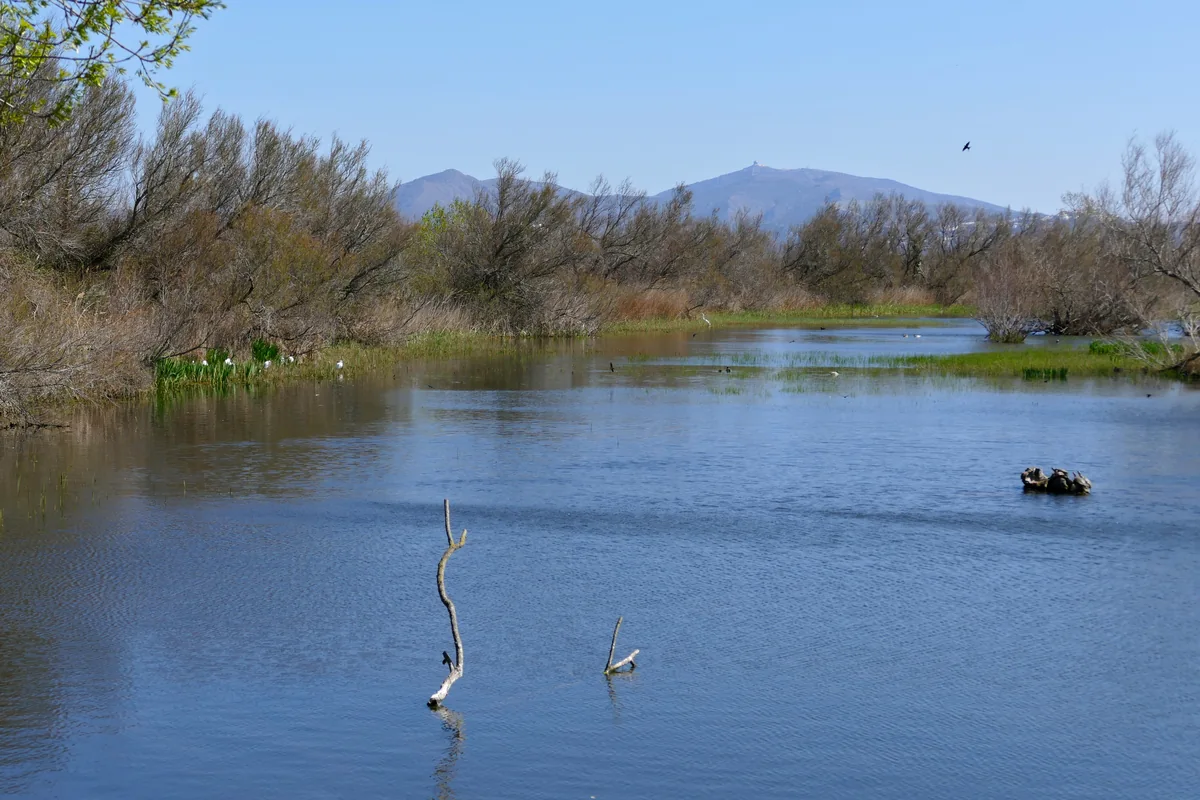
Open wetland water is edged by reeds, low trees and patches of grass, with distant birds and a low mountain ridge on the horizon.

Estany del Cortalet in Aiguamolls de l’Empordà, photographed from Aguait Quim Franch in March 2016.

Estany del Cortalet (25755494410).jpg — Bernard DUPONT / Wikimedia Commons / CC BY-SA 2.0 · Creative Commons

Walks and routes

Itinerary 1: El Cortalet to Mas Matà

The published route is 4.5 km there and back, with 1 m of elevation change and 75 minutes of walking time. Allow 2–3 hours if you plan to linger. Start at El Cortalet and follow the signed path towards Mas Matà; turn back sooner for a shorter outing. Keep the Quim Franch hide near the centre as an easy first stop, and choose further open observation points according to your time.

Officially adapted from El Cortalet. Ask staff to open the gate if your chair cannot pass, and check current ground and boardwalk conditions. Quim Franch is described as adapted; the upper level of d’en Biel has steep stairs. Treat any tower climb as an optional, separately checked addition.


Itinerary 1: El Cortalet to Mas Matà

Itinerary 6: Estany de Vilaüt

A separate 2.8 km circular outing through grazing country, past cork oaks and granite outcrops to a wetland hide. The official leaflet gives 5 m of elevation change and one hour; allow 75–90 minutes with stops. Its small roadside parking area is listed as free with about five spaces. Check availability and keep farm access clear.

Natural paths and livestock gates make this a different outing from the adapted Cortalet route. No step-free standard is established in the leaflet; ask about the surface and hide approach if using a wheelchair or pushchair.

Itinerary 6: Estany de Vilaüt

Itinerary 2: a longer option requiring an access check

The published leaflet describes a 6 km circuit from the Mas Matà car park towards the coastal lagoons and Can Comas, with 1 m of elevation change and 90 minutes’ walking. Check current restrictions before planning the whole circuit. Ask at El Cortalet for a permitted out-and-back option and its distance before setting out.

Do not transfer Itinerary 1’s adapted-access description to this car-park start, every boardwalk or the beach. Ask about the exact open branch and each hide entrance. Sandy, flooded or closed sections can prevent passage.

Itinerary 2: a longer option requiring an access check

An easy first morning

Arrive while the information centre is open, use the toilets and ask about the nearest suitable hide. Spend time there, then follow a short portion of Itinerary 1 and return before anyone becomes tired. Finish with a picnic at El Cortalet. Allow 1½–2 hours before the picnic and adjust to your group.

A fuller birdwatching visit

If the route is open and the group is comfortable, give Itinerary 1 two or three hours with pauses. Choose a few observation stops rather than trying to visit every hide. Keep lunch and the return relaxed; Vilaüt or the coastal routes can be another day’s plan.

Things to try

Try a five-minute hide watch

Choose a viewing opening, stay still and watch one small patch of water. Ask everyone to notice a behaviour rather than count species: swimming, feeding, resting or flying. A notebook or a simple sketch can keep children engaged without making more noise.

Compare three wetland edges

From the path, look for open water, dense reeds and a grassy meadow edge. What changes between them: height, shade, movement or sound? Keep the comparison observational; the plants and water do not need to be touched or collected.

Join a scheduled activity

Check the park’s agenda for guided walks or family activities that suit your date and language. Follow that event’s own booking instructions and meeting point.

Keep a genuinely shorter plan

If El Cortalet is open, ask what indoor interpretation or nearby viewing is available that day. A brief centre visit can be enough. Do not press on through flooded paths or use a hide as a reason to walk into strong winds or a storm; postpone the outdoor part if conditions are poor.

Wildlife and habitats

White stork

Scan open ground and the sky from public paths. Enjoy any storks at a distance, without approaching nest sites.

Little egret

Use binoculars to study white wading birds from an open hide. Compare their size and movement without leaving the viewing area.

Common kingfisher

A quiet pause beside visible water can be more useful than constant walking. Let any bird come into view rather than following it.

Black-winged stilt

Scan shallow water from a hide and notice the different shapes of wading birds. Keep identification tentative if the view is distant.

Western marsh harrier

Look above the reedbeds as well as across the pools. Give yourself time to notice a raptor passing through the wider scene.

Mallard

Start with the ducks visible from a hide. Comparing their resting, swimming and feeding behaviour makes a good first birdwatching exercise.

Common reed

Notice how reed stands change the view and the sound of the wetland. Look at stems and seed heads from the path; leave them growing.

Stories and discoveries

What is a closa?

The closes are meadows framed by trees and drainage channels. They show how wet ground has been managed for grazing and hay, while still supporting wildlife. Looking at the field edges helps make sense of the pattern you see from the paths.

Rice towers turned towards wildlife

At Mas Matà, the Senillosa towers once dried rice. One was converted into a lookout in 1996. Even from ground level, they are a useful landmark for understanding the wetland’s farming history.

The view changes with the water

Freshwater and brackish habitats sit within the same park. Seasonal water levels help shape the vegetation and which birds use a place. A pool, a muddy edge and a dry-looking meadow can all be part of the wetland’s yearly cycle.

When to visit

Spring: migration and quiet breeding areas

March–May is one of the park’s migration periods. It is also a time to give breeding wildlife extra space. The official map marks Itinerary 3 closed from 1 April to 30 June; that restriction concerns the coastal route, not a blanket closure of the whole park. Follow any additional signs.

Summer: shorten the exposed walking

Choose a cooler part of the day within the access arrangements, carry enough water and use a hat and sun protection. Keep an easy turnaround in mind. Hides offer somewhere to sit and observe, but should not be treated as guaranteed cool shelters.

Autumn and winter: birds, wind and wet paths

Autumn migration and winter waterbirds give plenty of reasons to return. Pack a windproof layer for the tramuntana and check for standing water after storms. The park’s map warns that some coastal paths flood in autumn and winter; a shorter Cortalet visit may be the better choice if staff confirm suitable access.

Getting there and practical advice

El Cortalet opening and contact

The published information-desk hours are 09:00–18:30 from 1 March to 24 October, and 09:00–17:00 from 25 October to 28 February. Confirm holiday exceptions and the current schedule. Contact +34 972 454 222 or [email protected]. Centre hours do not by themselves establish access to every trail or hide.

Paying for Cortalet parking

A February 2026 park notice introduced automated, time-based parking. It quotes €2–€8 for the first two hours according to vehicle type, with different charging beyond that period; bank-card payment is available. Check the full tariff for your vehicle and intended stay. The notice also lists exemptions for registered residents of park municipalities and members of named local conservation associations; ask how eligibility is checked.

Toilets, picnic space and supplies

El Cortalet lists adapted toilets and three picnic areas, one covered. Confirm which facilities are open if your visit depends on them. Bring your own food and drinking water rather than relying on a café or water supply. The wildlife recovery centre is closed to public visits.

The smaller Mas Matà information point

The published schedule is 09:00–14:00 daily from 28 March to 24 June, then Fridays, weekends and public holidays from 9 October to 6 December. It is a seasonal service, so check before relying on staff or facilities there.

Organised groups and event places

For an organised group, contact the park about a month in advance and wait for confirmation. The visitor page also describes registration windows for advertised activities; use the specific event notice for its deadline. Paths and hides have capacity limits, so agree the plan before bringing a group.

Drive to El Cortalet

Use the signed access from the GIV-6216 between Castelló d’Empúries and Sant Pere Pescador. The park gives the turning at kilometre 4.2. Follow the access road to the designated car park and keep farm entrances and emergency access clear.

Plan both directions by public transport

Figueres has rail and bus connections towards Castelló d’Empúries; high-speed arrivals at Figueres-Vilafant need an additional connection. Some buses serve the Aiguamolls de l’Empordà stop near the Cortalet turning, followed by about ten minutes on foot. Check the operator’s date-specific return journey before committing. Do not confuse a bus to Castelló with a stop at the park.

Ask about the whole arrival-to-hide journey

Tell El Cortalet staff your chair or pushchair size, walking tolerance and any assistance needs. Ask about parking-to-centre access, gate opening, current path firmness, boardwalk edges, viewing height, seating and available adapted toilets. Arrange the gate help during staffed hours if needed.

Choose viewpoints individually

The Quim Franch hide is identified as adapted in the route leaflet. Other stops involve boardwalks or raised structures, and the upper floor at d’en Biel is reached by steep stairs. Stay with a suitable ground-level viewing option if an individual viewpoint does not work for you.

Sources and useful links

Wildlife you might spot

7

Each card links to a full Explore page with photos, traits, and fun facts.

Snap map for this place

Start with the big picture, then zoom in to explore individual wildlife observations around this place.

Loading map…

Good to know before you go

Begin with the current notices and a quick question at El Cortalet. Follow barriers and posted restrictions, even if an older map or route leaflet shows a through route.

Carry drinking water, a hat, sun protection, a windproof layer and footwear with grip. Bring mosquito protection and do not rely on finding a drinking-water point along the walk.

Make hide visits calm and short enough for your group. Keep voices low, share viewing openings, and step out quietly if children need a movement break.

Stay on the marked public paths. Leave plants, feathers and other natural material in place, and keep clear of grazing animals, crops and private farm access.

Budget for paid parking at El Cortalet and bring a bank card. The automated system charges by time and vehicle class; check the posted tariff before leaving the car.

Leave bicycles outside Itinerary 1 and Itinerary 2, where cycling is prohibited. The park has separate cycling routes; ask for a suitable signed option.

The park discourages bringing dogs onto the main birdwatching routes. Where admitted, keep them on a lead and follow local exclusions; Vilaüt also has a partly dog-free section.

Use designated picnic areas, take rubbish away and never light a fire. Do not launch or land a drone. Organised groups should contact the park well ahead of the visit.

Frequently asked questions

At El Cortalet, off the GIV-6216 between Castelló d’Empúries and Sant Pere Pescador. It is the main information gateway, with parking, toilets and picnic areas. The whole park is much larger than this one starting point.
The published walking routes are self-guided; parking at El Cortalet is charged separately. Check the current visitor arrangements before going. Organised groups should request a place one month ahead and wait for the park’s reply. Guided events use their own registration instructions and may have limited places.
Do not build the day around that plan without checking with the park. Its homepage warns of a Can Comas beach-access closure, and a separate notice interrupts Itinerary 2’s circular return. Ask staff exactly which branch is open and return by an authorised path.
Itinerary 1 is officially described as adapted from El Cortalet, but gates, wet surfaces and individual hides need a separate check. Contact the centre with your chair dimensions and assistance needs. The upper floor of d’en Biel hide has steep stairs; a low-gradient path does not make every observation point step-free.
Wildlife varies with season, water levels and disturbance. Choose a quiet place to watch what is there rather than chasing a particular bird. Never approach nests, use playback or feed animals, and keep sensitive wildlife locations private.
The park describes rail access to Figueres, onward buses to Castelló d’Empúries and some services to the Aiguamolls de l’Empordà road stop. That stop is about ten minutes’ walk from El Cortalet; Castelló itself is about 5 km away on the walking approach. Check the actual outward and return services for your date before setting off.
No. The wildlife recovery facility at El Cortalet is not open to the public. Use the visitor information and public observation facilities instead.

Recent snaps at this place

Recent snaps will appear here as new observations are added.

View all ›

Take the discovery with you

Exploring Aiguamolls de l’Empordà Natural Park?

Identify the wildlife you spot, learn as you go, and keep a collection of the adventure.

  1. 1Spot it
  2. 2Snap it
  3. 3Keep the discovery





