
Short visit to Bokke
Follow the signed direct approach from the visitor center to the fenced mud-pool viewing area, then return the same way. This is the simplest choice when energy or time is limited.
 Illustration
Lake Akan makes a rewarding first stop in Akan-Mashu National Park because three very different things sit close together: a cool northern forest, a volcanic lakeshore and an aquarium full of marimo.
Lake Akan makes a rewarding first stop in Akan-Mashu National Park because three very different things sit close together: a cool northern forest, a volcanic lakeshore and an aquarium full of marimo. Start at Akankohan Visitor Center, the building many maps still call Akankohan Eco-museum Center. The name changed in December 2024. Its displays help turn the walk outside into something more interesting than a quick photograph of the lake.
This is the western, Lake Akan side of a much larger national park. Lake Mashu and Lake Kussharo belong to the eastern part and need separate travel time. For a relaxed introduction, stay around the visitor center and the Bokke trail rather than trying to collect all three lakes in one short stop. The forest here mixes evergreen conifers with broadleaf trees, so the view changes from spring wetland flowers to summer shade and autumn leaves.
The main Bokke walk leads through that woodland to the lakeshore and its bubbling mud pools. The operator gives the trail as 1.5 kilometers and about 45 minutes; the direct approach from the center reaches Bokke in roughly ten minutes. Give yourself longer if you enjoy reading tree panels or watching birds. At the pools, listen for the irregular bubbling: steam and volcanic gases are rising through mud from below. Stay outside the fences. This small patch of ground is hot enough to remain largely free of snow in winter.
Back inside, take a close look at the marimo. These green balls are freshwater algae made from many fine filaments gathered together. They are not little moss plants with roots, and the species does not always grow as a sphere. Lake Akan’s marimo are protected; the center’s aquarium lets you see them without entering their habitat. If the boat is running and you want a wider lake view, the sightseeing cruise adds a visit to the marimo exhibition on Churui Island.
The woodland rewards a slower pace even when no large animal appears. Squirrels, deer and woodpeckers are documented here, but a small hole in a dead trunk or movement high in the branches can be just as good a starting point for a family conversation. Keep your distance and let wildlife carry on feeding. Leave time for the human side of the lake, too: Akanko Ainu Kotan is a living Ainu community with working craftspeople and a theater. A community-led cultural program offers a different way to understand the forests and lake you have just visited. Wondering what that bird or insect is? Find out on your visit using the Snappit nature app.
The park was designated on 4 December 1934 as Akan National Park and gained its present Akan-Mashu name on 8 August 2017. The lakes and mountains have a much longer volcanic history: eruptions of Mount Oakan divided an older lake into today’s Lake Akan and neighboring lakes. The lakeshore visitor center began in 1967, was redeveloped as an eco-museum in 2002 and took the Visitor Center name in 2024. Lake Akan’s marimo became a national Natural Monument in 1921 and a Special Natural Monument in 1952.
Begin with the marimo aquarium and field notices at Akankohan Visitor Center. Then choose the short out-and-back to Bokke or the longer signed woodland-and-lakeshore walk. Stop to compare broad leaves with evergreen needles, listen for woodpeckers and watch the mud bubble from behind the barrier. With more time, add a lake cruise or an Ainu-led cultural experience in town.
Summer can be cool or surprisingly hot, so bring adjustable layers and rain protection. In winter the trail is not cleared of snow and snowshoes may be needed. Enjoy snow and ice from an open, permitted shore route; a frozen-looking lake is not proof that it can be walked on. Boat services are seasonal, with fewer autumn departures. Cold, ice and short daylight make a winter visit a different outing from the summer stroll.
The center offers wheelchair loans and parking for disabled visitors. The direct center-to-Bokke approach is described as flat and paved. For the longer woodland circuit, ask staff which sections suit your wheelchair and the current surface and snow conditions. The separate Forest Trail includes a wooden-step connection. Ask ahead about entrance and toilet access, wheelchair availability and any equipment you need.
Natural marimo in the visitor center’s aquarium
Bubbling geothermal mud beside Lake Akan
A short walk through mixed northern woodland
Living Ainu arts and community-led experiences
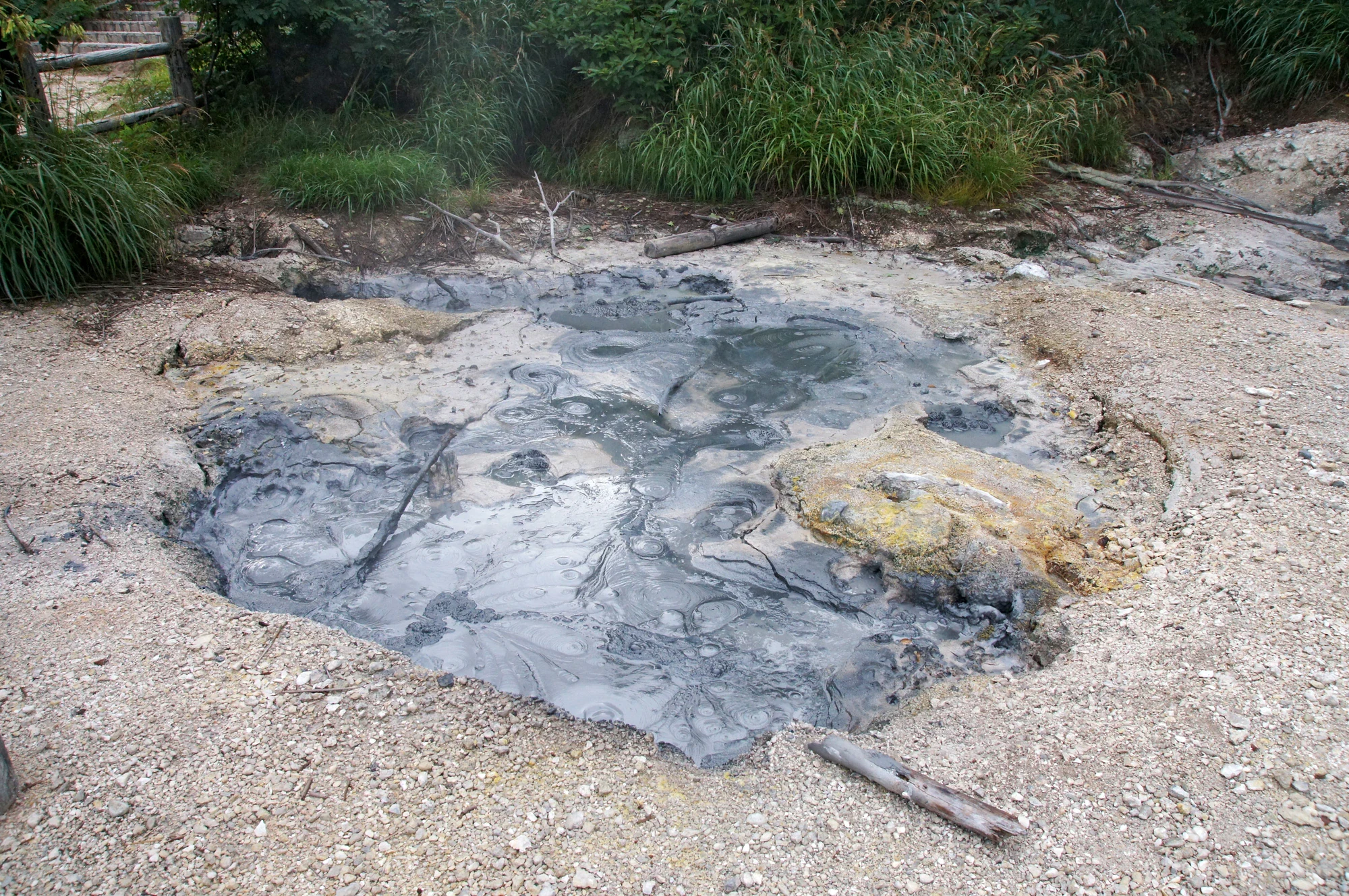
Bubbling mud at Bokke beside Lake Akan, photographed in September 2012. View this geothermal feature from outside the protective fence.
Lake Akan Kushiro Hokkaido Japan14s3.jpg — 663highland, CC BY 2.5 (https://creativecommons.org/licenses/by/2.5/). Source: https://commons.wikimedia.org/wiki/File:Lake_Akan_Kushiro_Hokkaido_Japan14s3.jpg. Resized and recompressed as WebP; no crop or retouching. · Creative Commons
Follow the signed direct approach from the visitor center to the fenced mud-pool viewing area, then return the same way. This is the simplest choice when energy or time is limited.
Use the signed Bokke trail linking the visitor center, geothermal pools and Marimo-no-Sato Pier. Ask for the current map before setting off and choose where to finish, leaving time to return to your accommodation or bus.
Choose the narrower ridge-side Forest Trail behind the center if you want more woodland and are comfortable with steps. It connects to the Bokke route; confirm the link you intend to use before leaving the center.
Spend 30–45 minutes with the marimo aquarium, maps and current field notices.
Take the direct Bokke visit or allow 60–90 minutes for a slower version of the main trail.
Return for a warm drink or a break in the center’s permitted eating area, leaving time for your bus.
Check cruise departures first, then explore the center and whichever Bokke section fits comfortably.
Take the approximately 85-minute lake cruise if operating, allowing additional boarding time.
Have lunch in town, then choose crafts or a pre-arranged cultural visit instead of rushing to another distant lake.
At the aquarium, compare the fuzzy surface with an ordinary leafy plant. Ask what makes a ball an aggregation of algae rather than one rooted plant. Sketch its shape without touching the display.
From the path, compare evergreen needles, broad leaves and the rough surface of a fallen trunk. Use the tree panels to name what you see. Look for feeding marks, but leave bark, wood and fungi where they are.
Pause at the permitted viewing edge and listen for bubbles breaking through the mud. Compare the open, warm patch with the surrounding forest. Keep all hands and feet outside the fenced area.
The operator’s circuit lasts about 85 minutes, including roughly 15 minutes at the marimo exhibition. Allow extra time for tickets and boarding. Fewer sailings run later in autumn; confirm today’s operation before arranging your walk around a departure.
Choose a community-led forest, lake or craft experience, or check the theater program at Akanko Ainu Kotan. Look for the maker’s name when browsing crafts, and remember that this is also a residential community.
Spend longer with marimo, park maps and short videos, then use the forest-facing rest space.
Check Akanko Ainu Theater’s current program and availability before crossing town.
Look for movement on trunks and branches. In winter its coat can be gray-brown rather than the bright red suggested by the English name.
Scan the woodland from the path and give any deer plenty of space. Do not offer food or follow it into the trees.
Look at dead trunks from the path for feeding marks, and pause if you hear tapping. Keep clear of any hole a bird is using.
Listen for tapping and search trunks with binoculars from the trail. A sound or feeding mark alone need not identify the bird to species.
Use binoculars to watch small birds working the tree trunks. Let the view come to you rather than leaving the path for a closer photograph.
A marimo sphere is an aggregation of fine algal filaments. The alga can also live attached to rock or in looser forms.
Geothermal warmth keeps parts of Bokke free of deep snow. Rangers have even documented cricket activity there in winter.
Rangers have recorded white-backed woodpeckers working softened dead timber along the Bokke trail. A fallen trunk can be a feeding place rather than a piece of forest to tidy away.
The center’s December 2024 change from Eco-museum Center to Visitor Center preserved its role as a base for nature learning and walks.
Look for white Asian skunk cabbage in the wetland from late April to mid-May. Ask about remaining snow, wet boards and the best open section that day.
Use the woodland for a slow nature walk, carrying rain layers and water. Keep clothing adaptable: Lake Akan can have cool weather and hot days.
Compare evergreen trees with changing broadleaf foliage. Fruit and fungi add detail to the walk; leave them in place. Watch the shortened cruise schedule and colder mornings.
Ask the center about snowshoes, route conditions and the permitted shore walk. The path is not snow-cleared. View the lake from land rather than following tracks onto ice.
Aquarium, nature interpretation, maps and field notices, videos, and an eating/rest area facing the forest.
Use the public parking lot for an ordinary car visit; the center’s own spaces are for disabled visitors. Check current charges on arrival.
Use the Akan Line or the appropriate airport service to Akanko Bus Center. The operator lists about two hours from Kushiro Station and 75–80 minutes from Kushiro Airport on its main services. Services are limited, and some July–October trips disappear in winter; choose the return before departure.
Navigate to Akankohan Visitor Center’s official address, then use the designated public parking. Do not assume a road on a map permits a complete drive or walk around the lake; the northern shore includes restricted private land.
The center offers wheelchair loans and disabled parking. Ask ahead about entrance and toilet access, hearing support and the wheelchair or other equipment you need.
The direct approach is described as flat and paved, about ten minutes on foot. Ask staff about the current surface and snow conditions, and which sections of the longer woodland circuit suit your wheelchair.
This narrower woodland route includes a wooden-step connection. Choose the direct Bokke approach if you need to avoid steps.
Each card links to a full Explore page with photos, traits, and fun facts.
Start with the big picture, then zoom in to explore individual wildlife observations around this place.
Check the center’s bear notices and any trail barriers before setting out. Walk together, make your presence known in poor visibility, and never approach a bear or run from one.
Keep children outside the Bokke fences. The mud is dangerously hot; this is a viewing stop, not a place to touch the ground or test the water.
Use the visitor center for a close look at marimo. Do not collect plants or algae, feed wildlife or leave food scraps.
Bokke is a walking trail
bicycles and pet dogs are prohibited; service dogs are excepted by the operator.
As checked on 16 October 2026, center hours are 09:00–17:00, with Tuesday closures, or the following day when Tuesday is a public holiday; 29 December–3 January is also closed. Admission is free.
Ordinary visitor parking is at Akankohan Shore No. 1 Parking Lot, not the center’s disabled parking spaces. Check the posted parking charge.
Plan around your return bus before starting. Some Akan Bus journeys run only July–October; a late arrival can leave little time before the center closes.
For any mountain extension, check current volcanic restrictions. JMA’s 16 October 2026 bulletin kept Mount Meakan at alert level 2, with danger around Ponmachineshiri crater. Summit hiking is outside this lakeside plan.
Recent snaps will appear here as new observations are added.

Maryland, US
You might spot White-Tailed Deer and Eastern Gray Squirrel.
View guide →

District of Columbia, US
You might spot Eastern Gray Squirrel, Duck, and House Sparrow.
View guide →

Illinois, US
You might spot American Robin, Canada Goose, and House Sparrow.
View guide →

Virginia, US
You might spot Spotted Lanternfly and Northern Cardinal.
View guide →
Take the discovery with you
Identify the wildlife you spot, learn as you go, and keep a collection of the adventure.








