Snappit logo
Snappit
Get App
Generic illustration, not a photograph of this venueIllustration
ParkChugoku, Japan

Daisen-Oki National Park

Daisen is a mountain you can enjoy without heading for its summit.

About

Daisen is a mountain you can enjoy without heading for its summit. Start in the Daisenji village area on its northern side, where the Daisen National Park Centre stands beside the bus stop. The nearby museum, woodland paths and temple approach make a satisfying half-day outing. When the cloud lifts, the mountain’s steep north face gives even a short visit a dramatic backdrop.

Begin at the Centre to choose a walk that fits the weather and your group. It is a useful place to rest, use the toilets and check local conditions. The Daisen Museum of Nature and History is a separate building nearby: its displays introduce the mountain’s geology, plants, animals and human history. Visiting before the walk gives you things to look for; saving it for afterwards provides an easy indoor finish.

For a manageable nature outing, follow the official Daisen Forest Walking Trail course from the Centre, past Daisen Sando Market and across Daisenji Bridge to the Shimoyama Campground area. The complete walk is about 2.5 km and is listed at 90 minutes. Its woodland centrepiece is much shorter: roughly 380 m of boardwalk, partly raised above the forest floor, through beech and mizunara oak. Allow around two hours for the walk if you want time to read signs and watch birds.

The pleasure here is close-up rather than high-altitude. Compare smooth beech bark with the more rugged oak trunks, look upward into the branching canopy, and pause where you can stand safely without blocking the path. There are Japanese and English interpretation panels along the boardwalk. Fresh leaves, summer shade and autumn colour each change the mood of the same small woodland. The boardwalk has raised cross battens, however, and the village connections involve slopes: a short distance does not make it a step-free outing.

If you still have energy, explore the Daisenji temple approach as a separate extension. Farther uphill, a long natural-stone path leads towards Ogamiyama-jinja Okumiya. Old trees and the stone paving give this walk its atmosphere, but the uneven surface and steps take more care, especially when wet. Keep it optional rather than rushing to fit forest, shrine and museum between buses.

Daisen-Oki is a widely spread national park. Its other landscapes include Hiruzen, Mount Sanbe, the Shimane Peninsula and the Oki Islands. This visit stays around Daisen’s foothill village in Tottori; the Oki Islands need their own travel plan. A summit ascent is also a separate mountain day, with different equipment, fitness and weather decisions. Turn your visit into a safari! Use the Snappit app to scan and log wildlife sightings here.

Daisen National Park was designated on 1 February 1936. Expansion on 10 April 1963 brought additional areas, including Oki, into the park and gave it its present name. The mountain’s religious history is much older: Daisenji traces its traditional foundation to 718. Pilgrimage and the historic cattle and horse market helped shape the village you walk through today.


What to do here

Check conditions at the National Park Centre, walk the 2.5 km forest walk if suitable, and visit the nearby museum. Add the temple approach only if your legs, daylight and return bus leave time.

Seasonal info

Snow and ice can turn these foothill paths into a winter outing requiring different preparation. Rain makes timber and stone slippery. In autumn, bring a warm layer, check bear notices and finish woodland walking well before dusk.

Accessibility

The Centre is the best starting point for advice on a low-exertion visit. A 2019 access survey recorded an elevator and adapted toilets there, but found the forest boardwalk’s raised cross battens difficult for a wheelchair. Ask staff about current access, toilets and surfaces before choosing a route. The shrine approach has uneven stone paving and steps.

Don't miss

1

A short woodland boardwalk through beech and mizunara oak

2

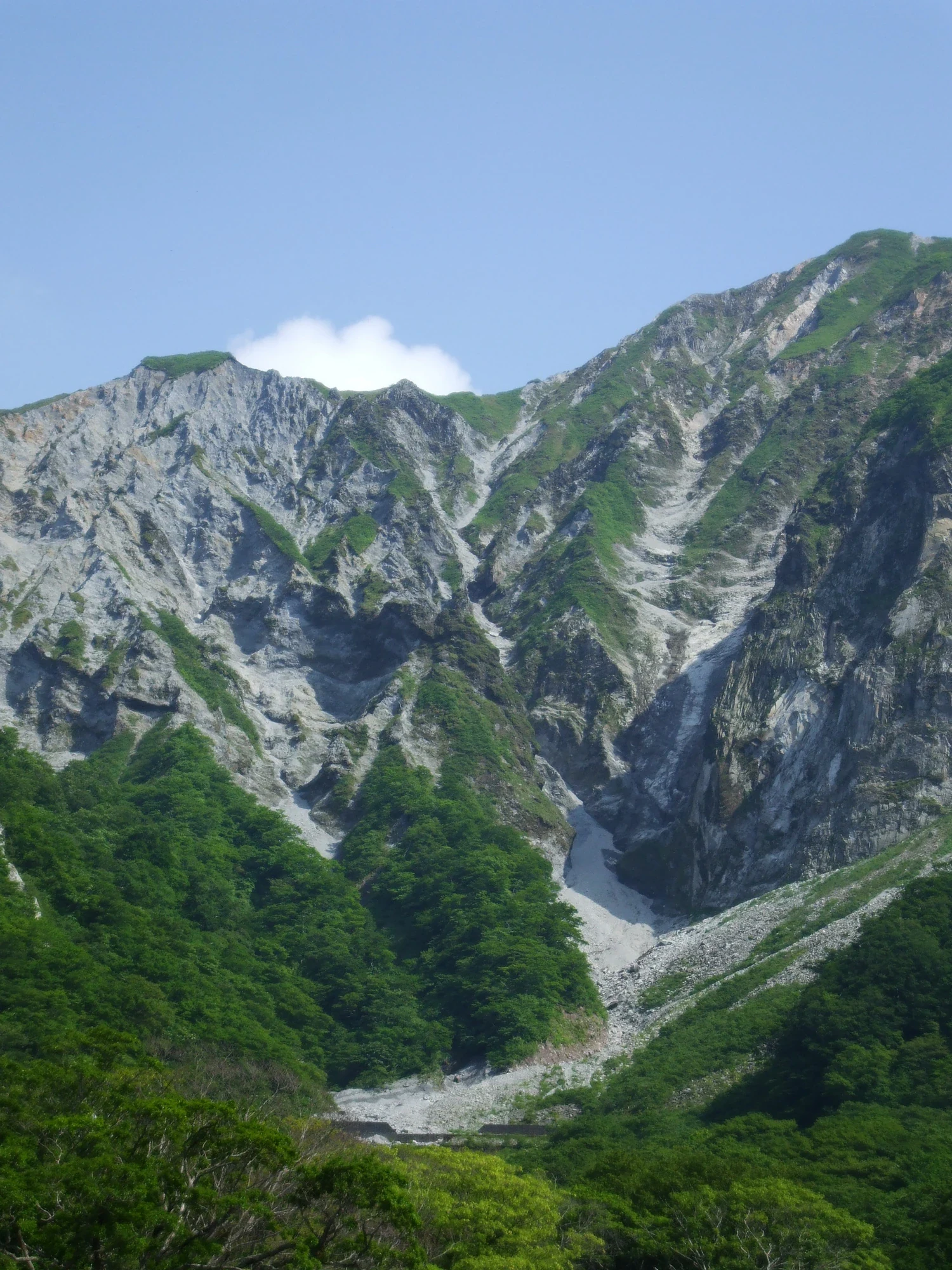
Daisen’s north face seen from the foothill village when skies clear

3

Geology and local history at the free Daisen Museum of Nature and History

4

A separate, unhurried look at Daisenji’s pilgrimage landscape

Grey gullies cut through the steep green and rocky north wall of Mount Daisen, with woodland below and blue sky above.

The steep north wall of Mount Daisen above green foothill woodland, photographed on 12 June 2007.

Daisen2.JPG — Mass Ave 975, CC BY-SA 3.0 (https://creativecommons.org/licenses/by-sa/3.0/). Source: https://commons.wikimedia.org/wiki/File:Daisen2.JPG. Resized and recompressed as WebP; no crop or retouching. · Creative Commons

Walks and routes

Daisen Forest Walking Trail course

From the National Park Centre, follow the official course through the village past Daisen Sando Market and across Daisenji Bridge to Shimoyama Campground. Explore the forest boardwalk, then return through Shimoyama and retrace the village approach. The map gives about 2.5 km and 90 minutes for the complete walk; allow two hours with stops. Pick up the map and have staff point out the current connections before leaving.

Expect village slopes and a timber boardwalk with raised anti-slip cross battens. Wheelchair users should discuss alternatives with Centre staff; a 2019 trial found the battens difficult to cross. Take particular care after rain.

Daisen Forest Walking Trail course

A relaxed half-day

Start at the Centre and check the walking conditions. Spend around two hours on the forest walk, including pauses. Back in the village, choose a food stop and a short museum visit to suit your return bus. Save the longer shrine approach for another visit if time is tight.

Allow 3–4 hours, plus travel

A shorter visit with less walking

Make the Centre and museum your main stops, with a short look towards the north face from the village if weather and access suit you. Ask staff about the easiest connection between buildings and the toilets you need. There is no need to complete the forest walk to enjoy the setting.

Allow 1–2 hours, plus travel

Things to try

Read the forest at arm’s length

Use the boardwalk’s interpretation panels to connect tree bark, leaf shapes and birdsong. Pause for a minute and notice sounds from different directions before continuing. Keep enough space for other walkers to pass.

Give the mountain a story

At the museum, start with the mountain model and nature displays, then look at the exhibits on pilgrimage and the village’s market history. The viewing hall is a useful place to compare the landscape outside with what you have learned.

Follow the pilgrimage approach

Walk uphill towards Daisenji for a change from the woodland. If you continue towards Ogamiyama-jinja Okumiya, the natural-stone approach from the torii near the temple runs for roughly 700 m before the final steps. Allow extra time for the return and turn back if the stones feel slippery. Respect worshippers and follow any photography notices.

Pause on the village approach

Daisen Sando Market offers local produce and souvenirs, with a bakery and café. It makes a convenient food stop if open; carry water and a snack so your walk does not depend on a shop’s schedule.

Join a seasonal nature walk

The museum runs guided nature walks on selected dates. Its autumn 2026 programme lists Sundays from 4 to 25 October, starting at 09:00 and lasting about three hours. Individual visitors register at the museum by 08:50; groups should contact it ahead. These are separate walking courses, so check the route, language support and weather decision before joining.

Swap the walk for the museum

Explore the mountain’s natural history and cultural displays, then rest at the Centre. A shorter day is preferable to slippery timber and stone. Both buildings can be useful in rain, although the museum has its own opening schedule.

Wait for a break without committing uphill

Use the Centre to review the forecast and choose a brief village outing only if conditions improve. Keep the shrine’s long stone approach and the forest walk for better footing; do not walk past a closure to complete your plan.

Wildlife and habitats

Beech

Look for the smoother trunks in the woodland around the boardwalk. Compare their surface with nearby oaks, then follow a trunk upward to see how its branches spread through the canopy. You can make this a simple family challenge without collecting leaves or stripping bark.

Oak

Mizunara oak grows alongside beech here. Its more rugged bark offers an easy contrast. In autumn, inspect fallen leaves and acorns where they lie, then leave them for the woodland’s animals and natural renewal.

Grey Wagtail

Watch for a slender bird with a grey back, yellow underside and a long, frequently bobbing tail around open or waterside edges. Rangers have photographed this species in the Bakuroza area. Look from a safe path or bridge rather than climbing down to water.

Eurasian Nuthatch

In Daisen’s broadleaf woodland, scan tree trunks as well as the canopy. A small, short-tailed bird moving head-first down a trunk is a useful nuthatch clue. Pause at a safe widening in the path and use binoculars rather than following a bird into the undergrowth.

The trees are the easiest starting point for nature watching. Birds move between woodland and open edges, so take binoculars and enjoy whatever appears. Watch from the path, give wildlife space and avoid calling birds in or approaching nests.

Stories and discoveries

A park with several very different landscapes

The national park’s 1963 expansion joined mountain and island landscapes under the Daisen-Oki name. Seeing Daisen’s forest gives you one part of a park that also reaches to the Oki Islands and the Shimane coast.

A building rooted in the mountain

The National Park Centre uses local red pine and Daisen volcanic stone. Solar panels and rainwater reuse are part of its design, so even the starting point tells a small story about the place.

A forest walk above the forest floor

Parts of the 380 m woodland boardwalk are elevated. Rather than hurrying through, use the changing height to look closely at trunks and the shaded ground below.

The village was a meeting place

Daisen’s religious importance drew pilgrims, while the cattle and horse market brought people and trade to the mountain’s foot. The museum connects that history with the Bakuroza area around today’s visitor facilities.

When to visit

Spring and early summer

Fresh leaves make the beech and oak canopy a good reason to come. Ask about lingering snow and wet surfaces early in the season; green foliage in the village does not settle conditions farther uphill.

Summer

Use the woodland for a slower, shaded walk and bring drinking water and rainwear. Check the weather before leaving the Centre and move indoors if conditions deteriorate.

Autumn

Late October into early November is a useful planning window for colour around Daisenji, but altitude and the year’s weather shift the timing. Check the local foliage reports, bring warm clothing and allow for crowded parking. Bear precautions matter during this feeding season.

Winter

Treat snow and ice as a change of activity, not just scenery. Ask the Centre about conditions, seasonal toilets and suitable local options. An indoor visit is the simpler choice unless you have made a separate winter-walking plan.

Getting there and practical advice

Daisen National Park Centre

Beside the Daisenji bus stop, at 40-33 Daisen. Published hours are 08:00–18:30 daily; entry is free. Facilities include information and rest areas, toilets, Wi-Fi and nursing/changing space, with paid lockers and showers. Bring a towel if using a shower. Telephone: 0859-52-2165.

Daisen Museum of Nature and History

A separate nearby building at 43 Daisen, with free entry. Open 09:00–17:00, extended to 18:30 from 21 July to 20 August. It closes over the year-end/New Year period and sometimes for maintenance; check the dated notice before travelling. Telephone: 0859-52-2327.

Daisen Town Tourist Information Center

For local visitor enquiries, the tourism office publishes 08:30–16:00 hours from 1 June 2026. These are different from the National Park Centre’s hours. Telephone: 0859-52-2502.

Toilets and a place to pause

Use the village facilities before entering the woods. Ask which public toilets are available on your route, particularly in winter. The Centre’s indoor rest spaces are a practical fallback when outdoor conditions deteriorate.

By bus from Yonago

Take a Nihon Kotsu Daisen Line service from JR Yonago Station that reaches Daisenji, roughly 50–55 minutes away. Some buses on the corridor finish earlier, and departures can be far apart. Check the operator’s current outbound and return tables for your date before choosing your walk; follow current signs for the boarding stand. Ask the operator ahead about wheelchair boarding.

By car and parking

The tourism office gives roughly 40 minutes from the Yonago area by car, depending on your starting point, traffic and weather. Use signed visitor parking around Bakuroza and follow staff directions. A museum notice reports partial parking restrictions from 15 to 26 October 2026, with busy weekends around events on 18 and 25 October. Check the latest allocation before arrival and leave extra time.

Start with the indoor facilities

A firsthand 2019 access survey recorded an elevator and adapted toilets at the Centre. Call before travelling to confirm the facilities you need and ask about the easiest connection to the museum. Staff can help you choose a visit around your mobility and energy.

Check the boardwalk surface, not just its length

Repeated raised cross battens made the boardwalk difficult for a wheelchair user in the 2019 survey. Approaches and village roads add their own slopes. Ask for current advice about your chair, pushchair or walking aid rather than relying on the boardwalk’s short length.

Keep the shrine optional

The Ogamiyama-jinja Okumiya approach has uneven natural-stone paving followed by steps. It takes more effort and steadier footing than an indoor visit; shorten the walk if footing, fatigue or wet weather becomes a problem.

Weather and footing

Carry a layer and rainwear even for the foothill walk. Wet timber, fallen leaves and uneven stone can be slippery. Check the day’s forecast and trail advice, turn back when conditions deteriorate, and leave time to return in daylight.

Bear precautions

Check local bear notices before walking. Tottori advises avoiding solitary outings near woodland at dawn or dusk, making your presence known with a bell or similar sound, and keeping food and rubbish secure. If you see a bear, stay calm and back away slowly; do not run or shout. At very close range, protect your head and face. Report sightings or signs to the local authorities or police.

Protect the woodland

Stay on designated paths, carry rubbish out and leave natural objects in place. Give animals space and respect barriers, worshippers and other visitors. A good photograph is not a reason to enter closed or fragile ground.

Sources and useful links

Wildlife you might spot

4

Each card links to a full Explore page with photos, traits, and fun facts.

Snap map for this place

Start with the big picture, then zoom in to explore individual wildlife observations around this place.

Loading map…

Good to know before you go

Choose your outward and return buses before setting off; Daisenji services are infrequent.

Ask Centre staff about the forest trail, weather and bear notices that morning.

Wear grippy walking shoes and carry rainwear, a warm layer and drinking water.

The full forest walk is about 2.5 km; the 380 m boardwalk is only one part of it.

Keep food packed away, take rubbish home and follow Tottori’s advice to make your presence known in bear habitat.

Stay on paths and leave plants, bark, stones and wildlife undisturbed.

Treat the shrine’s cobbles and steps as an optional extra, especially in rain.

For visits in mid-to-late October 2026, check the current Bakuroza parking restrictions before driving.

Frequently asked questions

No. The recommended outing stays around the Centre, Daisenji village and Shimoyama woodland. Do not turn it into a summit climb on impulse; plan that separately.
They are separate nearby buildings. Use the Centre for orientation and rest, and the museum for exhibits on Daisen’s nature and history.
Yes. Nihon Kotsu runs buses from JR Yonago Station to Daisenji, taking roughly 50–55 minutes. Check both directions for your date and choose a service that actually reaches Daisenji.
Do not assume so. Raised anti-slip battens, the approaches and village slopes can be difficult. Ask the Centre about your particular chair or pushchair and consider an indoor-focused visit instead.
Entry to the National Park Centre and the Daisen Museum of Nature and History is free. Transport, food, paid Centre services and any separately visited attractions are extra.
No. They are a separate island destination within the same national park. Give them their own transport and accommodation plan.

Recent snaps at this place

Recent snaps will appear here as new observations are added.

View all ›

Take the discovery with you

Exploring Daisen-Oki National Park?

Identify the wildlife you spot, learn as you go, and keep a collection of the adventure.

  1. 1Spot it
  2. 2Snap it
  3. 3Keep the discovery