





Grey Wagtail
Motacilla cinerea
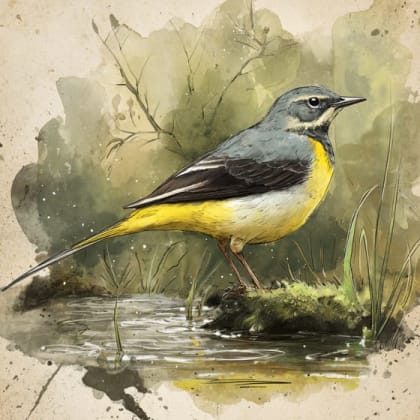
The Grey Wagtail is a cheerful little bird with a long tail that wags up and down. You can often see it near streams and rivers, hopping around looking for tasty insects to eat.
Habitat: Near water, like rivers and streams
The Grey Wagtail has a sleek grey back and a bright yellow underside, especially on its vent. It sports a long, constantly wagging black tail with white outer feathers and a distinctive white stripe above its eye.
Category
BirdsRarity
Common
Danger
1/5 · Very low
Snaps
6
Its 'grey' name hides a stunning yellow belly!
Males have a black chin patch during breeding season!
Their chirpy song sounds like 'tsi-tsi' or 'chip-chip.'
These birds build cup-shaped nests near fast-flowing water.
Grey Wagtail can expertly hunt flying insects over fast-moving water because of their agile flight and quick movements.
Grey Wagtail has a constantly wagging tail that helps them flush out hidden insects or signal to other birds.
Grey Wagtail can catch tiny aquatic insects by darting along riverbanks, thanks to its keen eyesight and quick reflexes.
They mainly eat insects found near water, sometimes catching them mid-air!
Wildlife encompasses all undomesticated animal and plant life existing in their natural habitats.
Feathered describes animals, primarily birds, possessing a covering of feathers.
Social animals live in organized groups, cooperating for survival benefits such as foraging, defense, and raising offspring.
Singing animals produce complex vocalizations, often for purposes of attracting mates, defending territory, or communicating within their species.

This trait identifies organisms whose diet primarily consists of insects and other small invertebrates.

Diurnal animals are primarily active during daylight hours, typically resting or sleeping at night.

Freshwater habitats include non-saline aquatic environments such as rivers, lakes, ponds, and wetlands, vital for numerous species.
Danger
1/5 · Very low
Always watch birds from a distance and don't try to touch them. They are wild animals and need their space.
The easiest way to identify Grey Wagtail is to use the Snappit nature identifier app.
18-19 cm
25-27 cm
0.014-0.022 kg
2-5 years
60 km/h
They mainly eat insects found near water, sometimes catching them mid-air!
Near water, like rivers and streams
Zoom in to split clusters and explore where this object has been snapped.
.jpg)
Municipal District of Cobh, IE
You might spot Ring-Tailed Lemur, Giraffes, and Cheetahs.
View guide →

Hainaut, BE
You might spot Giant Panda, Polar Bear, and Tiger.
View guide →

Canary Islands, ES
You might spot Orca, King Penguin, and Macaroni Penguin.
View guide →
Take the discovery with you
Snap it with Snappit to identify it, learn what makes it special, and add the discovery to your collection.





.jpg&width=800)









