Snappit logo
Snappit
Get App
Generic illustration, not a photograph of this venueIllustration
ParkNorthwest Spain, Spain

Gijón Atlantic Botanical Garden

The pleasure of Gijón’s botanical garden is how quickly the subject changes.

About

The pleasure of Gijón’s botanical garden is how quickly the subject changes. In the Factoría Vegetal, you can think about the plants behind everyday food and materials. In the Jardín de la Isla, the questions become more visual: how does a reflection change a view, and what happens when clipped planting sits beside a large tree? Give yourself time to stop rather than treating every collection as a box to tick.

The four living-collection areas are Entorno Cantábrico, Factoría Vegetal, Jardín de la Isla and Itinerario Atlántico. Some planting recreates habitats; other sections are cultivated displays. The garden also incorporates surviving native woodland, including the Peñafrancia alder wood and its part of the Carbayera del Tragamón. That distinction is worth noticing: a labelled collection and an old woodland tell different stories.

For a first visit, pick two interests. Pair useful plants with the historic garden, or make the woodland your main outing. Families can leave room for El Bosque del Cuélebre or the laurel maze, if open. You do not need to see every plant to have a satisfying afternoon. Take the ultimate field guide with you: use the Snappit app to identify birds, plants, and animals on your trip.

The botanical garden opened in April 2003. Its landscape incorporates an older story: Florencio Valdés developed the historic La Isla garden in the nineteenth century, with water features and ornamental trees. The botanical-garden portion is distinct from the adjoining private property. The Tragamón oaks also reflect human history: this is old woodland shaped by traditional use, rather than an untouched primeval forest.

What to do here

Compare the cultivated displays with the woodland, read a few plant labels closely, and walk a stretch of the Paseo Florencio Valdés beneath its plane trees. Choose a museum stop in the Quintana de Rionda if it is open, or book a guided visit to put the collections in context.

Seasonal info

A leafy summer visit feels different from a winter one, when branches and evergreen planting become more noticeable. Bring a rain layer in any season. After rain, slow down on damp paths and timber surfaces; in strong wind or severe weather, check the garden’s notices before travelling.

Accessibility

Ask for the reduced-mobility route map and agree a suitable route at the entrance. The published map grades paths by difficulty and recommends a companion on some sections. Confirm the woodland route, exhibition access and any lift you need; a general accessibility label is not a promise that every path will suit you.

Don't miss

1

The Factoría Vegetal, where plants connect with food, textiles and daily life

2

The water, old trees and ornamental planting of the Jardín de la Isla

3

The Peñafrancia alder woodland and the garden’s part of the Carbayera del Tragamón

4

A slow walk along the plane-tree-lined Paseo Florencio Valdés

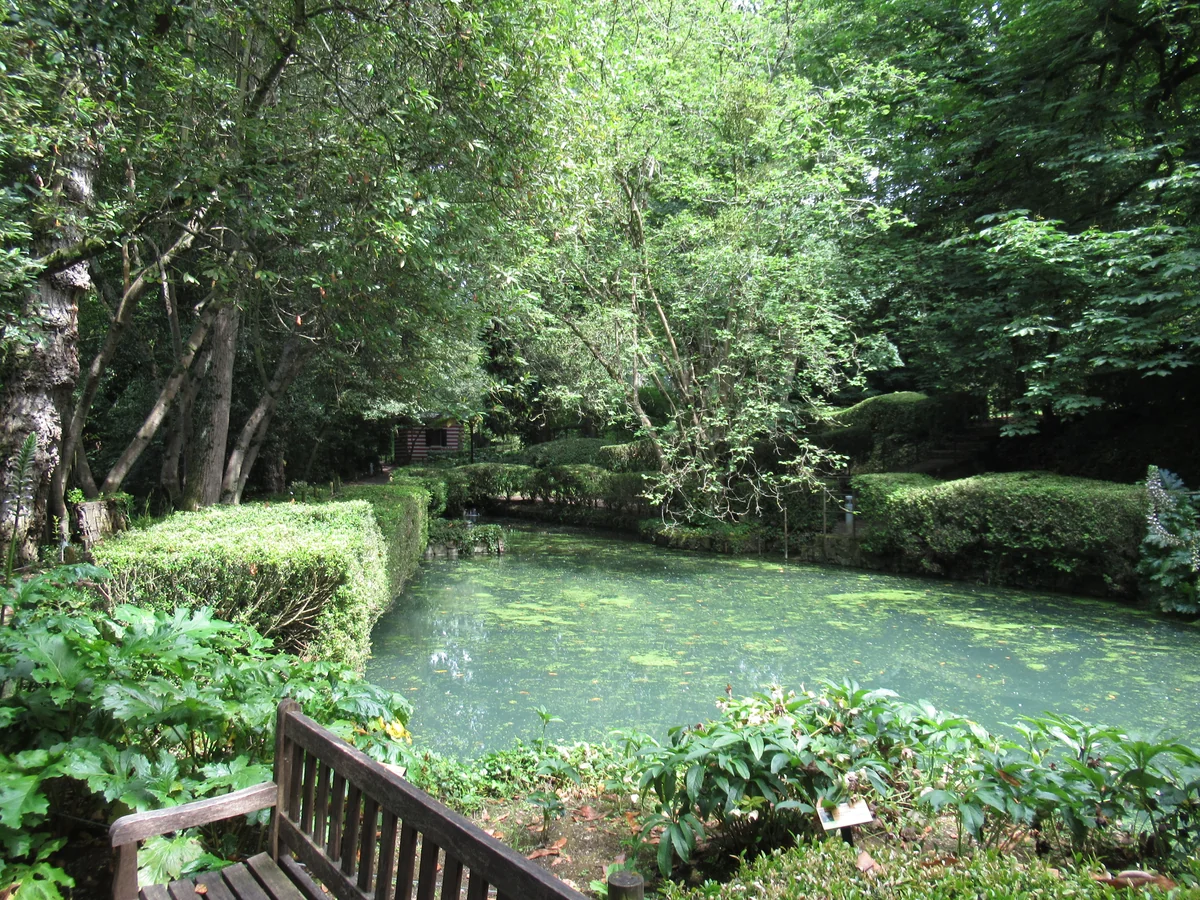
A pond reflects tall trees beside clipped hedges and flowering planting, with a wooden bench in the foreground.

A shaded pond and garden planting at Gijón’s Atlantic Botanical Garden, photographed in June 2022.

Jardín botánico atlántico de Gijón 02.jpg — Superchilum / Wikimedia Commons / CC BY-SA 4.0 · Creative Commons

Walks and routes

A short visit: useful plants and La Isla

Allow 75–90 minutes. Choose Factoría Vegetal and Jardín de la Isla from the entrance map. Give yourself time for one useful-plant display, then a slow look at the water and ornamental planting. The named Paseo de las Hespérides and Paseo Florencio Valdés help you orient yourself on the map; the latter is a particularly good place to compare the repeated shapes of plane trees. Follow the open signed links rather than trying to complete every side path.

Ask staff to mark the easiest links between your chosen areas. Check exhibition thresholds and upper-floor access separately.


A short visit: useful plants and La Isla

Make the woodland the main event

Allow 90–120 minutes, including stops. Choose the Itinerario Atlántico and follow the signs for the European temperate woodland. Spend time beside the Peñafrancia alder wood and in the garden’s part of Tragamón, using the open paths. Pause to compare the river-side woodland with the broad-crowned old oaks. Keep the return to the main entrance in your time budget; this is a flexible visit, not a route into the surrounding countryside.

Ask which woodland paths suit your mobility and the day’s ground conditions. Shorten the visit if wet surfaces or slopes make the return uncomfortable.

Make the woodland the main event

Let a guide connect the collections

The operator gives an approximate duration of two hours. Book the general visit for an introduction, or ask for a thematic visit such as La ruta de los Bosques Naturales, La belleza del Jardín de la Isla or Descubriendo la Factoría Vegetal. Tell the ticket office what interests you and any access needs when reserving. The individual guided service is included in ordinary admission, subject to availability; organised groups have separate arrangements.

Discuss the planned route in advance rather than assuming every themed tour uses the same accessible paths.

Let a guide connect the collections

Things to try

Read one label, then really look

Choose a labelled plant and find its scientific name and place of origin. Compare its leaf shape with a neighbour. A cultivated plant from another continent is not evidence that it grows wild in Asturias.

Build a plant-based shopping list

In the Factoría Vegetal, find one plant connected with food and another with fabric, dye or another everyday use. Let children explain the connection in their own words. Keep this a looking game: do not taste or pick anything.

A family pause

Leave some energy for El Bosque del Cuélebre or the laurel maze. Check that the area is open, agree where to meet, and keep younger children with an adult. A short, curious visit usually works better than rushing through all four areas.

Keep a wet-weather visit short

If the garden is open and conditions are mild, choose a compact collection visit with an available exhibition stop. Most of the experience is outdoors. In strong wind or heavy rain, change the plan rather than relying on museum rooms to make a woodland walk safe.

Wildlife and habitats

Pedunculate oak

In the garden’s Tragamón woodland, compare an old oak’s branching shape with younger trees nearby. These are native oaks in a landscape shaped by long use. Keep to open paths and leave acorns and fallen wood in place.

Black alder

The Peñafrancia alder wood offers a useful comparison with the oaks: a native woodland tied closely to wet ground. Look from the path at the vegetation beside the water, and use labels or a guide to confirm an individual tree.

Birds and other wildlife may use the garden, but encounters depend on the day. Watch quietly from the paths, do not feed or pursue animals, and leave dead wood and leaf litter undisturbed. These tree highlights concern documented woodland plants; ornamental collections elsewhere are cultivated.

Stories and discoveries

An old landscape inside a modern institution

The garden opened in 2003, but the La Isla garden and old woodland were already here. Look for the difference between deliberate ornamental design and the structure of surviving woodland.

Useful does not mean edible

The Factoría Vegetal also interprets medicinal, ceremonial and toxic plants. Plant labels are an invitation to learn, not instructions for home remedies or foraging.

When to visit

Cooler months

Ask about the camellias in La Isla and allow time to look at evergreen leaves and branch shapes. Flowering depends on weather and cultivar. A short dry-weather visit can be more rewarding than waiting for a perfect all-day forecast.

Autumn

Look for the contrast between fruit displays, changing leaves and evergreen planting. Check the event calendar if you want a workshop; do not assume a seasonal display or activity happens on every ordinary opening day.

Getting there and practical advice

Admission and ordinary hours

Checked 16 October 2026: ordinary adult admission is €2.90; the reduced rate is €1.80 for ages 12–26, over-65s and eligible disabled visitors, with evidence of eligibility. Individual admission is free through age 11. Listed hours are 10:00–18:00 in January, February and October–December; 10:00–19:00 in March; 10:00–20:00 in April and September; and 10:00–21:00 in May–August. Normally open Tuesday–Sunday, plus Mondays in July and August. Check holiday exceptions and last admission before setting out.

Toilets, access equipment and breaks

The published accessibility assessment identifies an adapted toilet, reserved parking, an adapted counter and manual wheelchairs. Its internal update is dated July 2021: confirm the toilet and any wheelchair loan you need before visiting. Use designated picnic spots; check directly whether refreshments are available that day.

Exhibitions and belongings

Quintana de Rionda offers a change of pace from outdoor looking. Ask which exhibitions are open. The guided-visit information says there are no lockers or dedicated storage for visitors’ belongings, so carry a light bag.

Special activities

The autumn 2026 calendar includes workshops and the separately ticketed Samaín programme. Check the exact activity’s date, age range, price and booking conditions; ordinary garden admission does not automatically include it.

Planning a photo session

If you are arranging portraits, a commercial shoot or a video session, contact the garden first about permission and any space-use charge. Its published tariffs include organised photography and filming; do not assume a normal admission ticket covers an arranged shoot.

Arrive at the main entrance

Use Avenida del Jardín Botánico 2230, Gijón, for the entrance. The municipal listing names bus lines 1, 2 and 18 among the services in the area; check the current route, stop and return time before travelling. Parking is shown on the garden’s map, but spaces are not guaranteed.

Choose a route, not a blanket rating

The reduced-mobility map distinguishes paths with no difficulty, mild difficulty and moderate difficulty, plus sections where a companion is recommended. It is a 2013 map, so use it to discuss your needs with staff, not as a current guarantee. Ask about surfaces, slopes, bridge approaches and any temporary diversions.

Check exhibition access separately

The map identifies a platform lift for the upstairs El Herbolario exhibition in La Casa. Confirm that the exhibition and lift are operating before making them part of your plan.

Sources and useful links

Wildlife you might spot

2

Each card links to a full Explore page with photos, traits, and fun facts.

Snap map for this place

Start with the big picture, then zoom in to explore individual wildlife observations around this place.

Loading map…

Good to know before you go

Get the current map at the entrance and choose a manageable visit. Ask about closed paths before committing to the woodland section.

For a guided visit, reserve ahead through the ticket office on +34 985 185 130 or [email protected]. The published individual-visit terms allow bookings no more than one week ahead.

Wear shoes with grip and bring water and a rain layer. Leave extra time to return to the exit before closing.

Keep children close beside ponds and streams. Photograph from a safe path position rather than edging towards the water.

Leave plants, fruits and seeds where they are. A food or medicinal-plant display is for learning, not tasting or collecting.

Use the designated picnic areas in the Itinerario Atlántico meadow or Carbayera del Tragamón, and take your litter to the recycling points.

Pets are not admitted; assistance dogs are excepted. Wheelchairs and pushchairs are permitted. The garden is smoke-free.

Check the event listing for your date

a workshop, evening visit or Samaín activity may need a separate booking and ticket.

Frequently asked questions

You can choose either emphasis. La Isla and the useful-plant collections offer cultivated garden interest; the Itinerario Atlántico includes native woodland. Follow the current map and choose the areas that suit your time and mobility.
The garden lists ordinary tickets for sale at its ticket office. Individual guided visits require advance registration and have limited places; special activities can have their own booking arrangements. Confirm before travelling if a particular visit is essential.
The standard individual guided-visit service is included, subject to availability and reservation. This does not mean every organised group visit, workshop or special event is included.
Yes, use the designated picnic areas. Bring what you need rather than relying on an unconfirmed café service.
There are useful access provisions, but choose your route with staff. Check the latest reduced-mobility map, the condition of outdoor paths and access to any upper-floor exhibition you want to enter.

Recent snaps at this place

Recent snaps will appear here as new observations are added.

View all ›

Take the discovery with you

Exploring Gijón Atlantic Botanical Garden?

Identify the wildlife you spot, learn as you go, and keep a collection of the adventure.

  1. 1Spot it
  2. 2Snap it
  3. 3Keep the discovery