Snappit logo
Snappit
Get App
Generic illustration, not a photograph of this venueIllustration
ParkKR

Hallim Park

Come for variety, and leave room to linger.

About

Come for variety, and leave room to linger. You can move from subtropical planting to miniature trees and ornamental stones, then trade open sky for a cave passage if it is open that day. The park’s nine themes also include a bird collection, a stone exhibition and a pond garden. This is a privately operated botanical and cultural attraction in Hallim-eup, rather than a wilderness hike. Nearby Hyeopjae Beach is a separate destination outside the ticketed property. Wondering what that bird or insect is? Find out on your visit using the Snappit nature app.

[Hallim Park began in 1971](https://www.visitjeju.net/kr/detail/view?contentsid=CONT_000000000500690) through the work of founder Song Bong-gyu. Its history is one of deliberate cultivation: the operator describes sowing palm seeds in sandy ground and gradually building the gardens around the area’s natural features. Later additions widened the visit beyond planting. The stone exhibition opened in 1996, and a former play area became the bird garden in 2000. That mixture of gardening, collecting and local cultural interpretation still shapes the experience.

What to do here

Use the entrance map to choose two or three priorities before following the marked visitor paths. Give the palms and subtropical planting an unhurried look, compare the trees and stones in the bonsai garden, and add Hyeopjae and Ssangyong caves only if staff confirm access. The folk village and pond garden make useful changes of pace. You do not need to treat all nine themes as a checklist.

Seasonal info

The [flower calendar](https: //www.hallimpark.com/flower) is a useful starting point, not a guarantee of peak bloom. Weather affects the display, and dated festival programmes may differ from the recurring monthly themes.

Accessibility

Plan the garden and cave portions separately. An alternate operator guide lists wheelchair and stroller loans, but that does not establish a continuous step-free route. Ask the office to confirm today’s suitable paths, cave alternatives, accessible toilets and equipment availability for your needs.

Don't miss

1

Palm Avenue, grown from seeds planted in the park’s early years

2

Hyeopjae and Ssangyong caves, with lava-rock and carbonate features

3

Bonsai and stone displays that reward a slower look

4

Flower gardens with different seasonal focal points

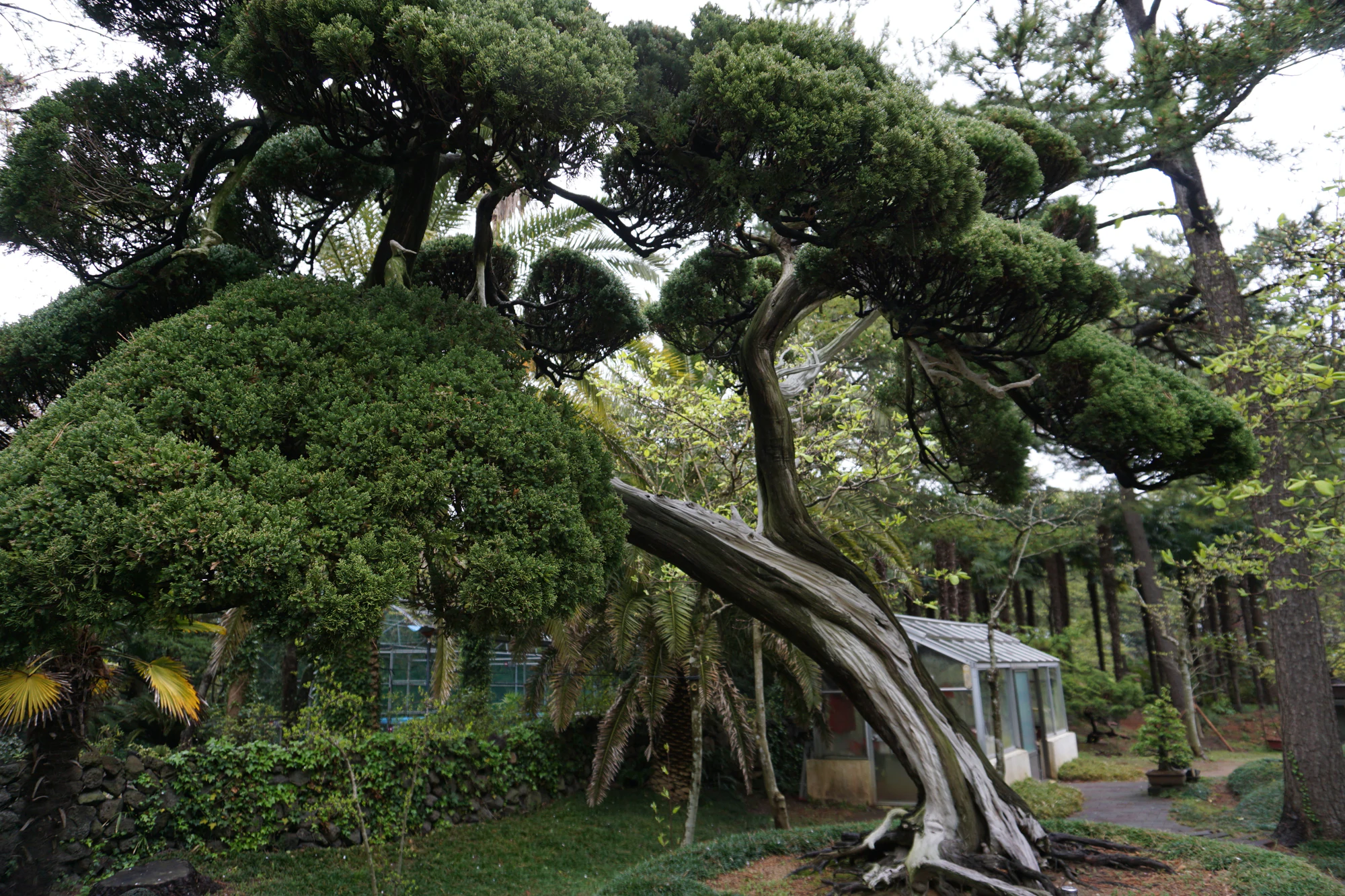
A twisting pale tree trunk and rounded dark-green canopy, with palms and a small glasshouse behind.

A shaped garden tree at Hallim Park, photographed on 10 April 2019. This historical view does not show current conditions.

“Hallim Park, Jeju” by Matt Kieffer, CC BY-SA 2.0. · Creative Commons 1 · Creative Commons 2

Walks and routes

A first visit: gardens with an optional cave stop

For a balanced visit, choose Palm Avenue and the subtropical planting, the bonsai-and-stone garden, and Hyeopjae–Ssangyong caves. Fit those priorities into the day’s marked route rather than trying to follow a rigid order from this guide. Allow around 90–150 minutes, with the upper end more comfortable for photographs. Ask at the entrance which cave passages are open and where to rejoin the garden route if you skip them. Use the current park map to connect the stops.


A first visit: gardens with an optional cave stop

A garden-led visit without caves

Give yourself about two hours to choose a few planted areas, the bonsai collection and either the pond garden or folk-village display. Put the current flower highlight near the start while your group has the most energy, then leave room for a seated break. Ask staff to connect your choices using the current visitor paths. Shorten it freely; a cave-free visit still has plenty of variety.

A garden-led visit without caves

A relaxed family morning

Arrive with two main stops in mind, collect the current map and check the cave option. Start with one planted area, then let the group choose between the caves and another above-ground display. Put a break before everyone is tired, and keep the final garden optional. Allow about two to three hours overall rather than promising children that the full park is a short walk.

Gardens first, coast afterward

Use the first part of the day for Hallim Park, then decide whether to add nearby Hyeopjae Beach. Having the ticketed attraction first makes it easier to respect its admission cutoff. Keep the beach visit outside your park time allowance, and check return transport before adding an unplanned long stop. This is a two-destination day plan, not an internal trail or a combined ticket.

Things to try

Palms, glasshouses and a quieter planted walk

Palm Avenue is one of the park’s defining scenes. Its palms and cacti were planted and tended, and the operator traces the palm planting to 1971. Pair it with the subtropical collection for the contrast between tall outdoor planting and plants grown under glass. For a change of scale, try the Wildflower Garden: the operator describes a quieter path with Jeju plants, flowers, stone figures and an ecological pond. Stay on the paths rather than stepping into beds for photographs.

Bonsai and ornamental stones

The Jeju Stone and Bonsai Garden brings trained trees together with ornamental natural stones. Give individual displays time: the relationship between a trunk, its branches and the stone beside it can be more interesting than a quick photograph of the whole collection. Use the plant labels for names and ages rather than guessing from the size of a tree. A small display can be worth as much attention as a towering palm.

A cave visit with conservation in mind

Hyeopjae and Ssangyong are lava caves with later carbonate deposits, a combination that helps explain their pale coatings and cave formations. Follow the open visitor passage and posted instructions, keep to the permitted route and avoid touching surfaces. Grippy footwear matters more than getting a photograph while moving. If you are uncomfortable with enclosed spaces, or need to avoid steps and uneven footing, ask about the bypass before starting. Cave access may change independently of garden opening.

Folk village, stone exhibition and pond garden

The Jaeam Folk Village presents an earlier Jeju way of life within the park, while the Jaeam Stone Exhibition gathers stones and fossils. These are cultural and collecting displays inside the same attraction. The pond garden adds water, planting and a large waterfall to the visit; its design uses the underlying lava-rock terrain. The bird garden is another optional stop, but its animals belong to a managed collection, not a record of Jeju’s wild birdlife. Observe enclosure rules and do not improvise feeding.

Light rain: choose sheltered stops; severe weather: reconsider

If conditions are mild and the park is operating normally, ask which glasshouses and exhibition spaces are open and build a shorter visit around them. The park still involves moving between areas outdoors. A cave is not a substitute for an official severe-weather shelter: follow any closure instruction and do not enter a closed passage. If wind or rain makes the route uncomfortable or unsafe, save the gardens for another day.

Wildlife and habitats

Daffodils: a planted winter highlight

Look for the narcissus garden when the winter display is in season. The operator highlights it in January, but flower condition depends on the year and your visit date. The cultivated collection belongs to the genus Narcissus; check individual labels for more precise names, and enjoy the display without picking flowers.

Bougainvillea: cultivated colour under glass

The operator places bougainvillea in the tropical bonsai garden and in the subtropical and pond-garden glasshouses. May is its calendar highlight. Bougainvillea is a genus with many cultivated forms, so use the plant labels to distinguish individual displays. Enjoy this maintained glasshouse collection as part of the park’s gardening story.

Stories and discoveries

Two very different kinds of shaping

The bonsai garden displays the work of cultivation, while the caves reveal geological processes. Looking at both during one visit makes the contrast memorable: trees deliberately trained over time, and rock passages with mineral features that visitors must leave untouched.

The heritage area is larger than your visit

The official Hallim lava-cave designation covers more than the park’s advertised cave walk. Its protected scope includes caves that are not open for ordinary tourism. Heritage status describes conservation responsibility; it is not a promise that every named feature is accessible.

When to visit

Winter and early spring

The recurring calendar highlights narcissus in January, plum blossom in February, cherry blossom in March and tulips in April. These are cultivated displays, with timing that can move between years. Check the current flowering report if one plant is the purpose of your journey, and keep a warmer layer handy for a slower outdoor visit.

Late spring and early summer

May’s themes include wildflowers and bougainvillea, followed by hydrangeas in June. Bougainvillea is associated with the tropical bonsai area and glasshouses; the hydrangea display offers a different garden focus. Choose the feature actually flowering that week rather than assuming a festival runs throughout its named month.

High summer

July and August focus on lotus and other aquatic plants around the pond garden. Plan a slower pace, carry water and use breaks rather than trying to stay outside continuously in uncomfortable heat. The caves can be an optional part of the day if open, but should not be treated as a shelter that is guaranteed to remain accessible in severe weather.

Autumn into winter

September’s red spider-lily display is associated with the Wildflower Garden and Gomsol Square. The recurring calendar then turns to cosmos and pink muhly in October, chrysanthemums in November and camellia displays in December. These themes help you choose a visit month; check current conditions and event dates before making a special trip for peak colour.

Getting there and practical advice

Admission and ticket-sales hours

Checked on 18 October 2026, the dedicated visitor page lists individual admission at ₩15,000 for adults aged 19+, ₩12,000 for seniors aged 65+, ₩10,000 for ages 13–18 and ₩9,000 for ages 3–12. Ticket sales start at 09:00, ending at 17:00 in February–May and September–October, 17:30 in June–August, and 16:30 in November–January. These are ticket-sales times, not closing times. The operator warns of seasonal shifts of around 30 minutes; other official pages conflict. Confirm before a late arrival at +82-64-796-0001.

Food and a rest stop

The operator lists Palm Tree Cafe, Dolharbang Restaurant, and the Ssangnyonggak and Gomsol rest areas. They give you options for a drink, snack or meal without trying to fit everything into a rushed circuit. Check what is serving when you arrive, especially if you have dietary requirements. The facilities page also advertises a paid Tropical Eco Tour bus, but its current route, boarding accessibility and schedule need confirmation; do not rely on it as a guaranteed way around the park.

By car or taxi

Use Hallim Park, 300 Hallim-ro, Hallim-eup, Jeju-si, as your destination. The operator lists free parking and an approximate 50-minute drive from Jeju Airport. Treat that as a rough planning figure: traffic, your exact starting point and the day’s conditions can change it. If using a taxi, check your return plan before you begin the visit, particularly when continuing to another west-coast stop.

By bus

The operator’s airport directions use express bus 102 to Hallim transfer stop, then trunk bus 202 to Hallim Park. Its indicative journey time is about 90 minutes, but this is not a checked timetable or a guaranteed connection. Verify the current route, direction, stop and return departures before setting out. Keep extra time for the transfer, and avoid planning to reach the ticket office on the last possible bus connection.

Check the whole route you need

The alternate operator guide lists wheelchairs, strollers and luggage lockers at the entrance rest area. Availability, eligibility, charges and the condition of the equipment need reconfirmation. Ask staff to describe a suitable garden route from entrance to exit, including surfaces, slopes, resting places and toilets. A loan wheelchair or an accessible entrance alone does not establish that every themed section can be reached comfortably.

Decide on caves separately

If steps, low clearance, lighting or a confined passage could be a problem, ask for specific details before entering the cave section. A garden-only plan is the practical alternative, with assistance and any necessary return arrangement agreed before the group splits up.

Sources and useful links

Wildlife you might spot

2

Each card links to a full Explore page with photos, traits, and fun facts.

Snap map for this place

Start with the big picture, then zoom in to explore individual wildlife observations around this place.

Loading map…

Good to know before you go

Wear grippy walking shoes for the garden paths and any open cave section.

Keep hands off cave formations, planted displays and bonsai; photograph from the visitor paths.

Check cave access before buying a ticket if the caves are your main reason for visiting.

Leave your meal and bus connections some flexibility rather than arriving near the ticket cutoff.

Keep children close around ponds and animal enclosures; follow staff instructions about feeding.

Bring a layer and rain protection, and shorten the visit if weather makes walking uncomfortable.

Frequently asked questions

No. Hyeopjae and Ssangyong are the park’s advertised cave attraction, subject to current access. The [heritage authority](https://digital.khs.go.kr/heri/heriDetail.do?ctptNo=1363902360000&ctptUid=13921654500567000053) identifies Socheon and Hwanggeum caves as restricted for conservation. Do not add those protected caves to an ordinary sightseeing route or assume that a park ticket permits entry.
Yes, as two separate stops. Finish the ticketed park visit before heading to the coast, and allow extra time for the transfer and whatever you plan to do there. The park ticket, garden paths and cave permissions do not cover beach activities.
The dedicated visitor page currently allows dogs weighing under 5 kg, limited to one per adult, with a leash and waste bags. Another operator page still says under 7 kg. Confirm directly before travelling with a dog, including restrictions in caves, indoor displays and the bird area.
The gardens can be the whole visit. Choose planting, bonsai, the folk-village display and the pond garden, and ask for a route that bypasses the caves. If mobility is the reason, have staff check the entire proposed route rather than just its entrance.

Recent snaps at this place

Recent snaps will appear here as new observations are added.

View all ›

Take the discovery with you

Exploring Hallim Park?

Identify the wildlife you spot, learn as you go, and keep a collection of the adventure.

  1. 1Spot it
  2. 2Snap it
  3. 3Keep the discovery