Snappit logo
Snappit
Get App
Generic illustration, not a photograph of this venueIllustration
ParkKR

Juknokwon Bamboo Garden

Juknokwon works best at walking pace.

About

Juknokwon works best at walking pace. Bamboo stems form close-set vertical lines, light filters through the leaves, and the paths give you choices without committing you to a mountain hike. The garden also introduces Damyang’s pavilion and literary culture. Make room for that second side of the visit rather than treating the grove as a quick photo stop.

The two entrances matter. Decide where you want to finish before setting off, especially if you have parked a car or arranged a pickup. A short visit can focus on the bamboo; a longer one can include the cultural village and a seated break. There is no need to collect all eight path names to enjoy the garden. Be ready to snap and learn! Get the Snappit app to identify any nature species you find here.

Damyang County developed Juknokwon as a visitor garden around an existing bamboo landscape; the national tourism listing dates its opening to May 2003. Its wider appeal comes from pairing the grove with local cultural interpretation.

What to do here

Explore the signed bamboo paths, take an unhurried photography stop, and continue to the poetry-culture village if time and energy allow. Use the entrance map to choose the connections on the day; the themed names describe a network rather than eight separate destinations.

Seasonal info

The bamboo keeps the garden visually green beyond the autumn foliage season. Spring brings new shoots; wet summer weather and winter ice call for a shorter, more cautious walk. Check the forecast and follow any temporary barriers.

Accessibility

Do not assume the whole garden is step-free. The tourism description includes stone steps, and a themed walking path is not an accessible-route certification. Ask the operator which entrance and current path sections suit your mobility needs before travelling.

Don't miss

1

A dense bamboo landscape with eight themed walking paths

2

The poetry-culture village’s interpretation of Damyang’s pavilion tradition

3

A flexible visit that can be shortened without completing every path

4

Spring bamboo shoots and year-round green stems

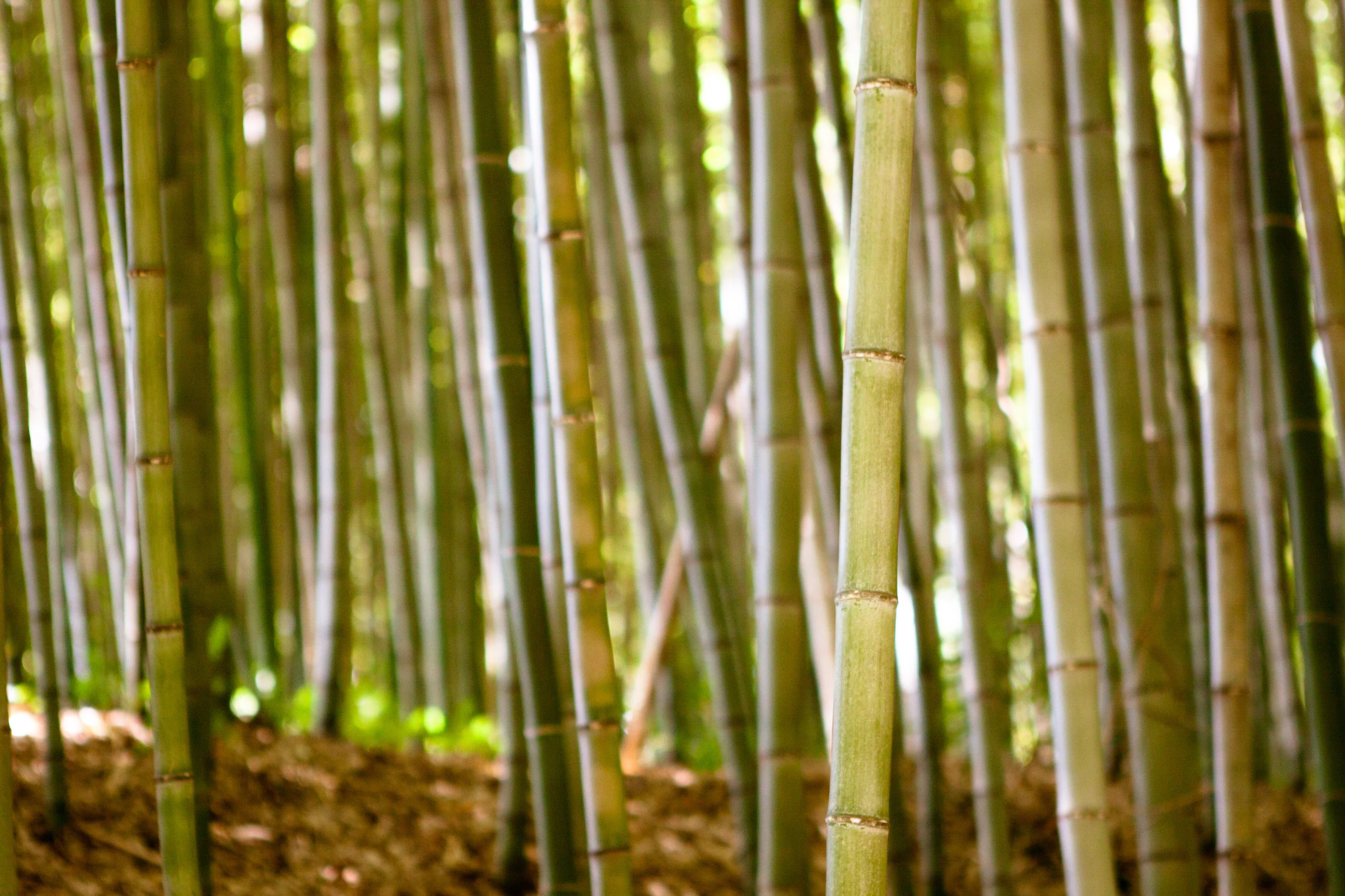
Green bamboo stems at different depths of focus above a leaf-covered forest floor; no path or people are visible.

Bamboo stems at Juknokwon, photographed on 5 August 2011. This historical view does not show today’s path or access conditions. Photo: “Juknokwon Bamboo Garden (죽녹원), Damyang (담양), South Korea” by Jirka Matousek, Flickr source, CC BY 2.0. Unchanged original; no crop or retouching.

“Juknokwon Bamboo Garden (죽녹원), Damyang (담양), South Korea” by Jirka Matousek / Flickr, CC BY 2.0. · Creative Commons 1 · Creative Commons 2

Walks and routes

A bamboo-first visit

Start at the entrance you have chosen and use the displayed map to select a small part of the themed network. Unsudaetong-gil, the Good Fortune Path, is one of the established names to look for. Resist the temptation to turn every junction into a new detour: a few good sections, a seated pause and a simple return are often more enjoyable than trying to cover everything. Allow 60–90 minutes; the route length will depend on the paths you choose.

Choose the actual surface and slope you can manage, not a path solely because its name sounds gentle. Confirm a suitable return before taking a descending or stepped branch.


A bamboo-first visit

Bamboo and pavilion culture

For a longer visit, combine some bamboo paths with the poetry-culture village, following the on-site signs between them. Take time to look at the pavilion forms and read the interpretation, then plan your exit around your transport. Allow 2–3 hours including a break. This is a suggested way to divide your visit, not an official measured loop or a promise of an open workshop.

The cultural area does not establish a step-free route through the bamboo garden. Ask about the complete connection, building thresholds and the return to your selected gate.

Bamboo and pavilion culture

Things to try

Make the photograph without leaving the path

The repeated stems make a strong subject even without a famous viewpoint. Try a close composition or wait for softer light beneath the canopy. Stay on the visitor path, keep equipment out of the walking line, and avoid bending shoots or moving leaves to improve a frame. The older photograph above illustrates the grove’s character, not a location you need to find.

Leave room for a cultural stop

The county presents the village as a place to encounter pavilion architecture, hanok and traditional culture. Decide whether you want a short look or a slower visit before committing your remaining time to more bamboo paths. Accommodation reservations and organised experiences are separate arrangements; check current availability rather than assuming they are included with admission.

When the weather turns

If conditions are poor, shorten the outdoor visit or save it for another day. Ask at the entrance which indoor cultural spaces are actually open before counting on one as a rain alternative. Keep an onward meal or indoor break flexible, and do not push farther into the grove just to complete a themed path.

Wildlife and habitats

Bamboo

Bamboo belongs to the grass family; Bambusoideae is the broad bamboo group, not one species. Here it forms a managed garden landscape. Enjoy the differences in stems and foliage from the path, but use an on-site label or specialist identification for a particular plant. The accompanying photograph does not identify a bamboo species.

Stories and discoveries

Eight names to recognise on the signs

The established themes are Good Fortune (운수대통길), Unchanging Love (사랑이 변치 않는 길), Memory Lane (추억의 샛길), Philosopher’s Path (철학자의 길), Contemplation (사색의 길), Scholar’s Path (선비의 길), Old Friends (죽마고우길), and Seonginsan Ascent (성인산 오름길). The English labels here explain the Korean names; use the Korean signs and current map for navigation.

Pavilion culture in one place

The poetry-culture village brings together interpretations of Damyang’s pavilion tradition, including Myeonangjeong and Songgangjeong. These recreations help you understand the connection between gardens, places to gather and local literary culture. They are not a substitute for visiting the original historic sites elsewhere in the county.

A network length is not your walking distance

The Korean tourism listing describes about 2.2 km of paths across eight themes. That is a network figure, not the length of either suggested visit above. Your distance changes with entrances, connecting paths, detours and the return journey.

When to visit

Spring: look for new growth

In spring, take your time looking for fresh growth as you walk. Look from the path and leave any new shoots untouched. What you see will depend on the weather and the timing of your visit.

Summer: shade with a weather plan

Choose a shorter walk if it is hot and humid, carry water and take breaks before you need them. In heavy rain, thunderstorms or strong wind, postpone the grove walk and follow staff directions. A green canopy is not weather shelter, and a wet path may be less comfortable than it looks.

Autumn and winter: green stems, shorter days

The bamboo gives the visit a different character from a deciduous-leaf viewpoint. In cold weather, check for icy shaded steps and keep your plans flexible after snowfall. The shorter winter opening period starts in November; an early arrival leaves more room for a slow pace and an uncomplicated return.

Getting there and practical advice

Opening hours and admission

Checked on 18 October 2026: the national tourism listing gives 09:00–19:00 for March–October, with last admission at 18:00; November–February is 09:00–18:00, with last admission at 17:30. It lists year-round operation. Individual tickets are KRW 3,000 for adults, KRW 1,500 for teenagers and KRW 1,000 for children. Groups of at least 20 are listed at KRW 2,400, KRW 1,000 and KRW 600 respectively. Children aged six or younger and visitors aged 65 or older are listed as free. Confirm eligibility and bring proof for concessions. These published terms are not a same-day opening guarantee.

Breaks, toilets and accommodation

Parking and toilets are listed, and the operator has a separate hanok-accommodation booking service. Check the entrance map for the nearest toilet and a convenient place to rest before walking farther. Do not assume a café, exhibition, footbath or cultural activity has the same hours as the garden; ask about anything you consider essential to your visit.

Choose the gate before you travel

The front entrance is at 119 Jungnogwon-ro (죽녹원로 119), Damyang-eup. The rear entrance is at 363 Jukhyangmunhwa-ro (죽향문화로 363). Use the address of your chosen gate for driving directions or a taxi, and share that same gate with anyone meeting you. A pin in the middle of the garden may be a poor pickup point. Parking is listed, but current charges, available spaces and accessible bays need checking.

Build the return journey into the plan

If you are travelling by public transport, check a live journey planner for your actual travel date and the stop serving your chosen entrance. Confirm the return connection before you start walking and keep a buffer for reaching it. Verify the stop name and direction as well as the departure time, and allow time to reach the stop from your exit. For entrance and visit questions, the operator lists 061-380-2680 and 061-380-2690.

Ask about a specific visit, not the garden in general

For wheelchair users, people with limited stamina or families using a stroller, call ahead with the equipment and distance you can manage. Ask which gate avoids stairs, whether there is a continuous suitable path to the area you want to see, and where the accessible toilet is. Also check loan-equipment availability and whether assistance is needed on slopes. Current gradients, path widths, accessible toilets and equipment provision were not verified. A short out-and-back on a confirmed suitable section is a better plan than discovering an unsuitable connection halfway through.

Sources and useful links

Wildlife you might spot

1

Each card links to a full Explore page with photos, traits, and fun facts.

Snap map for this place

Start with the big picture, then zoom in to explore individual wildlife observations around this place.

Loading map…

Good to know before you go

Photograph the entrance map and note your return gate before choosing a branch.

Wear shoes with grip; wet leaves and shaded steps deserve care.

Give other walkers room when stopping for photographs.

Keep to the paths and leave bamboo shoots, leaves and stems undisturbed.

Bring water and plan a rest before anyone in your group becomes tired.

Leave enough time to return to your chosen exit before closing.

Frequently asked questions

No. Choose a manageable section on the entrance map and keep your return route simple. The names are themes within the garden’s path network. A shorter visit can still give you a satisfying bamboo walk.
A fully step-free circuit has not been verified. Explain your needs to the operator and ask about the exact entrance, slopes, surfaces and toilets, rather than relying on a general accessibility icon or a photograph.
Do not plan an evening visit outside the published opening hours unless the operator announces a specific event. Lighting mentioned in tourism descriptions does not establish normal night admission.
No. They are separate nearby destinations. Give any additional visit its own travel time, access check and admission budget; the bamboo garden is already a worthwhile visit on its own.

Recent snaps at this place

Recent snaps will appear here as new observations are added.

View all ›

Take the discovery with you

Exploring Juknokwon Bamboo Garden?

Identify the wildlife you spot, learn as you go, and keep a collection of the adventure.

  1. 1Spot it
  2. 2Snap it
  3. 3Keep the discovery