Snappit logo
Snappit
Get App
Generic illustration, not a photograph of this venueIllustration
ParkKanto, Japan

Kairakuen Garden

Kairakuen is famous for plum blossom, but its most interesting feature is the way the garden changes around you.

About

Kairakuen is famous for plum blossom, but its most interesting feature is the way the garden changes around you. Near the front gate, tall bamboo and cedar trees narrow the view. Farther into the garden, the space opens towards lawns, flowering trees and the landscape around Senba Lake. You can enjoy that change of mood even when the plum branches are bare.

This is one of Japan’s three celebrated landscape gardens, alongside Kenrokuen and Korakuen. Tokugawa Nariaki, the ninth lord of the Mito domain, established it in 1842 as somewhere people could rest and enjoy themselves. The nearby Kodokan was its counterpart for study and training. Together, they expressed the idea that learning and relaxation both mattered.

For a first visit, keep the outing within the main garden. Enter at the East Gate for an unhurried look around the plum groves and Miharashi Square, or choose the Front Gate for the bamboo approach. Roughly 3,000 plum trees of around 100 varieties give the garden its early-spring reputation. Different trees flower at different times, so look closely at what is opening on the day rather than expecting every grove to peak together.

Kobuntei adds architecture, decorated rooms and an upper-floor outlook to the walk. It has its own ticket and shorter hours, and its interior cannot be visited in a wheelchair. The garden is still a worthwhile outing if you leave the building out. Beyond the main garden, free expanded grounds offer another choice, including Momijidani for autumn leaves; allow separate time rather than trying to cover everything in one visit. Turn your visit into a safari! Use the Snappit app to scan and log wildlife sightings here.

Kairakuen opened in 1842 under Tokugawa Nariaki. Its name expresses the wish to enjoy the place together with the people of the domain. The garden complemented Kodokan, founded the previous year, with rest alongside study. The original Front Gate survived the 1945 air raid, but Kobuntei was destroyed. Reconstruction of the pavilion began in 1955 and took three years; the building visitors see today is a restoration.

What to do here

Compare the plum flowers, linger on the open side of the garden and follow the shaded bamboo approach if you want a longer walk. Visit Kobuntei for its rooms and outlook when its stairs suit your group. In autumn, choose a separate stroll through Momijidani in the expanded grounds.

Seasonal info

Spring continues beyond the plums with cherries and azaleas. Summer brings deep green foliage and warm, humid walking conditions. Bush clover is an early-autumn feature, while Momijidani’s maples usually draw visitors in November. Flowering, leaf colour and event dates vary each year.

Accessibility

Many garden paths are gravel, and some approaches have steep slopes or steps. Use the official barrier-free map to choose a short route with staff: red paths cannot take wheelchairs, blue paths need assistance, and the dotted route is the recommended plum-season option. Free loan wheelchairs are available without advance reservations. Kobuntei excludes wheelchairs.

Don't miss

1

Plum groves with many different flower forms and colours

2

The change from bamboo shade to the open garden

3

Kobuntei’s restored rooms and third-floor outlook, if stairs suit you

4

Autumn maples in the free Momijidani extension

Walks and routes

A short visit from the East Gate

Enter at the East Gate and spend your time among the plum groves and around Miharashi Square. Follow the signed garden paths, pausing at tree labels and open views, then return to the same gate. If everyone wants more, continue towards the monuments and Senekidai viewpoint shown on the official Route B map. You do not need to include every stop.

For a wheelchair or pushchair, ask at the gate which section of the barrier-free route suits you. Gravel and any optional viewpoint approaches need a separate check; this whole walk should not be assumed step-free.
A short visit from the East Gate

The bamboo approach from the Front Gate

Start at the Front Gate and follow the official Route A through the bamboo and cedar setting towards Togyokusen and Kobuntei. The spring’s pale stone surround is a good place to notice how the garden uses water and changes in level. Decide at Kobuntei whether to buy a pavilion ticket, then continue towards the open garden and East Gate. Arrange your return from that side, or leave time to retrace your steps.

This route includes changes in level near the spring, and Kobuntei’s upper-floor visit uses stairs. If those are unsuitable, choose a staff-advised garden-only route rather than following Route A in full.

The bamboo approach from the Front Gate

An easy half-day from Mito

Take a morning bus to the entrance you have chosen, spend 1–2 hours in the garden, and add Kobuntei only if you want more. Finish with a rest near the East Gate and check the return bus before setting out. Keep lunch and travel outside your garden walking allowance.

An autumn alternative

Make Momijidani your extra walk after the main garden, or visit that free area on its own. Check the latest leaf-colour report first. For 2026, illumination is planned for November 7–29 from sunset until 21:00, with dates subject to the leaves; confirm the notice before making an evening journey.

Things to try

An optional visit inside Kobuntei

Look at the decorated rooms and the different ways they frame the garden. The third-floor Rakujuro opens the view in three directions, towards Senba Lake and the wider landscape. The pavilion is a post-war reconstruction. Allow 30–45 minutes, with extra time for a queue; use the loan cane provided at the ticket point if you need a cane inside.

A close look at plum flowers

Pick two nearby labelled trees and compare colour, petal layers and the way their branches grow. The official plum dictionary is helpful: Tsukikage is single white, Tora-no-o has double white flowers, and Konan-shomu has deep pink-red double flowers. Read the labels rather than guessing a cultivar from colour alone.

A small observation challenge

Before leaving, choose one detail from the shaded side and one from the open side: a bamboo stem, a flower bud, a framed view or the sound of water. Photograph or sketch them from the path. There is no need to collect anything to remember the visit.

A shorter garden day

In light rain, keep to a short open route and take your time on gravel and steps. Kobuntei can add indoor interest when open and suitable for your mobility, but it still involves reaching the building outdoors. If strong wind, heavy rain or a closure notice affects the visit, postpone the garden rather than using the trees as shelter.

Wildlife and habitats

Ume: cultivated flowering plums

Look at a labelled tree’s petal layers, colour and branching. Single and double flowers can look very different; flowering stages will vary across the grove.

Bamboo in the planted grove

From the path, compare the upright stems and the repeating joints. Notice how the dense grove filters light before the garden opens out.

Maples in Momijidani

On an autumn visit to Momijidani, compare the leaf shapes and the colours on different trees. The mix can be more interesting than searching for one perfect red canopy.

Look closely without collecting

These are managed garden plants. Labels and the official plant guide are more useful than trying to name every tree from a photograph. Compare what is visible today, keep to the paths and leave flowers, seeds and fruit for the gardeners to manage.

Stories and discoveries

A name about sharing

Kairakuen’s name carries Nariaki’s intention to enjoy the garden with the people of his domain. Its role as a place of rest helps explain why a quiet walk fits its story as well as a festival visit.

Plums for flowers and fruit

The garden’s plum dictionary distinguishes varieties selected for their flowers from those grown for fruit. In early summer, staff remove fruit as part of tree care. This is managed horticulture, so visitors should leave both fallen and growing fruit alone.

When to visit

Late winter and early spring

Use February–March as a starting window for plum blossom, then adjust to the flowering reports. Early varieties can begin well before that and late varieties continue later. A festival programme tells you when events happen, not which trees will be at their best.

Later spring and summer

Cherries and azaleas follow the plums. Special opening of Kobuntei’s inner garden is an occasional event, so do not treat it as part of an ordinary ticket. In summer, favour a shorter visit, water and shaded pauses. The park also warns visitors about hornets, especially around July–September.

Autumn and winter

Bush clover changes the open garden in early autumn. For November maples, head to Momijidani in the expanded grounds and follow the latest colour reports. Outside flower and foliage seasons, the bamboo, tree shapes and garden design remain the main reasons for a visit; choose daylight and allow for cold weather.

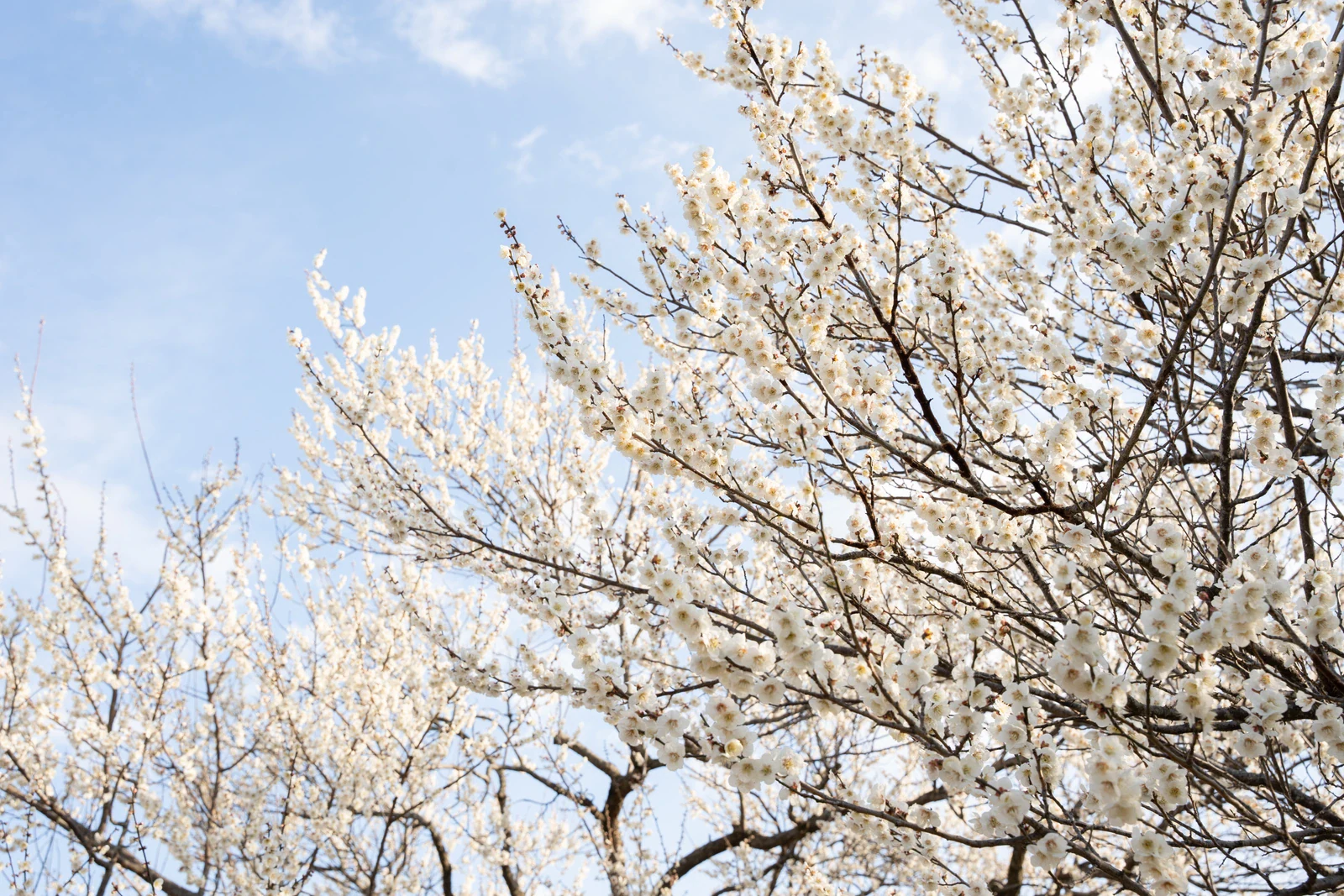
Branches covered in pale plum blossoms stand against a blue sky at Kairakuen.

Plum blossom at Kairakuen, photographed in March 2023.

Kairakuen Plum Bloosoms (52762214739).jpg — Raita Futo, CC BY 2.0 (https://creativecommons.org/licenses/by/2.0/). Source: https://commons.wikimedia.org/wiki/File:Kairakuen_Plum_Bloosoms_(52762214739).jpg. Proportionally reduced to a 1600-pixel long edge without upscaling; recompressed as WebP quality 92, method 6. No crop, retouching, added text or colour changes. EXIF omitted. · Creative Commons

Getting there and practical advice

Garden admission

Checked October 16, 2026: the Japanese tariff lists adults ¥320 and children ¥160 outside the plum festival, rising to ¥500 and ¥250 during it. The child category covers compulsory-school pupils; the adult category is age 15 and over excluding those pupils. Visitors 70 and over pay half the garden rate. Outside the festival, Ibaraki residents enter free with original proof of their prefectural address, and entry before 9:00 is free for everyone. These two offers stop during the festival. Check the new season’s dates and prices before travel.

Concessions and separate pavilion admission

Kobuntei costs an additional ¥230 for adults or ¥120 for children at the standard individual rate. Eligible disability or designated-intractable-disease certificates exempt the holder and one caregiver; public-assistance and some school-student concessions also apply. Bring the relevant proof and ask staff about eligibility, including concessionary pavilion tickets. A free garden entry does not automatically include Kobuntei.

Opening hours

The main garden normally opens 6:00–19:00 from mid-February through September, and 7:00–18:00 from October to mid-February. Kobuntei normally opens 9:00–17:00 in the warmer schedule, with last entry at 16:45; in the winter schedule it closes at 16:30, with last entry at 16:15. The surrounding expanded grounds are generally always open. Event arrangements can override ordinary hours. Confirm Kobuntei’s year-end and New Year opening directly.

Resting and practical help

Miharashitei, just inside the East Gate, has a shop, resting space and nursing room; ask its staff for the nursing room. Check the official garden map for toilets before beginning a longer route. Loan wheelchairs are available at the East Gate shop, Front Gate ticket point, Kairakuen-shita car park and Park Center, subject to availability.

Park Center

The Park Center is in the expanded grounds at Migawa 1-1251, not at the main garden entrance. It has plant-related information and exhibition space. Since April 2026 the building and its grounds open 9:00–16:30 on weekends and public holidays; weekday building hours remain 8:30–17:15. Exhibitions have their own closure days, so check before making a special visit. General enquiries: 029-244-5454.

Bus from Mito Station

From Mito Station’s north exit, Kairakuen-area buses take about 20 minutes. Stand 4 services can reach the Front Gate approaches: alight at Kobuntei Omotemon Iriguchi for about a 5-minute walk, or Rekishikan/Kairakuen Iriguchi for about 8 minutes. For the East Gate, suitable stand 4 stops are about 3 minutes away; stand 6 buses terminate at Kairakuen, about 5 minutes from that gate. Confirm the destination and current timetable before boarding.

Seasonal Kairakuen Station

Kairakuen Station is a temporary plum-season stop, not a year-round station. When operating, it serves trains heading towards Mito and Iwaki, not the Tokyo-bound direction. Check JR’s announcement for your actual date; use Mito Station and the bus if there is no suitable stop.

Arriving by car

Choose a car park for your intended gate and check its current fee. Kairakuen-shita is about 250 metres from the East Gate; the small Front Gate-front car park is about 50 metres from the Front Gate. Accessible parking arrangements change during the plum festival and can require priority reservations. A nearby car park does not by itself guarantee an easy step-free approach.

Choose a route, not just an entrance

The official map distinguishes wheelchair-prohibited paths, paths needing assistance and the recommended blossom-season route. Ask staff to connect your arrival point, desired sights and toilet using that map. Wheelchair loans are free, first-come on the day and cannot be reserved in advance. Phone ahead if reliable access to a particular facility is essential.

Keep the pavilion optional

The operator does not admit wheelchairs inside Kobuntei. Visitors using a cane must exchange it for a loan cane to protect the floors. Garden admission remains possible, so plan an outdoor visit that everyone can share rather than treating the upper-floor view as compulsory.

Respect the planting and path closures

Do not pick plants, collect fruit or disturb animals. Keep children close at viewpoints and on steps. Give hornets space, avoid disturbing a nest and tell staff if you notice one near a public path. Follow any temporary barrier or staff instruction.

Sources and useful links

Wildlife you might spot

3

Each card links to a full Explore page with photos, traits, and fun facts.

Snap map for this place

Start with the big picture, then zoom in to explore individual wildlife observations around this place.

Loading map…

Good to know before you go

Choose your entrance before setting off. The East Gate suits a short plum-grove visit; the Front Gate starts the bamboo approach.

Check the current admission page before blossom season. Festival rates differ, and the resident and before-9:00 free-entry offers do not apply during the plum festival.

Keep the day’s ticket if you leave and return. Kobuntei admission is separate from the garden ticket.

Use Mito Station as your year-round rail base. Kairakuen Station is seasonal and serves only trains towards Mito and Iwaki when it opens.

Wear shoes with grip and bring water. Shorten the outing in summer heat; wet gravel, slopes and steps deserve care.

Leave flowers, fruit, bamboo shoots and branches where they are. Stay on open paths and keep viewpoints clear for other visitors.

Check the latest pet-entry notice before bringing an animal. A limited trial has specific advance procedures and does not allow entry to Kobuntei or Miharashitei.

Ordinary visitor photography is allowed. Commercial shoots need advance permission, and tripods cannot be used inside Kobuntei.

Frequently asked questions

The historic main garden is a paid area, with concessions and free-entry periods. The expanded grounds are free, and Kobuntei has a separate charge. Check the admission details below so that a free parkland walk is not confused with entry to the main garden.
There is no single date when every variety peaks. Some trees flower well before the main season and others later. Use the current flowering report and enjoy the mix of buds, open flowers and finished trees you find.
No. Make it an optional addition for the architecture and upper-floor view. You can appreciate the garden from outside the building, and visitors who cannot use its interior can plan a garden-only outing.
Do not assume every gate is an entrance. Outside the plum festival, the South Gate is closed and the Togyokusen ticket gate is exit-only; the Onarimon Gate is closed. Plan around the East or Front Gate and check notices for your date.
You may bring food into the garden; use an appropriate resting place and take your rubbish away. Follow the building’s rules in Kobuntei. Dogs need separate planning: the current small-pet trial requires advance processing at the Park Center, while leashed walking is allowed in the expanded grounds south of the Joban railway. Read the current pet notice before travelling.

Recent snaps at this place

Recent snaps will appear here as new observations are added.

View all ›

Take the discovery with you

Exploring Kairakuen Garden?

Identify the wildlife you spot, learn as you go, and keep a collection of the adventure.

  1. 1Spot it
  2. 2Snap it
  3. 3Keep the discovery