Snappit logo
Snappit
Get App
Generic illustration, not a photograph of this venueIllustration
ParkHokkaido, Japan

Maruyama Park (Sapporo)

You can make a satisfying visit to Maruyama without climbing anything.

About

You can make a satisfying visit to Maruyama without climbing anything. Come out of the subway, walk into the park and give yourself time to look: a tree canopy above the path, flowers near the woodland edge, a bird moving around a trunk. The broad recreation area at the foot of Maruyama covers about 70 hectares, but a first visit works best as a smaller outing around the Park Center, open square and nearby woodland. It is an easy place to alternate a little nature-watching with a playground stop.

The trees tell two different stories. Maruyama’s protected forest preserves a natural landscape close to the city, while some park trees remain from a nursery used to test and raise trees for planting elsewhere in Hokkaido. Old katsura trees are part of the park’s character; planted larch and sugi (Japanese cedar) add a different texture. Comparing a broad leaf with a cluster of needles is a more rewarding starting point than trying to identify every tree at once. Stay on paths, look upward as well as down, and leave the plants where they grow.

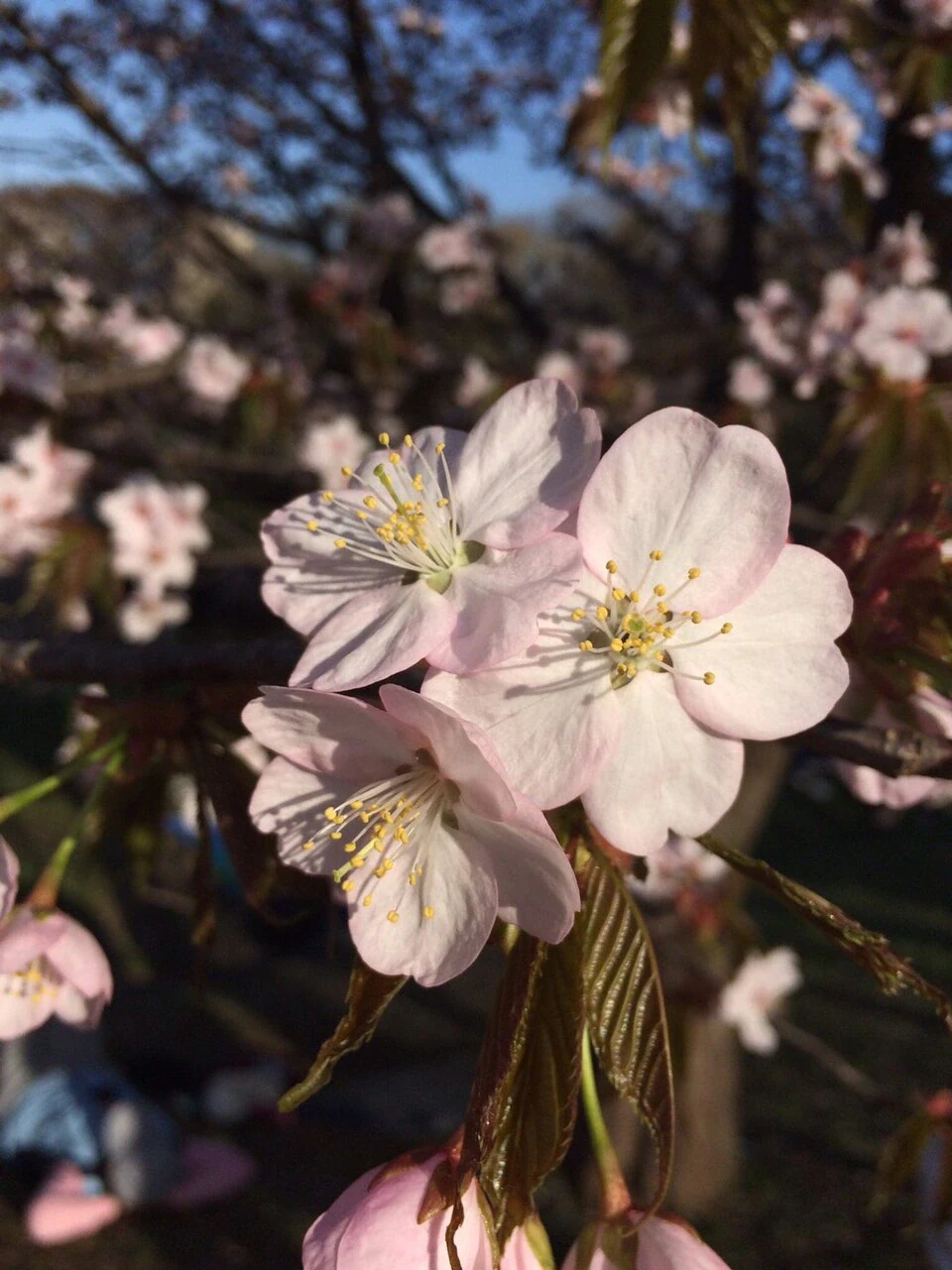
In spring, the park’s cherry blossoms attract plenty of company. Make time for the smaller flowers too: the operator’s spring guide includes blue-to-purple ezoengosaku and the quieter flowers of enreisō, a trillium. Later in the year, full summer foliage changes the feel of the woodland, then autumn brings another reason to return. If the branches are bare, spend a few minutes watching how birds use the trunks rather than judging the visit by the number of flowers.

For a longer outing, the Hachijūhakkasho entrance leads to a separate mountain walk, passing a series of devotional statues on the way toward Maruyama’s summit. The hill is only about 225 metres above sea level, but the ascent still calls for proper walking shoes, a check of current alerts and enough time to come down comfortably. You do not need to add it to enjoy the lower park.

Maruyama Zoo and Hokkaido Jingu are nearby places to visit in their own right. The zoo has its own admission and opening calendar; the shrine is an active place of worship. Choose one as an optional extension if it interests you, rather than treating all three as stops to hurry through. The park walk described here does not require entry to either. Turn your visit into a safari! Use the Snappit app to scan and log wildlife sightings here.

A tree nursery was established here in 1880 to test species and supply planting stock. The operator traces surviving sugi and larch plantings to 1890. The Hachijūhakkasho mountain trail and its devotional tradition date to 1914, while Maruyama’s natural forest was designated a national Natural Monument on 3 March 1921. These histories sit alongside one another: planted parkland, a protected forest and a well-used place for recreation.


What to do here

Start at the Park Center for a map and current advice, then choose a short walk around the square, playground and tree-lined paths. Add a woodland stretch only where open and comfortable underfoot. Pause to compare leaves and bark, or watch a trunk for a nuthatch or woodpecker. Fit the optional summit walk around your group’s energy and the day’s conditions.

Seasonal info

Spring combines blossom with small woodland flowers. Summer suits a shaded stroll and, when operating, the children’s water-play channel. Autumn rewards a slower look at the changing trees. In winter, ice, falling snow from branches and snow-clearing vehicles change how you move around the park; keep the outing short and use suitable footwear.

Accessibility

The Park Center has a multifunction toilet with ostomate provision, and one wheelchair is available to borrow. The operator lists no dedicated wheelchair parking and no ramps. Ask staff which lower-park paths suit your needs and what the surfaces are like that day. Woodland slopes and the mountain trail should not be treated as step-free routes.

Don't miss

1

A relaxed lower-park walk that is easy to shorten

2

Old katsura trees and the legacy of a historic tree nursery

3

Cherry blossoms in spring and foliage colour in autumn

4

An optional forest climb from the Hachijūhakkasho entrance

Walks and routes

The easy-to-shorten park visit

Begin at the Park Center just inside the entrance from Ōdōri. Look at the map, then spend time around the open square and playground to the north. If your group wants more trees, ask about the woodland path and boardwalk on the mountain side of the road. Return the way you came whenever you have had enough; this is a flexible outing, not a circuit to complete.

Stay with the lower park if you want a modest outing. Ask staff about the boardwalk approach, gradients and road crossings before choosing a woodland extension.

The easy-to-shorten park visit

Optional hike: Hachijūhakkasho entrance to the summit

Use the signed Hachijūhakkasho entrance beside Daishidō and return along the same trail. The city’s map gives 1 km to the summit, about 40 minutes up and 30 minutes down. Allow 1½–2 hours for the roughly 2 km return with stops, and add your approach from the park. The statues give the climb a cultural thread; at the top, enjoy the view without scrambling beyond a safe stopping place.

This is an uphill forest trail with uneven ground and a rocky summit, unsuitable for wheelchairs or strollers. Wear shoes with grip and turn back before anyone is too tired for the descent.

Optional hike: Hachijūhakkasho entrance to the summit

A gentle family visit

Arrive after the Park Center opens, pick up local advice and make a short tree-and-flower walk. Leave time for play and a sit-down snack, then return toward the station. Choose the woodland extension only if everyone still has energy; the mountain does not have to be the goal.

About 1½–2 hours

A park-and-hill morning

Check alerts before leaving, use the lower park facilities, then walk to the Hachijūhakkasho entrance. Take the summit return at your group’s pace and finish with a quiet break below. Allow roughly 3–4 hours for the combined outing, including approaches and rests, and keep the zoo for another visit if this already fills your morning.

About 3–4 hours

Things to try

Make a two-tree comparison

Pick two trees you can see comfortably from the path. Compare the outline of their crowns, the texture of the bark and whether the foliage is broad or needle-like. Children can sketch the differences or invent descriptive names before checking a label. Looking carefully is the point. You can enjoy the exercise without knowing an exact species name; leave every leaf and twig where it is.

Give the playground its own time

The play area lies between the Park Center and Kita 1-jō street, with climbing play equipment, swings, a seesaw and a sandpit. Let this be a proper stop rather than a hurried reward at the end of a long hike. In summer, bring a change of clothes if the designated water-play channel is open.

Choose one neighbouring visit

Hokkaido Jingu can add a quiet shrine visit; Maruyama Zoo is a larger, separately ticketed outing. Check the relevant operator’s hours before committing your afternoon. Keep voices considerate around worshippers, and let your group’s interests decide which extension, if any, you add.

A shorter visit is fine

In a light shower, use the Park Center’s rest area while it is open and decide whether a short nearby walk still appeals. In heavy rain or strong wind, postpone the woodland and summit: the park warns of stream flooding, falling branches and trees. A café back in the neighbourhood is a better plan than waiting beneath a tree or beside the water.

Wildlife and habitats

Larch: a conifer that changes with the seasons

The park’s larch is a living link to its old tree nursery. Look for the fine needles in the growing season and their autumn yellowing. Larch loses its needles for winter, a useful reminder that “conifer” does not always mean “evergreen”.

Trillium: an understated spring plant

Enreisō is a local member of the trillium group. Look for three broad leaves and a small flower at their centre; the park has described its flowers as reddish-brown. It is easy to overlook while admiring blossom overhead. Stay on the path and leave plants untouched.

Eurasian nuthatch: watch the direction it moves

A small bird travelling head-first down a trunk is worth a closer look. That unusual posture is a helpful nuthatch clue. The park lists nuthatches in every season, so a quiet pause beside an open path can be worthwhile even when there are no flowers to see.

Great spotted woodpecker: notice the bold patches

Look for a black-and-white bird with large pale patches on its back and red beneath the tail. The park lists great spotted woodpeckers across the seasons. Watch patiently from the path, and let a bird move away rather than following it through the trees.

Look closely without disturbing anything

Treat these nature notes as ideas for looking, rather than a checklist you must finish. Birds move around, and flowers depend on the season. A pair of binoculars helps you stay back; a photograph from the path is enough for a plant you do not recognise. There is no need to offer food, pick a leaf or enter the undergrowth.

Stories and discoveries

A nursery’s legacy in the trees

Some of the trees that now feel like familiar park scenery began as experiments in what could grow in Hokkaido. The nursery story is a reason to look at differences between trees, rather than imagining the entire park was always one untouched forest.

The climb is also a devotional route

The Hachijūhakkasho route took shape in 1914, with a sequence of devotional statues inspired by the Shikoku pilgrimage tradition. Treat the figures as religious objects as well as part of the walking landscape.

When to visit

Spring: look high and low

Plan around the current blossom reports rather than a fixed calendar day. Once you have enjoyed the cherry canopy, turn your attention to small flowers near the woodland paths. Snowmelt can leave wet ground, so it is worth having a shorter park-only plan.

Summer: shade, plants and play

Bring water and keep the walking portion flexible on a warm day. The operator’s summer-flower guide includes ōubayuri and yellow touch-me-not. Use the play channel only during announced operating periods, and stay alert for ticks and hornets around vegetation.

Autumn: allow time to stop

Use the operator’s foliage reports to choose your day, then leave enough time to enjoy individual trees rather than rushing straight to the hill. The needles of the planted larch can turn yellow too. Finish walks while the route is still easy to see.

Winter: keep the plan modest

Choose grippy winter footwear and warm layers. The park’s winter map flags slippery slopes, falling snow from trees and snow-clearing vehicles. Check which paths are usable and avoid standing under loaded branches. A brief lower-park visit is a sensible choice if you are unfamiliar with winter hiking.

Pale pink cherry flowers and young bronze-green leaves fill the foreground against softly blurred branches.

Cherry blossoms in Sapporo’s Maruyama Park, photographed on 6 May 2017.

Sakura12.jpg — Amazonxxxx, CC BY-SA 4.0 (https://creativecommons.org/licenses/by-sa/4.0/). Source: https://commons.wikimedia.org/wiki/File:Sakura12.jpg. Converted Wikimedia’s 960×1281 thumbnail (original photograph 1108×1478) to WebP quality 92, method 6 at unchanged dimensions. No upscaling, crop, retouching, added text or colour changes. EXIF omitted. · Creative Commons

Getting there and practical advice

The Park Center

The center is just inside the entrance from Ōdōri and offers a rest area, a small shop, vending machines and lockers. An AED is installed in the rest room. For current path advice, call 011-621-0453. Bring your own food: the shop sells goods rather than meals, and occasional food trucks should be treated as a bonus.

Toilets and family support

Multifunction toilets and baby-changing provision are available at the Park Center and the public toilet in front of it. There is no dedicated nursing room, but staff can help arrange a space inside the center. Ask on arrival so you know where to return when needed.

Summer water play

The shallow play channel is normally open from early July to late August, 10:00–16:00. Operation depends on the day’s notices. The 2026 season finished on 31 August; do not plan an autumn water-play stop. Use this designated facility only, and keep children out of the ponds and stream.

Subway is the straightforward choice

Take the Tōzai Line to Maruyama-Koen Station. Exit 3 is the operator’s recommended walking approach, about five minutes from the park. Allow extra time for crossings and the parts of the park beyond the entrance. If you need an elevator, follow station signs or ask staff rather than assuming the numbered exit itself is step-free.

If you come by car

The park has no dedicated visitor car park. Its FAQ points drivers to nearby paid parking and the shared Maruyama parking operation. Check the parking operator’s hours and the walk from your chosen lot, especially if you need a close drop-off. Public transport avoids making parking part of the outing.

Ask for a specific lower-park route

Tell the Park Center whether you use a wheelchair, a walking aid or a stroller, and ask about the surface, slopes, crossings and toilet access along a route you can comfortably retrace. Ask staff to help you choose the easiest approach rather than setting out on a complete circuit. A dry summer route may be much harder with snow or ice.

Loan chair and toilet details

One wheelchair is listed at the Park Center. The FAQ says it is free to borrow and cannot be reserved, so do not rely on finding it available. Ostomate provision is specifically listed inside the center. Check opening and availability before travelling if these facilities are essential to your visit.

Brown-bear awareness matters here

Check Sapporo’s current bear reports before entering the forest and avoid areas with recent activity. On a hike, make your presence known with conversation or a bell; turn back if you find tracks or droppings. If you encounter a bear, stay calm, do not run or approach it, and slowly back away while watching it. Never approach a cub. Keep all food and rubbish with you.

Sources and useful links

Wildlife you might spot

4

Each card links to a full Explore page with photos, traits, and fun facts.

Snap map for this place

Start with the big picture, then zoom in to explore individual wildlife observations around this place.

Loading map…

Good to know before you go

Check park notices and Sapporo’s bear information before setting out, especially if you plan to enter the woodland or hike. Obey closures on the ground.

Use Maruyama-Koen Station on the Tōzai subway line. The operator gives a five-minute walk from Exit 3 to the park.

Bring a ready-to-eat picnic and take every scrap and wrapper home. Do not feed squirrels or birds; keep food packed away between bites.

Keep to the paths. Do not pick plants, collect mushrooms or remove anything from the protected forest.

Wear closed shoes and cover exposed skin against ticks. Stay out of long grass, and give hornets and their nests a wide berth.

Watch carefully at road crossings between the lower park and woodland. Paths, boardwalks and slopes can be slippery, especially after rain or in winter.

Fires, barbecues and fireworks are prohibited. Dogs must remain on a lead, and their waste must be taken away.

For an organised group or a planned photography session, check the park-use notice requirements with the operator; commercial photography needs the relevant permission.

Frequently asked questions

Yes. The public park is free. Charges and opening arrangements for the zoo, sports facilities and parking are separate.
No. The lower park has plenty for a short visit. The summit is an optional mountain walk, not the way to reach the square or playground.
Its published hours are 09:00–17:00, with closure from 29 December to 3 January. Cleaning or events can also limit use, so check if you depend on its facilities.
Only use the designated water-play channel when it is open. Its usual season is July–August; the 2026 season ended on 31 August. The park’s ponds are not swimming or paddling areas.
Plan a lower-park visit and ask the Park Center about a suitable path before arriving. The summit route is unsuitable for wheeled access, and snow or rain can change the easier paths too.

Recent snaps at this place

Recent snaps will appear here as new observations are added.

View all ›

Take the discovery with you

Exploring Maruyama Park (Sapporo)?

Identify the wildlife you spot, learn as you go, and keep a collection of the adventure.

  1. 1Spot it
  2. 2Snap it
  3. 3Keep the discovery