
Snappit logo
Snappit
Get App
Generic illustration, not a photograph of this venueIllustration
ParkKyushu, Japan

Ohori Park

Start with the water.

About

Start with the water. Ohori Park is easy to enjoy without a long list of sights: follow the pond, find a place to pause, and watch the islands change shape as you move around them. The water occupies more than half of this roughly 39.8-hectare park, giving even a short visit a broad, open view.

The simplest outing is the pond circuit. A brick walking path sits closest to the water, with separate surfaces farther out for runners and bicycles. Keep the island bridges as an optional change of scene rather than something you must fit in. Among the trees, the red Ukimi Pavilion provides a lovely contrast to the water. You can enjoy the island scenery from the banks too.

Bring binoculars in winter and turn a stroll into a small birdwatching trip. Ducks, coots and gulls use the pond, while the planted trees give you something to notice in every season. For children, the two playgrounds offer a different sort of stop; you do not need to complete the circuit to have a worthwhile visit.

The Japanese Garden and Fukuoka Art Museum add two quite different experiences on the southern side. The garden has its own smaller, composed landscapes; the museum gives you an indoor option. Both need their own opening-hours check. Maizuru Park and the Fukuoka Castle grounds are next door, but they are a separate outing, so leave time for them rather than folding them into this short pond walk. Enhance your adventure: download the Snappit app to identify the local species you encounter.

The water began as an inlet of Hakata Bay and became part of the outer moat when Kuroda Nagamasa built Fukuoka Castle. Landscaping associated with the 1927 Eastern Industrial Exhibition helped shape the modern park, which opened in March 1929. Ukimi Pavilion was moved here from Higashi Park in 1949; the Japanese Garden opened in May 1984.

What to do here

Walk one pond circuit, stopping for a waterside view rather than trying to keep pace with the joggers. Add an island stroll, a playground or the Japanese Garden according to your energy. In winter, spend a few quiet minutes watching the birds before moving on.

Seasonal info

Spring brings planted flower displays, including tulips, and summer flowerbeds include sunflowers. In hot weather, shorten the circuit and take shaded breaks. Cooler months suit a slower birdwatching walk; wind can make a winter waterside stop feel chilly.

Accessibility

The perimeter has paved paths, and the park offers wheelchair and stroller loans. Treat the island bridges, Ukimi Pavilion approach and Japanese Garden as separate access checks. Ask the park office which route suits your chair or stroller and where the most convenient accessible toilet is.

Don't miss

1

A roughly 2 km pond circuit that works as a complete outing

2

Wooded islands linked by bridges, with views toward Ukimi Pavilion

3

Winter waterbirds close enough to watch from public paths

4

A separately ticketed Japanese Garden and an art museum for a longer visit

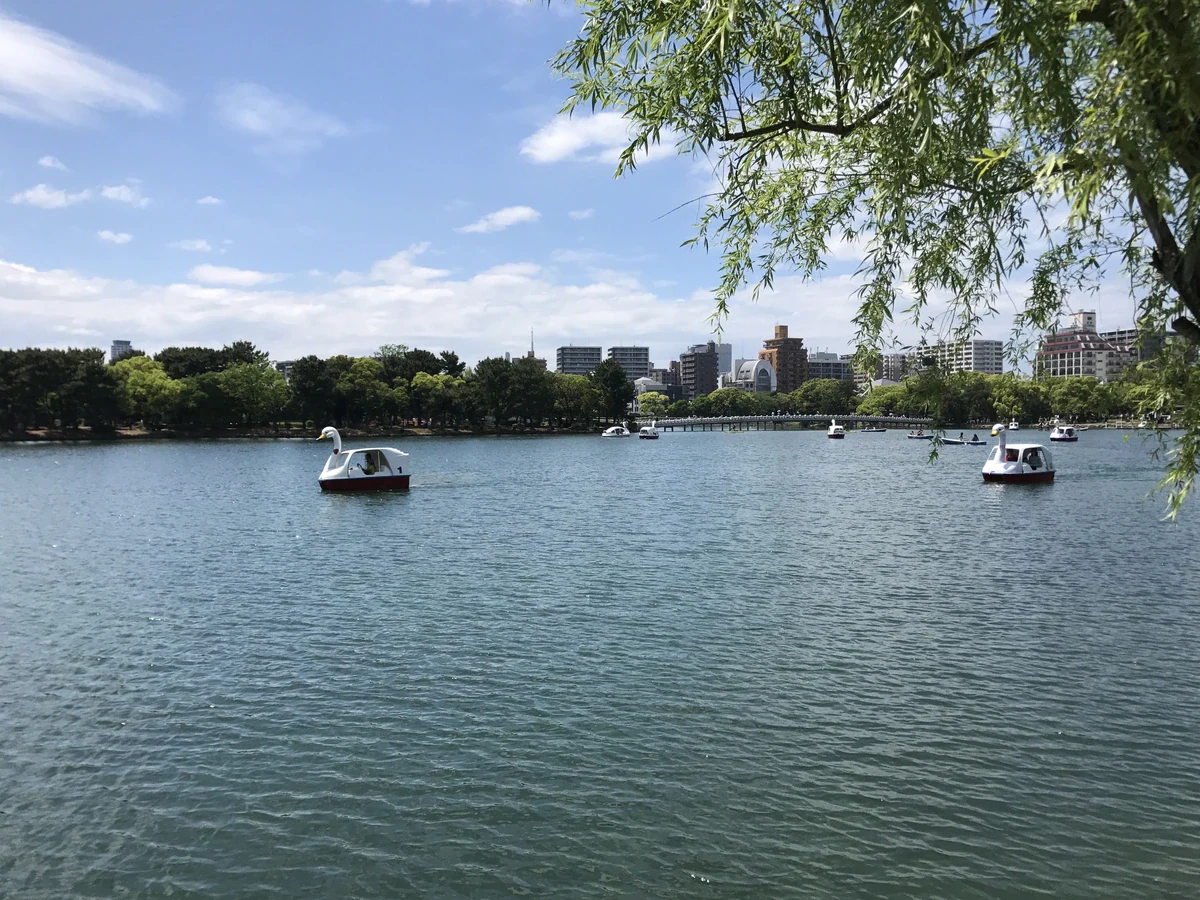
Blue-green water fills the foreground beneath willow branches, with small boats, a tree-lined shore and city buildings beyond.

A view across Ōhori Park’s pond from the eastern bank, with boats on the water, photographed in May 2017.

© そらみみ / Wikimedia Commons / CC BY-SA 4.0. Ohori_Park_20170505-1.jpg. Source: https://commons.wikimedia.org/wiki/File:Ohori_Park_20170505-1.jpg. License: https://creativecommons.org/licenses/by-sa/4.0/. Proportional downsampling to fit 1200 × 1200 pixels without enlargement; WebP quality 92, method 6. No crop, retouch, recoloring or added text. EXIF omitted. EXIF lists iPhoto 9.6.1 and file modification on 2017-05-05. Source processing retained; no specific retouch declared. · Creative Commons

Walks and routes

The pond circuit

Join the outer-bank walking path at the side nearest your arrival point and follow the pond all the way round. There is no need to cross to an island. Pause at a view you like, then continue; if energy runs short, simply retrace your steps instead of completing the loop.

Keep to a suitable paved bank section if you want to avoid the island crossings. For a wheelchair visit, ask staff about the current surface and the approach from your chosen entrance.


The pond circuit

An optional island detour

Use an open bridge to explore part of the linked islands and turn back when you are ready. Look back toward the bank to see how the trees frame the city. This is a detour from the pond circuit, so decide how much time you want to add before setting off.

Check the bridge and pavilion approaches separately with staff if you need step-free access. Views from the outer bank are a good alternative without committing to the crossings.

An optional island detour

An easy 90-minute visit

Begin with a stretch of the bank, stop to watch the water and choose one extra: a playground or a short island visit. Complete the circuit only if the group still wants to walk. This leaves room to linger instead of turning the outing into a distance target.

A half-day with gardens or art

Make the pond walk your first part, then have a break before the Japanese Garden or museum. Choose one indoor or garden stop for an unhurried outing; add both only if you have the afternoon free. Check their closed days first, especially on Mondays.

Things to try

A few minutes of quiet birdwatching

Choose one bird and watch what it does before looking for another. With children, try describing its movement and bill shape first, then use a field guide to check your guess.

A waterside run

If you want exercise rather than a stroll, use the rubber-surfaced jogging route. Slow down around other visitors and use the walking path for a cool-down.

Boating as an optional extra

The rental operator offers rowing and swan-style boats. Its current timetable lists starts at 11:00 on weekdays and 10:00 on weekends and holidays. April–August reception ends at 17:30; September–March reception is expected to finish about an hour before sunset. Weather can change operations, so check directly before making a special trip.

Shorten the outdoor part

In light rain, keep the walk short and take care on wet surfaces. In strong wind or heavy rain, save the pond circuit for another time and check whether the museum is open. The Japanese Garden remains an outdoor visit, and boat operation depends on the weather.

Wildlife and habitats

Black-headed Gull

Look for a small gull with reddish bill and legs. Despite its English name, the full dark head is a summer-plumage feature, so a winter bird need not look black-headed.

Common Pochard

Among the winter ducks, a male’s reddish-brown head and dark chest are useful starting clues. Females look different, so compare more than one bird before settling on an identification.

Tufted Duck

Use binoculars to look for the yellow eye. Males look dark-bodied and females browner; colour alone is a starting point, so take time to compare their shape and markings.

Eurasian Coot

A dark bird with a white bill and forehead is a good coot candidate. It belongs to the rail family, so there is more to the pond’s birdlife than ducks and gulls.

Japanese black pine

Look at the island pines from the path: dark bark and needles carried in pairs are useful details to notice. Compare their outlines with the softer shapes of the waterside willows without picking any foliage.

The birds below are wild visitors or users of the pond; the black pines belong to the managed park landscape. Winter is the most useful season for this waterbird shortlist, but the mix changes from day to day. Watch from the paths, give birds space and leave plants where they are.

Stories and discoveries

The pond came before the park

The broad water is a reminder of the former castle moat. Looking across it gives you a sense of why this place was called Ohori, the great moat, long before it became a public park.

A pavilion with a previous home

Ukimi Pavilion arrived from Higashi Park in 1949. Its place beside the pond is part of the park’s evolving history rather than an untouched scene from the castle’s early days.

When to visit

Spring and summer

Look for the planted tulips in spring and sunflowers in summer. Let the weather set the length of your walk: on a hot day, one waterside stretch and a shaded rest can be enough.

Autumn and winter

Bring a warm layer for a breezy pondside pause. November to March is the park’s broad winter-bird season, so make time for looking through binoculars rather than adding more walking distance.

Getting there and practical advice

Japanese Garden: a separate daytime visit

Allow 30–60 minutes for the garden’s ponds, streams and dry landscape. Regular daytime hours are 09:00–18:00 in May–September and 09:00–17:00 in October–April, with last entry 15 minutes before closing. It closes Mondays, or the following day when Monday is a public holiday, and 29 December–3 January. Standard admission is ¥250 for ages 15 and over and ¥120 for ages 6–14; under-6s enter free. Visitors aged 65 and over and eligible disabled visitors with one carer have fee exemptions with the required proof. Night events follow separate ticket rules.

Japanese Garden: notices to check

As checked on 16 October 2026, the operator has announced a temporary garden closure on 31 March 2027. Confirm arrangements before a visit around that date. A separate notice dated 15 October says the artificial mist display is suspended with no restart date yet; that notice does not close the whole garden.

Fukuoka Art Museum

Regular hours are 09:30–17:30, extended to 20:00 on Fridays and Saturdays in July–October; last entry is 30 minutes before closing. It closes Mondays, shifting to the next weekday if Monday is a public holiday, and 28 December–4 January. Collection-gallery admission is ¥200 for adults, ¥150 for high-school and university students, and free for junior-high-school students and younger children. Special exhibitions have their own prices. Check for temporary gallery closures.

Wheelchair and stroller loans

Ask the staff at the park’s car park for free loan equipment. The operator lists two wheelchairs and one stroller, with telephone reservations through the park office on 092-741-2004.

Toilets and a drink stop

Use the official park map to plan toilet stops. The park’s accessibility listing includes wheelchair-accessible and ostomate toilets. Food and drink venues include the BOATHOUSE area, the park café and Ohori Terrace; check each business for its own opening hours.

By subway or bus

The park operator gives about seven minutes on foot from Ohorikoen or Tojinmachi on the Airport Line. Kuromon and Ohori Koen bus stops are about five minutes away. Your actual walk depends on which part of the pond you want to reach; allow extra time if using station lifts.

By car

The paid park car park is on the north side. Posted hours are 05:00–23:00 in May–September and 07:00–23:00 in October–April. Vehicles cannot enter or leave outside those hours. For an ordinary car, the current charge is ¥220 for the first two hours, then ¥170 per additional 30 minutes.

Plan the bank and islands separately

A paved pond path is a useful starting point, but the park also has stepped areas. Ask staff to help choose your entrance, bank section and toilet stop. Check any island bridge or pavilion detour on its own before adding it to your route.

An indoor option with more facilities

The art museum provides ramps at all entrances, a visitor lift and accessible toilets. Staff can help at the first-floor information counter, where wheelchairs and strollers are also available for free use during the museum visit.

Main park access

The main grounds have no regular closed day, and the ordinary pond walk is free. Parking, rental boats, museum exhibitions and the Japanese Garden run separately. Use their own notices when planning a longer visit.

Sources and useful links

Wildlife you might spot

5

Each card links to a full Explore page with photos, traits, and fun facts.

Snap map for this place

Start with the big picture, then zoom in to explore individual wildlife observations around this place.

Loading map…

Good to know before you go

Use the brick waterside path for strolling; leave the rubber-surfaced route to runners and watch for bicycles when crossing the outer path.

Keep young children close beside the water and on bridges. Stop for photographs where others can pass.

Bring binoculars in winter, watch quietly and keep food packed away around birds.

Carry your rubbish home

the park has no rubbish bins. Fires, barbecues and fireworks are not allowed.

Dogs must be on a lead in the main park; pick up after them.

Book a loan wheelchair or stroller ahead if you need one; the park has only a small supply.

Check the Japanese Garden’s current notices, particularly for visits around or after its planned temporary closure on 31 March 2027.

Leave boats as a weather-dependent extra, and check the rental operator’s hours rather than planning around the boats in an old photograph.

Frequently asked questions

Yes. The pond circuit, islands, bridges, pavilion and playgrounds are free to visit. The Japanese Garden, museum exhibitions, boat rental and parking have separate charges.
No. The full circuit follows the outer bank. The island paths are an optional alternative perspective, so you can enjoy the pond without taking a bridge.
No. It has daytime opening hours, regular closed days and its own admission. Night events use separate tickets and schedules. Check the garden notices for its planned temporary closure on 31 March 2027.
The eastern Kujira, or Whale, playground is the larger-play option. The western Donguri, or Acorn, playground is compact and shady, with equipment aimed at smaller children. Pick the one that suits your child rather than promising both.
They are adjacent parks. Fukuoka Castle’s grounds belong to the Maizuru side; this guide focuses on Ohori’s pond and its associated facilities.

Recent snaps at this place

Recent snaps will appear here as new observations are added.

View all ›

Take the discovery with you

Exploring Ohori Park?

Identify the wildlife you spot, learn as you go, and keep a collection of the adventure.

  1. 1Spot it
  2. 2Snap it
  3. 3Keep the discovery




