Snappit logo
Snappit
Get App
Generic illustration, not a photograph of this venueIllustration
ParkAsturias, Spain

Redes Natural Park

Redes is a place to slow your plans down.

About

Redes is a place to slow your plans down. Forested slopes rise above villages and meadows, and water keeps appearing in the story: in the upper Nalón, its tributaries and the reservoirs farther down the valley. You can enjoy that landscape without setting yourself a summit or a long-distance walking target.

For a first visit, begin at the interpretation centre in Campo de Caso, also signed as El Campu. Its displays give you a way into the park’s wildlife, geology and rural life before you choose what to do outside. Allow time to ask about today’s conditions, then keep the rest of the morning flexible. A short look around the village and a meal can be enough for a relaxed introduction.

If you want a substantial walk, make the Ruta del Alba in Sobrescobio a separate plan. It starts at Soto de Agues, rather than at the centre, and the full return journey is a proper hiking day. The early valley track and the narrower upper gorge offer different experiences; you do not have to reach the end to have enjoyed the river. Don't forget to bring the Snappit nature identification app along to scan local species.

Redes became a natural park under the law of 27 December 1996. Its protection brings together the whole of Caso and Sobrescobio, including settlements and land still used for farming and grazing. The same territory is also recognised as a biosphere reserve. That lived-in quality is part of the interest. Meadows and mountain grazing grounds sit beside native woodland, while village buildings reflect a life shaped by timber, livestock and water. The park is a good place to ask how a landscape can support both everyday livelihoods and nature conservation.

What to do here

Use the centre to understand the woodland, water and pastoral landscape, then choose one outdoor focus. For a short visit, stay around Campo de Caso. For a walking day, head separately to Soto de Agues and follow the signed Ruta del Alba as far as your group and the conditions allow.

Seasonal info

Rain, fog, snow and ice can change a mountain outing considerably. Winter is better approached as a flexible valley-and-centre visit unless you have the equipment and experience for the conditions. In autumn, wet leaves can make even a surfaced path slippery; in spring, give fast water plenty of space.

Accessibility

The centre describes its permanent exhibition as accessible, with a practicable entrance and toilets; call to check the details your group needs. The Ruta del Alba has its own barriers, including village cobbles and steep sections. Do not treat a surfaced valley track as assurance that the complete walk suits a wheelchair or pushchair.

Don't miss

1

A clear introduction to Redes at the Campo de Caso interpretation centre

2

Beech woodland and the contrast between forest, meadows and mountain slopes

3

The river scenery of the Ruta del Alba, with a turn-back point of your own choosing

4

Village life and the water landscape of the upper Nalón

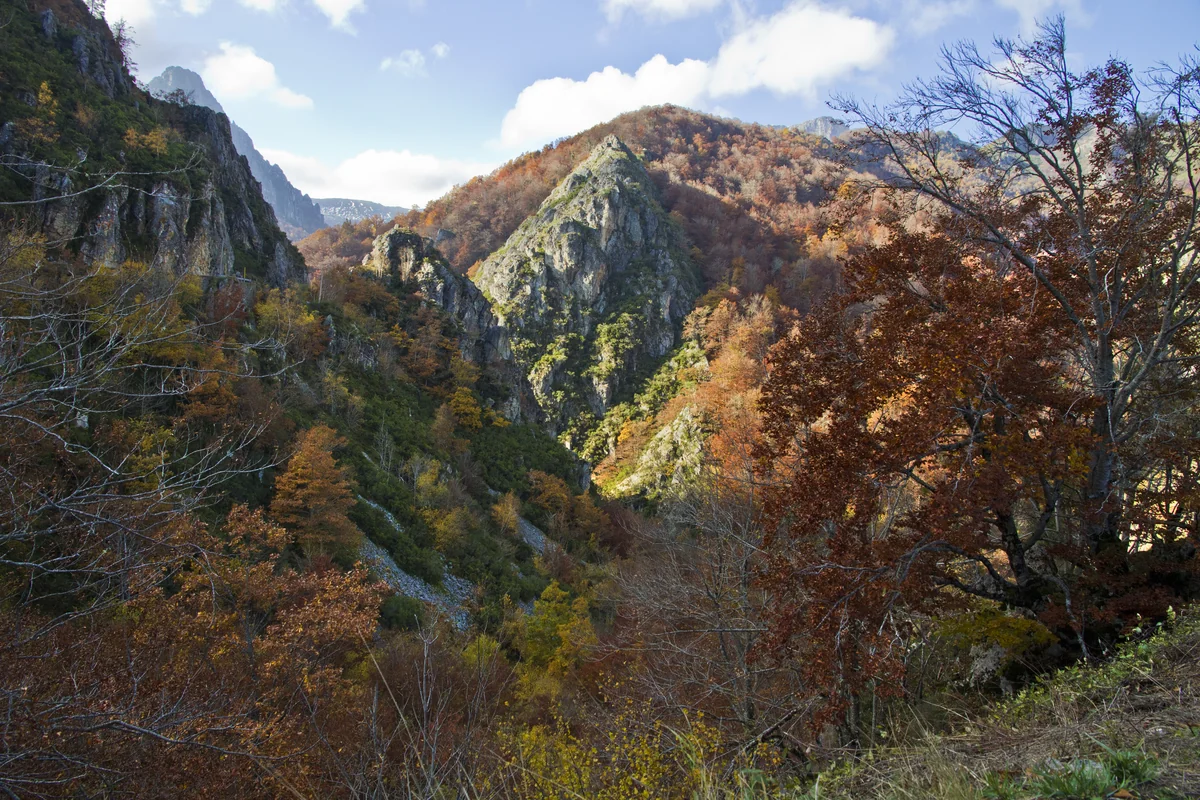
Orange and brown autumn woodland fills a steep rocky valley beneath limestone cliffs in Redes Natural Park.

Autumn woodland and rocky slopes in Redes Natural Park, photographed in November 2018.

ParqueNaturalRedes2.jpg — SusoRedondo / Wikimedia Commons / CC BY-SA 4.0 · Creative Commons

Walks and routes

Start small: Campo de Caso

Spend 45–60 minutes with the centre’s displays and film if available. Afterwards, choose a short look around the village or simply stop for a break. Ask staff to suggest any outdoor extension that fits your group; this is a flexible visit plan, not a marked walking circuit.

Use the centre as the first point of discussion for a wheelchair, walking aid or pushchair. Ask about the approach from parking or drop-off and any assistance needed.


Start small: Campo de Caso

A longer day: Ruta del Alba from Soto de Agues

Follow the signed PR-AS 62 along the Alba valley. The complete return trip is 13.64 km with 416 m of ascent; the official page rates it moderate and allows more than five hours. A broad early track gives way to a narrower gorge before Cruz de los Ríos. Return the same way. If you want less walking, agree a turn-back time at the start and keep enough energy for the return.

Village cobbles and significant slopes can be obstacles even before the upper gorge. Read the separate access assessment and confirm present conditions; do not assume the full trail is step-free or suitable for your mobility aid.

A longer day: Ruta del Alba from Soto de Agues

A relaxed first morning

Begin with a confirmed centre visit in Campo de Caso. Take your time with the displays, ask one or two practical questions, then decide whether to spend a little time outside or stop for food. Allow 2–3 hours overall and resist adding a distant trail simply to fill the day.

A day built around the Alba

Check conditions in advance and start at Soto de Agues with food, water and enough daylight. Decide whether you are aiming for the complete return walk or a shorter section. Keep the return journey in mind at every stop, and save Campo de Caso for another visit if adding it would make the day rushed.

Things to try

Build a landscape picture indoors

In the exhibition, choose one forest animal, one rock or landform and one example of rural life. Ask everyone which they would most like to understand outside. It gives a short visit a focus without turning it into a long checklist.

Listen before you look

On a permitted path, pause where you can stand safely without blocking others. Close your eyes briefly and separate running water, wind, livestock and bird sounds. Then look at the landscape and see which sources you can locate.

Compare woodland and meadow

From an open path or village viewpoint, look at the boundary between trees and grazing land. Think about where shade, water and shelter change. Leave gates, fields and animals undisturbed while you explore with your eyes.

Let the exhibition be the main event

If the centre is open, spend longer with the displays and ask questions about the habitats you had hoped to see. Decide afterwards whether any short outdoor stop is comfortable. In heavy rain, wind or poor visibility, move the longer walk to another day.

Wildlife and habitats

European beech

Ask staff how to recognise beech, then choose an open walk where you can practise. Compare a whole tree’s outline and leaves from the path rather than judging the forest by one distant canopy.

Sessile oak

Ask how to distinguish sessile oak from the other oaks in the area. Use a clear leaf photograph and several features, rather than assuming every oak beside a path is this species.

Common hazel

When a guide or display has helped you identify hazel, notice how its smaller-scale growth changes the edge of a wood. Leave nuts, branches and leaves where they are.

Alpine longhorn beetle

Use this woodland beetle as a reason to notice dead wood and ask why it matters. Learn its appearance from a field guide; do not peel bark, move logs or leave the path to search for one.

These are species documented in the wider park, rather than a list to tick off at the visitor centre. Enjoy what appears naturally, keep your distance and leave quiet woodland undisturbed. A short visit can be rewarding without seeing a rare animal.

Stories and discoveries

Water connects the mountains with daily life

The upper Nalón and the Tanes–Rioseco reservoir system help explain why water is such a strong theme here. Think of each river view as part of a much larger catchment, with consequences for communities downstream.

People belong in the landscape

The park includes villages, pastures and working land as well as woodland. Looking at a meadow beside a forest is also a way to notice how generations of land use have helped shape today’s view.

When to visit

Spring and early summer

Choose the outing for the conditions rather than the calendar. Be ready for rain and lingering snow higher up, and keep away from the river edge when flows are strong. A centre visit can still give the day a clear focus.

Summer

An early start gives a long walk more breathing room. Carry enough water, check the forecast and any fire restrictions, and keep a rain layer handy even when the village feels warm.

Autumn

Make woodland colour the theme, with time for photographs and quiet stops. Wet leaves can hide uneven ground, and a shorter day calls for an earlier turn-around on an out-and-back walk.

Winter

Keep a valley plan flexible and confirm the centre’s seasonal opening. Snow, ice and fog can make a familiar path a very different undertaking; postpone a mountain walk if conditions exceed your experience.

Getting there and practical advice

What the centre offers

The permanent exhibition covers nature and rural culture. The official page describes an approximately 20-minute staff-guided visit and a 12-minute park film; ask what is available when you arrive. Its listed contact is +34 985 608 022.

Published seasonal opening

The centre’s page lists 10:00–14:00 and 15:00–18:30 daily from 1 July to 30 September, and the same hours on low-season weekends. It also lists closure from 1–7 January and 16–31 December. Holiday exceptions are shown without a clear year, so call for your actual date.

Plan the practical stops

Check admission arrangements, toilets, parking or drop-off and any guided-visit booking when you call. Carry your own drinking water and food for a long walk rather than relying on refreshments along the trail.

Choose the right destination

For the short visit, navigate to the interpretation centre in Campo de Caso / El Campu, Caso. For the Alba walk, use Soto de Agues, Sobrescobio. The main valley approach follows the AS-117; check road conditions before travel, especially if crossing the mountains.

Without a car

Ask the centre or the relevant municipal tourism service about transport for your date, including the last return and any transfer between villages. Confirm the final stop or pick-up point; a journey into the Nalón valley does not necessarily take you to your chosen trailhead.

Inside the centre

The operator describes the permanent exhibition as accessible and the entrance and toilets as practicable. Explain your needs when calling, including wheelchair dimensions, help with transfers or a quiet visit, and ask about the whole approach from arrival to the exhibition.

What the Alba assessment actually covers

The linked COCEMFE assessment concerns roughly 1.5 km. It records a short 11.4% slope near the car park, a prolonged 9.6% section and shorter sections reaching 11.1%. It also notes cobbled paving, drainage grilles and a 4 cm surface defect. These observations date from October 2024; ask which barriers remain and whether the route suits your own equipment.

Sources and useful links

Wildlife you might spot

4

Each card links to a full Explore page with photos, traits, and fun facts.

Snap map for this place

Start with the big picture, then zoom in to explore individual wildlife observations around this place.

Loading map…

Good to know before you go

Call the centre on +34 985 608 022 before travelling, particularly outside July–September. Confirm opening, any guided visit and the conditions on the path you want to use.

Choose between a short gateway visit and a full walking day. Campo de Caso and Soto de Agues are different starting points, so leave time for the journey between them.

Carry water, food, a rain layer and shoes with grip. For a longer walk, take a usable map and a charged phone, and tell someone your plan.

Ask about works, fire restrictions and weather warnings before leaving the village. Respect signs and barriers; turn back if the surface, river level or visibility makes continuing uncomfortable.

Keep children close beside water and at path edges. Enjoy cascades and pools from the path rather than scrambling down for a photograph or a paddle.

Keep pet dogs on a lead, give livestock room and leave working guardian dogs alone. Leave gates as you found them.

Watch quietly, leave flowers and dead wood in place, and take every bit of litter home. Do not use food or calls to draw wildlife closer.

Park only where visitors are directed, leaving farm access clear. Arrange food stops and your return transport before setting out on a long walk.

Frequently asked questions

No. Redes is a separate natural park in Asturias, covering Caso and Sobrescobio. Campo de Caso is a useful gateway for this visit; do not navigate to a Picos de Europa visitor centre.
Yes. Give the interpretation centre 45–60 minutes, then spend as much or as little time outside around Campo de Caso as suits you. Ask staff for a short option that fits the weather and your mobility needs.
Ask the centre about admission and whether a guided exhibition visit needs arranging. Check separately for organised activities and any route-specific restrictions. A park visit does not give you access to every track or protected zone.
You can choose a shorter out-and-back visit from Soto de Agues, but the complete route is about 13.6 km with 416 m of ascent and an official time of more than five hours. Its upper section narrows into a gorge. Choose the distance for the least confident walker in your group.
Read the linked access report and ask about current conditions first. Its October 2024 assessment covers roughly 1.5 km, rather than the complete route, and records cobbles, drainage grilles and steep gradients. The centre is the better starting point for planning a visit around specific access needs.
Plan for the landscape and learn about sensitive wildlife in the exhibition. Do not set out to search for capercaillie or follow animals into the forest; the regional nature service says the species is unsuitable for wildlife-tourism activities.
Confirm the centre is open and make that your main visit. A wet day is a good reason to shorten or postpone a gorge walk. Keep an alternative plan rather than trying to fit a mountain route into a brief break in the weather.

Recent snaps at this place

Recent snaps will appear here as new observations are added.

View all ›

Take the discovery with you

Exploring Redes Natural Park?

Identify the wildlife you spot, learn as you go, and keep a collection of the adventure.

  1. 1Spot it
  2. 2Snap it
  3. 3Keep the discovery