Südparkrunde: the full circuit
No verified end-to-end wheelchair or pushchair assessment. Do not infer full accessibility from the park’s generally gentle terrain.
 Illustration
Come to Südpark for a day that can move from flower gardens to farm animals, with plenty of play in between.
Come to Südpark for a day that can move from flower gardens to farm animals, with plenty of play in between. If you have young children, start from the Südpark stop and head towards Café Südpark and the neighbouring farm. It gives the outing a clear first destination and an easy way back.
The park stretches across 70 hectares in three distinct sections. In the north, the Volksgarten has old trees, curving pond edges and winding paths. Farther south, In den Gärten gathers smaller garden spaces around a long water feature. Beyond them, Vor dem Deich opens towards the Deichsee, meadows and planted wetland edges. You can choose one mood for a short visit or link several together.
There is plenty to look at slowly. Follow the changing shapes of the hedge gardens, compare the formal water axis with the softer lakeside planting, or pause at the VHS-Biogarten when its gate is open. Its pond steps through deep water, shallows and a marshy fringe: a small, readable example of how different plants share a wet habitat. Watch from the path rather than searching through the vegetation for animals.
Children have several very different reasons to keep going. The farm offers domestic animals to observe, Kraut und Rüben adds play equipment shaped like carrots and leeks near the café, and the eastern Vor dem Deich playground combines climbing with water play and a rolling circuit. At the northern end, Klaus Rinke’s Zeitfeld turns a group of 24 clocks into an unexpected park entrance. Let children decide whether their next stop should be something living, something to climb or something puzzling. Don't forget to bring the Snappit nature identification app along to scan local species.
The Volksgarten was completed in 1895–96. The 1987 Bundesgartenschau joined it to newly shaped gardens, water and meadow landscapes. The farm building dates from 1859 and was restored for that show. Since 1988, Werkstatt für angepasste Arbeit has maintained the newer park sections, while the city looks after the historic Volksgarten. Its café, shop and farm also make this a place where visitors encounter the work of people with disabilities. The park received an award for sustainable management in 2023.
For a longer walk, use the city’s Südparkrunde map. The complete circuit starts and ends at In den Großen Banden by Südpark stop and is about 4 km: the web page gives 3.8 km and its PDF gives 3.96 km. It takes you north beside the cemetery, back south through the garden section and around the Deichsee. Expect asphalt, other park surfaces and a rise; Zeitfeld and the northernmost Volksgarten are extra detours.
For a shorter outing, walk from the same entrance to the café, Kraut und Rüben and the farm, then retrace your route. Or start at Zeitfeld by Auf’m Hennekamp, follow the pond-side paths towards the Emmastraße playground and return the same way. These two flexible outings have no measured distance here. Keep time for a proper play stop rather than trying to collect every attraction.
The water-play season has a winter break, and weather controls can stop the flow. In autumn, the Biogarten’s fruit trees give you something different to notice from spring blossom. In winter, choose a shorter walk and check the farm’s closing time. At 35°C or above, the farm closes at 15:00.
Mostly level parkland still includes the raised dike and mixed path surfaces. The full running circuit is not a certified step-free route. Vor dem Deich has a ramp into the water-and-mud play area and an accessible pump; Emmastraße also has ramp access and wheelchair-usable sand-play elements. These features do not establish access to every path, enclosure or play item. Accessible public toilets are listed at Siegburger Straße / Südpark and Volksgarten / Auf’m Hennekamp; check the approach that suits you.
Three contrasting park sections, from mature Volksgarten trees to Deichsee meadows
Hedge gardens and the long water axis in In den Gärten
Domestic animals at the historic farm, with no visitor feeding
Zeitfeld’s 24 clocks and two very different water playgrounds
No verified end-to-end wheelchair or pushchair assessment. Do not infer full accessibility from the park’s generally gentle terrain.
A short option, without a verified continuous step-free survey. Check farm access and any individual mobility needs with the operator.
The playground has ramp access and selected accessible play elements; the complete approach has not been certified here as step-free.
Start at Südpark stop and make the farm your first stop during its opening hours.
Take a proper play break at Kraut und Rüben, then choose lunch or a snack near Café Südpark.
If everyone still wants to walk, add a look at the nearby Deichsee from the public path. Keep this as an out-and-back and return past the café to the same entrance.
In the garden section, choose three views: a hedge opening, a flower bed and a reflection. Photograph the same subjects on another visit to see what the season has changed.
At Vor dem Deich, watch the water run from the higher level towards the lower play spaces when it is operating. Stay with younger children near the water and use the ramps where needed.
At the Biogarten pond, compare the open water with the shallows and marshy edge. Look for movement from the path, without dipping nets or disturbing the planting.
Use the farm-and-café return plan, with indoor seating at Café Südpark when open. Skip wet climbing equipment and leave the longer lake circuit for better conditions; the café is a break, not an all-day indoor attraction.
Watch the goats from the visitor side of the enclosure and compare how they stand, browse or rest. These are domestic farm animals. Let them move away when they want to, and keep all food out of reach.
The donkeys make a good slow-looking stop: try framing a portrait that includes the long ears without leaning over a barrier. Their position and visibility change during the day. Do not tempt them closer with food.
Look quietly into the rabbits’ visitor-viewing area and leave room for other families. A rabbit may choose to stay sheltered. Treat the accommodation as its space; do not reach in to lift or chase an animal.
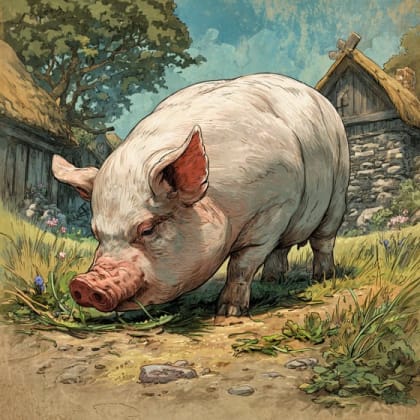
See what the pigs are doing before reaching for a photograph. Watching a resting animal can be just as interesting as catching it moving. Keep to the public viewing side and leave feeding to the keepers.
Look for the cultivated ‘Baldwin’ apple during Biogarten opening hours. It is a winter-storage variety, so autumn offers a different subject from spring blossom. Photograph fruit in place and ask the garden team before picking anything.
Make the fig a leaf-shape stop when the Biogarten is open: compare its foliage with the nearby fruit trees without pulling leaves off. This is a planted garden tree; fruit and foliage depend on the season.
The yew offers a different subject from the fruit trees. Keep this a looking-only stop, especially with small children: its needles, bark and seeds are poisonous. Do not pick or taste any part of it.
Look towards the orchard meadow for the walnut, staying on the visitor paths. Try a wider picture showing the tree above the grasses as well as a closer view from the path. Garden opening times apply here too.
The high ground at Vor dem Deich incorporates a flood dike built for Stoffeln in 1573. Its raised line helps explain why this otherwise gentle park has a viewpoint.
The water axis runs for 600 metres through a sequence of 16 themed gardens. That measurement describes the designed feature; it is not the length of a signed walking circuit.
The city lists accessible public toilets at Siegburger Straße / Südpark and Volksgarten / Auf’m Hennekamp as continuously open. Temporary faults can still occur. The minigolf operator also lists accessible toilets at its facility; ask about access during its opening hours.
Café Südpark has indoor and terrace seating. The Hofladen sells take-away food, with picnic tables on the adjoining meadow. Opening times are separate from park access.
The public toilets listed at Siegburger Straße / Südpark and Volksgarten / Auf’m Hennekamp are marked accessible and continuously open. The minigolf facility has accessible toilets and a tactile guidance system; check facility access with WfaA.
Each card links to a full Explore page with photos, traits, and fun facts.
Start with the big picture, then zoom in to explore individual wildlife observations around this place.
Choose your entrance
Südpark stop suits the farm and southern lake; Volksgarten stop suits Zeitfeld. Oberbilk serves the northeastern side. Check the day’s connections.
Farm timing
The operator lists daily 10:00–17:00, while the city lists winter closing at 16:00. Visit earlier and confirm the day’s hours with WfaA.
No feeding
Do not bring food for the farm animals. Feed is no longer sold there either.
Bring spare clothes
Water play can easily become the main event. Pack drinks and sun protection as well.
Keep the map handy
The approximately 4 km circuit does not include every attraction; the 600-metre water axis is a landscape feature, not a complete walking route.
Autumn 2026 travel
Coming from Monheim or Langenfeld? Check S6 replacement arrangements through 4 December and the SB59 diversion before leaving.
Recent snaps will appear here as new observations are added.

Maryland, US
You might spot White-Tailed Deer and Eastern Gray Squirrel.
View guide →

District of Columbia, US
You might spot Eastern Gray Squirrel, Duck, and House Sparrow.
View guide →

Illinois, US
You might spot American Robin, Canada Goose, and House Sparrow.
View guide →

Virginia, US
You might spot Spotted Lanternfly and Northern Cardinal.
View guide →
Take the discovery with you
Identify the wildlife you spot, learn as you go, and keep a collection of the adventure.