Snappit logo
Snappit
Get App
Generic illustration, not a photograph of this venueIllustration
ParkCorse, FR

Corsica Regional Nature Park

The Parc naturel régional de Corse follows the island’s mountainous spine across Haute-Corse and Corse-du-Sud.

About

The Parc naturel régional de Corse follows the island’s mountainous spine across Haute-Corse and Corse-du-Sud. Its roughly 450,000 hectares also include villages, farmland and stretches of coast. This is a lived-in landscape, with different valleys and communities, rather than a single attraction behind an entrance gate. Vizzavona, in Vivario, offers one manageable starting point within that much larger territory.

The contrast between its trees is part of the pleasure. Laricio pines keep their needles while the beeches change the light beneath them through the year. In spring, fresh leaves brighten the woodland; in autumn, the forest floor gathers colour. The setting feels a long way from a beach holiday, yet the train and the T20 make it possible to reach the mountain without organising a multi-day expedition.

Give the forest time of its own. A waterfall can provide a satisfying destination, but getting there is not the only measure of a good visit. For young children or a mixed-ability group, an early turnaround on the signed approach can be the better choice. For walkers comfortable with sustained climbing, the official station-to-cascade outing has a clear beginning and a clear return. Higher routes towards mountain refuges are a different undertaking. Unlock an interactive field guide for this spot: get the Snappit app to identify nature on the go.

Created in 1972, the park linked nature conservation with the future of Corsica’s rural communities. Its work has included mountain refuges, environmental education and species recovery. At Vizzavona, the Casa di a Natura opened in 1979. The hamlet also carries an older visitor story: hotels brought travellers seeking mountain air, while the railway and forestry shaped daily life. Understanding those uses makes the woodland more interesting than an apparently untouched backdrop.

What to do here

Start at Vizzavona station, check the route information and choose your turnaround before setting off. Follow the signed Cascade des Anglais approach only as far as suits your group. Spend your pauses comparing the canopy, listening for forest birds and looking at how the river has shaped the valley. Keep the high-mountain routes for a separately planned day.

Seasonal info

Summer shade does not remove fire risk or the possibility of thunderstorms. In autumn, wet leaves can hide uneven footing. Winter brings a different mountain outing, with possible snow, ice and travel disruption; the fair-weather walk described here should not be carried over unchanged into those conditions.

Accessibility

The complete cascade outing is for people comfortable on uneven forest paths, uphill ground and footbridges. The tourism office’s easy walking grade is not an accessibility assessment. A shorter turnaround reduces the distance walked but does not establish a step-free route; ask about current surfaces and gradients if using a wheelchair or pushchair.

Don't miss

1

Laricio pine and beech woodland around a mountain railway stop

2

A defined waterfall outing for walkers ready for the climb

3

A forest closely connected with Corsica’s endemic wildlife

4

A wider park linking mountain communities and protected coast

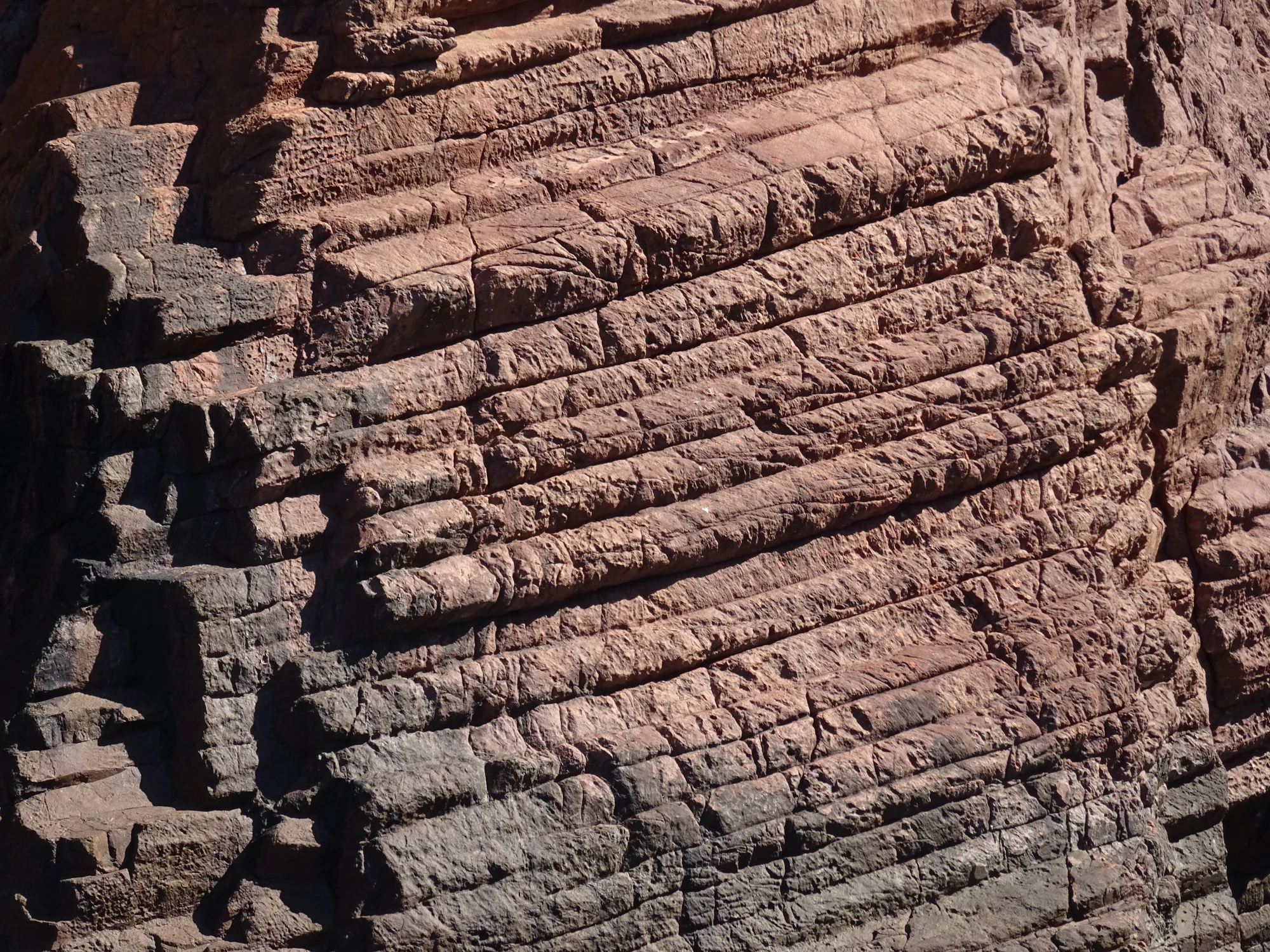
Close view of red-brown rock columns divided by diagonal cracks and dark recesses.

Detail of rhyolite columns at Scandola, photographed in April 2022.

“Orgues rhyolithiques, Scandola” by Lionel DUCHOISELLE, CC BY-SA 3.0. Original photograph unchanged. · Creative Commons

Walks and routes

Cascade des Anglais from Vizzavona station

The Centre Corse tourism office starts this linear walk at Vizzavona station and describes a shaded forest approach crossing the Fiuminatu and Agnone footbridges. Follow the marked waterfall direction, then return by the same way. The office publishes 300 m of elevation difference and grades it easy; that still represents a meaningful climb, especially for children. Do not confuse the station start with a different approach from the road pass.

Allow for rough ground, climbing and a return descent. This is not presented as wheelchair- or pushchair-accessible. If anyone is tiring, turn back on the same path while they still have energy for the return.


Cascade des Anglais from Vizzavona station

A first half-day in the forest

Arrive with the return journey already settled. Use the station area to adjust layers and distribute water, then start the signed waterfall approach. In the first part of the walk, check how the least confident person feels about both climbing and coming back down. Continue to the cascade only if conditions, energy and time all fit. Otherwise, enjoy a forest pause and retrace your steps. A shorter out-and-back is a flexible suggestion, with no fixed endpoint or measured length. Finish with a break in the hamlet if a suitable business is open.

Things to try

Make a forest comparison

Choose a comfortable stopping place beside the path where you can see both needle-bearing and broad-leaved trees. Compare silhouettes, shade and the pattern of the branches. With children, a photograph of each canopy makes a simple record to discuss later; there is no need to collect a branch, leaf or cone.

Arrange a deeper introduction

For an organised group, ask the park about Tra u faiu è u laricciu, its Vizzavona forest-discovery activity. Themes include woodland life and the history of the hamlet and railway. The park also offers an educational visit connected with the Southwell rock shelter. Agree availability, meeting point, duration, cost and suitability directly with the team.

Change the shape of the day

In persistent rain, favour an indoor stop or meal whose opening you have checked before leaving your base, and save the forest for better conditions. Casa di a Natura should not be treated as an automatic rainy-day shelter. Even a short woodland walk can become unpleasant when wet footing and a fixed return train are combined.

Wildlife and habitats

Pine: the laricio forest

The pines here are a defining part of the habitat. Look upwards from the path to appreciate the tall trunks and the spaces between their crowns, then compare them with the broad-leaved trees nearby. The local laricio pine belongs to the genus Pinus; the forest’s official management plan documents its conservation importance.

European beech — Fagus sylvatica

Beech gives this mountain forest much of its seasonal change. Notice the broad leaves and how the canopy alters the light underneath. In autumn, compare fallen leaves from the path rather than gathering them. The contrast with evergreen pine is easier to appreciate when you stop looking only towards the next destination.

Corsican nuthatch: a reason to value old trees

This island-endemic bird depends on old laricio-pine forest and uses dead trees for nesting. The Vizzavona management plan records it in the protected forest area. In summer it feeds on insects; in winter it draws on seeds hidden under pine bark. Watch quietly from the path if birds are active, without approaching cavities. Even without a sighting, knowing why ageing and dead trees matter changes the way you see the woodland.

Red deer beyond this first walk

The Corsican red deer is part of a recovery story across the wider park. Animals from Sardinia supported a breeding programme, followed by releases into the wild from 1998, including in Alta Rocca. These are free-living animals in suitable parts of the territory, not a promised encounter on the cascade path. Enjoy any distant sighting without following the animal.

Stories and discoveries

Conservation can begin far from a viewpoint

The park’s mouflon work includes the Cintu and Bavella populations and a breeding programme at Quenza. Disturbance from outdoor activities is one of the pressures it identifies. A quiet visit that stays on established paths helps protect wildlife even when no large animal appears.

A very different rock story at Scandola

On the park’s western coast, Scandola provides a striking change from Vizzavona’s woodland. Rhyolite columns are among its distinctive rock formations, shown close-up in this photograph from Osani. Diagonal joints and deeply shaded recesses give the rock a strongly textured appearance. The reserve has its own strict rules, including a prohibition on hiking and climbing within it; plan any coastal visit separately using the park’s current guidance.

When to visit

A summer morning

Start with the fire-risk and weather checks, then leave enough time for the return before the hottest part of the day or forecast storms. Shade is useful, but carry drinking water and make your rest stops away from the river edge.

An autumn visit

Make the changing beech canopy the focus. Shorter days reward an earlier start, and damp leaves call for careful footing. Observe any hunting or forestry-work signs and choose another outing if access is restricted.

Cold or unsettled weather

Postpone the forest route when snow, ice, strong wind or storms make it unsuitable. A mountain train journey is only a useful alternative if services and your destination arrangements are confirmed; it is not a reason to travel into a disruption.

Getting there and practical advice

Food, water and a place to pause

Vizzavona’s hamlet has accommodation and eating places, but individual openings vary. Carry what you need for the walk rather than relying on a particular café, public toilet or refill point. Check parking conditions on arrival if driving. Keep the station and road access usable for other visitors and residents.

Casa di a Natura

The centre offers arranged educational days and residential programmes for organised groups. Contact [email protected] or +33 4 95 47 21 50 to discuss a project. Its advertised accessible bedroom concerns the building; ask separately about the practical accessibility of the proposed outdoor activities.

By train

Vizzavona is served on the Corsican railway linking Ajaccio with the island’s interior and Bastia. Use the current main-line timetable and check both directions before choosing a walk. The return service, including any service changes, should determine your turnaround margin. Ask the railway about boarding assistance and the station-to-path connection if you need step-free access.

By road

Reach the Vizzavona sector from the T20 between Ajaccio and Corte. The railway station and the road pass are different starting points: use the station for the official outing described here. Mountain roads, weather and stopping opportunities can all affect the journey, so avoid adding a tightly timed onward commitment.

Choose the whole journey, not just the walk

For limited mobility, confirm the arrival point, any steps or gradients, a usable toilet and a suitable place to rest before travelling. Do not assume a railway stop supplies an accessible nature trail. If those arrangements cannot be established, ask the local tourism office for a better-matched visit rather than discovering the barriers at the trailhead.

Sources and useful links

Wildlife you might spot

3

Each card links to a full Explore page with photos, traits, and fun facts.

Snap map for this place

Start with the big picture, then zoom in to explore individual wildlife observations around this place.

Loading map…

Good to know before you go

Save the official route page and your return train details before leaving. Carry a map that you can use without a phone signal.

Bring water, food, grippy shoes and a warm waterproof layer. Set a turnaround time with enough margin for a slower descent.

At the station, use designated crossings and pedestrian access. Never follow the railway tracks or enter a railway tunnel as a walking shortcut.

Keep children close at footbridges and away from steep or wet river-edge rocks. A walking visit does not require entering the water.

Leave dead wood, stones, fungi and plants in place. Keep dogs on a lead and give wildlife room; do not use recorded calls to draw birds towards you.

Check the daily fire-risk information and local notices. Do not light fires or barbecues, and leave forest gates and emergency access clear.

Frequently asked questions

No. The cascade approach shares a forest section with the GR20, but this visit ends at the waterfall and returns to the station. It does not include a refuge stage or a summit. Treat any onward route as a separate mountain plan.
There is no single park-wide visitor gate. Individual buildings, activities, parking areas and transport services have their own arrangements. The official cascade listing does not advertise an admission ticket; check local notices rather than assuming every service is free or continuously available.
Plan its educational activities in advance. The park describes programmes for organised groups, including day visits and stays, rather than a guaranteed drop-in visitor centre. Contact the team before building your day around it.
Give the coast its own day and its own access checks. Scandola belongs to the park’s wider protected landscape, but it is far removed from this forest outing. Its reserve rules and marine conditions cannot be inferred from the walking advice for Vizzavona.

Recent snaps at this place

Recent snaps will appear here as new observations are added.

View all ›

Take the discovery with you

Exploring Corsica Regional Nature Park?

Identify the wildlife you spot, learn as you go, and keep a collection of the adventure.

  1. 1Spot it
  2. 2Snap it
  3. 3Keep the discovery