Snappit logo
Snappit
Get App
Generic illustration, not a photograph of this venueIllustration
ParkBretagne, FR

Gulf of Morbihan Regional Nature Park

The Gulf of Morbihan is a place to read in layers.

About

The Gulf of Morbihan is a place to read in layers. Beyond the boats and wooded islands lie broad feeding grounds, sheltered creeks and underwater meadows; inland, hedged fields, woodland and villages are part of the same regional nature park. Mor Bihan means “little sea” in Breton. Atlantic water entered river valleys here, leaving former high ground as islands and a shoreline with many folds.

For a first nature outing, concentrate on Séné, on the Noyalo estuary near Vannes. Its reserve brings the relationship between land and sea down to an approachable scale. Look across a lagoon, then compare it with the tidal channel beyond: water held behind a bank behaves differently from water that comes and goes. Birds respond to those differences.

The regional park is an inhabited territory, designated in 2014, rather than one enclosed attraction. Séné is a separately managed national nature reserve within it. Its entrances, opening arrangements and rules apply to this particular wetland visit; they are not a timetable or ticket for the whole Gulf. Be ready to snap and learn! Get the Snappit app to identify any nature species you find here.

Séné’s saltworks were laid out between 1723 and 1742; the last salt producer stopped in 1951. Their banks and basins survived the trade that created them. In 1979, donations collected after the Amoco Cadiz oil spill helped the Breton nature-conservation association acquire former saltworks at Petit Falguérec. National reserve designation followed in 1996. The protected space now commonly described as 530 hectares combines the 410-hectare reserve with a 120-hectare protection perimeter added in 2002. This history explains why today’s seemingly natural pools retain the geometry of working landscapes.

What to do here

Choose one of Séné’s two public trail sectors using the red-and-yellow visitor plan. The yellow sector is the better introduction when open, with covered hides and identification panels. The free red sector suits an independent walk. Leave time to settle at a viewpoint.

Seasonal info

Wildlife and visitor services follow different calendars. Winter can be rewarding even during Séné’s normal seasonal closure. Read the current opening note before setting off.

Accessibility

Séné has an adapted section, but not every hide is wheelchair-accessible. The free red trails are less developed. Ask about the specific route and current surfaces before travelling.

Don't miss

1

Lagoons and former saltworks viewed from designated paths and hides

2

Avocets, shelducks and spoonbills among the reserve’s recorded wild birds

3

The changing boundary between exposed mudflat and saltmarsh

4

A coastal landscape whose conservation still depends on careful water management

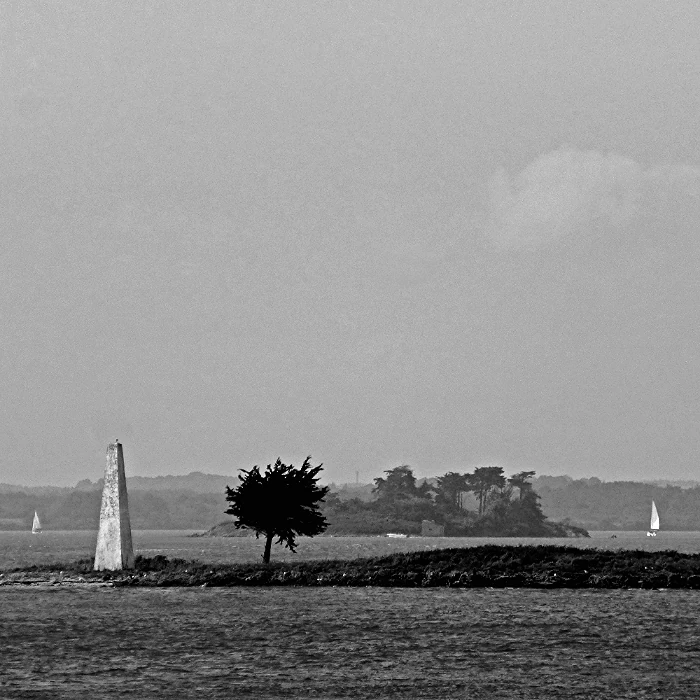
Black-and-white view across water to a low islet with a stone beacon and tree, with wooded shores and small sails beyond.

An island view in the Gulf of Morbihan, photographed in May 2016. This wider Gulf scene does not depict the Marais de Séné.

Photograph: “Golfe du Morbihan, Bretagne, France” by Pom', CC BY-SA 2.0. Original photograph unchanged. · Creative Commons

Walks and routes

Séné: the yellow-sector hide visit

Start at the Centre Nature on Route de Brouel and follow the yellow-sector visitor plan. The reserve describes two trails totalling 4 km, with six covered hides, and suggests two hours. Ask which hides are most rewarding before choosing your route. Identification panels make this a good option for beginners.

Discuss the shorter adapted section at reception; it does not cover the whole network.

Séné: the yellow-sector hide visit

Séné: the free red-sector trails

The red-sector access is separate, approximately 2 km farther along the road from the Centre Nature. The reserve lists 4.5 km across two trails, one hide and two viewing platforms, with about two hours suggested. Choose signed branches to suit your energy; do not cut across the marsh to the yellow sector.

These less-developed trails need walking shoes, or boots in winter. Check suitability before bringing a wheelchair or pushchair.

Séné: the free red-sector trails

An easy first visit, when the yellow sector is open

Ask about the birds and choose a few hides. Settle in long enough to understand each view, adding another stop only if everyone still has energy. Leave room in the two-hour visit for questions and a final look at your favourite pool.

An independent winter outing

Choose the red trails on a suitable day, or reconfirm the Sunday yellow-sector opening. Bring binoculars and warm layers. Concentrate on one or two viewpoints and turn back in good daylight; the Centre Nature’s usual services may be unavailable.

Things to try

Make the first hide a shared discovery

With children, identify one bird together before opening a field guide. Ask for three clues: its size beside another bird, its bill shape and what it is doing. Use a panel or binoculars to test the guess. The useful discovery is which details help.

Sketch the water, not just the birds

From a designated viewpoint, sketch the bank, water and vegetation. Mark where birds are feeding or resting, without following them. Drawing helps the layout of a former salt pond make sense, and works even when the wildlife is quiet.

Choose a guided theme

Guided nature outings run through the year, sometimes outside normal hours or elsewhere in the Gulf. Check the event’s meeting place and booking requirements. A theme such as migration, insects or evening wildlife gives a visit a satisfying focus.

A light shower is different from a storm

On a day of occasional showers, an open covered hide can make a short visit worthwhile, but reaching it still involves outdoor walking. In strong wind, heavy rain, flooding or poor visibility, postpone the exposed wetland outing. Do not use a closed coastal path as a way around a flooded or damaged section.

Keep the coast as a separate decision

Before adding any shoreline walk elsewhere in the park, check the municipality’s latest restrictions and the tide reference for that precise area. The Gulf has different published tide tables for its upper, middle and outer reaches. Never assume a Port-Navalo time applies unchanged beside Vannes or on another estuary.

Wildlife and habitats

Pied Avocet

Look for a black-and-white wader with a slender bill curving upwards. Séné is a breeding site, so spring behaviour can be as interesting as a clear portrait. Watch from the hide and leave feeding or resting birds undisturbed.

Eurasian Spoonbill

Spoonbills use the reserve as a migration stopover. A distant white bird is not automatically one: wait for it to show its bill and compare it with the identification panels. If it remains asleep, enjoy the scene without trying to make it move.

Common Shelduck

A white body, dark green head, chestnut breast band and red bill make an adult shelduck a useful first identification. Look for this reserve regular among the waterbirds, comparing its proportions with nearby ducks rather than relying on colour alone.

Brent Goose

A small, dark goose of the Gulf’s winter wildlife, dependent on sheltered feeding grounds. When watching a flock, notice how many are feeding and how many are alert. If your approach interrupts them, give them more space.

Eelgrass

This flowering plant forms submerged meadows in the wider Gulf; it is not a feature to seek along the Séné footpaths. The Gulf also supports dwarf eelgrass, a separate species. A green bed glimpsed from the shore cannot always be identified to species.

Stories and discoveries

Two wetland words to recognise

At Séné, the slikke is the mudflat exposed by the retreating tide. Higher up, the schorre is the vegetated saltmarsh flooded less often. Look for the change in colour and texture from a permitted viewpoint. The plants occupy different levels according to the salt and inundation they can tolerate; a small change in height can make a large ecological difference.

A lagoon is maintained, not simply left alone

The reserve repairs banks and regulates seawater passing through its water-control structures. Without this work, some former salt ponds would change into saltmarsh. Both habitats have conservation value, so restoring a lagoon is a deliberate ecological choice. The straight banks in the view are part of the wildlife story, not an unfortunate interruption of it.

The underwater Gulf

Eelgrass beds are another part of the park’s habitat mosaic, even when you cannot see them from a hide. These are flowering plants rather than seaweed. They shelter small marine animals, and their roots help stabilise sediment. Avoid treating an exposed coastal bed as bare ground; the wildlife value of the Gulf extends beneath the waterline.

When to visit

Spring: watch without approaching nests

Séné supports breeding waterbirds. Watch behaviour from the designated hides and paths rather than looking for nests. A bird repeatedly alarm-calling or leaving a settled position is a reason to move away. Check the opening calendar before planning an early-morning visit: the regular spring schedule is afternoon-based.

Summer: give the afternoon some breathing room

Bring drinking water and sun protection for the walking sections, and enjoy the hides as places to stop rather than hurry through. In the published 2026 summer schedule the staffed site closes between 13:00 and 14:00; plan arrivals around that break and verify the next season’s timetable.

Autumn and winter: the estuary earns its place

Think of the estuary as a feeding and resting landscape. Larger gatherings can make a telescope useful, but binoculars still reward a first visit. Shorter daylight and wet ground favour a modest plan; consult the opening note for winter access.

Getting there and practical advice

Equipment and interpretation

During the normal season, binocular hire at reception costs €2 a pair; covered hides have identification panels and staff offer interpretation. Special-opening services may differ, so bring your own optics if they are essential.

Parking and basic planning

The official plan marks parking at the Centre Nature and by the separate free-sector access. Use these designated areas and leave entrances clear. Confirm toilet access with the reserve if it is essential, particularly outside the staffed season. Overnight parking by campervans and converted vans, camping and bivouacking are prohibited on the reserve.

Arriving at Séné

Use the Centre Nature address, Route de Brouel, 56860 Séné, for the staffed visit. For the free sector, consult the official visitor plan before arrival: its access is separate. Do not navigate to the regional park’s administrative office in Vannes expecting a reserve entrance. The reserve contact number is +33 (0)2 97 66 92 76.

Without a car

Vannes is a useful gateway, and Kicéo’s current urban network serves Séné. Check the journey planner for the exact reserve destination, return service and final walking leg; a bus labelled Séné does not necessarily reach the Centre Nature. Cycling can be useful for the approach on permitted roads, but the reserve trails themselves are for walking.

Plan the adapted visit specifically

The destination tourism office describes an adapted trail and two wheelchair-accessible hides, allowing 45–60 minutes, and notes a 3 cm level change at the trail entrance. It also lists guide-dog access and an easy-read French booklet. Ask the reserve to confirm the usable section, current surface condition, toilet arrangements and assistance needs before travelling. These details do not establish access throughout the red trails or all yellow-sector hides.

Visitor information

Opening and prices: autumn 2026 to winter 2027

Séné’s regular staffed visitor season is closed until 31 January 2027. The published exception is free access to the yellow sector on Sundays, 14:00–17:00, hosted by the Friends of the reserve. The red sector remains available year-round. Booked groups and scheduled nature outings continue during the closure. Check the reserve’s current notice before travelling.

For the normal paid season, the posted 2026 prices are €7 full rate, €3.50 reduced rate and €16 for the family package (parents and children in education); children under seven visiting with family are free. These are reserve prices, not a regional-park admission fee. Use the current practical-information page for eligibility, last admission and the next season’s dates.

Sources and useful links

Wildlife you might spot

5

Each card links to a full Explore page with photos, traits, and fun facts.

Snap map for this place

Start with the big picture, then zoom in to explore individual wildlife observations around this place.

Loading map…

Good to know before you go

Bring binoculars; on the free trails, do not rely on equipment being available.

Pack a windproof layer

sitting still to watch birds feels colder than walking.

With children, choose a few absorbing stops rather than a hide-counting challenge.

Use rubber tips on walking poles on coastal paths, and follow local signs.

Do not step onto a mudflat for a closer photograph or use it as a shortcut.

Bring water and a snack, and ask where eating is permitted.

Keep a little time at the end to revisit your best viewpoint: the scene may have changed.

Frequently asked questions

There is no single gate for this inhabited park. Plan each reserve, activity or boat journey separately. Séné has a normally paid sector, a free sector and seasonal exceptions, described in the opening note.
Pet dogs are prohibited, including on a lead, and bicycles are not permitted on the reserve trails. The tourism office specifically lists guide dogs as accepted. If you rely on an assistance animal, discuss your visit with the reserve in advance.
There is no single best tide for every viewpoint. Exposed mud offers feeding opportunities, while rising water changes where birds gather. Séné also has managed lagoons. Ask which open viewpoint is useful that day and keep your distance from resting flocks.
Treat any tidal crossing as a separate outing with its own access rules and locally applicable tide information. This visit stays on the reserve’s designated land paths. A visible causeway or exposed strip of shore is not an invitation to follow it.

Recent snaps at this place

Recent snaps will appear here as new observations are added.

View all ›

Take the discovery with you

Exploring Gulf of Morbihan Regional Nature Park?

Identify the wildlife you spot, learn as you go, and keep a collection of the adventure.

  1. 1Spot it
  2. 2Snap it
  3. 3Keep the discovery