Snappit logo
Snappit
Get App
Generic illustration, not a photograph of this venueIllustration
ParkOccitanie, FR

Haut-Languedoc Regional Nature Park

In the Sidobre, rounded granite blocks interrupt the trees as if someone has scattered pieces of a much larger landscape.

About

In the Sidobre, rounded granite blocks interrupt the trees as if someone has scattered pieces of a much larger landscape. The Sentier des immortels at Vialavert gives you a manageable way into their story: a short path through woodland, interpretation about the rock, and reproductions of the Haut-Languedoc’s statue-menhirs. You can enjoy the geology without committing to a long hill walk.

This is the Tarn side of the Parc naturel régional du Haut-Languedoc, which also extends into Hérault. The whole park lies in Occitanie, at the southwestern end of the Massif central. Atlantic, upland and Mediterranean influences help explain why its landscapes range from beechwoods and wet ground to evergreen oak and garrigue. A visit to the Sidobre is one chapter of that larger landscape, not a miniature tour of every habitat.

Make Maison du Sidobre your practical starting point. Its outdoor trail is the main nature outing here; the indoor displays add the story of people who quarry and work the stone. Saint-Pons-de-Thomières, where the park organisation is based, is a different gateway. You do not need to go there first. Nor do you need to add a Caroux summit or a gorge walk to make this a worthwhile visit: those involve separate route planning and very different terrain. Unlock an interactive field guide for this spot: get the Snappit app to identify nature on the go.

The regional nature park was created in 1973 to support the protection and living use of its natural and cultural heritage. In the Sidobre, that relationship is especially tangible: the same stone that shapes the woods also supports a working craft and industry. The statue-menhirs on the trail are reproductions, brought together to introduce prehistoric carved figures from the wider Haut-Languedoc. They should not be mistaken for an untouched prehistoric alignment discovered on this spot.

What to do here

Follow the Sentier des immortels, taking time to compare the natural rock with the carved human figures. If Maison du Sidobre is open, add the Du granit et des Hommes exhibition to connect the landscape outside with the local stone-working trade.

Seasonal info

The outdoor route is listed for year-round use, while the visitor building keeps seasonal opening hours. A year-round listing does not override temporary restrictions or poor ground conditions.

Accessibility

Plan access around the bridge and woodland surface. Maison du Sidobre has documented indoor wheelchair access; the outdoor route has separate all-terrain-wheelchair advice, explained below.

Don't miss

1

A short geological trail through the Sidobre woodland

2

Sixteen reproductions of Haut-Languedoc statue-menhirs

3

The link between natural granite and local stone-working skills

4

A modest first outing within a large, cross-boundary nature park

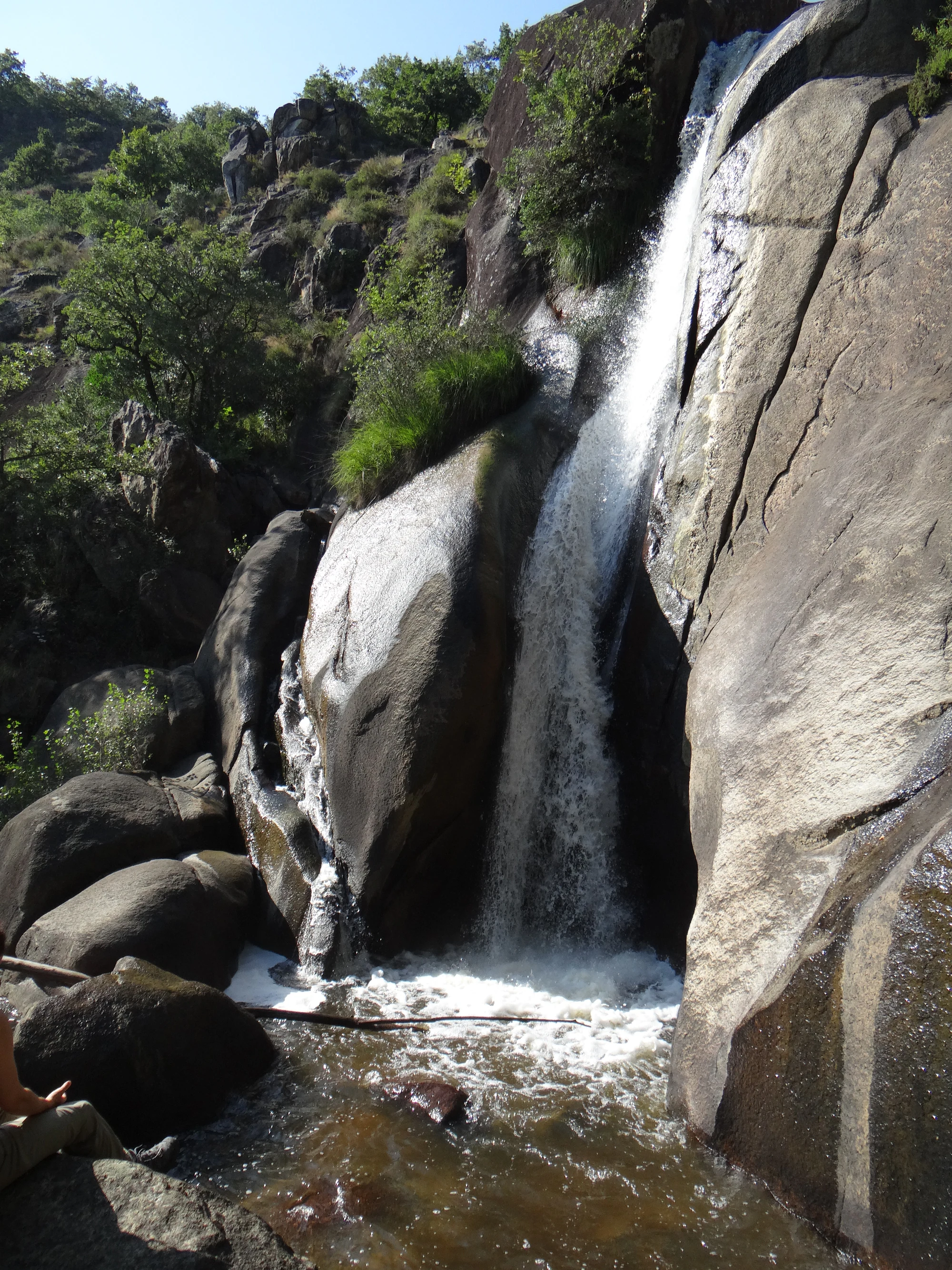
A waterfall runs down tall rounded grey rock into a brown pool, with vegetation above and part of a seated person visible at the lower left.

The Saut de la Truite in the Sidobre, photographed by Sandrine Rouja on 3 August 2014. This wider-park view is not on the introductory route and does not show present water levels or permission to approach or swim.

“Cascade, Le Saut de la truite” — Sandrine Rouja, CC BY 2.0. https://www.flickr.com/photos/79489755%40N02/14648914848/ . https://creativecommons.org/licenses/by/2.0/ . Original unchanged. · Creative Commons

Walks and routes

Sentier des immortels: the short woodland circuit

Start at Maison du Sidobre, 56 route du Lignon, Vialavert, Le Bez. The official sheet takes you over a wooden footbridge, up a gentle rise and along the woodland path between small wooden posts, then beside the lake. The second part introduces 16 reproductions of statue-menhirs. Follow the signed circuit and its interpretation; the sheet also mentions longer neighbouring walks, which are separate outings.

The standard circuit includes a wooden footbridge and a small climb. Use the access advice below to decide whether the full circuit or the adapted out-and-back is suitable for your group.


Sentier des immortels: the short woodland circuit

A simple first visit

Allow 1–2 hours. Arrive at Maison du Sidobre, check the trail notices and, when the desk is open, ask about current conditions. Walk the short circuit with time for the geology and carved figures, then return to the building for the exhibition if it interests your group. If attention or energy runs out, the outdoor outing is a complete visit in itself. If arriving by bus, fit this plan to an actual return service before leaving Castres.

Things to try

Read the granite

Find a visible rock surface from the path and look for its different grains. Granite forms when molten rock cools slowly underground; weathering later works along cracks and gradually rounds the blocks. On the trail, use the interpretation to connect the small details with the large shapes. A phone close-up is enough: there is no need to chip off a sample.

Look for the human figure

At the statue-menhir reproductions, choose two figures and compare what has been carved. Which details make you recognise a body or clothing? Let children explain their own interpretation before reading the panel. The point is to notice how a human shape can emerge from a simple slab, not to race through all 16.

Follow the stone indoors

Du granit et des Hommes explains the journey from extraction to working and finishing granite. After the outdoor walk, look for a connection between a rough rock face, a tool and a finished object. The indoor visit makes the landscape feel like a place where people live and work, rather than scenery alone.

Keep the stone story indoors

If Maison du Sidobre is open, spend your available time with the granite displays and ask the team for a suitable next outing. There is no reason to force the woodland circuit in wind or heavy rain. If the building is shut, save this visit for another day rather than treating a gorge or waterfall as an easier wet-weather substitute.

Wildlife and habitats

Black woodpecker

The park’s forest-fauna guide records this large woodpecker as an established breeder. Its excavation of tree cavities also creates places later used by other animals. If you hear or glimpse a woodpecker, enjoy it from the path and keep well away from nest holes.

Rosalia longicorn

This longhorn beetle links the park’s beechwoods with dead wood. The park guide specifically records it in the Somail and Espinouse, with adults appearing briefly in summer. It offers a vivid example of why dead trees matter as habitat. Leave timber and any insects undisturbed.

Eurasian otter

The park’s species guide describes the otter’s natural return from the 1990s and records it along parts of rivers including the Arn, Agout and Gijou. It is elusive, so treat it as part of the wider river story rather than a likely sighting here. Stay on public paths and leave banks and resting places undisturbed.

These examples belong to the wider park’s documented wildlife. They explain why its forests and rivers matter; none is a promised sighting on the Sentier des immortels.

Stories and discoveries

A long story in one rock

The local tourism guide places the formation of the granite roughly 300 million years ago. It cooled beneath the surface; erosion subsequently exposed it. Water entering fractures helps break down some minerals into clay and loose sandy material, leaving more resistant rounded blocks. The rounded shapes are the product of a long process, not evidence that somebody stacked them for visitors.

Different woods in one park

Woodland covers about two-thirds of the park. Higher, cooler ground supports beech and conifers, while valley slopes include oak and chestnut woods and the Mediterranean side has evergreen oak. This variety helps explain why wildlife information for the whole park cannot be treated as a list of species beside one short trail.

When to visit

Spring and autumn

Use the woods for a close-looking outing: changing leaf cover alters how much rock and sky you can see. After rain, shorten the visit if footing is awkward. During the hunting season, ask locally about any activity affecting the chosen trail and respect temporary signs; a general opening calendar cannot tell you where a hunt is happening that day.

Summer

Check the Tarn prefecture’s forest-fire access information for the day and the correct massif. Carry water, favour a cooler part of the day, and leave the woods if conditions or official advice make the outing unsuitable. A small distance does not remove heat or fire risk.

Winter, wind and storm damage

Keep the outdoor plan flexible and check the building’s winter calendar. Avoid woodland in strong winds and do not negotiate fallen or hanging branches. Elsewhere in the park, Hérault’s February 2026 storm order specifically restricts access to damaged forest parcels and tree-blocked forest roads; check current local instructions before adding a walk on that side of the park.

Getting there and practical advice

Parking, toilets and food

The trail listing records free parking and public toilets. The accessible visitor guide identifies adapted toilets behind Maison du Sidobre. Check their availability when planning an out-of-hours visit. Bring your own drinking water and food if you need them; the walk should not depend on a café being open.

Maison du Sidobre opening

The 2026 accessible guide gives daily opening in April–June and from the September school return to the end of the autumn holidays, 10:00–12:00 and 14:00–17:00. Summer school-holiday hours are daily 10:00–18:00. From November to March, it lists weekdays 10:00–12:00 and 14:00–17:00, with a Christmas-holiday closure. Confirm the date with the office, especially around holidays.

Cost and local advice

The trail is free. The museum’s individual visit operates on a voluntary-contribution basis; guided groups have separate prices. For access advice and current opening, contact Maison du Sidobre on +33 (0)5 63 74 63 38 or [email protected].

By car

Use Maison du Sidobre, 56 route du Lignon, Vialavert, 81260 Le Bez as the destination. This avoids confusion with the park’s administrative address in Saint-Pons-de-Thomières. Park in the designated visitor parking rather than on a woodland track or access road.

By public transport

liO line 763 links Castres, Brassac and Lacaune and serves Le Bez–Vialavert. The current timetable runs from 1 September 2026 to 31 August 2027 and includes weekday and Saturday services; do not assume a Sunday departure. Regional tourism advice allows about 10 minutes on foot from the stop to the trail. Check both directions and the school-holiday columns, and ask about the final walking connection if road walking or mobility is a concern.

Outdoor access: plan the exact version

The 2026 guide lists the Sentier des immortels for an all-terrain wheelchair. It advises travelling in the reverse direction and returning the same way to avoid the wooden footbridge. Discuss this with the tourist office before arrival; this advice does not certify the full circuit for an ordinary wheelchair. The published 600 m and 14 m ascent refer to the standard route, not a measured adapted alternative.

Indoor access and rest

The same guide describes independent wheelchair access to the exhibition, a nearby reserved parking place, a regular unobstructed surface and adapted toilets. The trail sheet also mentions granite loungers beside the lake. Choose the building as the main visit if the outdoor surface is unsuitable, and confirm any assistance or equipment requirements in advance.

Sources and useful links

Wildlife you might spot

3

Each card links to a full Explore page with photos, traits, and fun facts.

Snap map for this place

Start with the big picture, then zoom in to explore individual wildlife observations around this place.

Loading map…

Good to know before you go

Save the official trail sheet before setting off; follow the on-site waymarking rather than an improvised shortcut.

Wear shoes with a secure grip. Wet wood and rock deserve particular care.

Bring water and a snack, especially with children; do not build your visit around finding refreshments at the trail.

Keep dogs on a lead and take litter away with you.

Keep children close at the footbridge and beside the lake.

Leave stones, plants and dead wood where they are, and enjoy the carved reproductions without climbing on them.

Frequently asked questions

No. The route is a small introduction in the Sidobre sector, in Tarn. The park also covers landscapes in Hérault. Choose one sector at a time rather than trying to combine distant places into a rushed day.
The Sentier des immortels is listed as freely accessible. Organised visits, workshop visits and group programmes have separate arrangements; reserve those directly if you want to add one.
Ask the tourist office about the current surface and the bridge before relying on a pushchair. Its family advice recommends a baby carrier for many Sidobre paths.
No. The photograph shows the Saut de la Truite elsewhere in the Sidobre in August 2014. It provides wider landscape context. This itinerary does not include a waterfall approach, swimming or scrambling.

Recent snaps at this place

Recent snaps will appear here as new observations are added.

View all ›

Take the discovery with you

Exploring Haut-Languedoc Regional Nature Park?

Identify the wildlife you spot, learn as you go, and keep a collection of the adventure.

  1. 1Spot it
  2. 2Snap it
  3. 3Keep the discovery