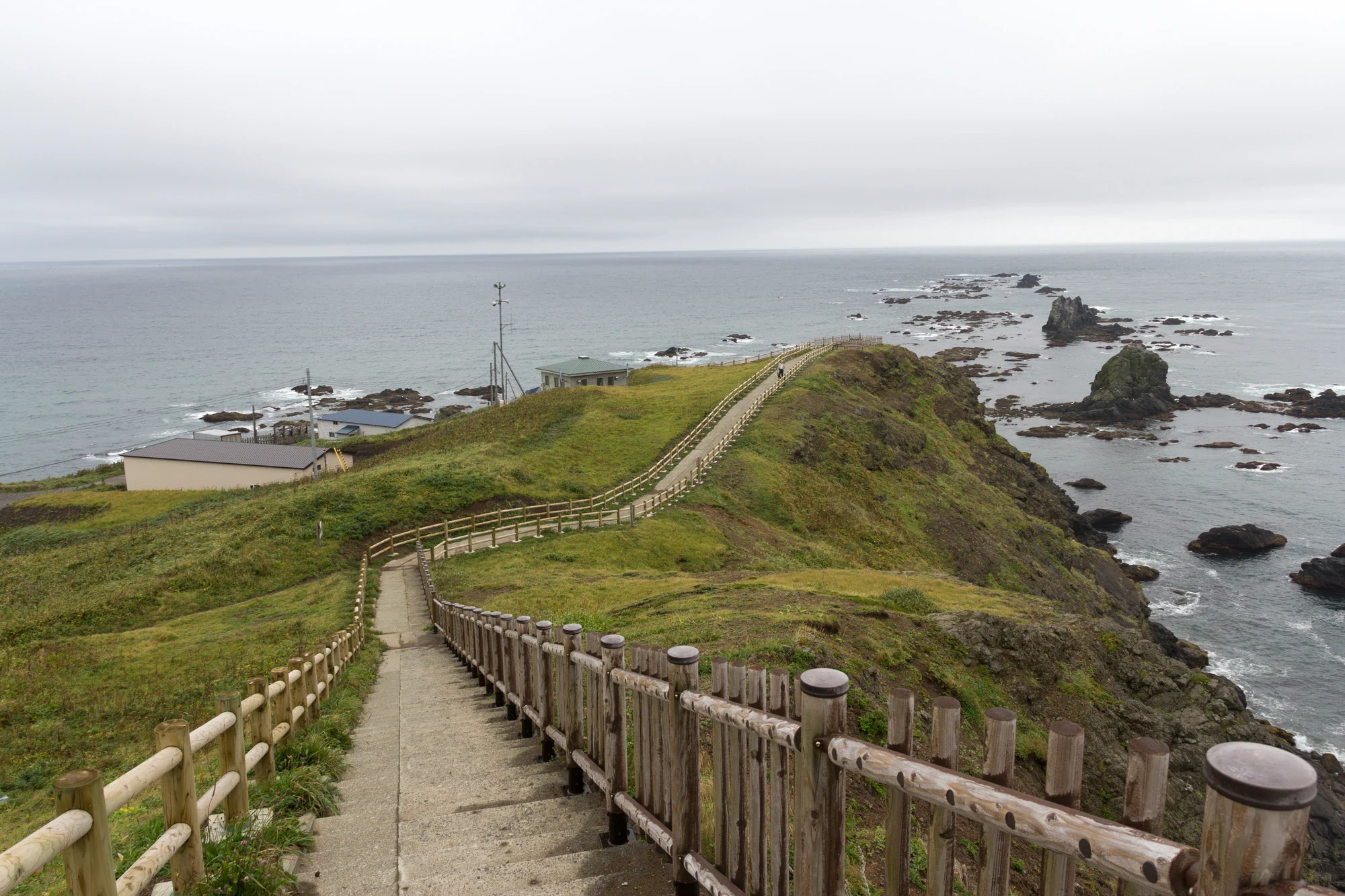
At Cape Erimo, the first thing to notice is the shape of the land. The headland narrows toward a line of rocks stretching into the Pacific, giving you a visible ending to Hokkaido’s long Hidaka mountain range. Start with Cape Erimo “Kaze no Yakata,” the House of Wind, then decide how much outdoor walking the conditions allow. A few unhurried viewpoints and time looking through a telescope make a better visit than rushing to the furthest point.
This is a small coastal introduction to a much bigger national park. Hidakasanmyaku-Erimo-Tokachi was designated on June 25, 2024, and covers a mountain-to-coast landscape extending roughly 140 kilometres north to south. Its remote high mountains demand a completely different trip. You do not need to climb them to understand part of the park’s story: here the continuation of the landscape into cliffs, reefs and the sea is right in front of you.
Kaze no Yakata is tucked into the ground beside the lighthouse, a design intended to fit the landscape and avoid obstructing the lighthouse beam. Inside, the view becomes something you can take your time over. Sit by the observation-room windows, look along the reefs and use the viewing equipment to search for movement. The indoor setting is particularly helpful for children or anyone who finds it hard to stand outside comfortably in the wind.
The animals that make this view special are wild harbor seals, called zenigata azarashi in Japanese. The offshore reefs are a resting and breeding habitat, rather than an enclosure. Try watching one area patiently instead of sweeping the whole coastline at speed. A seal may be hauled out on a rock, but fog, sea conditions and the animals’ movements can leave you with no clear sighting. The center’s displays and recorded footage keep the visit worthwhile when the real animals are difficult to see.
Make time for the exhibits as well as the windows. They connect local winds, seals and the work of a fishing town; the film includes underwater seal footage and kelp and salmon fishing. The artificial strong-wind experience gives the cape’s weather a memorable physical dimension, but it is optional. For a quieter family activity, ask whether the craft session using supplied natural materials is available that day, or try the seal quiz together.
Outside, keep the outing flexible. In suitable conditions, follow the signed visitor paths to the cape viewpoints and look at the white lighthouse from the public area. The sea can look very different on either side of the headland, and the offshore rock chain is the detail worth lingering over. Return indoors or end the visit if the wind makes walking uncomfortable. There is no need to approach the shoreline or climb onto rocks to get a satisfying sense of this coast. Eager to name that creature? Identify any animal you find during your visit using the Snappit app.
The national park designation dates to June 25, 2024; the cape’s cultural importance is much older. Cape Erimo became part of the nationally designated scenic site Pirika-noka in 2010 in recognition of its importance to Ainu spiritual culture. Treat it as a meaningful place as well as a viewpoint.
The surrounding Erimo coast also tells a story of repair. Logging and grazing left land badly degraded, and a community-supported restoration project began in 1953. Kaze no Yakata’s exhibits introduce this greening work. The recovered coastal forest is part of the wider area, rather than a forest walk included in this short cape itinerary.