Snappit logo
Snappit
Get App
Generic illustration, not a photograph of this venueIllustration
ParkAndalucía, Spain

María Luisa Park, Seville

María Luisa rewards a slower pace than the city’s monument checklist.

About

María Luisa rewards a slower pace than the city’s monument checklist. Choose two or three garden stops, find somewhere to sit and let the water, foliage and small architectural details hold your attention. The pond-to-pond visit suggested here leaves room for children to investigate shapes and reflections without turning the afternoon into a march.

This is a designed historic garden, with planted trees and maintained water features. Its nature interest comes partly from that mixture: a familiar Mediterranean tree can stand close to an ornamental species brought from elsewhere. Enjoy the birds without assuming every bird around a pond is a wild visitor.

Plaza de España and Plaza de América belong to the park’s larger historic story, but they need extra time. Treat their architecture as an optional addition to the quieter garden visit. Museum interiors, boat hire and events have their own practical arrangements; a walk through the park does not include them. Planning to visit? Download the Snappit app to identify the wildlife you spot in real-time.

The park grew from the gardens of the Palacio de San Telmo. In 1893 the Infanta María Luisa donated a substantial part of the grounds to Seville. Jean-Claude Nicolas Forestier reworked the garden for public use, and it opened on 18 April 1914. The preparations for the 1929 Ibero-American Exposition added the great plazas and further garden spaces. That layered history explains why intimate, enclosed corners sit alongside much grander architectural settings.

What to do here

Start with Isleta de los Patos, then use the park’s paths and signs to reach Estanque de los Lotos. Compare the irregular island setting with the more formal pond composition. If you still want to explore, choose either the fountain axis towards Jardín de los Leones or a separate visit to one of the monumental plazas. Leave time to return to your chosen exit.

Seasonal info

The municipal winter schedule, applying from October, is 08:00–22:00. Official tourism information lists summer opening as 08:00–24:00; check the seasonal changeover and gate notices before a late visit. Wind or storm precautions, maintenance and events can override normal access.

Accessibility

Plan around the paths you can use comfortably rather than a complete circuit. Ask about the easiest current entrance and surface conditions for your wheelchair, walking aid or pushchair. Keep the island bridges optional, and view the Lotos composition from its outer edge: its central planted and fountain area is not a visitor walkway. Plaza de España has separate changes of level, so check those arrangements if you add it.

Don't miss

1

Isleta de los Patos

an island-and-pavilion garden scene best enjoyed without rushing the birds.

2

Estanque de los Lotos

pergolas and a formal water composition that invite a closer look from the outside.

3

Jardín de los Leones

a fountain-focused extension for people who enjoy garden design.

4

Glorieta de Bécquer

a meeting of sculpture and a living tree, worth a separate stop when access allows.

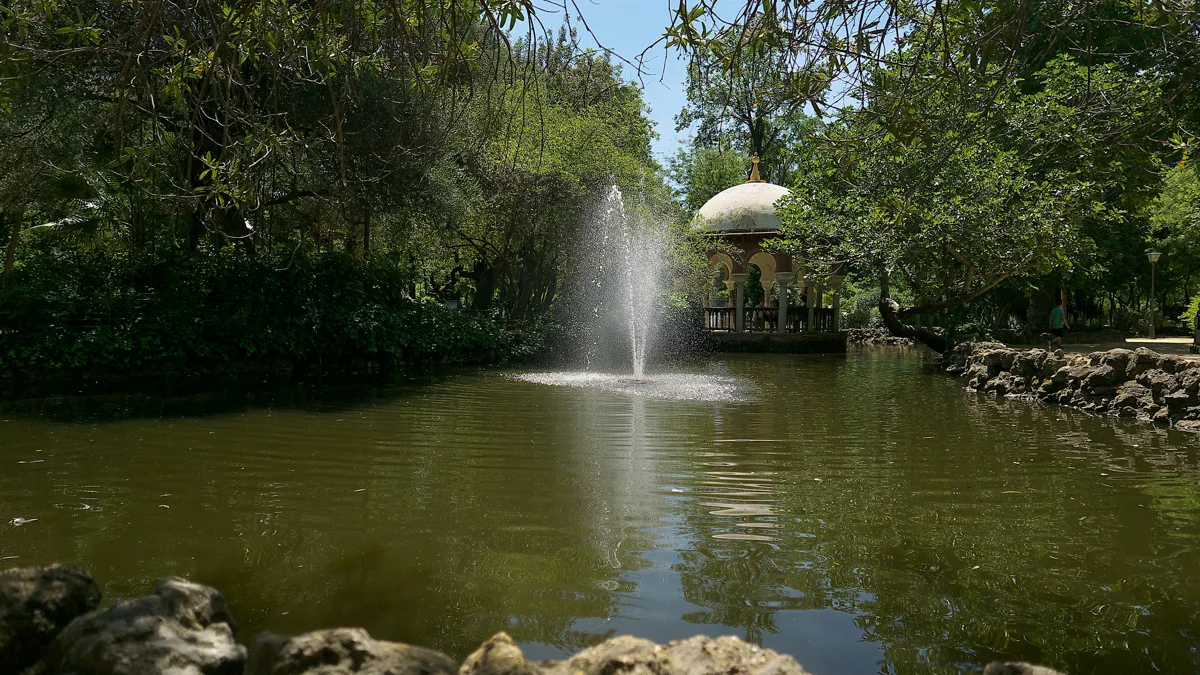
A fountain rises from a green pond in front of a small domed pavilion, framed by overhanging trees and a rocky bank.

The fountain and pavilion at Isleta de los Patos in María Luisa Park, photographed in May 2016.

Isleta de los Patos, Sevilla.jpg — José Luis Filpo Cabana / Wikimedia Commons / CC BY 3.0 Unported · Creative Commons 1 · Creative Commons 2

Walks and routes

A first visit between the two ponds

Begin by the outer edge of Isleta de los Patos and take a few minutes to look across the water. Continue on public park paths to Estanque de los Lotos, where you can study the pergolas and central fountain arrangement from outside. This is a choice of stops, not a marked trail; use the current signs or park plan to choose the connections and your return exit.

The island itself is optional. Check bridge access and the surfaces between stops on the day. If a bridge or linking path is awkward, stay at one pond and return along the approach you found comfortable.


An extra look at the fountain axis

For a second garden section, find Fuente de las Ranas and Jardín de los Leones. The fountains lead along the axis towards Monte Gurugú, with a pergola and benches between the Lions garden and the mound. You can enjoy this section from garden level without adding a climb.

The Lions fountain is raised. Choose views from the surrounding public paths and check any change of level before continuing.

With young children: stop before everyone is tired

Use the two ponds as the maximum plan, with a rest between them and a simple observation game. Bring water and any snack you need, supervise the water edges and be happy to finish after one stop. Allow about an hour, or longer if your group is comfortable.

With more time: gardens plus one architectural stop

Spend the first part of the outing in the central garden, then choose Plaza de España or Plaza de América. If you want the Arts and Popular Customs Museum, confirm that day’s opening before building it into the plan. Allow two to three hours for gardens and one plaza, with extra time for an indoor visit.

Things to try

Try a garden-shape hunt

Ask children to find one curved outline, one straight line, a reflection and a plant growing upwards. They can sketch what they find or take photographs without touching the planting. End the game while it is still fun, rather than adding another distant stop.

Photograph details instead of a checklist

Choose a small subject: a pergola’s pattern, a tiled edge or the contrast between leaves and water. Keep feet and equipment on the path, leave space for other visitors and avoid moving branches to improve the view.

Add Plaza de España for architecture

If you have time and energy, make the square a separate part of the outing. Look closely at its ceramic benches and the relationship between canal, arcades and open space. Check event restrictions; boat hire is optional and needs its own price and operating check.

Pause at Glorieta de Bécquer

Look at how the sculptural group is arranged around the tree rather than treating the tree as background. The municipal record identifies it as Taxodium distichum. Stay outside any protective barrier and respect any separate opening arrangements.

Choose an indoor plan before the rain starts

If the forecast makes a garden walk unattractive, check whether the Arts and Popular Customs Museum can fit your day. Do not use the closed Archaeological Museum as your backup, and remember that a serious weather warning may affect cultural venues as well as the park. A museum visit should be confirmed separately, not reached by crossing a closed garden.

Wildlife and habitats

Garden trees at Isleta de los Patos

Common fig, Aleppo pine and black locust are among the cultivated trees recorded around the island. Look for plant labels and compare leaves or overall tree shapes from the path.

Climbers and shrubs at Estanque de los Lotos

Trumpet vine and sweet mock orange are named in the municipal planting account. Use them as prompts to inspect the garden’s different layers rather than expecting everything to flower on the same day.

Birdwatching without feeding

Settle quietly at a safe distance from the pond edge and watch how birds move between water, banks and vegetation. Sightings vary, and ornamental park birds and free-living visitors can share the same space. Keep food packed away.

Stories and discoveries

The tree helped shape the monument

The city’s tree catalogue records several adjustments to Bécquer’s monument as the tree grew. It is a useful reminder that a historic garden keeps changing even when its overall design is protected.

A garden made of smaller rooms

Forestier used existing features and strong axes while giving an important role to the glorieta, a small garden space where you can pause. Looking for these changes in scale makes more sense than trying to collect every monument.

Planting is ongoing

Municipal reports from 2026 describe renewed planting intended to recover the park’s historic design. Treat plant lists as a guide to the garden’s character: maintenance and replacement can change what is present.

When to visit

Spring

Leave time to examine fresh growth and planting, with a flexible route and a forecast check. Choose a weekday morning if you prefer to start before the busiest part of the sightseeing day.

Summer

Prioritise an early, short visit and regular rests. Bring enough water for your group, avoid strenuous exploring in the hottest part of the day and change plans if the forecast is too hot for a comfortable outing.

Autumn

Use the cooler part of the day for a slower garden visit, but keep checking temperatures and wind. From October, plan around the municipal winter closing time rather than assuming the summer midnight schedule continues.

Winter and unsettled weather

A daylight visit makes it easier to judge surfaces and find your exit. Strong wind and storms can lead to preventive park closures; wait for the city’s access instructions rather than entering after the weather merely seems to improve.

Getting there and practical advice

Entry and opening times

Park entry is listed as free. The municipal winter schedule from October is 08:00–22:00; the official tourism listing gives 08:00–24:00 in summer. Leave time to reach an open exit and check the gate notice for your date.

Rest stops

The municipal garden descriptions record benches at the island pavilion and the pergola near the Lions garden. Pick a seat you can reach comfortably and avoid planning a walk that depends on one particular bench being available.

Toilets, drinking water and refreshments

Before a longer visit, ask where an open toilet is available and whether it suits your access needs. Carry your own drinking water and do not treat decorative fountains as drinking points. If a café or kiosk is part of your plan, check its opening locally.

Museum visits

The Arts and Popular Customs Museum occupies the Pabellón Mudéjar at Plaza de América and is listed as open by its operator; check its separate timetable and admission details. The Archaeological Museum remains listed as temporarily closed for renovation as checked on 17 October 2026.

Finding your way

Keep a park plan available and use named features to orient yourself. A new signage project was announced in June 2026, but do not depend on every proposed sign already being in place.

Tram or metro to Prado de San Sebastián

Prado de San Sebastián is a useful public-transport starting point for the park’s northern side. TUSSAM’s tourist map shows a T1 Metrocentro stop, and the official metro page places its station on Avenida Carlos V. Continue on foot using the pedestrian crossings and your chosen park entrance. Check service changes before travelling.

If you need a lift or a shorter approach

The official Prado de San Sebastián station information identifies lift access, but check that it is working before relying on it. Choose your park entrance around the garden section you want to visit, and allow for the approach walk as well as time inside.

Bus planning

Use TUSSAM’s current route planner or app for the best stop from where you are staying. The park’s older feature pages list several bus routes, but those lists are not a reliable substitute for current service and diversion information.

Paths and entrances

Ask which entrance and connecting paths currently suit your chair, walking aid or pushchair. The municipal accessibility plan identified improvements needed to paving, wayfinding and facilities, so avoid assuming that a level-looking map means an easy continuous route. Choose a short out-and-back visit if that gives you a more dependable return.

Water features

At the two ponds, make views from outside the planting your main aim. Check the island bridges before using them, and keep clear of wet edges. The Lotos centre is an ornamental composition without public access, and the Lions fountain stands above the surrounding ground.

Plaza de España needs its own check

The regional accessibility assessment describes several levels, ramps and stairs. That assessment dates from 2016, so ask about current access, working lifting equipment and suitable toilets before relying on them. Choose a ground-level visit if you cannot confirm an appropriate route.

Sources and useful links

Wildlife you might spot

5

Each card links to a full Explore page with photos, traits, and fun facts.

Snap map for this place

Start with the big picture, then zoom in to explore individual wildlife observations around this place.

Loading map…

Good to know before you go

Carry drinking water and sun protection. Shorten the outing rather than trying to see everything during hot weather.

Use the official forecast and municipal notices before setting out; obey closed gates and temporary barriers.

Choose your exit and return transport before you wander into the smaller garden sections.

Keep children close at water edges. Ornamental ponds and fountains are for looking at, not paddling.

Watch birds quietly and leave them unfed; do not handle birds, collect plants or climb on old trees and monuments.

Arrange a toilet stop before a longer walk, especially if you need an adapted facility; ask locally which one is open and suitable.

Keep the central garden visit manageable and skip extra stops if your group is tiring.

Check museum information separately. The Archaeological Museum was still officially listed as temporarily closed when checked on 17 October 2026.

Frequently asked questions

Official tourism information lists park entry as free. Paid activities, organised events and museum visits are separate; check their own conditions if you want to include them.
Yes. Make one pond your main stop and only add the second if everyone is comfortable. A rewarding visit does not require both plazas or a circuit of the whole park.
The municipal account describes bridges to Isleta de los Patos, but use them only if they are open and suitable for your group. The central ornamental area at Estanque de los Lotos is not accessible to visitors.
The municipal island description mentions ducks, swans and peafowl in the ornamental setting. That does not establish the status or exact species of every bird you see. Enjoy watching them without feeding or approaching them.
Check first. The Arts and Popular Customs Museum is a separate venue in Plaza de América, with its own timetable. The Archaeological Museum’s official listing still stated temporary closure for works on 17 October 2026.
Do not assume so. It has its own visitor information and can be affected by events. Check the square and the park separately, especially for an evening visit or a step-free plan.

Recent snaps at this place

Recent snaps will appear here as new observations are added.

View all ›

Take the discovery with you

Exploring María Luisa Park, Seville?

Identify the wildlife you spot, learn as you go, and keep a collection of the adventure.

  1. 1Spot it
  2. 2Snap it
  3. 3Keep the discovery