
Snappit logo
Snappit
Get App
Generic illustration, not a photograph of this venueIllustration
ParkKanto, Japan

Meiji no Mori Takao Quasi-National Park

Mount Takao packs a surprising amount into a small mountain: tall cedars, temple lanterns, busy woodland birds and, when the air clears, a view beyond the surrounding hills.

About

Mount Takao packs a surprising amount into a small mountain: tall cedars, temple lanterns, busy woodland birds and, when the air clears, a view beyond the surrounding hills. The 770-hectare Meiji no Mori Takao Quasi-National Park protects forest around the 599-metre summit in western Tokyo. Warm- and cool-temperate woodland meet here, so a slow walk has plenty to offer even without a big panorama.

For a first visit, take the cable car from Kiyotaki and follow Trail 1 towards Yakuo-in Temple. This is the mountain's main pilgrimage approach, with paved stretches and a cedar avenue. It still climbs, and the onward route to the summit includes stairs. The cable car saves the lower ascent; it doesn't deliver you to the top.

At the summit, make time for Takao Visitor Center, where natural-history displays and the information counter help put names to things you've noticed along the way. It is a separate place from TAKAO 599 MUSEUM down near the railway station. The museum makes a good foothill visit; reaching the visitor center means going up the mountain.

Keep the day flexible. Walk to the temple gate and turn back if the slopes are enough, or continue to the summit if everyone is comfortable. Trail 5 adds a short woodland loop near the top, but you don't need it for a satisfying visit. Save the narrow stream and ridge trails for a day when your footwear, energy and the weather suit a proper hike. Enhance your adventure: download the Snappit app to identify the local species you encounter.

Long before the park designation, Mount Takao was a sacred mountain associated with Yakuo-in and mountain religious practice. Protection of the temple forest helped preserve its trees. The area later passed through imperial and national forest management, and the quasi-national park was designated in 1967 to mark the centenary of the Meiji era.

What to do here

Ride up from Kiyotaki, wander the cedar-lined Trail 1 approach to Yakuo-in, then decide whether to continue to the summit and visitor center. Pause at a wide spot to listen for birds. Return on Trail 1 and the cable car rather than adding a rougher descent at the end of the day.

Seasonal info

Autumn colour is usually best from mid-November into early December, with timing varying each year. From October 31 to December 6, 2026, Trail 6 is uphill-only all day between Biwa Waterfall and the Trail 5 junction. Summer calls for a cooler start and attention to rain and thunderstorms; in winter, check for snow or ice and leave ample daylight for the descent.

Accessibility

The cable car can carry wheelchair users, with staff assistance and an elevator at the upper station. Beyond it, the mountain has slopes and stairs. The paved approach towards Yakuo-in’s gate may be possible with assistance, but the summit walk is not a step-free outing. Ask the operator about your chair and needs before travelling; TAKAO 599 MUSEUM is the easier foothill alternative.

Don't miss

1

The cedar-lined pilgrimage approach on Trail 1

2

Yakuo-in’s temple gate, lanterns and tengu figures

3

Forest and distant hill views from the summit in clear weather

4

Seasonal nature displays at the summit’s Takao Visitor Center

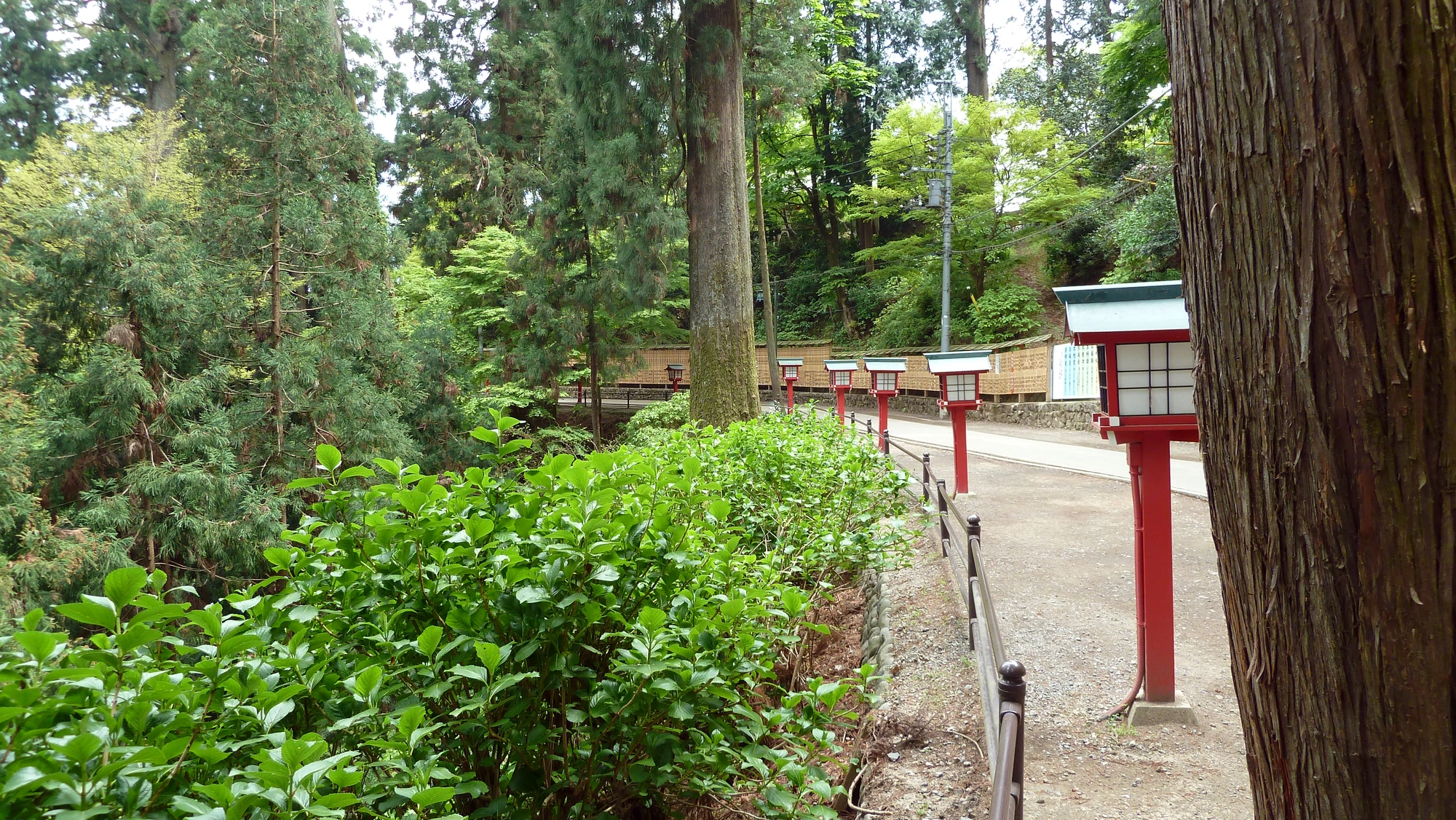
A paved path curves through tall trees beside red-and-white lanterns, a low railing and dense green plants.

Tall trees and red-and-white lanterns line a paved section of Mount Takao’s Trail 1, photographed in April 2013.

Mount Takao - Trail 1 (9409426238).jpg — Rob Young, CC BY 2.0 (https://creativecommons.org/licenses/by/2.0/). Source: https://commons.wikimedia.org/wiki/File:Mount_Takao_-_Trail_1_%289409426238%29.jpg. Resized proportionally to a maximum 2000-pixel long edge without upscaling; recompressed as WebP quality 92, method 6. No crop, retouching, added text or colour adjustment. EXIF omitted from derivative; original retained separately as evidence. · Creative Commons

Walks and routes

Cable-car top to summit and back

Follow Trail 1 past the cedar avenue and Yakuo-in to the summit, then return the same way. Budget 60–90 minutes going up and about 45–60 coming down with pauses. The main day plan adds time for the visitor center and lunch.

Paved stretches, inclines and stairs. This is not a step-free summit route.

Cable-car top to summit and back

A shorter walk to Yakuo-in’s gate

Walk about 1 km from the upper cable station to the temple gate, then retrace your steps: about 2 km of walking altogether. Choose the sloping Onnazaka approach instead of the Otokozaka staircase. Leave time for the cedar avenue and temple surroundings; you needn’t add the summit.

Onnazaka avoids that staircase, but remains a hill. Wheelchair users need advance advice and suitable assistance; the main hall is reached by stairs.

A shorter walk to Yakuo-in’s gate

Trail 1 from the mountain foot

Start at the right-hand side of the Kiyotaki cable-station square and follow the main approach uphill. The full ascent is 3.8 km, with an official walking time of 100 minutes. Give yourself 2–2½ hours if you want pauses, then allow separately for the summit and return journey.

The lower climb is steep despite its paving. Above Yakuo-in there are many steps. Choose this only if the whole group wants the extra ascent.

Trail 1 from the mountain foot

Optional Trail 5 woodland loop

If you reach the summit with energy to spare, Trail 5 circles just below it for 0.9 km. The official time is 30 minutes; allow 35–50 minutes for a slower look at the forest. This is a woodland extra rather than a panoramic circuit.

A narrow mountain path with some boardwalk and paved sections. Its relatively level course does not make the approach or overall outing wheelchair-accessible. Skip it when slippery or short of daylight.

Optional Trail 5 woodland loop

The unhurried summit day

4–5 hours, plus any unusually long queues

Arrive at Takaosanguchi in the morning. Walk about 300 m, roughly five minutes, to Kiyotaki and check the return timetable before boarding.

Ride the cable car, then give the Trail 1 ascent 60–90 minutes with stops. Reassess at the temple: turn back if the climbing is already enough.

At the summit, spend 20–30 minutes in the visitor center when open, then take time for lunch and the view. Add Trail 5 only if conditions, energy and daylight allow; its time is extra.

Return down Trail 1, allowing about 45–60 minutes to the upper cable station. In autumn, leave the summit by 15:00 at the latest, and earlier when necessary. Allow for the cable-car queue and walk back to the railway station.

Cedars and temple surroundings, without the summit

2–3 hours with the cable car

Use the cable car both ways and make Yakuo-in’s gate your turnaround point. The upper-station walk is about 1 km each way.

Take the sloping Onnazaka branch, stop for the cedars and temple details, then retrace your route. Allow 60–90 minutes for this walking portion and adjust for the group’s pace.

Leave the summit visitor center for another visit. If you still have time and energy at the foot, TAKAO 599 MUSEUM is a separate optional stop.

Why Trail 6 is a different sort of outing

Trail 6 follows a stream, with stepping stones, narrow sections and a long staircase near the top. Its 3.3 km ascent is a hiking choice for sure-footed walkers, not an easy shortcut or rainy-day replacement for Trail 1. During the autumn 2026 restriction, do not use it to descend.

Check the visitor center’s latest trail notices and follow signs or staff directions on the day.

Things to try

Try a two-leaf woodland game

Without picking anything, find one broad leaf and one narrow leaf along the main path. Compare their shapes, then look up to see how the tree crowns differ. This works well as a short pause between uphill stretches.

Take one question into the visitor center

Choose a bird call, leaf or animal track you wondered about and ask at the information counter. A photo taken from the path can help. Leave roughly 20–30 minutes for the displays rather than treating the building as a quick summit checkpoint.

Catch an autumn mini-talk

On Saturdays, Sundays and public holidays from October 31 to December 6, 2026, the visitor center plans a free mini-talk at 13:30, lasting about 15 minutes, in place of its guided walk. Ask about the day’s topic and language when you arrive.

Stay at the foot: TAKAO 599 MUSEUM

About four minutes on foot from Takaosanguchi Station, the museum brings local plants, insects and forest life indoors through specimen displays and a projection wall. Allow about an hour, with longer if the children want to linger. It usually opens 08:00–17:00 from April to November and 08:00–16:00 from December to March; last admission is 30 minutes before closing. The main exhibition is free, though special exhibitions may charge. Check the current Japanese-language closure calendar before travelling.

Wildlife and habitats

Long-tailed tit

Look for a tiny, rounded bird with a tail that seems much too long for its body. Outside the breeding season, moving groups can turn a quiet patch of branches into a busy little procession.

Eurasian jay

A harsh, scratchy call may give this woodland bird away before you see it. If it shows a wing, look for the bright blue-and-black patch. Jays also store acorns for later.

Great spotted woodpecker

Watch tree trunks for a black-and-white bird bracing itself against the bark, with red beneath the tail. A quick burst of drumming can be your first clue; stop and look without approaching the tree.

At a safe, wide place off the flow of walkers, pause and listen before looking into the branches. A quiet few minutes may reveal more than a fast walk, though wildlife sightings depend on conditions. Keep to the path, give animals space and never use food to bring them closer.

Stories and discoveries

A forest shaped by both climate and care

Mount Takao sits where warm- and cool-temperate forest meet. Its woodland also owes much to a long history of protection around the sacred mountain, so the landscape reflects people as well as climate.

The famous “flying” resident glides

Takao’s Japanese giant flying squirrel moves between trees on a membrane stretched between its limbs. It is nocturnal, so learning about it in the daytime displays is a better fit for this outing than waiting on the mountain after dark.

A short railway with a substantial climb

The cable railway covers 1,000 metres of track and gains 271 metres in height. Its six-minute ride removes a sizeable part of the lower climb, leaving the temple and summit walk ahead.

When to visit

Spring: flowers and fresh leaves

Keep your eyes on the path edges for violets without stepping into the vegetation. The changing greens of the forest are reason enough to slow down; exact flowering dates vary.

Summer: a shorter, cooler day

Start early, carry water and keep a close eye on the forecast. A shorter temple walk can be a better choice than pressing on to the summit in heat or approaching thunder. Do not use the stream trail as a storm escape.

Autumn: colour comes with queues

The usual leaf-colour window is mid-November to early December, but follow the visitor center’s current colour reports. Keep the outing simple and allow extra time for transport and toilets. Children should stay beside their adults through the busiest sections.

Winter: check the footing first

Check the latest snow and ice conditions before travelling and ask about the route when you arrive. Short daylight and slippery stretches are good reasons to turn back early, even if the sky is clear.

Getting there and practical advice

Takao Visitor Center, at the summit

A nature-information counter and exhibits at the top of Mount Takao. Admission is free; usual opening is 10:00–16:00. Monday is the usual closing day, shifting to the next weekday after a holiday period if Monday is a public holiday; it also closes over New Year. Check temporary notices. There is no vehicle access to the center.

Toilets along the outing

Use the toilets before committing to the next climb, particularly on crowded autumn days. Wheelchair-accessible toilets are available at the cable stations and in the summit area; the visitor center itself has no toilet. A toilet’s accessible interior does not mean the mountain route leading to it is step-free.

Food and rests

Bring enough water and a snack to avoid depending on a shop being open. Lunch and pauses are part of the time allowance, so take them before anyone is exhausted. Keep entrances and the walking line clear when stopping.

Arrive at Takaosanguchi, then walk to Kiyotaki

Take Keio services to Takaosanguchi Station, the mountain’s rail gateway. If arriving on JR at Takao, transfer to Keio for Takaosanguchi. From there, the lower cable station at Kiyotaki is about 300 m away, a gentle uphill walk of roughly five minutes. The summit visitor center is not a drive-up stop.

Cable car: Kiyotaki to Takaosan Station

The first cable car is normally at 08:00. The ride takes six minutes, with a usual 15-minute interval; check the operator’s display for today’s last departure and any disruption. Adult return tickets are ¥980 and child return tickets ¥500 at the October 2026 check. You cannot reserve a boarding time, so queues can change the day’s pace.

The chairlift is a separate option

The chairlift usually starts at 09:00 and takes about 12 minutes. Its operating hours differ from the cable car. This guide’s timing and wheelchair advice use the enclosed cable car, so don’t swap the two without checking the practical details.

Discuss the whole journey with cable-car staff

The cable car has staff-assisted wheelchair boarding and an elevator at its upper station. Ask about the approach you hope to take, your wheelchair and the assistance available; an accessible vehicle is only one part of this outing.

Temple gate, hall and summit are different destinations

The Onnazaka approach can avoid the Otokozaka staircase on the way to Yakuo-in’s gate. It still has gradients, and manual-wheelchair users need assistance. The main hall has stairs. Do not assume that reaching the gate means you can continue to the summit.

Inside the summit visitor center

Wheelchair access is limited to the first floor; the lower floor is reached by stairs. Discuss the mountain approach separately before deciding to visit.

Visitor information

Trail 6 direction restriction in autumn 2026

From October 31 through December 6, 2026, the section from Biwa Waterfall to the Trail 5 junction is uphill-only all day. Use another permitted route to come down; the main plan here returns on Trail 1.

Check beyond the main route before adding a detour

The October 2 trail bulletin includes a fallen-tree warning on the Konpiradai course and closures or damage farther towards Shiroyama and Hikage. Keep to your planned route, check the latest bulletin and respect on-site barriers instead of improvising a detour.

Bear awareness

The visitor center’s May 2026 advisory reminds walkers that bears live around Takao, especially Oku-Takao. Travel together in daylight where possible, and make your presence known at dawn or dusk. Check for newer warnings before your visit.

Sources and useful links

Wildlife you might spot

3

Each card links to a full Explore page with photos, traits, and fun facts.

Snap map for this place

Start with the big picture, then zoom in to explore individual wildlife observations around this place.

Loading map…

Good to know before you go

Check the latest trail notices and the day’s last cable car. Special-event hours can differ from the usual timetable, and a late service is no reason to stay on unlit paths.

Wear grippy walking shoes and bring water, snacks, rain protection, a warm layer, a map and a small torch. Paving does not make steep paths effortless.

In autumn, follow the visitor center’s advice to leave the summit by 15:00 at the latest. Turn back earlier if weather, daylight or anyone’s energy calls for it.

If thunder or heavy rain threatens, shorten or postpone the mountain walk. Do not shelter under trees during a thunderstorm; ask a nearby open facility about shelter.

Keep children close in crowds and agree where to meet if separated. Allow time for toilets and cable-car queues during the leaf-colour season.

Stay on marked paths, leave plants where they grow, take litter home and do not feed wildlife.

Bears live around Takao, especially farther into Oku-Takao. Favour a daytime walk together and follow current advice; around dawn or dusk, make your presence known rather than moving silently.

Takao Visitor Center is on the summit and cannot be reached by car. TAKAO 599 MUSEUM is near the railway station, so check which one you mean when planning the day.

Frequently asked questions

No. It runs from Kiyotaki to Takaosan Station on the mountainside. The visitor center’s map gives about 40 minutes up and 30 minutes down between the upper station and summit. Allow roughly 60–90 minutes going up if you want temple and nature stops.
Trail 1 is 3.8 km one way from the mountain foot to the summit, before adding the approach from the railway station. The official walking times are 100 minutes uphill and 80 minutes downhill, without the generous stops you may want on a family day.
Plan around a particular stretch rather than the whole mountain. Speak to cable-car staff about boarding and the steep paved approach towards the temple gate. The main temple hall has stairs, and continuing to the summit adds further barriers. A pushchair is not a substitute for a plan for the uphill sections and steps.
Yes. From the upper cable station, the paved approach to Yakuo-in’s gate is about 1 km each way. Turn around there for cedars and temple surroundings without adding the summit. There are still inclines; this is a shorter walk, not a flat one.
Stay at the foot and visit TAKAO 599 MUSEUM, or postpone the hike. Its plant and insect displays give you something worthwhile to do indoors. Do not climb to the summit visitor center simply to find a wet-weather activity.
Its usual hours are 10:00–16:00 and admission is free. It closes on Mondays, moving the closure to the next weekday after a holiday period when Monday is a public holiday, and over the year-end/New Year period. Check for temporary closures before setting out.

Recent snaps at this place

Recent snaps will appear here as new observations are added.

View all ›

Take the discovery with you

Exploring Meiji no Mori Takao Quasi-National Park?

Identify the wildlife you spot, learn as you go, and keep a collection of the adventure.

  1. 1Spot it
  2. 2Snap it
  3. 3Keep the discovery





