
Snappit logo
Snappit
Get App
Generic illustration, not a photograph of this venueIllustration
ParkKanto, Japan

Musashi Kyuryo National Government Park (Shinrin Park)

Shinrin Park rewards a little restraint.

About

Shinrin Park rewards a little restraint. Its 304 hectares contain wooded hills, ponds, lawns, flower gardens and places for children to play, but trying to see everything turns a pleasant day into a long journey between attractions. Choose one area and let the smaller details hold your attention: a leaf shape, a bird moving through the branches, or the change from a shady path to a bright flower bed.

For a first visit, start with the botanical garden. From Central Gate, the Maple Garden is about a 10-minute walk and the botanical exhibition building about 15 minutes. The border beds, Colour Leaf Garden and café give you several reasons to pause without travelling the length of the park. If you are arriving by public bus, West Gate is usually the more useful entrance; the exhibition building is about 20 minutes away on foot. These are walking times before stops, and the ground rises and falls.

The landscape mixes cared-for woodland with deliberately planted displays. July brings wild yamayuri lilies in parts of the woods, while the Maple Garden has its strongest autumn colour around the second half of November. Winter opens up views through bare branches and makes birdwatching especially rewarding. A flower report for your visit date is more useful than trying to recreate a photograph taken in another season.

This is a national-government urban park, opened in 1974, with gates, admission charges and a closing time. Keep the main botanical walk as your anchor. The roughly one-kilometre Wildflower Course lies in a different part of the park, and cycling uses a separate network. Either can make a lovely second chapter, but neither needs to be squeezed into the same visit. Enhance your adventure: download the Snappit app to identify the local species you encounter.

The park opened in 1974 as part of the project commemorating the centenary of the Meiji era, becoming Japan’s first national-government park. It spans Namegawa and Kumagaya in Saitama. Its woodland setting remains central to the visit, alongside gardens, lawns and recreation facilities.

What to do here

Walk from Central Gate or West Gate to the botanical garden, explore the open garden paths and compare the maples, foliage and current flowers. Pause at the exhibition building or Botanical Café. For a longer woodland day, make a separate out-and-back to the Wildflower Course using the current map.

Seasonal info

Normal hours are 9: 30–17:00 in March–October, 9:30–16:30 in November and 9:30–16:00 in December–February. There are seasonal closure days, and special evening events have their own entry arrangements. The 2026 water-play season ended on September 27; check a new schedule before planning a future splash visit.

Accessibility

This is hilly ground. Paved paths still include slopes, and the Wildflower Course includes earth or woodchip surfaces and steps. Use the official accessibility map and ask gate staff for a suitable short route. Manual wheelchairs and strollers can be borrowed free while supplies last; powered chairs are not available to borrow. Park-bus boarding with a wheelchair or stroller can be limited when crowded.

Don't miss

1

The Maple Garden, with different leaf shapes, spring growth and late-autumn colour.

2

The botanical garden’s border beds and Colour Leaf Garden, followed by a café pause.

3

A short, unhurried Wildflower Course visit for seasonal flowers beneath the trees.

4

Winter birdwatching around the botanical garden, with binoculars and time to stand still.

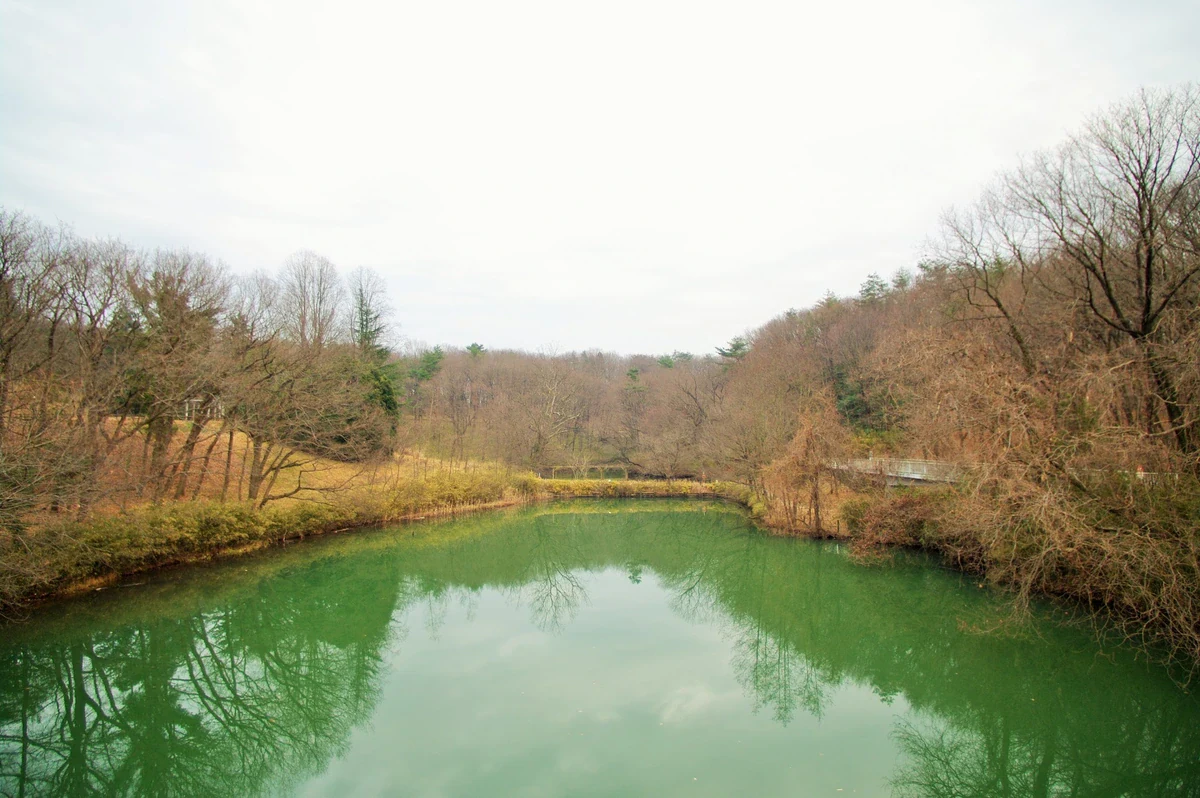
Green pond water reflects bare winter trees, with wooded banks and a railing along the far side.

A winter view of Bunyamanuma pond at Musashi Kyuryo National Government Park, photographed in January 2016.

Bunyamanuma.JPG — Parksj-musashi, CC BY-SA 4.0 (https://creativecommons.org/licenses/by-sa/4.0/). Source: https://commons.wikimedia.org/wiki/File:Bunyamanuma.JPG. Proportionally reduced to a 1200-pixel long edge without upscaling; recompressed to WebP quality 92, method 6. No crop, retouching, added text or colour correction. EXIF omitted. · Creative Commons

Walks and routes

Botanical garden from Central Gate or West Gate

From Central Gate, follow the signed main pedestrian route towards the Maple Garden and botanical exhibition building. Explore the garden paths that appeal, then return the way you came. From West Gate, follow the botanical-garden signs instead and return there for the public bus. Keep the small closed path between Central Restaurant and Yamayuri Path out of your plan.

Paved main approaches with hills; smaller garden paths vary. Ask for a suitable route if steps or slopes are difficult.


A separate Wildflower Course outing

Approach from South Gate or Central Gate, then follow the open Wildflower Course signs. The approximately 1 km circuit is the small woodland section itself; reaching it and returning to the gate adds walking. The park bus can shorten the approach when running, using the Wildflower Course Entrance stop. Check the last departure before setting off.

Earth or woodchip paths, slopes and steps. Choose the paved garden visit instead if these surfaces do not suit you.

Choose cycling as the main activity

The dedicated cycle course has an approximately 13.5 km circuit within a 17 km network. Decide your circuit with the rental-centre staff and current map, allowing time to stop at marked bicycle parking areas. Walk into gardens from there. Return a rental bike to the centre where you borrowed it.

Hills, sharp bends, fallen leaves and branches. Keep your speed down, supervise children closely and wear a helmet. This is not a practice course for first-time riders.

A relaxed botanical half-day

2–3 hours inside the park

Enter at Central Gate if arriving by car or taxi, or West Gate from the public bus. Check the closing time, open paths and your return transport.

Walk to the botanical garden. Spend time in the Maple Garden and whichever flower or foliage displays are currently looking good.

Pause at the exhibition building, Botanical Café or a suitable picnic spot. Use the toilets before deciding whether to walk farther.

Return to your original gate without adding a distant attraction at the last minute.

A longer garden-and-woodland day

3–4 hours or more inside the park

Start with the botanical garden while everyone is fresh, then take a proper food and water break.

If the group still wants a longer walk, use the current map to reach the Wildflower Course by open main paths. Ask staff if a connection is unclear.

Walk only the part of the woodland course that suits the group. Its approximately 1 km circuit is additional to the approach.

Head back with enough time for the gate and any park bus. Do not rely on the final service to rescue an overlong outing.

Things to try

Look at the planting, not just the flowers

In the Colour Leaf Garden and border beds, compare leaf colours, textures and the shapes of plants. Let the current display decide your stops. The Maple Garden is interesting in spring as well as autumn, when new leaves and small flowers reward a closer look.

Give birdwatching ten quiet minutes

Pause on an open path around the botanical garden and let movement or calls draw your attention. Winter’s leafless branches make birds easier to follow. Binoculars help you see more without moving closer; put food away and leave birds room to feed or rest.

Make room for a picnic

Bring a packed lunch and choose an open lawn or rest area rather than trying to reach another attraction. Keep bicycle routes, walking paths and entrances clear. A shorter walk with a proper break often works better with children.

Choose a play-focused day

For the west-side play facilities, start at West Gate rather than building a cross-park itinerary. Check which equipment is open: parts of the Kids Dome’s outdoor play area remain closed. The splash basin and stream are seasonal, and their 2026 opening period has finished.

Keep a rainy visit small

The botanical exhibition building and café can provide a pause from showers, but getting there still means walking outside. Choose one short garden section and turn back if surfaces become difficult. In thunderstorms, strong wind or heavy rain, postpone the woodland outing and follow staff instructions rather than relying on a tree or open shelter.

Wildlife and habitats

Eurasian Jay

Listen for a rough, carrying call, then watch the trees without chasing the sound. The park recorded this woodland bird at the botanical garden in February 2026.

Hawfinch

Look for a sturdy bird with a very heavy bill and a short tail. The local winter guide links it with tree seeds; a quiet pause near open woodland is more useful than hurrying between viewpoints.

Long-tailed Tit

Watch for a tiny pale body with a disproportionately long tail moving through branches. The park’s winter guide includes it among the birds around the botanical garden.

Mallard

Scan open pond water from the public path, without approaching the bank. Mallards are among the winter ducks recorded by the park; use a field guide to compare them with the other ducks sharing the water.

Look slowly and leave things in place

These birds are recorded locally, but what you see depends on the season and the day. Watch from public paths, keep your distance and avoid feeding or calling birds towards you. The garden’s planted displays and the woodland’s wild flowers have different stories; both deserve space. Take photographs rather than flowers, and leave fallen wood and other natural material for the creatures that use it.

Stories and discoveries

A large park is several different days out

The park stretches roughly 4 km north to south. Its gardens, play areas and wooded corners have different convenient entrances, which is why choosing a gate matters more than following a list of everything on offer.

Some summer flowers belong to the woods

Yamayuri lilies grow wild in the park, including around the Maple Garden and Wildflower Course. Their main season is usually July. Enjoy them from the path; stepping into the grass to get closer damages the habitat that supports the display.

The wildflower walk is cared for

The Wildflower Course looks like a woodland path, but volunteers help maintain it. Look for the flowers that suit the season rather than expecting every species shown on the park’s information pages to be in bloom together.

When to visit

Spring: new leaves and changing flower beds

Early April brings fresh growth in the Maple Garden, and spring planting adds brighter displays in other areas. Choose a current highlight close to your entrance rather than chasing several flower fields across the park.

Summer: lilies, shade and shorter walks

July is the main yamayuri lily season. Go slowly, take water and shorten the walk in hot weather. Water play is a separate seasonal activity: the 2026 basin season ran May 2–September 27, and the stream April 25–September 27, with cleaning and closure exceptions. Do not assume either is open on a future visit.

Autumn: colour builds gradually

The Maple Garden generally colours during November, often looking strongest in the second half of the month; some years continue into early December. Different trees turn at different times. Evening illuminations use special dates, gates and hours, so check the specific event if that is the reason for your trip.

Winter: birds and an earlier finish

With leaves down, the botanical-garden woods are easier to look into, and ponds attract winter birds. Bring warm layers and binoculars, watch for slippery or icy paths, and work back from the normal 16:00 closing time. The seasonal closure calendar matters particularly in December, January and February.

Getting there and practical advice

Hours, tickets and the winter calendar

Normal hours are 9:30–17:00 in March–October, 9:30–16:30 in November, and 9:30–16:00 in December–February. Gate admission is cash-only: ¥450 for high-school age and above, ¥210 for ages 65 and over, and free for junior-high-school-age children and younger. Bring age identification for the senior ticket. Scheduled closures listed on October 16, 2026 are December 7, 14, 21 and 31, then January 1, 4, 12, 18–22 and 25, 2027. Later dates await the operator’s update. Check the calendar again before travelling.

Botanical Café and a dry pause

The café is inside the botanical exhibition building, about 15 minutes on foot from Central Gate or 20 minutes from West Gate. Its listed hours end 30 minutes before park closing, with last orders one hour before park closing. Other kiosks may close on weekdays or seasonally, so carry water and a snack.

Toilets and family facilities

The park provides multipurpose toilets and baby-changing facilities, with nursing rooms at South, Central and West gates and the botanical garden. Check the map and ask staff which nearby toilet is open. The Sculpture Plaza toilet is still listed as unavailable because of an electrical fault.

Bicycle hire

Standard bicycle hire is ¥600 for three hours for high-school age and above, or ¥350 for junior-high-school age and younger. Electric-assist hire is ¥1,000 for three hours and limited to high-school age and above; extra-time charges apply. Availability varies, and bikes must return to the same rental centre. Ask for the return deadline before leaving.

Help and information

The park management centre’s number is 0493-57-2111. Gate staff can help with current paths, loan equipment and transport. Save the official map before exploring and use the numbered signs to explain where you are if you need help.

By train and public bus

At Tobu Tojo Line Shinrin-kōen Station, use the north-side bus stops. Buses towards Rissho University or Kumagaya stop at Shinrin Koen Nishiguchi for West Gate. For South Gate, get off at Namegawa Chugakko and walk about five minutes; a direct South Gate bus runs on Saturdays, Sundays and public holidays. Check the operator’s current timetable rather than assuming every departure uses the same route.

From Kumagaya

Buses from the south side of JR/Chichibu Railway Kumagaya Station towards Shinrin-kōen Station serve Shinrin Koen Nishiguchi for West Gate and Shinrin Koen Minamiguchi Iriguchi for South Gate. Pick the stop that matches your plan, then confirm the return boarding point.

Central Gate, cars and taxis

Central Gate is convenient for the botanical garden but has no regular public-bus service. Use a taxi or drive if you want to start there directly. Each gate has parking; ordinary-car parking is ¥700. The park is about ten minutes by road from Higashimatsuyama Interchange when traffic is flowing.

The park bus

The park bus links South, West and Central gates and stops near the Wildflower Course and botanical garden. Adult rides cost ¥400 and rides for children aged three through junior-high-school age cost ¥200. A ¥600 day pass is available on eligible days; in April, May, October and November it is sold only on weekdays, and other busy days may also be excluded. Buses are generally one or two an hour, with weather, events and crowds affecting service. Check the day’s timetable and final departure.

Plan for slopes even on paving

The official accessibility map marks different levels of slope on paved paths, as well as steps and soil or woodchip sections. The main Central Gate approach towards the botanical garden includes sloped paving. Ask staff to help choose the gentlest suitable route and a comfortable turning point.

Loan equipment and the park bus

Manual wheelchairs, strollers and some walking aids are available free at gates in limited numbers, without advance reservation. Powered wheelchairs or mobility scooters are not provided; fully charge your own equipment before coming. Park-bus boarding for wheelchair and stroller users may not be possible when crowded, so discuss your return plan before going far.

Keep the Wildflower Course optional

The Wildflower Course contains soil or woodchip paths and steps. It should not be treated as a step-free continuation of the botanical walk. Use the accessibility map to choose an alternative, and check the location of an open multipurpose toilet at the start.

Respect the current tree-hazard closures

The notice updated March 6, 2026 remains posted. It closes the northern nature trail from Oiyamanuma to the north shelter, the small path near the memorial tower towards Kuriyanuma, and the small path between Central Restaurant and Yamayuri Path because dead trees could fall. Follow the barriers and use open main paths; ask staff if the map and the signs seem different.

Check play-area and temporary restrictions

Parts of the Kids Dome’s outdoor play area remain unavailable. The disc-golf course is scheduled to close on October 21–22, 2026 for vegetation work. Check current notices before making an optional activity the centre of your day. Supervise children near water and use only designated water-play areas when open.

Keep walking and cycling separate

Use pedestrian routes for walking. The cycle course has hills and sharp bends, and leaves or branches can reduce grip. Follow its signs, slow down and supervise children. If bringing your own bicycle, check the park’s guidance on Saitama’s required cycle liability insurance.

Sources and useful links

Wildlife you might spot

4

Each card links to a full Explore page with photos, traits, and fun facts.

Snap map for this place

Start with the big picture, then zoom in to explore individual wildlife observations around this place.

Loading map…

Good to know before you go

Choose your entrance before travelling

Central Gate suits a botanical-garden visit by car or taxi; regular public buses serve West and South gates.

Bring cash for gate admission. Adult entry is ¥450, entry for people aged 65 or over is ¥210, and junior-high-school-age children and younger enter free.

Photograph the return bus timetable and check the last park-bus departure before walking away from your entrance.

Use the current map and respect barriers. Several small paths are closed because dead trees could fall; an old route description is not a reason to enter.

Wear shoes with grip and bring water. Hills, wet leaves and summer heat can make a short-looking outing more tiring.

Keep walkers off the cycle course and bicycles on the permitted cycle network. Park at the marked bicycle parking areas before exploring on foot.

Take a toilet break at the entrance or exhibition-building area. The Sculpture Plaza toilet remains listed as closed.

Leave plants and wildlife undisturbed. Stay on open paths, keep back from ponds and photograph flowers without stepping into the planting.

Frequently asked questions

No. The official approach to South Gate is about 3 km, or 40 minutes on foot, from the station. Buses and taxis leave from the station’s north side. For the botanical garden by regular bus, use West Gate; Central Gate does not have a regular public-bus service.
Central Gate is the closest convenient start for the Maple Garden and exhibition building. West Gate works well if arriving by public bus, with about a 20-minute walk to the exhibition building. Return to the gate that matches your onward transport.
Yes, the park permits packed lunches and drinks. Choose an open lawn or a designated rest area, keep paths clear and take your rubbish away. The Botanical Café is another option, but food service finishes before the park closes.
Bicycles use a dedicated course with a roughly 13.5 km circuit within a 17 km network. It has hills and sharp bends, so it is better for confident riders than for learning to cycle. Rental bikes must return to the same rental centre.
It can be, with a carefully chosen route. The park’s accessibility map distinguishes slopes, steps and surfaces. Discuss your needs with staff, and do not assume the Wildflower Course or every garden path is step-free. Ask about the day’s park-bus boarding arrangements too.
Dogs can enter under the park’s conditions, including an entry declaration and a fixed lead no longer than 1.5 m. Pets cannot use the cycle course or park bus and are excluded from various indoor and water-play facilities. Assistance-dog provisions differ; check with staff before travelling.

Recent snaps at this place

Recent snaps will appear here as new observations are added.

View all ›

Take the discovery with you

Exploring Musashi Kyuryo National Government Park (Shinrin Park)?

Identify the wildlife you spot, learn as you go, and keep a collection of the adventure.

  1. 1Spot it
  2. 2Snap it
  3. 3Keep the discovery




