Snappit logo
Snappit
Get App
Generic illustration, not a photograph of this venueIllustration
ParkKansai / Chugoku, Japan

San'inkaigan National Park

The big decision at Tottori Sand Dunes is how far you want to walk.

About

The big decision at Tottori Sand Dunes is how far you want to walk. You can enjoy the sweep of sand from the entrance-side viewing terrace, spend time with the visitor center’s hands-on exhibits, or cross the open dunes toward Umanose, the ridge known as the Horse’s Back. The climb gives you a wider view of the Sea of Japan, but soft sand makes every uphill step work harder than it would on a paved path. A good visit leaves enough energy for the return.

This is the western end of San’inkaigan National Park, a coastal park extending roughly 75 kilometers through Tottori, Hyogo and Kyoto prefectures. Elsewhere are rocky bays, sea caves, reefs and pine-topped islets. The dunes are a satisfying introduction, rather than a way to see the whole park in one afternoon. Uradome Coast and the more distant Hyogo and Kyoto sectors need their own travel plans. The larger San’in Kaigan Geopark is also a different designation, not an alternative name for the national-park boundary.

The landscape begins far inland. Weathered rock in the Chugoku Mountains supplies grains that rivers, especially the Sendai River, carry toward the sea. Waves return sand to the shore, and coastal winds move it inland. Look closely and the apparently simple surface becomes a record of that movement: parallel wind ripples, small protected sand columns, and delicate streaks left as sand slips down a slope. These patterns depend on recent wind and moisture. A smooth, footprint-covered or rain-darkened surface is part of the same living landscape.

Start indoors to give those shapes some meaning. The visitor center has a wind-ripple demonstration, microscopes for examining sand, tactile examples and displays about dune plants and insects. Its short dome-theater film shows how the scenery changes. Ask at the counter which features are visible today and pick up the local map. With children, choosing one question, such as why some plants creep along the ground, often makes the outdoor walk more interesting than simply racing to the highest ridge.

Umanose rises to about 47 meters above sea level; that figure is the ridge’s elevation, not the climb from the entrance. If conditions and your group’s energy allow, pause on top for the sea view before deciding whether to go any farther. The low area below sometimes holds the pool called the Oasis. Rain and snow feed its groundwater, so the pool expands and disappears with changing conditions; it is more typical from late autumn to spring and may dry out in summer. There is no need to reach the shoreline to complete this outing, and swimming off the dunes is prohibited.

The patches of vegetation deserve as much attention as the bare ridges. Sea bindweed spreads through underground stems and can produce pale pink flowers around late spring and early summer. Other local specialists include dune sedges and low-growing coastal shrubs. Open sand also supports small insects and their burrows. Keep feet clear of plants and respect ropes protecting habitat, even when the ground inside looks empty. Black-tailed gulls belong to the coastal scene, while barn swallows visit the dunes and nearby buildings in spring; sightings are always a bonus.

This open landscape takes care. Planting around the dunes helped protect settlements and farmland from blowing sand, but reducing sand movement also encouraged vegetation to spread into the open dunes. Conservation now balances those protective woods with work to retain the moving-sand habitat. That makes a useful final question for the day: when can keeping an area open be just as important as planting trees? Leave the plants and sand where they are, wash off your shoes at the visitor facilities, and take home photographs and new questions instead. Unlock an interactive field guide for this spot: get the Snappit app to identify nature on the go.

San’inkaigan became a national park on 15 July 1963, after an earlier quasi-national-park designation in 1955. Tottori Sand Dunes also received national Natural Monument protection in 1955 for their landforms and scientific interest. The dunes’ recent history includes sand-control planting, agriculture and later restoration of open sandy habitat. The present visitor center opened on 26 October 2018. Its displays connect the geology with the people who have lived beside, cultivated and conserved this coast.


What to do here

Begin with the visitor center, then choose your outdoor distance after checking heat, wind and the return bus. For a low-exertion visit, use the entrance-side viewing terrace and enjoy the indoor sand experiments. For a longer outing, walk onto the sand, look for wind ripples without trampling the best patch, and approach Umanose at a comfortable pace. Climb only if everyone is coping well; turn back from the ridge rather than automatically descending to the sea. Compare bare sand with the edges of plant patches, or watch distant birds through binoculars. A guided dune walk is a separate booking through the center; ask about current availability, language, price and suitability before arranging one.

Seasonal info

Spring brings fresh dune-plant growth and returning swallows; sea bindweed is a late-spring to early-summer possibility, with flowering dates varying. Summer can make the sand hot enough to burn skin, and the open dunes have no shade. Autumn often suits a slower walk, although storms and strong winds can still interrupt plans. Winter may bring snow and powerful northwesterly winds. The Oasis is seasonal rather than a permanent pond. Check the day’s conditions instead of planning around a photograph of a particular season.

Accessibility

The visitor center is described by the national-park visitor-information service as wheelchair-accessible. A wooden slope from Tottori Sand Dunes Parking Lot reaches an entrance-side viewing terrace suitable for ordinary wheelchairs. Loose dune sand is a different surface: ordinary wheelchairs and strollers are not a reliable way to cross it, and the Umanose climb is strenuous. The center lists indoor and specialist dune wheelchairs, with no advance reservations. Ask staff about availability, assistance, the usable area and current surface conditions; a loan does not make the ridge accessible. Confirm any particular toilet, transfer or step-free-access requirements before travelling.

Don't miss

1

See how wind makes ripples, then look for the same patterns outdoors.

2

Choose between an entrance-side panorama and the more demanding Umanose climb.

3

Discover sea bindweed and other plants adapted to moving coastal sand.

4

Look for the seasonal Oasis and learn why a dune landscape can hold water.

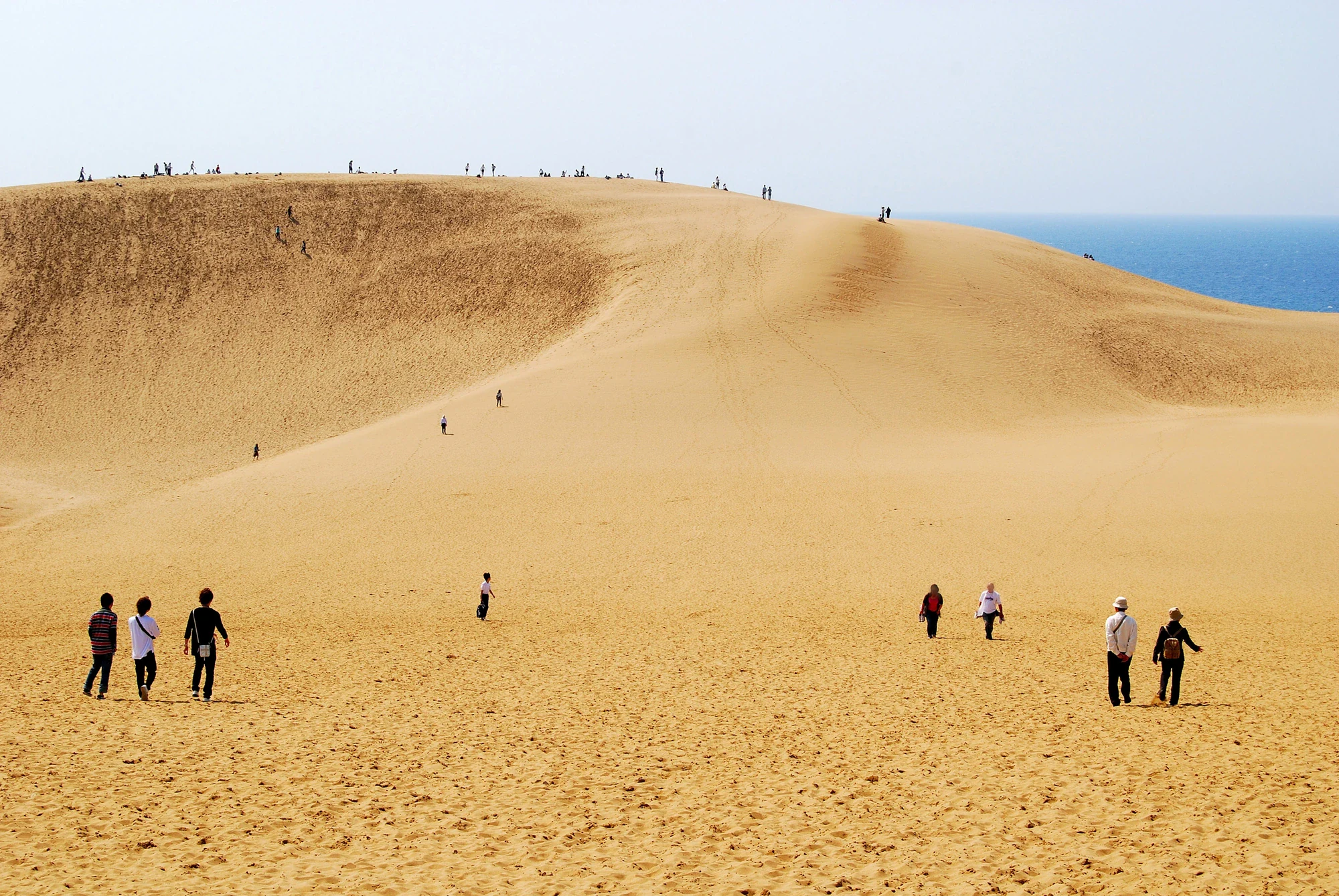
Visitors cross a sweeping golden sand slope and stand along its high curving ridge, with blue sea visible beyond.

Visitors give a sense of scale to a broad ridge at Tottori Sand Dunes, with the Sea of Japan beyond, in May 2008. Climbing the ridge is optional.

Tottori-Sakyu Tottori Japan.JPG — Hashi photo, CC BY-SA 3.0 (https://creativecommons.org/licenses/by-sa/3.0/). Source: https://commons.wikimedia.org/wiki/File:Tottori-Sakyu_Tottori_Japan.JPG. Resized and recompressed as WebP; no additional crop or retouching. · Creative Commons

Walks and routes

Visitor center and entrance-side panorama

Spend time with the sand exhibits, then use the viewing terrace reached from the parking-lot side. This is the shorter option when the group wants a view without a soft-sand climb. Ask staff to point out the ramp and any current obstruction.

Use the center and the wooden-slope approach to the terrace for a shorter accessible visit. Ask staff about the ramp and current surface conditions, especially if you need particular widths or gradients.

Visitor center and optional Umanose outing

After checking the local map and conditions, walk onto the dunes at your own pace. Look at the small-scale patterns before approaching the Horse’s Back. Climb only if comfortable, pause for the sea view and return to the entrance-side facilities. The shoreline and seasonal pool are not required stops.

Loose sand and significant slopes; not a step-free wheelchair or stroller circuit. The same return distance still has to be covered, and hot or windy weather can make a short distance demanding.

Start with the visitor center, local conditions and toilets. Choose a map and one thing to look for outside.

Take the dune walk only as far as suits the group, with Umanose optional. For a shorter visit, substitute the entrance-side viewing terrace.

Return to the facilities, wash away sand and allow time to reach your chosen bus or parking space.

Things to try

Read a patch of sand

Find a visible pattern from your existing walking line. Is it a regular ripple, a little column protected at the top, or a streak down a slope? Compare it with the displays inside. Photograph it without flattening it, then try to explain which ingredient mattered most: moving air, moisture or gravity.

Self-guided; choose a safe open area and keep out of protected habitat.

Compare grains indoors

Use the center’s microscope display to notice that sand is made of individual grains, not one smooth material. Ask a child to describe a grain’s color or shape before looking at the larger dune again. This works well when wind or heat makes outdoor time short.

General visitor-center admission is free; individual displays may be unavailable during maintenance.

Look for signs of small lives

A tiny trail or hole can change how empty the sand seems. Observe from outside plant patches and any roped area; do not dig, pour water into holes or handle small animals. Use the indoor specimens and models when the real occupants remain hidden.

Self-guided observation; no species identification or encounter is guaranteed.

Arrange a guided dune walk

The center lists paid outdoor guiding separately from free indoor interpretation. Contact it before making this the centerpiece of a visit, especially for language support, children or mobility needs. Commercial sand sports are also separate arrangements: check the actual activity, allowed area, weather policy and participant restrictions with the operator.

Arrange an outdoor guide in advance and confirm the price, available dates and language. Check commercial activities directly with their operators before building a day around them.

An indoor dune visit

Stay with the visitor center’s grain comparisons, tactile exhibits, dune-life displays and film. The landscape is easier to understand afterward, even if the outdoor walk has to wait. Check that the building is operating before travelling in severe weather.

Wildlife and habitats

Sea bindweed: a plant that travels beneath the sand

Look beside existing open walking areas for low mats of rounded, glossy leaves. Pale pink funnel-shaped flowers are a seasonal bonus. The stems that spread below the surface help explain how a plant can occupy loose sand; leave them buried and observe without picking or stepping into the patch.

Black-tailed gull: watch from a comfortable distance

The visitor center includes this gull in its winter dune story. On an adult, a dark band across the tail and the yellow bill’s dark-and-red tip markings help with identification. Young gulls look different, and a distant gull need not be this species. Binoculars are more useful than walking closer to rough water; do not feed birds.

Barn swallow: life around the dune edge

In spring, watch the air above the dunes and nearby visitor buildings. Swallows return seasonally to this area. Adults have glossy dark upperparts, a reddish throat and a dark breast band. Watching their insect-catching flights is a good short activity while someone rests; leave any nests undisturbed.

Stories and discoveries

An inland beginning for coastal sand

The dune story connects mountain rock, river transport, waves and wind. Looking at a grain in the visitor center makes that much larger journey easier to imagine.

The pool follows the water supply

The Oasis can appear when rain and snow recharge groundwater. Its changing outline is part of the dune system, rather than a fixed attraction with a guaranteed water level.

Conservation can mean keeping sand moving

Sand-control planting protected nearby human activity but also changed the dunes. Restoration of open sandy habitat explains why managers may remove encroaching vegetation while protecting specialist dune plants.

When to visit

spring

Choose a calm day for new plant growth and returning swallows. Flowering shifts with the year. Wind can still be forceful, so a warm forecast alone is not enough to plan the ridge climb.

summer

Keep exposure short and avoid the hottest hours. Closed shoes with socks matter because bare sand can be dangerously hot. Make the indoor center a real alternative, not just a stop before an obligatory climb.

autumn

Milder days can suit slow observation and low-angle photography. Strong winds or storms may reshape the surface; wait for safe conditions rather than seeking out a storm to watch the sand move.

winter

Snow is possible, not guaranteed. Cold northwesterly winds can make the open dunes uncomfortable or unsafe. Keep plans flexible, favor the indoor exhibits and check access and transport after severe weather.

Getting there and practical advice

Tottori Sand Dunes Visitor Center

At 2164-971 Yuyama, Fukube-cho, Tottori City. General entry is free; published hours are 09:00–17:00, year-round. Telephone +81 857-22-0021. Maps, staff advice and indoor exhibits make this the starting point. Confirm temporary closures and any specific language assistance before travel.

Toilets, water and breaks

The adjacent parking-lot toilet is listed as ostomate-equipped; there are no toilets in the open dunes. The center lists a nursing room and changing facilities, outdoor foot-washing and a covered outdoor rest space where packed lunches can be eaten. Bring your own drinking water and a small towel; do not rely on the Oasis or on being able to buy supplies out on the sand.

Wheelchair loans

The center lists chairs for indoor use and specialist dune chairs, without advance reservations. Check availability at reception and ask about assistance and the area currently suitable for use. They do not establish an accessible route to the top of Umanose.

Footwear

Bring your own suitable footwear. The center does not lend boots or sandals.

From Tottori Station

Route 39, the Tottori Sand Dunes Line, serves Sakyu Kaikan (Tottori Sand Dunes), convenient for this visitor-center focus. The Hinomaru timetable effective 1 April 2026 gives about 22 minutes from the station. Iwami–Iwai services also serve Sakyu Higashiguchi, a different stop. Check the current route, boarding point and return departure for your date before setting out.

From Tottori Station

Parking for the visitor-center focus

The visitor center has no dedicated car park. Its access page directs drivers to Tottori Sand Dunes Parking Lot in front of the center and lists a standard-car charge of JPY 500 for each 24-hour period. Recheck the current rate and busy-day arrangements. Allow time for traffic rather than treating the nominal driving time as a guarantee.

Parking for the visitor-center focus

The center has wheelchair access, and an ordinary wheelchair can use the wooden slope between the parking lot and an entrance-side dune viewing terrace. If you need particular ramp gradients, turning space or assistance, discuss these with staff before travelling. Check for sand accumulation or maintenance before depending on the approach.

Loose sand and steep slopes require substantially more effort than firm paths. A standard stroller or ordinary wheelchair should not be assumed usable beyond the terrace. Specialist loan chairs are subject to availability and staff advice; bring any assistance you need and discuss transfers or equipment suitability in advance.

The center lists writing and communication-support boards, tactile exhibits, a nursing room and changing facilities. Ask about English interpretation before booking a guide; published language provision is not a guarantee that a particular staff member will be available.

There is no shade out on the dunes. Bring drinking water and sun protection, use socks and familiar closed shoes in heat, and stop before fatigue builds. Strong sunshine can heat the sand above 60°C; sandals or bare feet are not a safe default. Avoid strenuous sand climbs in hot weather.

Check current warnings and ask the center about wind. Wind-blown sand can make walking and seeing uncomfortable; protect your eyes and turn back rather than pushing toward the ridge. Conditions can differ across the dunes, so a sheltered entrance is no assurance of an easy walk farther out.

Swimming off the dunes is prohibited. Stay well away from rough surf and supervise children. Keep the Oasis undisturbed and do not drink from it.

Stay out of roped habitat, leave plants and small animals alone, and do not take sand home. Sand writing, litter and fireworks are prohibited. Tent installation, vehicle use and other special activities have separate rules; a general visit is not permission for them.

If someone becomes unwell, stop and get help promptly. Call 119 for an emergency. During its operating hours, the visitor center can be reached on +81 857-22-0021.

Sources and useful links

Wildlife you might spot

3

Each card links to a full Explore page with photos, traits, and fun facts.

Snap map for this place

Start with the big picture, then zoom in to explore individual wildlife observations around this place.

Loading map…

Good to know before you go

Use the toilets and organize drinking water before stepping onto the sand. There are no toilets within the open dunes, and the return can feel longer than the outward walk.

Wear socks and familiar closed walking shoes in hot weather. Bare feet and sandals can be burned by the sand; the center currently says it does not lend boots or sandals.

Carry water, sun protection and a wind-resistant extra layer. Skip the ridge in severe heat or uncomfortable wind, and do not run up steep sand slopes.

Choose a turnaround point before anyone is exhausted. You can enjoy the dunes without climbing Umanose or reaching the beach.

Do not swim off the dunes. Keep children away from the surf and do not treat the Oasis as drinking water or a paddling pool.

Leave sand, plants and animals in place. Do not write or draw on the sand, cross habitat-protection ropes, litter or set off fireworks.

Check the return bus before your walk, especially if you want evening light. Published service times and visitor-center hours do not necessarily match sunset.

For drones, commercial shoots, costumes or substantial props, check the visitor center’s notification and permission requirements in advance. Ordinary sightseeing does not clear specialist filming activities.

Frequently asked questions

It introduces the park through Tottori Sand Dunes and its visitor center. The national park continues across three prefectures. Rocky-coast walks, boat trips and the Hyogo or Kyoto sectors are separate outings.
General entry to the dunes and the visitor center is free, and independent visits do not require a reservation. The center publishes 09:00–17:00 hours year-round. Parking and separately booked activities can cost extra; recheck special closures before visiting.
Yes. The visitor center and entrance-side viewing terrace make a worthwhile shorter visit. The terrace is reached by a wooden slope from the parking lot. Ask staff about the current access surface if you use a wheelchair or walking aid.
Route 39, the Tottori Sand Dunes Line, goes to Sakyu Kaikan (Tottori Sand Dunes). The operator’s timetable effective 1 April 2026 schedules about 22 minutes from the station. Use the current Hinomaru or Nihon Kotsu timetable for your travel date and check your return before leaving the station.
Swimming off the dunes is prohibited. This visit is a sand-and-nature outing, not a supervised beach session. Keep clear of the surf and leave the seasonal Oasis and its surrounding habitat undisturbed.
They depend on conditions. The Oasis is fed by rain and snow through groundwater and is generally more likely from late autumn to spring. Fresh ripples need suitable wind and dry, loose sand; rain and footprints change what you see.
No. These are separate commercial activities, and this outing does not depend on them. The center’s Japanese FAQ describes camel business mainly as photography and notes weather and animal-condition cancellations. Check directly with any operator about the activity actually offered, restrictions, price and cancellation terms.
Keep the visit indoors at the visitor center, where the sand displays and film still explain the landscape. In a strong-wind or severe-weather warning, postpone the outdoor part. If someone becomes unwell on the dunes, stop the outing and get help; call 119 for an emergency.

Recent snaps at this place

Recent snaps will appear here as new observations are added.

View all ›

Take the discovery with you

Exploring San'inkaigan National Park?

Identify the wildlife you spot, learn as you go, and keep a collection of the adventure.

  1. 1Spot it
  2. 2Snap it
  3. 3Keep the discovery