At Sengan-en, the view is part of the garden. The planting and buildings draw your eye across Kinko Bay to Sakurajima, so the volcano becomes the backdrop to a carefully arranged foreground. This is borrowed scenery on a grand scale. Begin with a quiet look from the garden in front of the House, then turn around and notice how much there is nearby: stone lanterns, old gates, water and the rooms of a former lord’s residence. You can enjoy that contrast without making a mountain walk part of the day.
The estate was established in 1658 by Shimazu Mitsuhisa, the nineteenth head of the family that ruled Satsuma. Later generations developed it as both a retreat and a place to receive guests. Walking through the House, or Goten, makes that history feel more domestic. There are reception rooms, a study, a bedroom and a bath, rather than a single grand hall to hurry through. Look for the small decorative nail covers between larger views of the garden. Take your time, remove your shoes and follow the room-by-room visitor signs.
Outside, the Main Gate and older Tin Gate tell their own story about status. The Tin Gate takes its name from its roof, and the lord and his heir once had the privilege of passing through it. Continue toward Bōgakurō Pavilion and look back toward the rock face bearing the huge Senjingan inscription. Farther into the grounds, the little stream in the Kyokusui Garden gives a gentler sense of scale. It was designed for poetry gatherings, and today it is a good place to pause rather than search for another major monument.
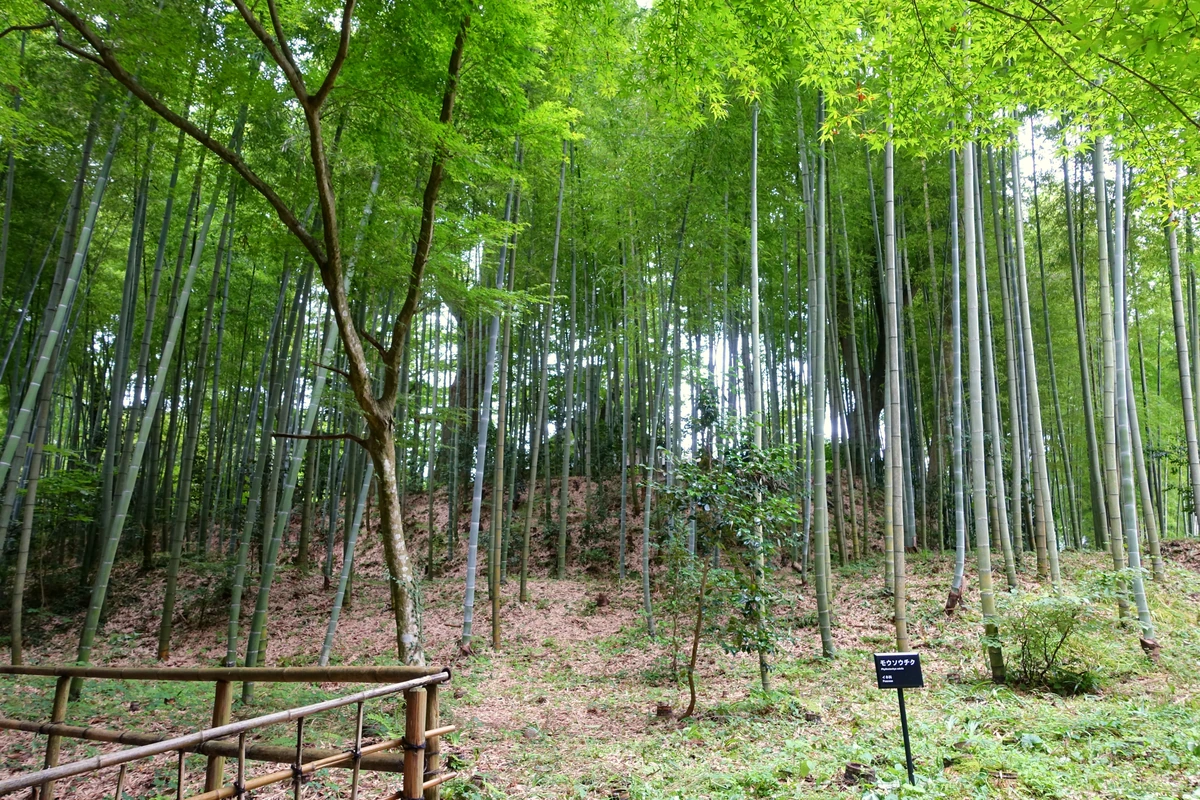
The Konan Bamboo Grove adds a different texture to the visit. Sengan-en’s interpretation links moso bamboo with Shimazu Yoshitaka, who is said to have brought it from China via the Ryukyu Islands and planted it here. Look at the repeated joints in the stems and the way the leaves filter the light. The bamboo photograph beside this passage was taken at Hakusan-jinja at Chūson-ji in Iwate. It is an offsite example of moso bamboo, not a view of Sengan-en’s grove.
There is also an unexpected industrial chapter. Near the entrance, the remains of a reverberatory furnace recall Shimazu Nariakira’s nineteenth-century modernisation programme. The Orientation Centre helps explain the machinery and the connection with the Shuseikan World Heritage component. For a first visit, combine a few of these historic stops with the House, the bay view and a seated break. Save the neighbouring Shōko Shūseikan Museum for extra time if everyone still wants more. Take the ultimate field guide with you: use the Snappit app to identify birds, plants, and animals on your trip.
Founded in 1658 by Shimazu Mitsuhisa, Sengan-en developed as a villa and reception setting for the Shimazu family. It later served for a time as their principal residence. Its designed landscape is nationally designated for scenic beauty. A separate strand of history began in 1851, when Shimazu Nariakira started constructing a reverberatory furnace on estate land as part of the Shuseikan industrial programme. The furnace remains belong to the Shuseikan component of the Sites of Japan’s Meiji Industrial Revolution World Heritage property. The garden’s scenic designation and that industrial World Heritage story describe different aspects of the same place.