Snappit logo
Snappit
Get App
Generic illustration, not a photograph of this venueIllustration
ParkComunitat Valenciana, Spain

Parc Natural de l’Albufera, Valencia

The pleasure of l’Albufera is in slowing down: a bird pausing at the edge of shallow water, a narrow irrigation channel beside a rice field, or the broad sky reflected in the lagoon.

About

The pleasure of l’Albufera is in slowing down: a bird pausing at the edge of shallow water, a narrow irrigation channel beside a rice field, or the broad sky reflected in the lagoon. This is a working landscape as well as a protected wetland. The open water, rice-growing marshes and coastal dunes each tell a different part of its story.

For a first visit, start at Racó de l’Olla. Its interpretation centre and permitted birdwatching areas give you a manageable introduction without trying to cover the whole park. Spend time in a hide rather than rushing between viewpoints; binoculars make a much bigger difference than a long species checklist. The protected inner reserve is for wildlife and is closed to casual exploration.

El Palmar is a separate next stop for a meal or a prearranged lagoon boat ride. The Devesa is another distinct landscape: wooded, fixed dunes and seasonally wet hollows on the coastal barrier. Its walking options need particular care after the August 2026 fire. Ask which routes and parking areas are open before adding one to your day; older trail maps are useful for understanding the landscape but cannot settle current access.

Keep the day modest. Racó de l’Olla plus one extra experience is a satisfying first outing. A longer rice-field walk or a booked visit to Tancat de la Pipa deserves its own time, transport plan and access check. Take the ultimate field guide with you: use the Snappit app to identify birds, plants, and animals on your trip.

The coastal barrier separated the lagoon from the sea, while centuries of fishing, rice cultivation and water management helped shape the landscape visitors see today. Golas connect the lagoon to the Mediterranean, and canals distribute and drain water through the fields. Natural-park protection dates from 1986. Today, conservation also includes restoring damaged habitat and improving water quality, alongside the everyday work of the communities around the lagoon.

What to do here

Begin with the exhibition and permitted hides at Racó de l’Olla. Choose one addition: a booked boat trip from El Palmar, the official El Palmar–L’Estell rice-field route if open, or a Devesa walk specifically cleared by staff. Tancat de la Pipa is an advance-booked reserve visit on the other side of the lagoon.

Seasonal info

Rice fields change from flooded ground to growing crop, harvest and drier periods; water levels and birds move with farming and water management. The official L’Estell leaflet discourages March–April visits when its rice fields are dry, and warns of autumn–winter hunting closures. Summer heat, fire restrictions, storms and restoration work can all alter a plan.

Accessibility

Plan access by the specific centre, path, hide and boat. Ask Racó de l’Olla about the current approach, surfaces, thresholds, viewing heights and toilet provision for your needs. Its lookout tower is a separate feature: do not assume it shares the access of the ground-level visit. Flat rice-field roads and a short Devesa trail are not, by themselves, evidence of wheelchair suitability.

Don't miss

1

A patient birdwatching session in the permitted Racó de l’Olla hides

2

The lagoon’s open water and fishing heritage on a separately booked boat trip

3

Rice fields and irrigation channels along the official L’Estell route, when open

4

The Devesa’s dune woodland, only on a route confirmed open after the 2026 fire

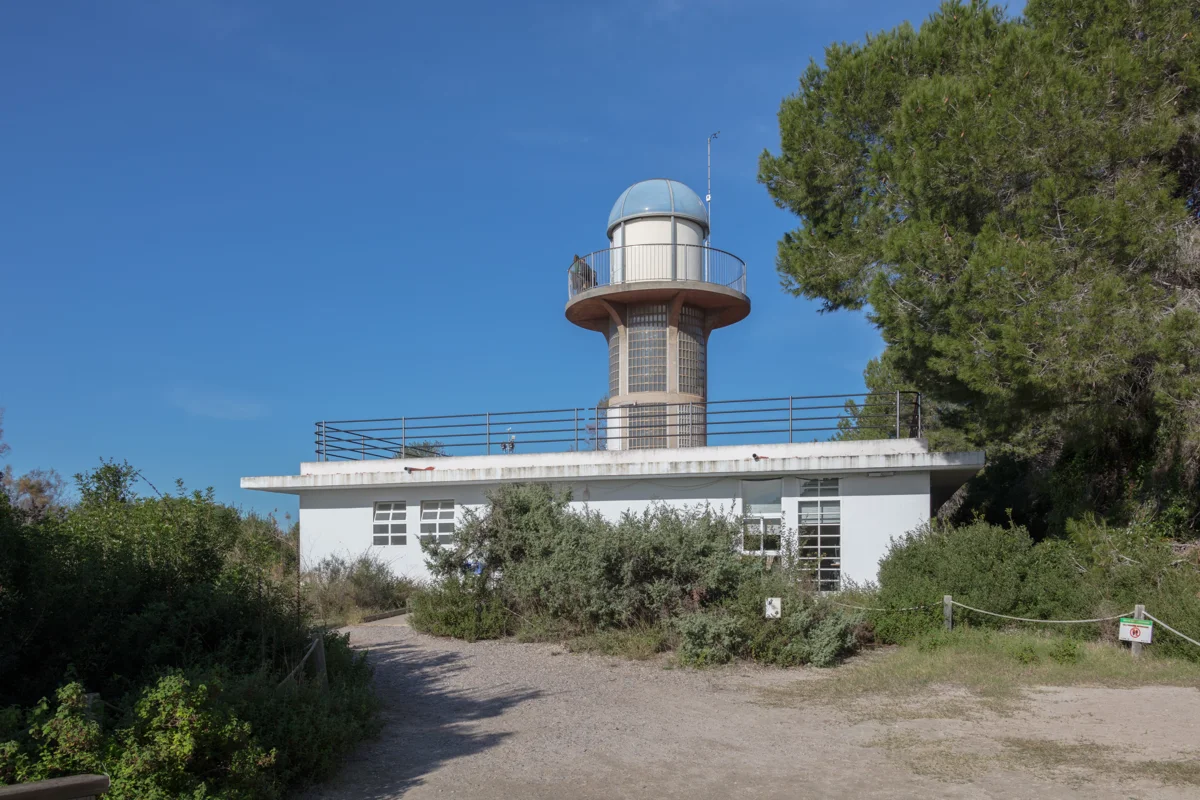
A white observation building with a raised round tower stands beside shrubs and tall trees, with an earth path in front.

The Racó de l’Olla observation building in December 2022, before the 2026 fires. This historical photograph does not show current vegetation, building access or path conditions.

Diego Delso, delso.photo / Wikimedia Commons / CC BY-SA 4.0 International · Creative Commons 1 · Creative Commons 2

Walks and routes

Racó de l’Olla: exhibition and permitted birdwatching visit

Start at reception and ask which hides and paths are available. Combine the exhibition with quiet observation of the reserve’s waterbirds. The published botanical interpretive trail is about 400 m; allow additional walking for the rest of your visit and follow the public circuit indicated by staff. Return with time to spare before closing.

Ask about the current pedestrian approach, path surface, hide thresholds and seated viewing. Confirm toilet access and whether your mobility aid can use the intended circuit. The tower is optional; do not assume lift access.


Racó de l’Olla: exhibition and permitted birdwatching visit

El Palmar–L’Estell: rice-field return walk

The official route begins at the Asociación Hostelera car park on the northern approach to El Palmar, crosses the village and continues through the rice-growing landscape. It is 5.6 km out and back in total, not a loop. The leaflet gives 90 minutes on foot or 30 minutes by bicycle. Irrigation channels and agricultural activity are the interest; stay on the indicated route because L’Estell is a private estate.

The leaflet describes a flat mix of asphalt and earth roads, with farm machinery possible. That does not establish an uninterrupted accessible surface. Ask about recent mud, gates and any turning point suitable for your wheelchair or pushchair. Carry water and plan for exposed sections.

El Palmar–L’Estell: rice-field return walk

Devesa botanical itinerary: check reopening first

The published botanical itinerary explores the fixed dunes and woodland of Pla de la Sanxa, south of the Gola del Pujol. Its short length makes it tempting as an add-on, but only use it once the Devesa–Albufera service confirms that the approach, route and chosen parking are open after the fire. Otherwise, keep the day centred on Racó de l’Olla and a separately arranged lagoon activity.

A short sandy-woodland route is not automatically step-free or wheelchair-friendly. Ask about current sand, roots, damaged surfaces and any boardwalk sections before relying on it.

Devesa botanical itinerary: check reopening first

Port de Catarroja–Tancat de la Pipa: access to a booked reserve visit

This northern-side option runs between rice fields from Port de Catarroja towards Tancat de la Pipa. Reserve entry requires advance arrangement; a walk to the gate is not admission. Confirm the meeting point, permitted approach and return plan when booking. If walking both ways, budget 8 km before adding the reserve visit.

Speak to the reserve about your particular requirements. A May 2026 accessibility assessment identified barriers and proposed improvements; it did not certify a fully accessible visit. Ask about surfaces, resting places, hides and the visitor building.

Port de Catarroja–Tancat de la Pipa: access to a booked reserve visit

1–2 hours: an easy introduction at Racó de l’Olla

Choose this if you want a focused nature visit or are travelling with children. Arrive in the morning and let the centre’s current advice determine the circuit.

Start at reception, check which paths and hides are available and spend time with the exhibition.

Follow the permitted short interpretive path and settle into one birdwatching area. Find one bird you can identify confidently rather than chasing a long list.

Return with plenty of time before 14:00. Add the tower only if its access suits your group and it is open.

Half a day: Racó de l’Olla and El Palmar

Reserve a boat that fits your travel plan, then use the morning for the centre. Allow roughly 4–5 hours including local transfers and time to eat; check the operator’s actual trip length.

Visit Racó de l’Olla during its morning opening.

Travel separately to El Palmar; do not assume the centre’s trail is a pedestrian shortcut to the village.

Leave time for a meal if wanted, then meet your boat at the confirmed jetty. Check the return bus or parking plan before boarding.

A walking morning: El Palmar–L’Estell

Choose the official 5.6 km return route when the park confirms it is open. The leaflet’s 90 minutes is walking time; allow longer for observation and a break.

Check hunting restrictions and field conditions, then start at the official northern village parking area.

Follow the published route, watching irrigation and farm activity from the road. Give agricultural vehicles room and turn back if any section is closed.

Return to El Palmar on the same route. A prebooked boat or meal can follow, but a late finish will miss Racó de l’Olla’s opening.

A separate outing: Tancat de la Pipa

Make the reserve appointment first, then plan around its meeting point, access needs and permitted approach. This is on another side of the lagoon, so do not bolt it onto a rushed El Palmar visit.

Contact the team to agree the visit, approach and return arrangements.

If using the Port de Catarroja walking approach, allow for 4 km each way as well as the reserve programme; ask about current track conditions.

Use the visit to learn about water treatment, habitat recovery and birds from the designated public areas.

Things to try

Make one hide stop count

Choose a comfortable place and spend ten quiet minutes looking before moving on. First separate birds on open water from those feeding at the edge; then try identifying one of each with binoculars and the centre’s displays. This works well with children because there is a simple task without a long walk.

Book a lagoon boat independently

A traditional albuferenc outing adds the open-water view and local fishing stories that a hide cannot provide. El Palmar has commercial operators; confirm the exact jetty, duration, price, weather policy and boarding arrangements. Sunset departures are separate reservations and can change with the season. No boat ride is included in free centre entry.

Read the rice-growing landscape

On the open L’Estell route, notice how channels, field levels and water-control structures organise the countryside. Compare flooded or growing fields with worked ground at another time of year. Watch farming from the permitted route without entering crops or obstructing machinery.

See what wetland restoration involves

A booked Tancat de la Pipa visit offers a different theme: formerly cultivated land managed as a wetland, with green filters that help improve water quality. Ask the team how habitat management and the post-DANA recovery fit together. Arrange access before travelling.

Explore the coastal woodland when cleared

If staff confirm an open route, compare dense fixed-dune vegetation with the more exposed coast and seasonal hollows. Use the marked path and interpretation panels. Do not enter fenced dunes, burnt woodland or restoration plots to complete a plant checklist.

Light rain: shorten the centre visit

If the centre confirms it is open and the approach is safe, spend more of the visit with the exhibition and choose only a suitable short hide outing. Waterproof shoes and a layer help, but shelter at a hide does not make the route to it safe in a storm.

Heavy rain, thunder or strong wind: change the day

Postpone exposed rice-field and woodland walks, follow emergency advice and check boat cancellation arrangements. A flooded lane is a reason to turn back. Keep an indoor plan in Valencia rather than driving into the park in search of an alternative entrance.

If the Devesa is closed

Do not substitute an unofficial path around the barrier. Ask Racó de l’Olla whether its own visitor area is available, or move a booked boat trip to another suitable time with its operator. Each venue and activity needs its own check.

Wildlife and habitats

Little egret

Look for white plumage, a slender black bill and black legs with yellow toes. Compare the bird with other pale herons from a permitted hide, using binoculars rather than approaching it.

Black-winged stilt

Long reddish legs and a slender straight bill help distinguish this black-and-white wader. Watch how it feeds in shallow water without approaching the bank.

Pied avocet

Look for a black-and-white wader with a noticeably upturned bill. If it is feeding, watch for the bill sweeping through shallow water.

Red-crested pochard

A male in breeding plumage has a rounded orange-brown head and red bill; females are much subtler. Scan open water from a permitted viewpoint rather than assuming every duck is the same species.

Greater flamingo

Very long legs and neck and a strongly bent bill give flamingos their familiar outline. Use binoculars for distant birds rather than trying to get closer to a resting group.

Glossy ibis

A dark wader with a long down-curved bill. In good light, adults can show reddish-brown and iridescent tones. Watch from a permitted viewpoint and compare its shape with nearby herons.

Aleppo pine

One of the Devesa’s characteristic wild trees. Where a woodland path is confirmed open, compare the pine canopy with the shrubs below it; stay out of fire-recovery areas.

Mediterranean fan palm

A wild component of the Devesa vegetation. Look for its fan-shaped leaves from the marked path and leave every plant undisturbed.

Mastic

This wild shrub is part of the dense Devesa understorey. Use interpretation panels to connect its name with the living plant without picking leaves or stepping into recovering vegetation.

Watch the habitat as well as the birds

These are species documented in the park, not a promise for a particular hide or day. Ask staff what is being seen from public areas, move slowly and keep noise down. Do not feed birds, use playback calls, approach nesting or resting groups, or step beyond a barrier for a photograph. The plant suggestions describe the Devesa’s established vegetation; visit recovering woodland only where access has been cleared.

Stories and discoveries

The water landscape is managed

The lagoon, surrounding rice fields and connecting canals work together. Water levels and bird feeding opportunities change with rainfall, cultivation and management, so a winter view can look very different from a summer visit.

The Devesa is part of the lagoon’s story

The coastal barrier separates the wetland from the Mediterranean. Its dunes, wooded areas and wet hollows are distinct habitats, rather than simply scenery around the lake.

A rice field can become a restoration wetland

Tancat de la Pipa shows how former rice-growing land can support managed wetland habitats and water-cleaning green filters. The reserve is both a conservation project and a place to learn through an arranged visit.

A closed area is part of the visit

At Racó de l’Olla, the separation between public viewing areas and the integral reserve gives birds space to breed and rest. A good view from a hide is the intended experience; entry to the protected interior is not an extra trail.

When to visit

November–February: winter waterbirds

Wintering waterbirds make this a rewarding season for a quiet hide visit. Dress for wind and check shorter daylight hours for the journey home. Some rice-field routes have hunting restrictions; confirm access before leaving the public visitor areas.

March–May: changing fields and migration

The wider wetland changes as birds move through and farming progresses. Racó de l’Olla is a useful focus, while the L’Estell leaflet specifically discourages March–April because those rice fields are dry. Do not expect every field to be flooded or every route to offer the same birdwatching conditions.

June–August: take the short morning option

Use the morning opening for birdwatching, carry water and protect yourself from sun. Breeding wildlife needs undisturbed space, and fire-weather restrictions may close forest sectors. Check current alerts and avoid making a long exposed rice-field walk the default summer plan.

September–October: migration and careful access checks

Autumn brings another migration period and agricultural changes. Heavy rain can affect tracks and water levels; follow warnings and never cross flooded lanes. In autumn 2026, also confirm Devesa post-fire restrictions and any hunting-related rice-field closures.

Getting there and practical advice

Racó de l’Olla: opening and contact

Carretera del Palmar s/n, 46012 València. The Generalitat directory lists Monday–Sunday 09:00–14:00, closed 1 and 6 January, 19 March, and 24, 25 and 31 December. Contact +34 963 868 050 or [email protected] to check your visit, temporary restrictions and any access needs.

Free entry, with group conditions

Entry is free and capacity is limited. Groups of 15–50 must book; independent parties below 15 normally do not need to. Arrange guided or educational visits in advance. A centre booking is separate from any boat, restaurant or other reserve reservation.

What to expect at the centre

The visitor offer includes interpretation displays, a tower viewpoint, bird observatories and a short interpretive trail, with a car park. Ask which elements are available on your day. Confirm toilet and drinking-water provision rather than planning around an assumed café, shop or accessible toilet; bring your own drinking water.

Casa Forestal de la Devesa: check before travelling

This restored former forest-guard house reopened for visitors in July 2025. The published schedule was Saturdays, Sundays and public holidays 10:00–13:30, with groups larger than ten booking at [email protected]. Because that schedule predates the 2026 fire, confirm current opening and the approach before making it part of your day.

Tancat de la Pipa: an arranged visit

Book through the reserve team at +34 608 746 865 or [email protected]. Ask about the available programme, meeting point, visit length, any charges, current access and your mobility requirements. Do not travel expecting unrestricted walk-in access.

Devesa route and parking questions

The municipal Devesa–Albufera service lists +34 961 610 021 and +34 961 610 347, with [email protected] for contact. Ask which path and parking area are open after the fire. This is an administrative service, not a substitute visitor attraction; in-person office attention is by appointment.

From Valencia by EMT bus

Lines 24 and 25 serve the Albufera corridor; line 24 is the El Palmar branch, while line 25 continues towards El Perellonet and El Perelló. The tourism office lists both for the Racó de l’Olla area, but describes a short roadside-shoulder walk to the entrance. Check the exact stop, crossing and approach with the centre if travelling with children or a mobility aid. Use EMT’s current journey and service information for timings and fares.

El Palmar’s weekend bus stops

EMT’s standing notice says line 24 does not enter the village on Saturdays, Sundays and public holidays. It finishes at the entrance roundabout, arrival stop 2171 Vicent Baldoví–Novelda, and starts back towards Porta de la Mar at stop 2173 Vicent Baldoví–Pintor Martí Girbés. Check for any newer diversion before travelling, especially after a late boat trip.

By car: use the right parking area

Racó de l’Olla has a car park off the El Palmar road. The main CV-500 and CV-401 roads reopened after the August fire, but that reopening did not cover all local Devesa parking. Follow current signs and use only open designated parking; never block gates, farm access or emergency routes. Confirm any boat operator’s parking arrangements separately.

By bicycle: choose suitable roads

The official L’Estell route can be cycled when open, with mixed road surfaces and farm traffic. Bicycles are not allowed into Racó de l’Olla, and Devesa paths and dunes must not be treated as an unrestricted mountain-bike network. Check permitted approaches, closures and where you can securely leave your bicycle before setting off.

Ask for a route that matches your needs

Before a Racó de l’Olla visit, describe your wheelchair, walking aid, pushchair or other requirements. Ask about the route from parking or bus stop, surface firmness, steps and thresholds, a suitable hide viewing position, resting opportunities and toilets. Keep the tower separate from the ground-level plan.

Tancat de la Pipa is still an individual access check

The reserve’s May 2026 assessment described partly accessible elements alongside barriers, including connections, surfaces and access to facilities. Improvements were proposed. Discuss the current visit with staff rather than relying on a general accessibility label or assuming the post-DANA repairs settled every barrier.

Boat accessibility depends on the particular trip

Ask the operator about the exact jetty, steps or ramp, the gap to the boat, seating, stability, help available and whether a transfer is needed. Explain your requirements before paying. A general claim of access to a jetty does not answer whether its boat suits you.

Keep a shorter option available

For fatigue, heat sensitivity or young children, a shorter centre visit with one hide may be more enjoyable than adding a rice-field walk. Ask staff which part of the public circuit is easiest that day. After rain, fire or works, reassess even a route you have used before.

Stay on permitted ground

Keep to marked or officially described access routes. Leave dunes, reedbeds, crops, canal banks and private farm buildings undisturbed. Supervise children near roads, water and irrigation channels. A quiet-looking field edge is not an invitation to enter.

Protect the recovering landscape

Do not light fires or barbecues. Use authorised campsites for overnight camping and respect local restrictions and closures. Take rubbish away, leave plants in place and avoid trampling burnt or recovering ground.

Check permission for activities beyond an ordinary visit

Boat navigation is regulated; use an established passenger operator or resolve your own craft’s registration and authorisation before arrival. Ask the park before arranging specialist filming, drone use, organised events or any activity beyond normal permitted public access. An ordinary visitor ticket or route leaflet is not a permit for those activities.

Visitor information

Check Devesa access after the August 2026 fire

The city’s 31 August 2026 notice reopened CV-500 and CV-401 and reported normal EMT operation. It still closed the roads and parking along avenida de la Gola del Pujol from Torre 1 to the restaurant Duna roundabout, plus Camí Vell de la Devesa, Tallafoc de la Rambla, Tallafoc dels Ferros and Tallafoc de la Calle. On 24 September the city announced further safety and restoration work. Before planning a forest walk, contact the Devesa–Albufera service and ask about your exact route and parking area. Follow newer notices and barriers on site.

Flood recovery is specific to each site

The October 2024 DANA damaged the wider wetland and visitor infrastructure. Recovery has progressed, but a restored road or reserve activity does not establish that every track, hide or boarding point is ready for your needs. Ask the relevant centre or operator about your chosen visit, especially after heavy rain.

Sources and useful links

Wildlife you might spot

9

Each card links to a full Explore page with photos, traits, and fun facts.

Snap map for this place

Start with the big picture, then zoom in to explore individual wildlife observations around this place.

Loading map…

Good to know before you go

Check Racó de l’Olla’s opening and capacity before travelling; arrive with time to enjoy it before its 14:00 closing.

Groups of 15–50 need a Racó de l’Olla reservation. Arrange guided visits separately; smaller independent parties normally do not book.

Bring binoculars, water, sun protection and a windproof layer. Keep your voice low in hides and give wildlife space.

Pets and bicycles are not admitted inside the Racó de l’Olla reserve or interpretation centre; ask staff in advance about any assistance-animal arrangements.

Keep boat and reserve bookings separate. Confirm the exact jetty, departure time, price, cancellation terms and boarding requirements with the boat operator.

After the 2026 Devesa fire, check the exact path and car park you intend to use. Never move barriers or follow an old route through a closure.

For rice-field walks, check hunting and farm-work restrictions, leave machinery room and stay on the permitted route. Fields, embankments and farm buildings are not public shortcuts.

Check the return bus before staying for sunset. EMT line 24 normally turns at El Palmar’s entrance on Saturdays, Sundays and public holidays.

Frequently asked questions

No. It is the most manageable starting point in a much larger park that includes the lagoon, rice-growing marshes and coastal habitats across 13 municipalities. El Palmar, the Devesa and Tancat de la Pipa involve different access arrangements.
The published visitor information lists free entry with limited capacity. Independent parties of fewer than 15 normally arrive during opening hours; groups of 15–50 must reserve. Guided and educational visits should be arranged ahead. Check with the centre if your group falls outside those conditions.
Racó de l’Olla’s listed hours are 09:00–14:00, so an afternoon lagoon outing will not include the centre. A boat operator or restaurant has its own timetable and booking conditions.
Do not expect a continuous public waterside promenade. Rice fields, canals, roads, private land and protected reserves interrupt access. Choose an official route and confirm its current conditions rather than tracing an improvised shoreline circuit.
Check the specific route before setting out. On 31 August 2026 the city reopened the main CV-500 and CV-401 roads and reported normal EMT operation, but retained several local road and parking closures. Further safety and recovery work was announced on 24 September. Road access does not confirm that every forest path or car park is available.
Ask about the exact visit you want to make. Request current surface and threshold information at Racó de l’Olla, an accessible toilet check and advice on viewing from a seated position. For a boat, discuss the individual jetty, boarding method and whether transfer from a wheelchair is needed before booking.
Greater flamingos occur in the park, alongside many other waterbirds. What you see depends on the season, water levels and where birds are feeding or resting. Let staff suggest the best permitted viewing area that day.
Neither pets nor bicycles are admitted at Racó de l’Olla. Elsewhere, follow the rules for that sector: the Devesa walking itineraries and sensitive dune areas are not off-road cycling routes, and dogs must be kept on a lead where admitted.
Do not treat a passenger-boat outing as permission for independent launching. Navigation on the lagoon and municipal canals is regulated through registration and authorisation procedures. Check the requirements for your craft with the municipal Devesa–Albufera service before bringing it.
Postpone exposed walks and check any boat trip directly with its operator. Never enter a flooded lane or cross a closed path. In light rain, an open Racó de l’Olla exhibition and a shorter hide visit may still work; severe-weather warnings take priority over the itinerary.

Recent snaps at this place

Recent snaps will appear here as new observations are added.

View all ›

Take the discovery with you

Exploring Parc Natural de l’Albufera, Valencia?

Identify the wildlife you spot, learn as you go, and keep a collection of the adventure.

  1. 1Spot it
  2. 2Snap it
  3. 3Keep the discovery