Snappit logo
Snappit
Get App
Generic illustration, not a photograph of this venueIllustration
ParkCataluña, Spain

Ebro Delta Natural Park

For a first visit, make Casa de Fusta and l’Encanyissada your little corner of this very large landscape.

About

For a first visit, make Casa de Fusta and l’Encanyissada your little corner of this very large landscape. Begin with the lagoon exhibition if it is open, then take your binoculars to the public viewpoint and the signed interpretation path. Sit quietly for a while: a bird that looked like a dark dot may turn out to be diving, feeding or preening. The pleasure here is in watching what happens, rather than covering a long distance.

Around you is a working delta. Reed-fringed lagoons sit beside rice fields, drainage channels and roads used by local residents and farmers. Fresh water, seawater and the agricultural water cycle help shape the habitats. The natural park protects a series of places on both sides of the river, rather than every field and village in the wider delta.

You can keep the day to a short lagoon walk, add a separate visit to the freshwater springs at Els Ullals de Baltasar, or return with bicycles for the much longer Ruta de les llacunes. Choose one of those plans before you set off. The flat horizon makes distances look deceptively small, and sun or a headwind can change how much your group wants to do. Take the ultimate field guide with you: use the Snappit app to identify birds, plants, and animals on your trip.

The park was created in 1983 after local opposition to the draining of wetlands, and expanded in 1986. Casa de Fusta tells a different part of that story: the wooden building was brought from Canada in 1926 for a hunting society. It later came under public management, became part of the park’s visitor provision and gained its lagoon exhibition in 1999. Today it is a useful place to consider how rice growing, fishing and wildlife conservation share the delta.

What to do here

Explore the Casa de Fusta interpretation area, watch from the public lagoon viewpoints and follow the short l’Encanyissada path towards El Carreter. Use the official cycling circuit only if you want a substantial ride. Give children a simple challenge: find a swimming bird, a wading bird and a bird in flight.

Seasonal info

Rice fields change from wet surfaces to green growth and harvested ground, but flooding and farming dates vary. Summer brings exposed paths, heat and mosquitoes; carry water, sun protection and repellent. In winter bring a windproof layer and leave enough daylight for the return. Respect seasonal wildlife barriers in every part of the park.

Accessibility

The current lagoon-route sheet describes adapted viewpoints at Casa de Fusta and El Carreter, while the park documents ramp access to the exhibition and level approaches to interpretation panels. Ask about the complete route, current surfaces and toilets for your needs. Patrau has stairs, and a flat park is not automatically step-free throughout.

Don't miss

1

The broad l’Encanyissada view beside Casa de Fusta

2

A short interpretation walk towards El Carreter

3

Wild waterbirds viewed quietly through binoculars

4

An optional contrast with the freshwater springs of Els Ullals de Baltasar

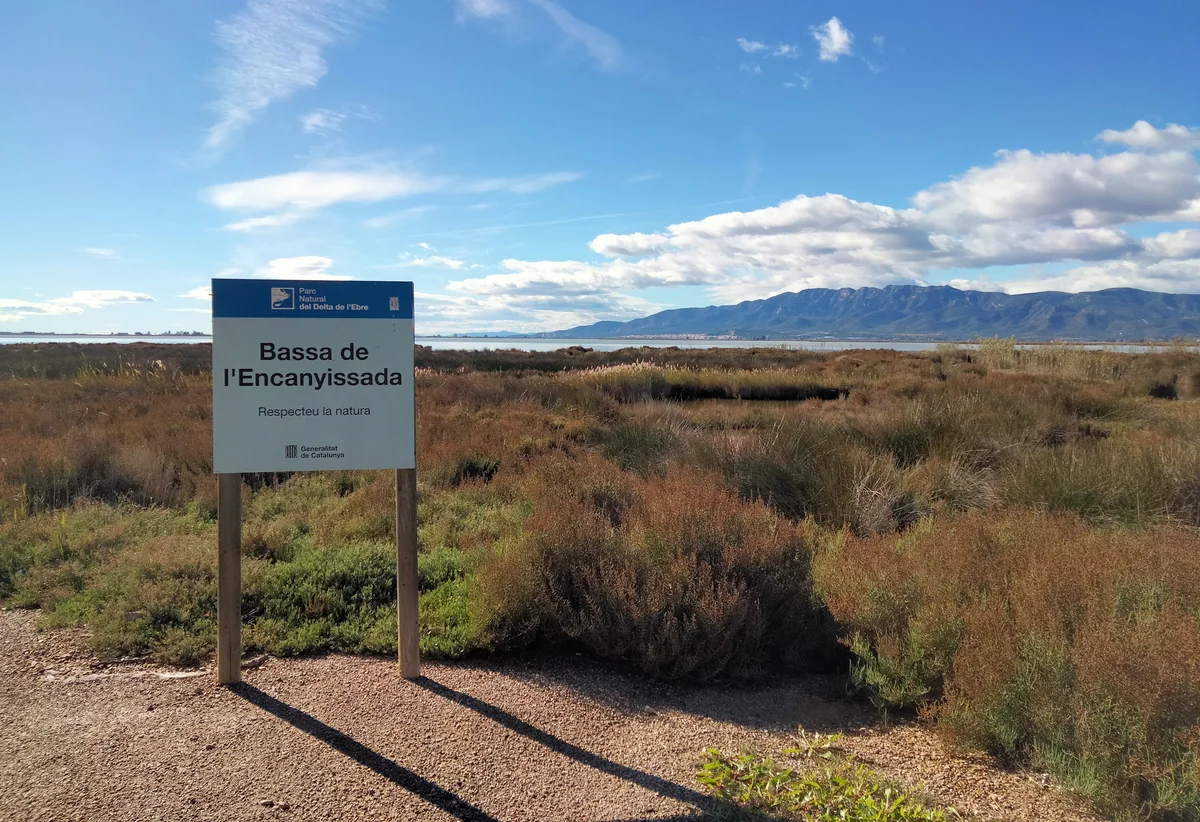
A Catalan sign for l’Encanyissada stands beside low wetland plants, with lagoon water and a long mountain ridge beyond.

L’Encanyissada and the Serra del Montsià, seen near the lagoon viewpoint in November 2022.

13 L'Encanyissada i la serra del Montsià, vora el Mirador (Amposta).jpg — Enric / Wikimedia Commons / CC BY-SA 4.0 · Creative Commons

Walks and routes

L’Encanyissada interpretation path: a short out-and-back

From Casa de Fusta, follow the signed lagoon interpretation section of the shared cycle path towards El Carreter. The park describes this section as 900 m one way, so returning along it makes about 1.8 km. Allow 45–75 minutes for the whole out-and-back with reading and birdwatching stops; turn back sooner if the sun or wind is tiring.

The park records levelled approaches to the interpretation panels, and its current cycling sheet describes El Carreter as adapted. Check the path and hide with staff before relying on it for wheelchair or pushchair access.


L’Encanyissada interpretation path: a short out-and-back

Ruta de les llacunes: a longer cycling day

The official 28.8 km circular ride starts at Casa de Fusta and links l’Encanyissada, Poblenou del Delta and La Tancada. Its published estimate is 4 hours, over asphalt and earth with 3 m of ascent. Use the current route sheet and signs, and add time if you want to linger at viewpoints.

This is a cycling circuit with roads connecting cycle-path sections. Low elevation gain does not make it traffic-free or suitable for every rider. The Patrau viewpoint is reached by stairs.

Ruta de les llacunes: a longer cycling day

Els Ullals de Baltasar: a separate freshwater walk

For a second, contrasting stop, travel to the Els Ullals car park and follow walking itinerary 12A. The official circular route is 0.9 km, with 0 m of ascent and an estimated 30 minutes. Wooden walkways and interpretation panels introduce the springs; leave extra time if you want to watch the water and plants.

The route sheet calls this a pedestrian, adapted itinerary. Confirm the state of the wooden surfaces and the full connection from parking for your mobility needs. Wet boards can be slippery.

Els Ullals de Baltasar: a separate freshwater walk

A relaxed first visit: 1½–2½ hours

Start at Casa de Fusta while the information point and exhibition are open. Spend time at the nearby viewpoint, then take the short interpretation walk towards El Carreter and return the same way. Finish when your group has had enough; one good watch is more rewarding than rushing between towers.

A half-day with two kinds of water

Keep the Casa de Fusta plan, then make a separate transfer to Els Ullals de Baltasar for the 0.9 km walk. Allow time for travel and a food break. If the forecast deteriorates, drop the second stop rather than trying to fit it in.

A full cycling outing

Make the Ruta de les llacunes the main event. Check bikes, wind and road conditions before leaving, carry sufficient food and water, and use the official sheet for the circuit and signed alternatives. Avoid adding a distant northern-delta visit to the same plan.

Things to try

Watch one bird for five minutes

Choose a bird you can already see from a public viewpoint. Follow its behaviour without following it on foot: is it swimming, wading, diving or resting? A short sketch or a few notes make a satisfying record even before you know its name.

Read the water-shaped landscape

Compare the open lagoon, a band of reeds and a cultivated rice field from a permitted path. Notice their different edges and how channels connect the landscape. Treat fields and sluices as working places, not places to enter or touch.

Photograph the habitat as well as the birds

Try a wide view of reeds, water and sky, then a closer composition from the same viewpoint. Use your lens or binoculars to bring wildlife nearer; keep your feet on the public route. Special filming and sensitive-species photography can require park authorisation.

Use the exhibition when it is open

A confirmed Casa de Fusta exhibition visit can be the centre of a damp-day outing. Add only a short outdoor watch if conditions are comfortable. In strong wind, lightning or flooding, postpone the exposed paths and do not drive through standing water.

Wildlife and habitats

Greater flamingo

Long legs, a long neck and a sharply bent bill are more useful clues than expecting every bird to be bright pink. Young birds can be grey-brown. Watch feeding groups through binoculars from the public viewing places.

Black-winged stilt

Look for a black-and-white wader on remarkably long pink-red legs. Watch how it picks food from shallow water, keeping enough distance that it continues its normal activity.

Little egret

A slender white heron with a dark bill and black legs; yellow toes are a useful clue when visible. It may walk actively through shallow water. Compare its shape and movements rather than approaching for a closer look.

Eurasian coot

Look for a dark swimming bird with a white bill and forehead shield. Spend a moment watching how it feeds and moves through the water; the pale face is often easier to pick out than the body in shadow.

Great crested grebe

A long neck and pointed bill help distinguish this diving bird from ducks. Breeding adults have conspicuous head plumes, while winter birds look plainer. Wait quietly to see where a diving bird resurfaces.

Red-crested pochard

A male in full plumage has a rounded orange-brown head, red bill and dark breast; females are much more subdued. Scan the open water patiently, using shape as well as colour.

Common reed

The reedbed is worth a look in its own right: notice the tall stems, the movement of the leaves and the changing edge between vegetation and open water. Stay on the path and listen without pushing into the stems.

These are wild species documented in the park’s habitats or delta surveys, not a checklist promised at Casa de Fusta on one day. Water levels, seasons and disturbance affect what you can see. Watch quietly from public paths and hides, avoid calls or bait, and leave nests and roosts undisturbed. The museum’s preserved specimens are a separate interpretive collection.

Stories and discoveries

A wooden house with an unexpected journey

Casa de Fusta began as a prefabricated wooden hunting lodge brought from Canada in 1926. Its present role as a place to learn about lagoons makes the building itself part of the story.

Not all wetland water is alike

L’Encanyissada receives fresh water and has connections towards the sea; La Tancada has a stronger saline character. Els Ullals add another habitat, where groundwater emerges into freshwater pools. These differences help explain why a short transfer can change what you notice.

Rice fields are part of the living picture

The park’s winter census covers rice fields as well as lagoons, bays and other wetlands. Its results show why water management and farming conditions matter to birds beyond the edges of the protected lagoons.

When to visit

Spring: migration and breeding

Leave time for birds on the move and for changes in the reedbeds. Keep to marked viewing places; a barrier may protect nesting wildlife even when the land beyond looks empty.

Summer: shorten the exposed part

Go early, take shade breaks where available and carry more water than a short distance might suggest. The reedbeds are habitat, not shelter to step into. Repellent and light protective clothing make a warm-weather visit more comfortable.

Autumn: a changing agricultural landscape

Harvest and water management change the look of the rice fields and where birds feed. Enjoy the variation without assuming every field will be flooded. Keep clear of farm machinery and muddy road edges.

Winter: patient watching in the wind

Winter brings a different mix of waterbirds. Warm layers, binoculars and a sheltered pause help more than a long list of stops. Choose a shorter walk if wind makes standing at a viewpoint unpleasant.

Getting there and practical advice

Casa de Fusta: information and exhibition

The visitor area combines the wooden exhibition building with a traditional barraca information point. Inside are lagoon displays and preserved bird specimens; outdoors are interpretation and viewpoints. Phone +34 667 001 382 to confirm opening, last entry, current admission and group booking requirements.

Parking and practical stops

The official lagoon cycling sheet lists free parking at Casa de Fusta. Follow current signs, leave agricultural access clear and check toilet availability on arrival. Bring the water and food you need rather than assuming every concession will be open.

Public viewpoints and hides

Use the marked viewing structures and respect the posted capacity. The current route sheet lists adapted viewpoints at Casa de Fusta, El Carreter, Pont del Través and La Tancada–Albert Rull; Patrau uses stairs. Pick the ones that suit your visit instead of treating every tower as essential.

Other centres have separate arrangements

The Ecomuseu in Deltebre and independently operated visitor attractions require separate planning. Do not assume a Casa de Fusta ticket covers them, or that their opening hours match.

Aim for the southern lagoon gateway

Use Casa de Fusta, Partida de la Cuixota, near Poblenou del Delta in Amposta, as your destination. Follow official access information and local signs. The park’s administrative office in Deltebre is a different place and is not the starting point for this walk.

Roadworks can change the approach

Diputació de Tarragona lists the T-2021 La Ràpita–Poblenou del Delta project as in execution from April 2026 to April 2028. Check the latest traffic arrangements before setting out and follow signed diversions. The project dates do not mean that the entire approach is closed.

Plan the last leg if travelling without a car

Arrange your onward journey and return from the lagoon before leaving your accommodation or transport interchange. Ask the park or Amposta Tourism about services for your date; do not assume a town bus stops at Casa de Fusta. A hired bike is only useful if the distance, road sections and wind suit everyone.

Start with the exact facilities you need

Ask Casa de Fusta about arrival parking, the entrance ramp, toilet access and the connection to the lagoon viewpoint. Describe your wheelchair, walking aid or pushchair and the distance you are comfortable covering. Published adaptations are useful planning information, but current conditions still matter.

Short path, shared use

The l’Encanyissada interpretation panels were given level approaches from the cycle path. El Carreter is described as adapted in the current route sheet. Expect other walkers and cyclists, and ask whether any part is muddy, damaged or temporarily closed.

Choose viewpoints individually

Casa de Fusta and El Carreter have documented provision for reduced mobility and visual impairment. Patrau is a different proposition because its approach uses stairs. At Els Ullals, check wooden walkway condition and turning space with staff before committing to the circuit.

Sources and useful links

Wildlife you might spot

7

Each card links to a full Explore page with photos, traits, and fun facts.

Snap map for this place

Start with the big picture, then zoom in to explore individual wildlife observations around this place.

Loading map…

Good to know before you go

Start with the short Casa de Fusta visit; the 28.8 km lagoon circuit is a separate cycling plan.

Confirm Casa de Fusta opening, admission and any booking needs on +34 667 001 382. Published timetables differ.

Check roadworks and diversions before approaching from La Ràpita or Poblenou del Delta. The T-2021 improvement project is listed as running from April 2026 to April 2028.

Bring binoculars, drinking water, a hat and a windproof layer. Add mosquito repellent in the warmer months.

Stay on signed paths and use the public hides. Keep away from nests, roosts and closed reedbeds; never feed or lure wildlife.

Watch for farm vehicles and cyclists, and supervise children beside canals and water. Do not stop a vehicle in the road for a photograph.

Keep dogs on a lead and check beach-specific restrictions before adding a coastal stop.

Do not launch a drone or a boat into the lagoons. Use designated campsites or motorhome areas for overnight stays.

Frequently asked questions

Yes. Use Casa de Fusta and its nearby public viewpoint as your main outing. Add as much of the signed interpretation path as suits your group, then retrace your steps. You do not need to circle the lagoon.
Amposta Tourism lists €2.50 for the Casa de Fusta exhibition, checked on 17 October 2026. Confirm the current price, concessions and group arrangements before travelling. The official cycling sheet describes free parking at its Casa de Fusta start; other delta sectors and private attractions have their own arrangements.
The park leaflet and municipal tourism listing give different schedules. Phone +34 667 001 382 for your date, including the last exhibition admission. Plan the indoor part first if it matters to your visit, rather than relying on an old afternoon closing time.
They are wild birds documented in the delta, and the park includes them in its lagoon-watching advice. Their position changes with water, food, weather and disturbance. Ask which public viewpoints are useful that day and enjoy the other birds too.
No. The park’s activity rules prohibit navigation on its lagoons. If you want a separate river or bay outing, ask an authorised local operator about the permitted area, weather and access rules.
The Ecomuseu is a different park information facility in Deltebre, across the river from the southern lagoon visit. This guide’s first-day plan uses Casa de Fusta and wild habitats. The birds displayed inside Casa de Fusta are preserved specimens, distinct from the wild birds outdoors.

Recent snaps at this place

Recent snaps will appear here as new observations are added.

View all ›

Take the discovery with you

Exploring Ebro Delta Natural Park?

Identify the wildlife you spot, learn as you go, and keep a collection of the adventure.

  1. 1Spot it
  2. 2Snap it
  3. 3Keep the discovery