Snappit logo
Snappit
Get App
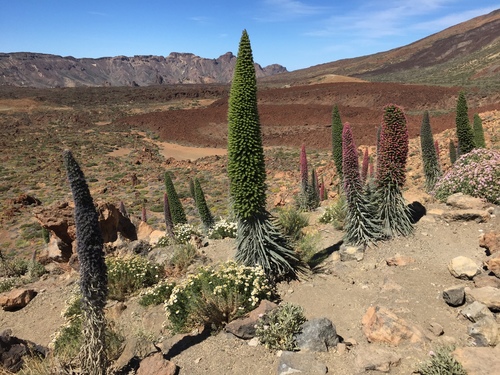
Teide National Park photo
National ParkSpain, Spain

Teide National Park

Teide is a place to slow down and look closely.

About

Teide is a place to slow down and look closely. Across the volcanic high country, small shrubs and scattered flowers live with strong sun, cold nights and little water. The immense landscape catches your eye first; the plants give you a reason to stop.

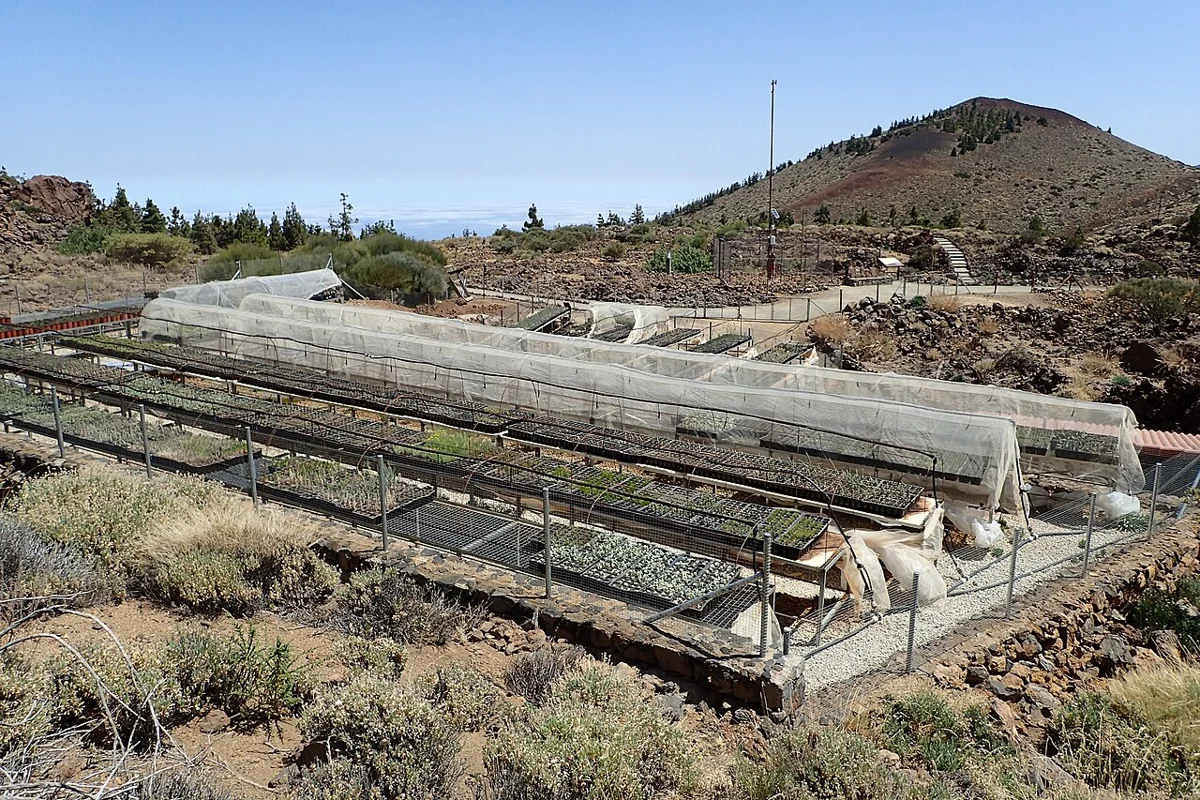
For a manageable first visit, make El Portillo your destination. The centre introduces the park’s geology and living world, and the adjoining botanical garden brings characteristic mountain plants together along signed paths. This is a cultivated collection with a conservation purpose. The nursery beds in the photograph show plants being grown and cared for. Stay in the public garden areas and leave working beds to the staff.

You can make a satisfying visit here without a cable-car ticket or a summit climb. If everyone wants more walking, consider the separately signed Alto de Guamaso circuit after checking that it is open. The summit, La Rambleta and the regulated high trails need a different plan, equipment and permissions. Wondering what that bird or insect is? Find out on your visit using the Snappit nature app.

Teide became a national park on 22 January 1954 and a UNESCO World Heritage site in 2007. Its protected landscape tells a much older story through volcanic landforms and the ways plants have adapted to mountain conditions. El Portillo adds a practical chapter to that story. Its botanical garden is used for interpretation, research and plant propagation, including conservation work with threatened flora. Looking at a carefully tended collection is a useful reminder that protecting wild places can involve patient work away from the most dramatic views.

What to do here

Start with the centre, choose one plant adaptation to investigate, then explore the garden at your own pace. Compare compact shrubs, small leaves and sheltered growing places. Finish by looking back at the surrounding landscape and seeing how much more you can now pick out.

Seasonal info

Bright sunshine can feel warm while the wind is cold. Summer brings dry conditions and fire restrictions; winter can bring frost, snow and road closures. In autumn 2026, wildlife-management days also restrict access to large parts of the park. Check the current notices before adding a trail.

Accessibility

The park describes about half of the botanical garden’s more than 1,000 m of paths as accessible for people with reduced mobility. Ask staff to identify the suitable section and check the route from your arrival point, gates and toilets. This description does not cover every garden path or the surrounding mountain trails.

Don't miss

1

A short botanical visit in Tenerife’s volcanic high country

2

Cultivated mountain plants and the conservation work behind them

3

Small-scale details that make the wider landscape easier to read

4

An optional volcanic-cone walk at Alto de Guamaso

Rows of nursery trays beneath low mesh covers sit among volcanic rocks, shrubs and garden paths, with a hill beyond.

Plant-growing beds at the El Portillo botanical garden, photographed in August 2019. This cultivated setting illustrates the garden’s conservation and interpretation role.

Jardin Botanico en Centro de Visitantes El Portillo kz05.jpg — Krzysztof Ziarnek, Kenraiz / Wikimedia Commons / CC BY-SA 4.0 · Creative Commons

Walks and routes

El Portillo botanical garden: choose a short visit

Follow the signed public garden paths beside the centre and turn back whenever you have had enough. Give yourself 30–60 minutes to read labels, compare plant shapes and take photographs. There is no need to cover every path.

Ask staff which section suits your mobility, wheelchair or pushchair and how to reach it. The published accessible proportion describes the garden network, not a single guaranteed loop.


El Portillo botanical garden: choose a short visit

Alto de Guamaso: an optional volcanic circuit

The official PNT 14 route offers a 3 km circuit around the volcanic cone, with views towards the La Orotava valley and a transition between pine woodland and high-mountain scrub. Choose the signed circular option and return to your starting point; the route also has a different linear continuation. Allow 1½–2 hours, compared with the official 1½-hour walking estimate.

Treat the full circuit as a mountain walk. The official page describes only its first 290 m, from the viewpoint towards Los Tagorores, as a reduced-mobility path. Check that short section separately if it is your destination.

Alto de Guamaso: an optional volcanic circuit

A short El Portillo morning

Ask what is open, visit the centre, then choose a manageable stretch of garden. Leave time for photographs and a quiet pause before returning. Allow 1½–2½ hours on site and keep the rest of the day flexible.

If the group wants a longer walk

After the garden, ask specifically about PNT 14 Alto de Guamaso. If weather, access and everyone’s energy suit, travel to the signed start and choose the circular route. Add 1½–2 hours for the walk plus time to get there; otherwise finish at El Portillo.

Things to try

Try a plant-survival challenge

Choose three plants you can study without touching them. Sketch their overall shape and compare their leaves. Which looks best sheltered from wind? Which has the smallest exposed leaves? Check your ideas against the labels or ask the staff.

Photograph a landscape in three scales

Take one wide view, one shrub-sized view and one close detail from the path. Keeping the same place at different scales helps children notice how much is happening in a seemingly bare landscape.

Watch without chasing

Give yourself five quiet minutes to notice bird calls, movement and insects visiting flowers. Wildlife varies with season and weather; enjoy whatever appears without feeding, catching or following it off the path.

Keep the visit indoors, if travel is safe

If the roads are open and conditions allow a safe journey, spend more time with El Portillo’s interpretation and skip the exposed walk. If the mountain forecast is poor, the Telesforo Bravo visitor centre in La Orotava offers a lower-altitude introduction to Tenerife; confirm its own hours before going.

Wildlife and habitats

Wild canary

Pause quietly and listen for birds before scanning the shrubs. Use binoculars from a public path and let the birds keep their distance.

Common raven

Look up occasionally for larger birds crossing the open sky. Keep snacks packed away and never encourage a bird to approach for food.

Teide broom

Use the garden’s labels to learn the name, then look at the compact shape of shrubs in the wider landscape. The park’s white-flowered broom is one of the main plants of its mountain scrub.

Red tajinaste

This is the plant with tall red flower spikes in many spring photographs of Teide. Ask what is flowering during your visit; May and June are the usual season, and a garden visit in October will tell a different story.

Teide violet

Learn about this small high-altitude specialist in the centre or through garden interpretation. Do not leave a path or add a summit ascent simply to search for a flower.

Stories and discoveries

The garden is also a conservation workplace

Propagation and research are part of El Portillo’s purpose. Nursery trays, fences and carefully tended beds tell that story, but they do not mean working areas are open to visitors.

Small leaves can be a big advantage

The park’s plants face strong sunlight, dry conditions, wind and cold. Compact growth, small leaves and fine hairs are among the adaptations described by the park’s botanists. Look for these features without picking a sample.

When to visit

Spring

Look for new growth and flowering plants, then check the labels to connect names with shapes. May–June is the typical red-tajinaste flowering period, but the season varies.

Summer

Choose a comfortable morning, carry water and take sun and wind protection. Check fire-prevention restrictions before travelling and shorten the outdoor visit if the heat is tiring.

Autumn 2026

The published wildlife-management schedule restricts large park sectors on Mondays, Tuesdays and Fridays from 2 October to 3 November, with holiday exceptions, and on 14–15 December. El Portillo’s special-use zone is exempt, but ask before extending onto any trail.

Winter

Make the road and weather check the deciding factor. Frost, snow, strong wind or poor visibility can change a modest outing into an unsuitable one. Choose a lower-altitude day instead if access or conditions are doubtful.

Getting there and practical advice

Opening window and contact

At the 16 October 2026 check, the regional park website listed El Portillo centre and garden open daily 09:00–16:15, except 1 and 6 January and 25 December. Confirm on +34 922 922 371. Other official descriptions give longer garden access, so plan within the daytime window.

Entry, food and practical needs

Turismo de Tenerife lists free garden entry. Ask the centre about any exhibition ticket or booking, toilet access and the facilities you need. Bring your own drinking water and a snack rather than relying on a fountain or café at the centre.

A cultivated garden, with working areas

Enjoy the labelled public paths. The nursery and research facilities support plant conservation; enter a working area only if staff explicitly invite you.

Arriving by road

El Portillo’s published address is TF-21, km 32.1, La Orotava. The northern approach follows TF-21 from La Orotava; TF-24 approaches from La Esperanza. Check the road-information service before setting out and use only designated parking. Follow any new transport or parking instructions shown for your visit.

Arriving by public bus

Look up TITSA line 348 from Puerto de la Cruz via La Orotava and El Portillo. Verify the operating day, disruption notices, visitor-centre stop and return bus with TITSA. Do this before leaving the coast; do not plan to walk along the road if you get off at the wrong El Portillo stop.

Choose the garden section with staff

The regional park page describes about half the garden’s path network as accessible for reduced mobility. Discuss your needs before travelling, including gradients, current surface, gates, seating, toilets and the distance from your arrival point.

Alto de Guamaso has a limited adapted approach

Only the initial 290 m towards Los Tagorores is described as a reduced-mobility path. The rest of the 3 km circuit is a different outing. Ask about the approach and current conditions before making the short adapted section part of your plan.

Sources and useful links

Wildlife you might spot

2

Each card links to a full Explore page with photos, traits, and fun facts.

Snap map for this place

Start with the big picture, then zoom in to explore individual wildlife observations around this place.

Loading map…

Good to know before you go

Check Tenerife ON alerts, road conditions and the park’s weather links before travelling. At El Portillo, ask which paths are open that day.

Bring drinking water, a snack, sun protection, a warm windproof layer and shoes with grip, even for the short visit.

Plan for the published daytime opening window. Do not rely on descriptions of round-the-clock garden access.

Stay on permitted paths. Leave stones, flowers and seeds where they are, and close garden gates after passing through.

Leave the nursery beds and research areas to staff. Photograph plants from the public paths without moving labels or leaning into the beds.

Do not smoke outdoors in the park or light fires. Take your rubbish away and never feed wildlife.

Ordinary pets are excluded under the park’s management plan. If you use an assistance dog, confirm the applicable access arrangements with the park before travelling.

Keep summit plans separate

a cable-car ticket does not include permission for regulated trails, and a permit does not override weather closures or equipment checks.

Frequently asked questions

The centre-and-garden outing does not take you onto the regulated summit trails. Ask the centre about any current entry arrangements; if you later choose a high trail, make its separate reservation through Tenerife ON.
It is a cultivated collection of mountain flora, used for interpretation and conservation. Plants growing in beds or nursery trays should not be treated as wild sightings, and working areas may be closed to visitors.
General park access remains free under the management plan, and Turismo de Tenerife lists the garden as free. Some services and regulated trails have separate charges. Confirm any current exhibition ticket or booking requirement with El Portillo before travelling.
Ask staff to direct you to the garden’s accessible section and confirm the approach from your parking place or bus stop. Do not assume every path is suitable. The full Alto de Guamaso circuit is a separate mountain walk.
TITSA lists line 348 from Puerto de la Cruz via La Orotava and El Portillo. Confirm that it is running, the correct visitor-centre stop and your return journey before leaving. A public-transport visit may need more time than the short garden outing.
Plan those separately. Cable-car tickets are sold by the operator; permissions for regulated trails are handled through Tenerife ON. High-altitude conditions, equipment requirements and closures still apply even when you have a booking.

Recent snaps at this place

View all ›

Take the discovery with you

Exploring Teide National Park?

Identify the wildlife you spot, learn as you go, and keep a collection of the adventure.

  1. 1Spot it
  2. 2Snap it
  3. 3Keep the discovery