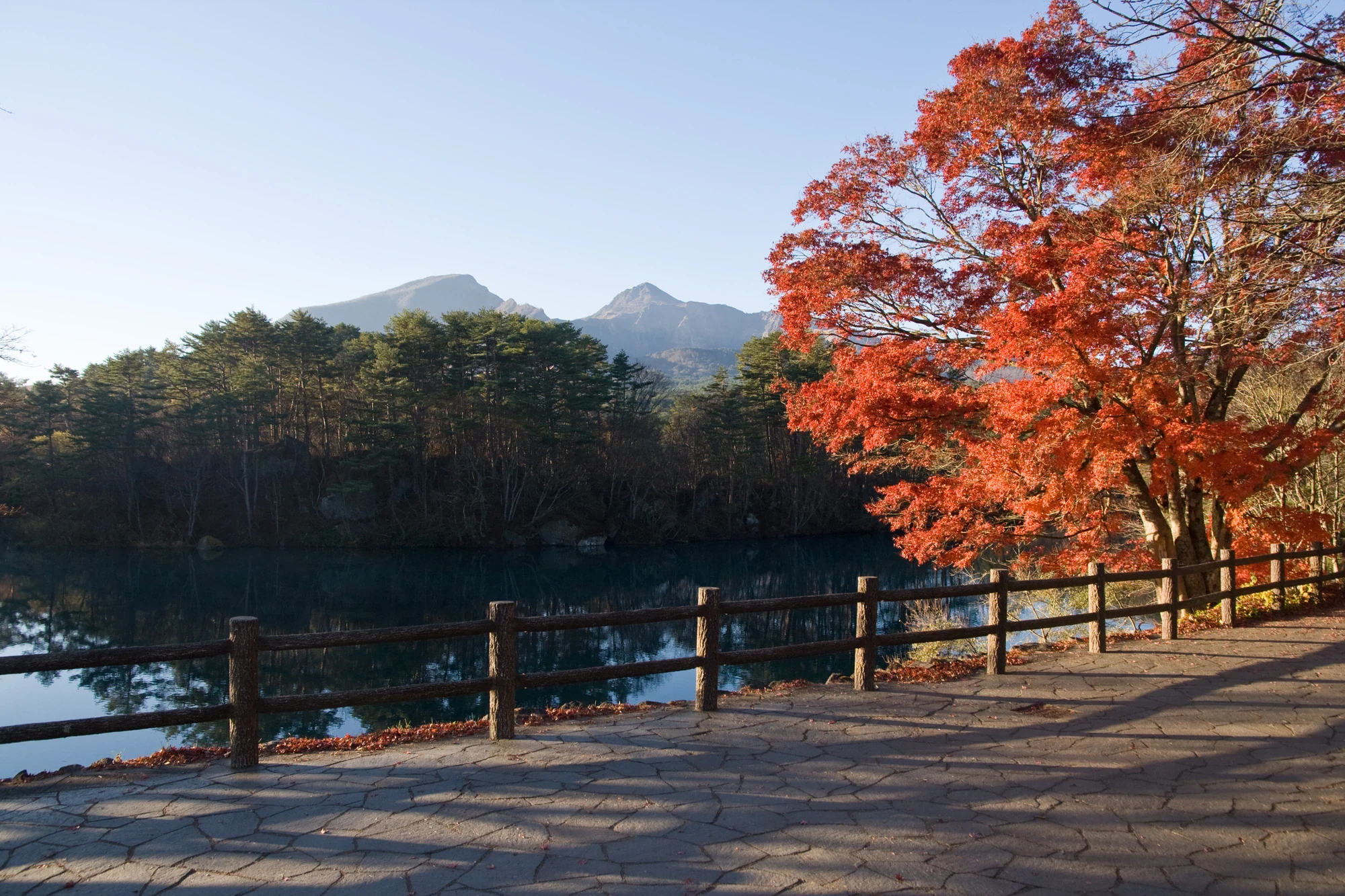
Start at Urabandai Visitor Center, then let the ponds set the pace. Bishamonnuma, the largest of the Goshikinuma ponds, makes a satisfying first stop: green-blue water, wooded banks and, when the clouds cooperate, Mount Bandai rising behind them. The visitor center helps turn that attractive view into a story you can follow on foot. Ask about the day’s trail conditions before choosing a short visit or the full pond walk.
Bandai-Asahi is much larger than this corner of Fukushima. The national park reaches across Yamagata, Fukushima and Niigata, taking in the Dewa Sanzan, Asahi and Iide mountains as well as the Bandai-Azuma area. This guide stays with the visitor center and Goshikinuma in Urabandai. Mountain ascents and the park’s distant sacred peaks deserve separate days and preparation.
Goshikinuma is a collective name for several dozen ponds, rather than a single lake or a set of exactly five. Their landscape took shape after Mount Bandai’s 1888 steam-driven eruption caused a massive collapse. Rock and debris blocked drainage channels, leaving water pooled between the deposits. These wooded ponds are not simply bowls left in old craters. The disaster transformed a lived-in landscape, and the peaceful scene today has a much more turbulent beginning.
The water is the real invitation to slow down. Compare Bishamonnuma with the milky blue of Aonuma or the more open view at Bentennuma. Akanuma’s reddish margins offer another clue to the chemistry beneath the surface. Mineral-rich water, fine particles and iron deposits help create the colours, while light, season and reflections change how they look. Rather than hunting for a particular shade from a photograph, notice the differences that are there on your day.
Look up from the ponds, too. The forest is a landscape of recovery, helped by planting led by Endo Genmu and others after the eruption. Red pines were important pioneers on the disturbed ground. Autumn shrubs add small flashes of colour, and the combination of water and woodland gives birds several different places to feed. A pair of binoculars and a little patience can add as much to the outing as reaching the next viewpoint.
For a compact visit, enjoy the center and the approach to Bishamonnuma, then return the same way. For more variety, the approximately 4-kilometre Goshikinuma Nature Trail links the eastern visitor-center side with the western Yanaginuma side. It has little overall height change, but exposed rocks, boardwalks, muddy patches and entrance steps make it a proper woodland walk. Plan the bus connection before setting off so that the final pond does not become the start of an unexpected walk back. Be ready to snap and learn! Get the Snappit app to identify any nature species you find here.
Bandai-Asahi became a national park on 5 September 1950. In Urabandai, the defining event was Mount Bandai’s 1888 steam-driven eruption and collapse, which blocked rivers, destroyed communities and created new lakes and ponds. The forest that followed owes part of its recovery to people: Endo Genmu invested in replanting the damaged land, using pioneer trees such as red pine.
Urabandai Visitor Center opened in 2003 and reopened with renewed exhibitions in April 2025. Its role is a useful one for a first visit: connecting the scenery outside with the region’s geology, wildlife and history.