Snappit logo
Snappit
Get App
Generic illustration, not a photograph of this venueIllustration
ParkAndalucía, Spain

Cazorla, Segura and Las Villas Natural Park

The name covers three mountain ranges, not one attraction with a single entrance.

About

The name covers three mountain ranges, not one attraction with a single entrance. There are forested valleys, high limestone country, reservoirs, villages and working landscapes across this large natural park in north-eastern Jaén. For a first visit, resist the temptation to collect distant viewpoints. Choose one part of the park and leave time to stop, listen and look.

Torre del Vinagre makes a useful starting point for the central Guadalquivir valley. Its reception, information service, shop and nature activities were confirmed operating in October 2026, although the museum and interpretation area were still being fitted out. Ask which rooms and activities are available, then choose a short outing nearby. The separate botanical garden is temporarily closed, so it should not anchor your day.

The lower Río Borosa trail gives you a manageable taste of the river landscape if conditions allow. Walk only as far as the group can comfortably retrace, pause to watch the moving water and turn back with plenty of energy left. This is different from the long return walk to the hydroelectric station, and much shorter than a mountain outing to the upper lagoons. The Cerrada de Elías boardwalk section remains closed; follow the signed forest-track alternative and current staff advice.

For another day, choose the rocky Cerrada del Utrero circuit near Vadillo-Castril, or build a separate visit around the Segura mountains and Siles. Las Villas, the Tranco reservoir and the southern approaches from Quesada and Pozo Alcón are further parts of the same park, not quick additions to a short Borosa walk. Collado del Almendral offers a paid wildlife-park experience by the reservoir, with managed animals in an enclosure; keep that separate from watching wild animals on an ordinary park trail. Turn your visit into a safari! Use the Snappit app to scan and log wildlife sightings here.

These mountains have long supported forestry, grazing and village life. Timber and the movement of wood through the river valleys helped shape the landscape, while olive-growing country meets the mountain forests around its margins. The area became a UNESCO Biosphere Reserve in 1983 and a natural park in 1986. Its present conservation framework also includes Natura 2000 protection and the management plans approved in 2017. El Sequero in Siles, a former pine-cone processing building, is a particularly tangible place to explore the forestry story.

What to do here

Start with up-to-date advice at Torre del Vinagre, then choose a short open section of the lower Borosa trail. Give the river a few quiet minutes rather than walking straight past it. Choose Utrero instead if your group is comfortable with rock steps and uneven ground, or book Collado del Almendral as a separate managed-wildlife visit.

Seasonal info

Mountain weather and access matter more than a calendar label. Heavy rain, rockfall, heat, fire restrictions, snow or ice can change the plan. Check daylight, the forecast and the park’s notices before leaving; a previously open route or a predicted reopening date is not a promise for today.

Accessibility

Assess each stop separately. Torre del Vinagre lists accessibility provision, but ask about the rooms currently open, toilets and the complete arrival route during works. Utrero has rocky paths and carved steps. Borosa’s tracks, bridges and temporary works need a specific check for wheelchairs, pushchairs or anyone who finds uneven ground difficult.

Don't miss

1

A small, unrushed introduction to the park from Torre del Vinagre

2

River sounds and wildlife watching along an open lower section of the Borosa

3

Limestone walls and the Guadalquivir gorge on the more demanding Utrero circuit

4

A choice of distinct valleys and villages for a longer stay

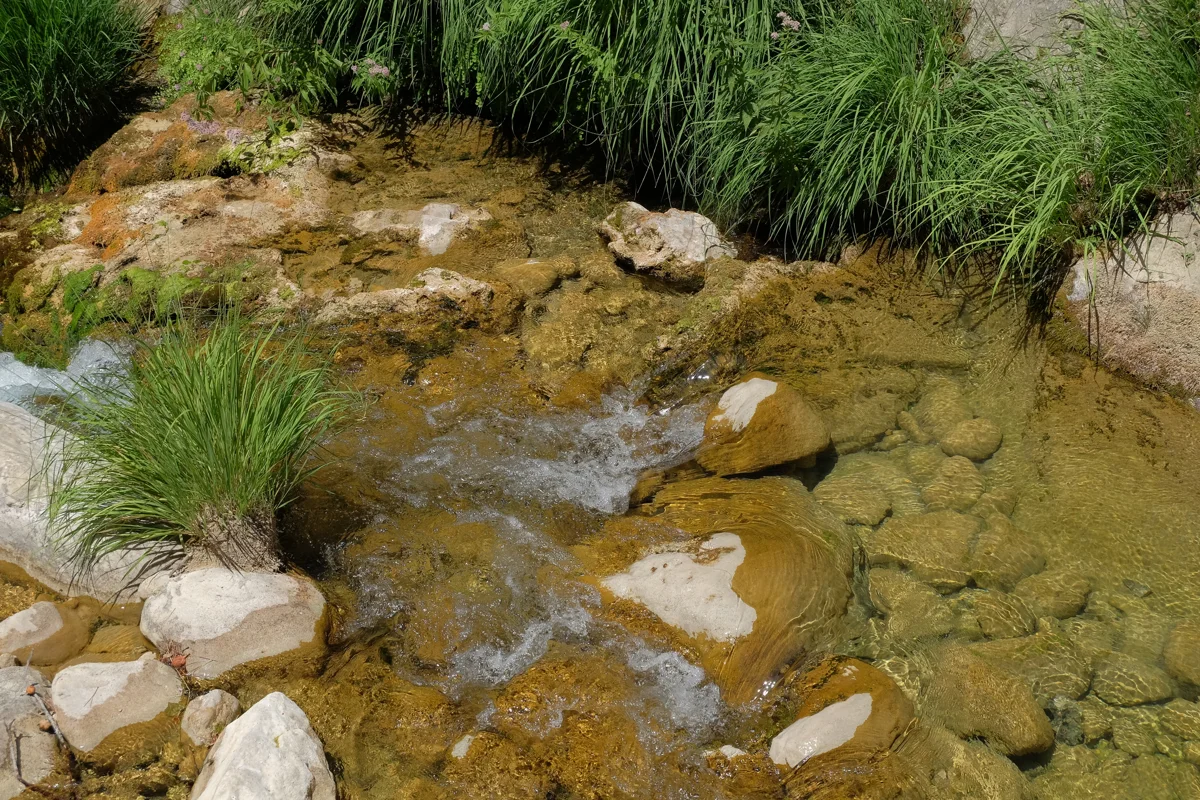
Clear shallow water flows among pale rocks, with dense green grasses along the riverbank.

Clear water and streamside vegetation on the Río Borosa, photographed in July 2014. This historical view does not show which walking sections are open.

Rio Borosa.jpg — Niko35moral / Wikimedia Commons / CC BY-SA 3.0 Spain · Creative Commons 1 · Creative Commons 2

Walks and routes

A short taste of the lower Borosa

Start at the signed lower Río Borosa trailhead and choose an out-and-back section that suits the group. Allow 60–90 minutes including pauses, turning back at a safe, open point while everyone still feels fresh. There is no need to reach the gorge or a named landmark. This is a flexible part of the longer official trail, not a separately waymarked short loop.

The lower route uses a track, but surfaces, slopes and bridges still matter. Ask about current obstacles before bringing a wheelchair or pushchair. Keep children close beside the water and accompany them across the bridges.


A short taste of the lower Borosa

Cerrada del Utrero: a short but rocky circuit

This circular walk near the Vadillo-Castril turn-off explores a narrow Guadalquivir gorge. The official route is about 1.7 km, graded medium, with a walking time of 45 minutes; allow 60–90 minutes to look around. Rock steps lead beside the dam, and the walk opens views towards the Linarejos waterfall, whose flow depends on conditions. Stay on the marked return.

Expect uneven rock, carved stairs and gorge-edge drops. This is not a step-free or pushchair circuit, despite its short length. Children need close supervision, and wet rock can be slippery.

Cerrada del Utrero: a short but rocky circuit

Río Borosa to the hydroelectric station: a longer day

The official linear trail ends at the hydroelectric station. Published figures are about 7.3 km and 2½–3 hours one way, so the normal return is roughly 14.6 km before the current diversion is allowed for. Set aside about 5–7 hours including pauses, and ask staff what today’s version involves. The upper tunnels and lagoons are beyond this plan and need separate route, fitness, daylight and weather decisions.

A sustained return walk needs more stamina than the short lower-river outing. Track and path surfaces, bridges and construction arrangements must be assessed on the day. Do not treat a leaflet’s low grade as a promise of easy current access.

Río Borosa to the hydroelectric station: a longer day

Your first 2–3 hours

Check the road and route notices before leaving. Start at Torre del Vinagre during a confirmed opening period, allowing roughly 20–40 minutes for advice and whatever is available to visit. Move to the signed lower Borosa start and spend 60–90 minutes on an open out-and-back section. Leave the remaining time for the short transfer, a rest and an unhurried return. Driving from your accommodation and a meal are extra.

A half-day built around Utrero

If uneven rock and stairs suit the group, make Utrero the main walk. Allow 60–90 minutes on the circuit, plus travel and a separate food or rest stop. Check conditions with an operating information service before arriving: the Utrero information point itself has a posted closure. Do not automatically combine this with the full Borosa walk.

Spread a longer stay across different sectors

Give the Torre del Vinagre and Borosa area one day, then choose a different base or direction. Around Tranco, decide whether you want a booked Collado wildlife-park visit. In the northern Segura mountains, Siles and El Sequero make a different introduction. Leave Las Villas or the southern Quesada–Pozo Alcón side for another day, chosen around current roads and open routes.

Things to try

Give the river ten quiet minutes

Find a safe, broad place on the public path where you are not blocking other walkers. Put the camera down for a moment and listen: water over stone, leaves moving and birds calling often reveal more than a hurried search for a particular animal. Watch without entering the river or disturbing the banks.

Compare shade, water and rock

Use the centre’s interpretation, or its online version, to compare the park’s river corridors, pine forests, rocky places, high mountains and human-shaped landscapes. On the walk, notice how quickly light, moisture and vegetation change. You do not need to identify every tree to start seeing those differences.

Read the limestone at Utrero

From the path, look for grooves, hollows and steep walls shaped by water in limestone. The gorge makes the relationship between rock and river unusually easy to see. Keep the observation at a comfortable stopping place rather than leaning over the edge or climbing on the dam.

Let a local guide add depth

Ask Torre del Vinagre about its current interpretive walks and nature workshops, including the meeting point, age suitability, cost and booking. A guided visit can help you understand a habitat or choose an appropriate outing. Do not assume an activity advertised for the centre runs every day.

Choose the managed wildlife experience at Collado

Collado del Almendral offers a tourist-train circuit, managed ungulates and a bird display, with views towards the Tranco reservoir. Book it as a separate attraction and check which walking sections your ticket includes. If your priority is quiet wild-animal watching, spend that time on an ordinary open park route instead.

Explore Torre del Vinagre online

The centre’s virtual interpretation offers a way to compare the park’s habitats without travelling into bad weather. Use the text version or sign-language material as useful, then pick one habitat to look for on a future dry-day visit. It is also a good option while physical exhibition areas are being fitted out.

Check a nearby indoor centre, or leave the outing for another day

If travel is safe, call the Río Borosa visitor centre or, when staying in the north, El Sequero to confirm opening before setting off. Do not cross the whole park in poor conditions just to reach an indoor stop. Heavy rain or strong wind is a reason to leave gorge walks for a better day, not to wait beneath rock faces or beside rising water.

Wildlife and habitats

Griffon vulture

Scan open sky above the limestone slopes for a large bird with broad wings and a short tail, circling with little flapping. The Utrero leaflet highlights griffons in this landscape. Watch from the path with binoculars and keep well away from cliff nests.

Red deer

Red deer live in the park’s woods. A quiet woodland-edge watch can be more rewarding than walking quickly, and autumn is a reason to listen as well as look. Keep well back, especially during the rut. Deer encountered inside Collado del Almendral belong to its managed enclosure.

Iberian ibex

Look across rocky slopes from an established path rather than climbing closer for a photograph. The local ibex belongs to the subspecies Capra pyrenaica hispanica. Wild ibex live in the wider park; animals encountered during a Collado del Almendral visit are in its managed enclosure.

White-throated dipper

Beside suitable flowing water, look for a compact dark bird with a bright white bib. A dipper may bob on a rock or disappear under the water to feed. Wait quietly on the path; do not scramble down a slippery bank or approach a nest to improve the view.

Eurasian otter

Otters are recorded in the park’s river fauna, but a short visit is better spent enjoying the river than expecting one to appear. Watch quietly from a safe public path, leave banks undisturbed and never search for a resting place or approach an animal if you are lucky enough to see it.

Strawberry tree

Look for an evergreen shrub or small tree with glossy leaves, small hanging bell-like flowers and round, rough-surfaced fruit that turns red. Strawberry trees grow wild in the park’s Mediterranean vegetation. Photograph what you find without picking it, and distinguish wild plants from labelled specimens planted in a botanical collection.

Stories and discoveries

Two major rivers begin in these mountains

Both the Guadalquivir and the Segura have their sources within the park. Their valleys help explain why this is a landscape of very different places rather than one continuous visitor route. Seeing either source is a separate outing; the recommended Borosa walk does not visit them.

The forests also have a human history

Pine forests here are part of a long relationship between mountains and people. Timber, grazing and forest management have shaped what you see. At El Sequero in Siles, the former pine-cone processing building gives that history a physical setting rather than leaving it as a line in a guidebook.

A conservation story still being written

The park is part of Andalucía’s bearded-vulture reintroduction work. A June 2026 official report records the release of two captive-bred birds here. That is a reason to appreciate the conservation effort, not to expect a sighting on a short walk or to seek out release sites.

A botanical garden is a living collection

Torre del Vinagre’s garden was arranged to introduce local vegetation through changing conditions of altitude and moisture. Its planted specimens help explain the wider mountains, but do not count as wild observations. Keep it on a future-visit list while the temporary closure remains in force.

When to visit

Spring: enjoy the water, respect the weather

Choose a settled forecast and make the river or gorge your focus. After storms, check bridges and rockfall notices before travelling. A waterfall’s flow varies, so enjoy the surrounding rock and woodland rather than making a particular cascade the test of a successful day.

Summer: start early and keep the plan modest

Use the cooler part of the day, carry enough drinking water and allow shade stops. Do not assume water beside the path is safe to drink or a river is an authorized bathing place. Check heat and fire restrictions, and keep cooking fires and barbecues out of the outing.

Autumn: slow down and listen

A mild day suits an unhurried woodland walk. Listen for deer without seeking them out or moving closer during the rut, and inspect leaves or fruit without collecting them. Shortening daylight matters on the full Borosa return, especially when a diversion changes the day.

Winter: a lower route can still need a rethink

Check road and trail conditions after rain, frost or snow. High-country plans need their own preparation; do not substitute them when a lower gorge is closed. If surfaces are icy or the weather deteriorates, choose a confirmed indoor visit or postpone the walk.

Getting there and practical advice

Torre del Vinagre: information first

The 9 October 2026 update confirms reception and information, a specialist shop and nature activities. Museum and interpretation-area fitting-out was still under way. Call +34 681 242 232 or email [email protected] for the day’s hours, open rooms, activities and essential facilities. Do not rely on a café, EV charger or proposed attraction merely because it appears in an older description or a future plan.

Botanical garden: currently closed

The garden is separate from the visitor centre and has a temporary closure notice from 29 September 2026. No reopening date is given. Check for an explicit reopening before travelling specifically for the collection.

Río Borosa visitor centre

This separate centre near the lower river introduces water, river habitats and their ecology. It can complement a walk if open. Confirm hours and facilities on +34 671 596 098 or +34 660 054 021, or at [email protected]. Its location beside the fish farm does not mean the working fish-farm installations are open to visitors.

Plan an open picnic and toilet stop

A storm-damage notice still lists closures at several local recreation areas, including Puente-Badén Piscifactoría, Empalme del Valle and Peña del Olivar. It also affects the Presa del Tranco–Cañada Morales trail. Ask which facilities are open for your particular day and sector. Carry drinking water and a cold picnic, and settle essential toilet arrangements before starting a walk.

Collado del Almendral: tickets and departures

The standard train-and-bird-display visit is listed at €10 for adults, €8 for children aged 2–12 and free for under-twos; concessions and premium visits have separate terms. The operator lists Monday closure, with holiday exceptions, and says times can change. Confirm your date, departure and price on +34 953 825 267. Use the operator’s directions near the Tranco reservoir and its designated parking.

El Sequero: a northern starting point

If you are staying near Siles, start with the local forestry and mycology story rather than driving straight to Torre del Vinagre. The municipal visitor centre occupies a former pine-cone processing building at Carretera de Hellín 21. Call +34 953 491 143 to confirm the opening and exhibits before making it a fixed stop.

Bring the basics for a mountain day

Take sufficient water, food, layers and a charged phone. The route guidance warns that coverage is not continuous. Keep an offline copy of your chosen route information, tell someone your plan if walking alone, and use 112 for emergencies. No route distance is a substitute for checking how your group is coping.

A-319: check the roadworks first

The Spanish notice dated 14 October 2026 announces full resurfacing closures between kilometre points 23 and 32.7, approximately 09:30–12:00 and 16:00–18:30. It estimates five or six days of disruption. Confirm the actual schedule before travelling; an estimated finish does not prove the road has reopened. Follow official traffic directions rather than treating a forest track as an improvised shortcut.

Navigate to the specific facility

Use the official locator for Torre del Vinagre, then the signed lower Río Borosa trailhead if that is your walk. Utrero starts opposite the Vadillo-Castril turn-off on the JF-7091. Collado del Almendral and Siles are different destinations within the wider park. Leave ample time for mountain roads and use designated parking without blocking access.

Without a car, arrange the whole journey

Do not assume a bus to Cazorla or another gateway town reaches Torre del Vinagre or your trailhead. Before choosing the walk, confirm the last connection, safe walking approach and return with the local information service or your accommodation. A prearranged transfer or guided outing may be more practical; check the actual service for your date.

Ask about today’s visitor-centre layout

Torre del Vinagre’s official listing includes physical, visual and hearing accessibility provision, but ongoing works make the specific service important. Describe your needs and ask about parking or drop-off, step-free entry, accessible toilets, open rooms, seating and any assistance. Its online interpretation has an accessible text version and sign-language material for preparing the visit.

Separate a short track outing from the complete trail

For Borosa, ask about the current surface, gradients, bridge width and protection before setting a distance goal. A short accompanied outing may be a very different proposition from the complete return to the station. Utrero includes carved stairs and rough rock, so choose another plan if step-free passage is essential.

Check the train and walking sections separately

Before booking Collado del Almendral, ask whether boarding requires a transfer, what mobility equipment can travel, and how the walking sections and toilets suit your needs. The operator describes both a botanical stroll and a more demanding viewpoint walk; a train ticket does not establish access to every part of the visit.

Sources and useful links

Wildlife you might spot

6

Each card links to a full Explore page with photos, traits, and fun facts.

Snap map for this place

Start with the big picture, then zoom in to explore individual wildlife observations around this place.

Loading map…

Good to know before you go

Check the dated A-319 roadworks notice before setting off. Full closures between kilometre points 23 and 32.7 began on 14 October 2026; confirm the day’s timetable and follow the official traffic arrangements.

For Borosa, check the current notice as well as the route leaflet. Cerrada de Elías is closed, and the open alternative uses the forest track. Children must cross the temporarily protected bridges with an adult.

Phone Torre del Vinagre before relying on a particular exhibition, activity or opening slot. The separate botanical garden has been temporarily closed since 29 September 2026.

Choose the turn-back time before you start. The full Borosa trail is roughly 7.3 km each way before allowing for the current diversion; the upper lagoons are a separate, longer undertaking.

Carry drinking water, a ready-to-eat picnic, sun protection, a warm layer and shoes with grip. Do not rely on every fountain, café, picnic area or toilet being available.

Keep to open marked paths, obey barriers and avoid gorges during heavy rain or strong wind. Download useful information beforehand; mobile coverage is not continuous. Call 112 in an emergency.

Watch animals quietly from a distance. Do not feed them, approach deer during the rut or leave paths to follow a bird. Keep dogs under close control and check the rules of any booked attraction.

Use designated parking and leave gates and access tracks clear. Skip fires and barbecues, take rubbish away, and check any extra requirements for organized activities or overnight stays.

Frequently asked questions

Choose one sector. Torre del Vinagre and a short lower Borosa walk make a sensible first outing. Siles and the northern Segura mountains, Las Villas, the Tranco reservoir and the southern approaches deserve separate time rather than a hurried drive between them.
The official Borosa and Utrero leaflets say special authorization is not normally required. The park’s management rules allow walking and nature observation on public routes without access restrictions. Closures still apply, and restricted areas, organized activities, camping and specialist sports can have different requirements. Ask about your actual plan.
The current notice records a temporary closure from 29 September 2026 without a reopening date. Check that notice before including the garden. The visitor centre is a separate facility, with reception and some services operating while other areas are being fitted out.
No. Cerrada de Elías is currently closed, with a forest-track alternative for the longer walk. A short lower-river outing can turn back well before that area. The route to the hydroelectric station is already a substantial return walk; tunnels and upper lagoons require a separately planned mountain day.
The attraction keeps deer, ibex and other ungulates in a managed, semi-free-ranging enclosure, and offers bird displays. Those encounters are different from observing free-ranging animals elsewhere in the natural park. Choose it for the experience it actually offers.
Ask staff about the complete route from parking to the specific facilities you want to use. Do not assume the whole Borosa route is suitable because its lower section follows a track. Utrero’s steps and rocky circuit rule out treating it as a step-free walk. Ask Collado separately about train boarding, transfers and the walking sections.
This is a large protected landscape with separate facilities and activities. Check any guided visit or attraction individually. Collado del Almendral currently lists its standard train-and-bird-display visit at €10 per adult and €8 for ages 2–12; confirm the price, departure and any concessions directly before booking.
Confirm essential facilities before travelling, particularly while repairs and changes of operator are under way. A current storm-damage notice still lists several recreation areas as closed, including Puente-Badén Piscifactoría near the Borosa area. Bring water and food, and ask staff where an open picnic stop and suitable toilets are available.

Recent snaps at this place

Recent snaps will appear here as new observations are added.

View all ›

Take the discovery with you

Exploring Cazorla, Segura and Las Villas Natural Park?

Identify the wildlife you spot, learn as you go, and keep a collection of the adventure.

  1. 1Spot it
  2. 2Snap it
  3. 3Keep the discovery