Snappit logo
Snappit
Get App
Generic illustration, not a photograph of this venueIllustration
ParkComunitat Valenciana, Spain

La Mata and Torrevieja Lagoons Natural Park

Two salt lagoons sit just behind the built-up coast of southern Alicante, with a surprising amount to notice between the water and the town.

About

Two salt lagoons sit just behind the built-up coast of southern Alicante, with a surprising amount to notice between the water and the town. La Mata and Torrevieja form one natural park, linked by a channel and separated by the low rise of El Chaparral. This is a working salt landscape as well as a refuge for wildlife. The visitor-friendly starting point is the old Casa Forestal beside La Mata.

Make your first visit a slow walk from the information centre to an open birdwatching point, with time for the saltmarsh plants and a rest. The yellow walking itinerary introduces several of these habitats. You do not need to complete a circuit of a lagoon to have a rewarding visit, and the public paths are not an invitation to wander across the exposed shore.

La Mata is usually greenish or blue-green. The better-known pink lagoon is Torrevieja, elsewhere in the same park. Its colour is linked to salt-loving microorganisms and varies with conditions; a vivid pink view is not something to build a timetable around. Neither lagoon is a swimming or mud-bathing spot.

Birdwatching works best when you give the landscape time. Sit quietly, use binoculars and compare how birds feed rather than chasing a photograph. The park also has a human story: channels, salt production and surviving vineyards explain why this wetland looks the way it does. A guided visit can make those connections easier to see. Explore the grounds like a pro—download the Snappit app to instantly identify animals and plants.

Salt and water management have shaped the lagoons for centuries. The channels link the lagoons to each other and to the sea, while salt extraction and nearby vineyards remain part of the landscape’s identity. The area was protected as a Paraje Natural in 1988 and subsequently became a natural park. Its conservation rules recognize that wildlife, traditional uses and visitors share a limited space. Looking at a channel or a vineyard from the path can be as revealing as looking through binoculars.

What to do here

Begin at the La Mata visitor centre, ask which paths and hides are open, then choose a manageable section of the yellow walking itinerary. Pause at an open observatory and notice the change from saltmarsh to trees. For a deeper introduction, reserve a municipal birdwatching or vineyards-and-salt walk.

Seasonal info

Spring is a time to give nesting birds extra space. Autumn and winter bring changing waterbird gatherings, while summer calls for careful heat planning. Water level, salinity, weather and light all affect what the lagoons look like. Check conditions rather than expecting a particular colour or bird.

Accessibility

Ask the centre about using La Pinada’s adapted boardwalk and its approach with your wheelchair or pushchair today. Confirm the arrival point, surface, viewing area and toilets that suit your needs. Other yellow-route sections and hides need a separate check; the boardwalk does not make the whole route step-free.

Don't miss

1

A flexible first visit from La Mata’s Casa Forestal

2

Quiet watching from the lagoon’s public bird observatories

3

Saltmarsh vegetation beside a working saline landscape

4

Vineyards and salt-making stories on a guided walk

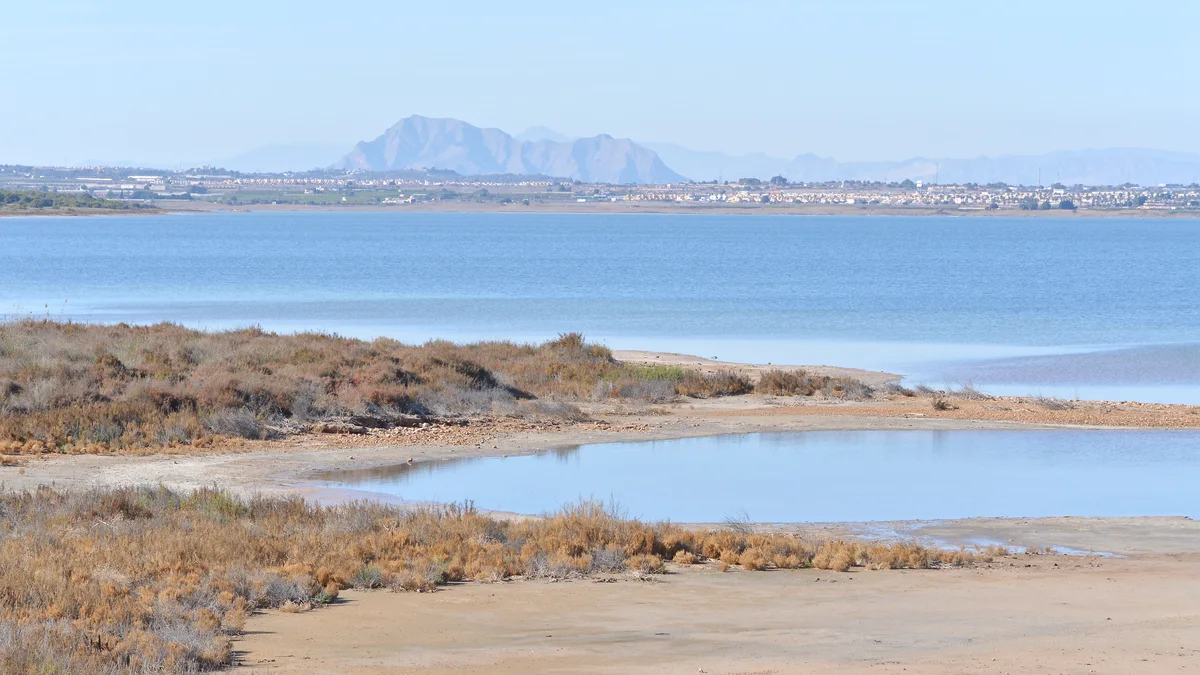
Blue lagoon water surrounds a low spit edged with scrub, with buildings and pale mountain ridges across the water.

La Mata lagoon and its low shoreline vegetation, photographed in February 2024.

Llacuna de la Mata - Torrevieja, Spain 2024-02-04 (03).jpg — Ryan Hodnett / Wikimedia Commons / CC BY-SA 4.0 · Creative Commons

Walks and routes

A short introduction on the yellow walking itinerary

Start with the current route map at the Casa Forestal. Choose an open part of the signed yellow itinerary and give yourself 60–90 minutes for walking and stops, returning along permitted paths. The established route introduces the Acequión channel, saltmarsh, birdwatching and La Pinada. Let staff help you select a section that suits your group rather than aiming to visit every feature.

Ask about the surface and obstacles on your chosen section before bringing a wheelchair or pushchair. Check hide entrances and viewing positions as well as the path itself. An outing using the adapted boardwalk needs its own arrival plan.


A short introduction on the yellow walking itinerary

La Pinada: consider the adapted boardwalk

For a shorter outing, ask the centre about reaching La Pinada by its adapted boardwalk and spending time at the rest area. The older official brochure describes a boardwalk 384 metres long and 1.60 metres wide, ending at a platform with adapted tables. Those figures describe the boardwalk itself, not the full journey from your parking place. Allow 30–60 minutes if staff confirm a suitable open approach.

Confirm today’s access point, parking-to-boardwalk connection, surface, gradients and turning space before relying on it. Ask separately about a suitable toilet and whether the viewing position works from a seated height.

La Pinada: consider the adapted boardwalk

A booked park walk with a local guide

The 2026 municipal programme offers general nature, birdwatching and vineyards-and-salt walks at La Mata. The park outings last about 3½ hours. Choose the theme that interests you, confirm the date and meeting point, and leave the rest of the morning free rather than adding a long independent walk.

Ask the organizer about the exact route, walking surface, rest stops, language and suitability for your group before booking. A programme described as suitable for all audiences is not a detailed accessibility assessment.

A booked park walk with a local guide

Your first 2–3 hours

Arrive during a confirmed centre opening period and allow 20–30 minutes for orientation. Spend 60–90 minutes on a manageable open section of the yellow route, including one quiet birdwatching stop. Use the remaining time for a rest and the return. Keep the plan flexible for heat, tired legs or an unexpectedly absorbing view. Travel from your accommodation is extra.

A shorter visit with access needs

Contact the park before setting out and agree a suitable arrival point and route. If the La Pinada boardwalk works for your group, make that the main outing and allow 30–60 minutes on site, with extra time for arrival. A comfortable short visit is worthwhile on its own; add the centre only if its opening and access fit.

Make the guide your main event

Reserve a municipal park walk and plan around its approximately 3½-hour duration. Confirm the meeting point and bring water, sun protection and comfortable shoes. Eat afterwards rather than squeezing the outing between commitments. A later visit to the Torrevieja lagoon needs its own permitted access plan.

Things to try

Watch one bird for a whole minute

At an open observatory, pick one bird and follow what it does without moving closer. Is it wading, filtering, swimming or resting? Try describing the behaviour before looking up the name. With children, take turns choosing the bird and keep voices low.

Look for the boundary between habitats

From the path, compare the low plants near salty ground with the taller vegetation farther away. Notice changes in shape, height and colour without picking leaves or stepping off the route. The difference is often easier to see than any individual plant is to name.

Follow the salt-and-vineyard story

Ask about a vineyards-and-salt guided walk if you enjoy understanding how a place works. It adds people and agriculture to the lagoon landscape. Stay outside cultivated plots unless the visit explicitly includes access, and check what the activity includes rather than assuming there is a wine tasting.

Choose cycling as a separate plan

The park’s established red route is designed for cycling. Get the current route and conditions before bringing bikes, ride considerately and keep pedestrian viewing areas clear. For a first family visit with frequent wildlife stops, walking is the simpler choice.

Use a poor-weather day for orientation

If the forecast is unsuitable, call before travelling and visit the centre only if it is open and safe to reach. Use the time to choose a route for a better day. A bird hide should not be your plan for waiting out a storm, and a boardwalk or low-lying track may need a condition check after rain.

Wildlife and habitats

Greater flamingo

Look for the long neck, very long legs and sharply bent bill. Adults may look much paler than a bright-pink illustration, and young birds are grey-brown. Watch how a feeding bird holds its head low in the water, keeping your own position at the public viewing point.

Black-winged stilt

The striking clue is the combination of a small black-and-white body and exceptionally long legs. Use binoculars to compare it with other waders from the hide. If birds become alarmed, give them more space rather than waiting for a closer photograph.

Pied avocet

A black-and-white wader with an upward-curving bill is worth a closer look through binoculars. When feeding, avocets can sweep that bill sideways through shallow water. Watch the movement from the permitted path or hide and leave the shallow margins undisturbed.

Common shelduck

Look for a bold duck-like bird with much white in its plumage, a dark head, a chestnut breast band and a red bill. Young birds are less crisply patterned. Comparing shape and colour is more useful than assuming every distant white bird is a gull.

Black-necked grebe

Scan the open water for a small grebe with a fine, slightly upturned bill. In winter its dark upperparts contrast with pale cheeks and throat; its elaborate breeding colours are absent. This is the bird also called Eared Grebe, so those two English names refer to the same species.

These are wild birds in a changing wetland, so sightings vary. Watch quietly from permitted places, never feed or flush birds, and keep away from nests and closed areas. A distant view through binoculars is better than making a bird leave its feeding or resting place.

Stories and discoveries

A wetland shaped by salt-making

The two lagoons work together in the salt-production system. The park brochure describes La Mata as a warming basin, with salt harvested at Torrevieja. That makes channels and water management part of the nature story, not merely background industry.

The colours belong to different lagoons

The famous pink colour is associated with Torrevieja’s very saline water and its microorganisms. La Mata usually looks greenish. Weather, light and water conditions affect the view, so comparing a lagoon with a heavily saturated photograph is rarely helpful.

Tiny life supports large birds

Brine shrimp are among the invertebrates recorded in the lagoons, and small aquatic organisms are food for waterbirds. You can think about that food web while watching birds from a hide; there is no need to collect water, disturb the shore or try to catch anything.

When to visit

Spring

Leave plenty of space around nesting areas and follow temporary barriers. Choose a quiet viewing point rather than walking towards birds on the open ground. Mild days are appealing for a family outing, but check heat and weather warnings before leaving.

Summer

Keep to cooler daylight hours, carry water and postpone long exposed walks in strong heat. If an evening experience appeals, check the organized summer programme rather than assuming unrestricted night access.

Autumn and winter

Plan around a comfortable weather window and bring a layer for wind. These months can suit patient waterbird watching, but what is visible depends on conditions. Confirm the centre’s morning hours and finish the walk with daylight to spare.

Getting there and practical advice

Visitor centre at the Casa Forestal

The centre is the practical starting point for route advice. Municipal tourism lists weekday hours of 09:30–14:00 and weekends and public holidays of 09:00–13:00. Confirm the day’s opening on +34 965 721 650 or at [email protected] before making a special journey.

Observatories and rest areas

There are bird observatories around La Mata and designated picnic areas. Ask which viewing points are open and which suit your group. Bring your own binoculars and a cold snack; neither equipment hire nor a staffed hide is promised. Keep picnic time separate from quiet watching.

Water, toilets and essential stops

Bring drinking water and settle any essential toilet arrangements with the centre before starting. Ask specifically about an accessible toilet if you need one. The presence of a visitor centre or a picnic area is not enough to assume that every service will be available when you arrive.

Booking the municipal walks

The 2026 municipal walks are advertised as free, with limited places and advance registration. Book through Torrevieja’s tourism service or call +34 965 703 433. Registration opens three weeks before an activity; confirm your date, language and meeting point with the organizer.

Navigate to the La Mata visitor centre

Use the Casa Forestal de La Mata as your destination, rather than a generic pink-lagoon pin. The national tourism directions place it about 400 metres along an asphalt access road from kilometre 64.5 of the N-332. Follow current signs and designated parking arrangements.

Arrange the last part of the journey

If arriving without a car, ask the centre or municipal tourist office about the current bus stop and a safe pedestrian approach. Confirm the return service before leaving town. Do not improvise a walk across the N-332 or along its roadside; a nearby stop does not by itself establish a safe connection.

Check the entire journey, not just the boardwalk

For wheelchair users, describe your needs when you call: parking or drop-off, surface firmness, slope, gates, rest space, view from seated height and toilets. Ask staff to identify one suitable open visit. The historical 384-metre boardwalk specification cannot answer all of those questions.

Pushchairs and a flexible pace

Choose a short section and turn back before anyone is tired. Check for loose ground, narrow approaches and damaged boards at the centre. On a warm day, frequent water breaks and a shorter route matter more than ticking off every named hide.

Sources and useful links

Wildlife you might spot

5

Each card links to a full Explore page with photos, traits, and fun facts.

Snap map for this place

Start with the big picture, then zoom in to explore individual wildlife observations around this place.

Loading map…

Good to know before you go

Stay on the open marked paths and behind barriers. Keep off the exposed lagoon shore, salt crusts and restricted working areas, even when other people are walking there.

Do not swim, wade or take mud baths in either lagoon. Plan a separate beach visit if you want to get into the water.

Bring binoculars, drinking water, sun protection and comfortable closed shoes. A light layer helps on a breezy winter morning; do not rely on finding drinking water along the walk.

Check the centre’s hours and current path conditions before leaving. Phone +34 965 721 650, especially if an accessible route or an essential toilet stop determines whether the visit will work.

Plan an ordinary walk in daylight. Night use of park paths has separate requirements; choose an organized evening visit or ask the park in advance.

Keep dogs on a lead, close to you, and clear of wildlife. Pick up after them and do not play fetch in the park.

Use the picnic areas for a cold snack, leave viewing spaces free for other people and take rubbish away. Recreational fires and barbecues are prohibited.

Reserve guided activities rather than just turning up. For a group of more than 15 on an independent walk, contact the park beforehand about notification requirements.

Frequently asked questions

The first-visit route here is beside La Mata, which is usually greenish or blue-green. The pink Torrevieja lagoon is another part of the same park. If seeing that lagoon is your main aim, ask the centre for currently permitted viewing options and allow a separate visit.
No. Keep out of both lagoons and off their vulnerable shores. Their protected and working salt environments are for viewing from permitted places, not for bathing.
The published management plan does not require prior notification or permission for groups of up to 15 walking authorized routes. Closures and special restrictions still apply. Guided activities require their own booking, and larger groups should contact the park beforehand.
Plan it around a confirmed suitable section. Ask about the La Pinada boardwalk, the approach from parking, current surface condition, viewing access and toilets. A flat-looking landscape does not mean all paths and hides are accessible.
No. Greater flamingos are part of the park’s wild birdlife, but their position and visibility change. Bring binoculars and enjoy whichever birds are using the open viewing areas during your visit.
Dogs must remain on a lead and under close control. Keep them away from birds, collect their waste and do not play throwing games. Check any extra conditions for a booked activity.
The park has a separate red cycling itinerary. Ask the centre which cycle paths are currently permitted; do not assume a pedestrian boardwalk, hide approach or every yellow-route section can be ridden.
No. Municipal tourism currently lists 09:30–14:00 on weekdays and 09:00–13:00 at weekends and on public holidays. Confirm before travelling, especially around holiday closures. The centre’s timetable is separate from permitted daylight access to the paths.

Recent snaps at this place

Recent snaps will appear here as new observations are added.

View all ›

Take the discovery with you

Exploring La Mata and Torrevieja Lagoons Natural Park?

Identify the wildlife you spot, learn as you go, and keep a collection of the adventure.

  1. 1Spot it
  2. 2Snap it
  3. 3Keep the discovery