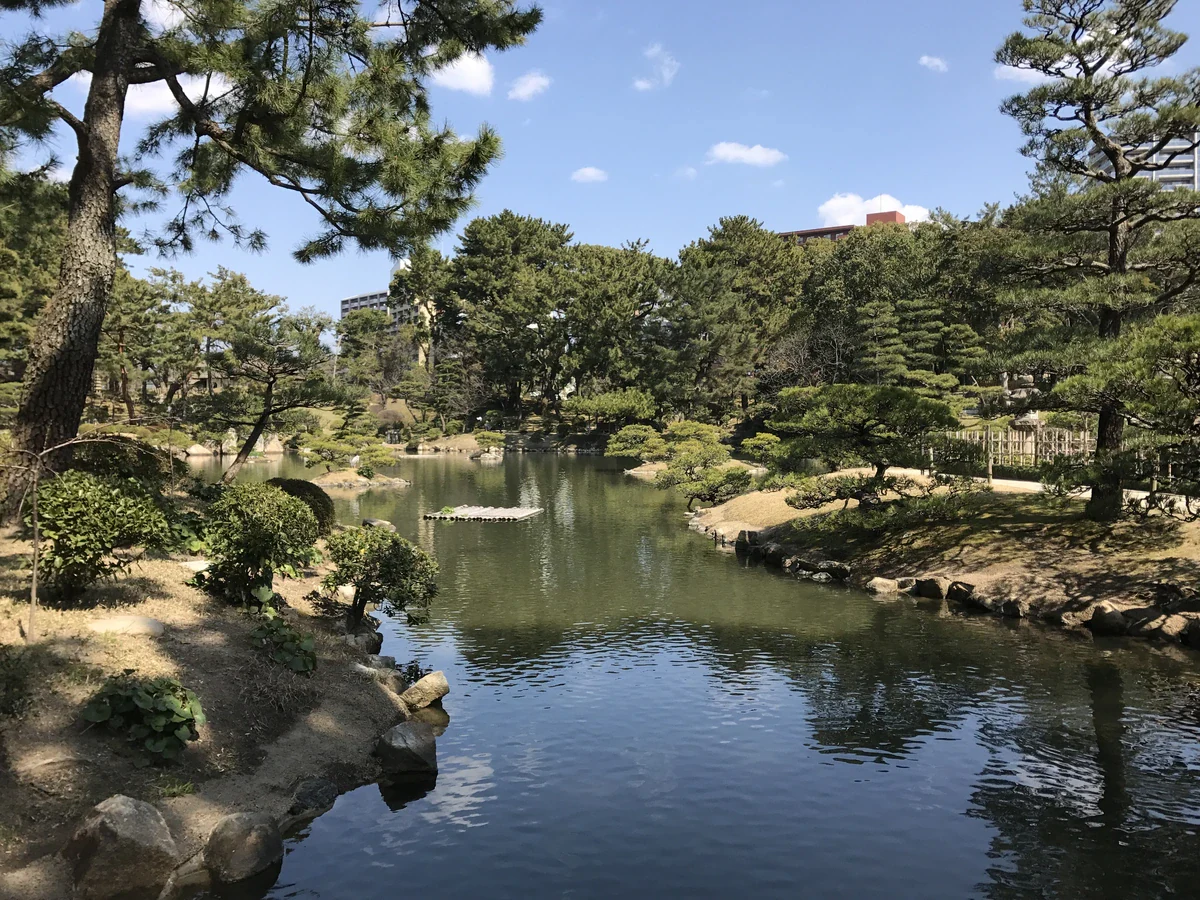
Shukkeien rewards a small change of pace. Instead of heading straight for the arched bridge, stop at your first clear view of the pond and choose one detail to follow: a pine reflected in the water, a stone shoreline or the gap between two islands. Walk a little farther and look again. The pleasure is in seeing familiar ingredients rearrange themselves as you move.
This is a daimyo's strolling garden in central Hiroshima, first created in 1620. Its name expresses the idea of gathering scenery into a smaller space. Around Takuei-chi pond, little hills, islands, waterside buildings and winding paths suggest a much larger landscape. The nearby city remains part of the view, so enjoy the garden for its careful composition rather than expecting a remote woodland escape.
Kokō-kyō, the rounded stone bridge across the pond, gives the garden its most recognizable silhouette. It is worth viewing from the bank before deciding whether to cross: the arch is steep, and the garden specifically warns visitors about slipping. You can appreciate the bridge without making it part of your route. Keep younger children close beside the water and leave plenty of room for other people on narrow stretches.
Flowers give the walk a changing focus. Plum blossom comes before the main cherry season; summer offers green foliage, and late autumn brings colored leaves. You do not need a famous flowering week to enjoy the garden. Watching a reflection settle, noticing a carefully framed opening or sitting down before taking the next photograph can be just as satisfying.
Make room, too, for the garden's history. Shukkeien was devastated by the atomic bombing of 6 August 1945, and people died here. Its memorial and surviving trees deserve an unhurried, respectful pause. The restored landscape is also the result of years of work after the war, not an untouched survival of the seventeenth century.
For a first visit, allow 60–90 minutes, or closer to two hours if you want a guide and tea. Pick up the garden map at the entrance, decide how much walking suits your group, and finish with a rest at Sensuitei if it is open. Hiroshima Prefectural Art Museum next door makes a convenient longer outing, especially when the weather turns. Wondering what that bird or insect is? Find out on your visit using the Snappit nature app.
The garden began in 1620 as a villa garden for Hiroshima lord Asano Nagaakira, designed by his retainer and tea master Ueda Sōko. Later generations changed and restored it, including substantial work after the 1758 fire. The Asano family donated it to Hiroshima Prefecture in 1940, when it also received national Scenic Beauty designation.
The atomic bombing on 6 August 1945 caused immense loss of life and extensive destruction. The pond, artificial hills and stone bridge retained their form despite damage. Restoration began in 1949 and continued over many years, with major rebuilding completed in 1974. The garden’s beauty today sits alongside that history: the memorial and registered bomb-surviving trees are part of the visit, not separate from it.