A shorter visit with young children
Ask for the owls first, then choose either the donkeys or the camels. Add a playground stop if energy allows. Finish with the enclosure the children enjoyed most rather than adding several new ones.
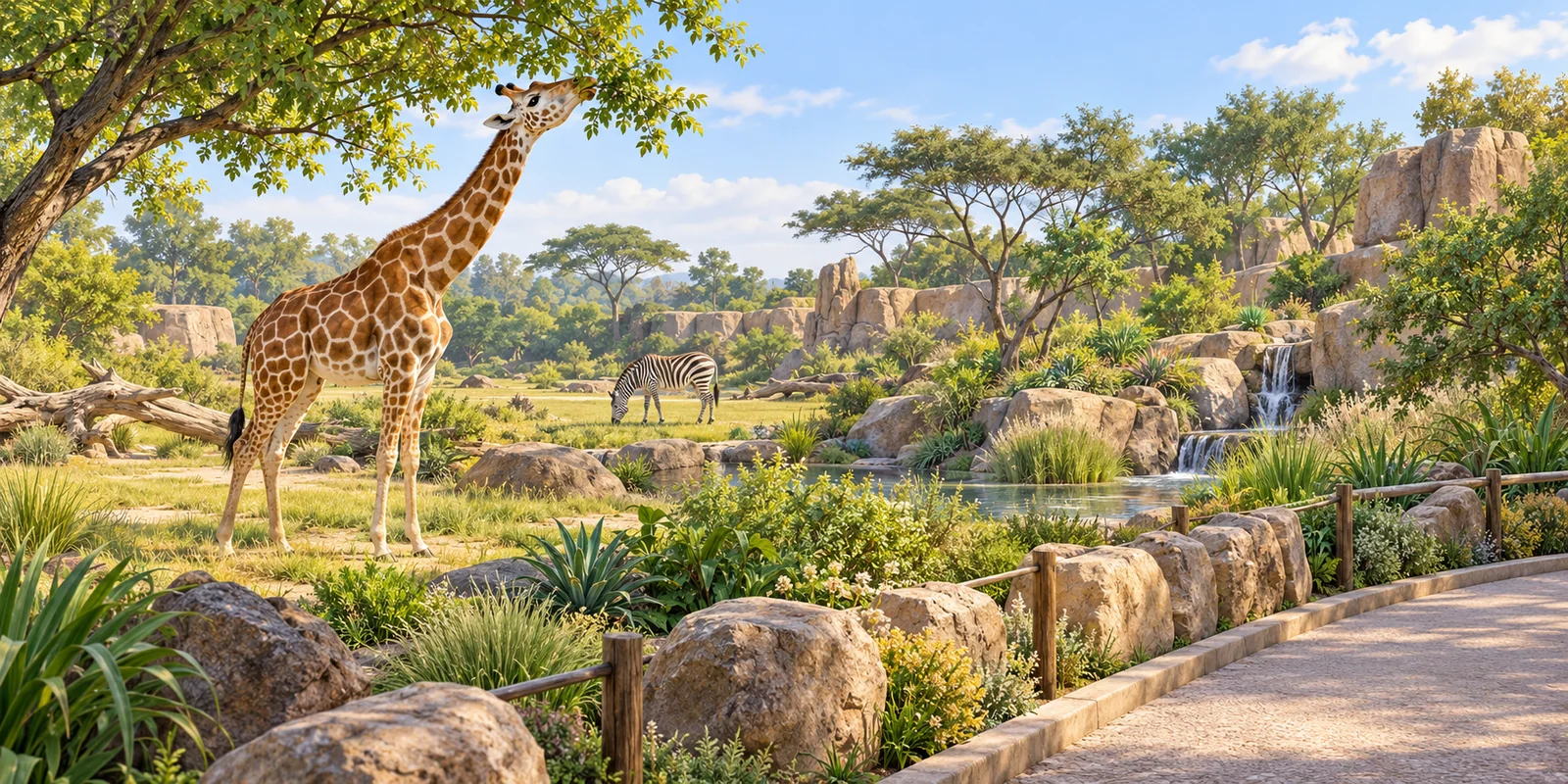 Illustration
Come to Tierpark Weißwasser for a relaxed animal-watching outing with owls at its heart.
Come to Tierpark Weißwasser for a relaxed animal-watching outing with owls at its heart. The green grounds beside the Jahnbad suit a gentle rhythm: a few enclosures, a seat in the park, then something new to discover. Start by asking where to find the owls and which walk-through enclosures are open that day.
Snowy owls, Carpathian lynx and blue-and-yellow macaws give you very different animals to watch. Mix the quieter stops with the donkeys or the two-humped camels, and leave room for the playground. You need not make every animal a mission. Let each child choose a favourite, then give that enclosure a second visit before leaving. Take the ultimate field guide with you: use the Snappit app to identify birds, plants, and animals on your trip.
Tierpark Weißwasser celebrated its 60th anniversary in 2026. The anniversary continued a tradition of family festivals alongside everyday visits to see the animals. Owls have become a particular focus of the park, giving a family visit an easy theme to explore together.
Build your visit around a few good looks. At the owl aviaries, wait quietly and notice where each bird is looking. At the lynx enclosure, scan the whole space before deciding that nothing is there. Then change the children's task: find an animal with long ears, one with a colourful tail and one much taller than them. Read the enclosure names together and compare your choices.
Use the playground as a proper break between animal stops. If a walk-through enclosure is open, read its instructions before entering and let animals choose their distance. Families wanting more explanation can arrange a guided tour directly with the park.
The park opens daily at 09: 00. Closing is 18:00 from April through October, 16:00 from November through February and 17:00 in March. On 24 and 31 December it closes at 14:00. In winter, make the animals your first priority and keep breaks flexible. Check the official hours and news before travelling.
For a wheelchair, walker or pushchair, call 03576 208366 before visiting to discuss the easiest paths and access to the enclosures you most want to see. Ask specifically about surfaces, thresholds in walk-through areas and accessible toilets. Benches offer opportunities to pause during the visit.
Make the snowy owl and the other owl aviaries the centre of your visit, with quiet time to watch rather than rushing from sign to sign.
Look for Carpathian lynx, miniature donkeys and two-humped camels, then let the children choose a favourite to revisit.
Allow about 2–3 hours, including the playground and a snack stop; a 90-minute visit works for a smaller selection of enclosures.
Dress for the weather and start earlier in winter, when normal closing is 16:00. Ask at the entrance which walk-through areas are open.
Ask for the owls first, then choose either the donkeys or the camels. Add a playground stop if energy allows. Finish with the enclosure the children enjoyed most rather than adding several new ones.
Begin with the owls and a patient look for the lynx. Pause for a drink and playtime, then visit the macaws and choose among the deer, donkeys, camels and meerkats. Save the final part of the visit for a second look at a favourite.
Give everyone a small sheet of paper. Watch an owl quietly, draw its outline, then add three details you noticed. Compare the drawings after you have moved away from the aviary.
Choose a donkey, deer or meerkat. Take turns watching for one minute, then describe only what actually happened: looking around, walking, eating or resting. Your accounts may be different even at the same enclosure.
For persistent rain, the Glasmuseum in Villa Gelsdorf, Forster Straße 12, offers an indoor look at Lausitz glass and Weißwasser’s industrial story. Children can explore with a museum rally. Check opening times separately, bring cash and note that the house is not barrier-free.
Look carefully before lifting your camera. Pick one bird and watch its gaze, then try a quick sketch of its outline. A still owl can be as interesting as a moving one.
Scan the enclosure slowly from the public viewing area. If the lynx is visible, compare the shape of its ears and tail with a familiar pet cat. Return later if it stays out of view.
Try drawing the bird with just two colours, then look again for details you missed. Watch how it changes position rather than calling to attract its attention.
Choose one deer and describe its coat without using the word brown. Compare it with another animal if both are visible, and use the enclosure sign to learn more.
Watch one donkey’s ears for a short while and notice when they change direction. Keep fingers away from the barrier and let the animal decide whether to come closer.
Find a viewpoint that lets you see the whole animal, including its feet. Sketch its outline, then compare the proportions with the donkeys. These are domestic two-humped camels, not wild camels.
Pick one visible meerkat and follow what it does for a minute. Does it keep doing the same thing? Compare your observations with someone watching a different animal.
All animals listed here are in zoo care. An individual animal may be resting, indoors or temporarily out of view.
Owls are a particular focus at Weißwasser. Make them the link between your stops: compare the birds you can see and read their signs for differences in where they live and what they eat.
The park marked its 60th anniversary in 2026. Its family festivals are part of that local history; check current dates if you would like your visit to coincide with one.
In spring and summer, spread the visit around pauses for drinks and play. In the colder months, begin earlier and make a shorter list of favourite animals. Bring clothing that is comfortable for standing still outdoors.
Check current connections via Weißwasser railway station and the Nordweg bus stop. Allow for the final walk and check your return connection before entering the park.
Discuss your particular needs with the park on 03576 208366. Useful questions include path surfaces after rain, steps or narrow entrances at walk-through enclosures, the nearest suitable toilet and a manageable selection of animal stops.
Each card links to a full Explore page with photos, traits, and fun facts.
Start with the big picture, then zoom in to explore individual wildlife observations around this place.
Arrival
Head to Teichstraße 56, 02943 Weißwasser, beside the Jahnbad. Follow the local entrance and parking signs; ask the park beforehand if you need a close drop-off.
By public transport
Use Weißwasser railway station and check connections to the Nordweg stop, listed for the zoo by ZVON. Plan the final walk to Teichstraße 56 and the return journey.
Tickets
Compare individual admission with the family ticket for two adults and children up to 16. Check current prices and any discount eligibility before setting off.
Mobility needs
Call 03576 208366 to ask about paths, walk-through thresholds and toilets suited to your needs. Allow time for seated breaks.
Dogs and animals
A separate dog ticket is offered. Ask about lead rules and any areas dogs cannot enter. Keep your snacks for people and follow each enclosure’s feeding and contact instructions.
Breaks
Bring a drink and a snack, use the seating, and ask where the toilets are when you arrive. Check any food service on the day before depending on lunch inside the park.
Book a tour ahead
Guided visits are offered for families and groups. Children’s birthday packages are currently unavailable, so confirm directly if you are planning a celebration.
If rain sets in
Consider the Glasmuseum at Forster Straße 12 as a separate indoor visit. Check its opening days; payment is cash-only and the building is not barrier-free.
Recent snaps will appear here as new observations are added.

North Carolina, US
You might spot American Robin and Eastern Gray Squirrel.
View guide →

Florida, US
You might spot Anhinga, American Alligator, and Wood Duck.
View guide →

New Mexico, US
You might spot Wood Duck, Duck, and Canada Goose.
View guide →

Michigan, US
You might spot African Lion, Komodo Dragon, and Brown Bear.
View guide →
Take the discovery with you
Identify the wildlife you spot, learn as you go, and keep a collection of the adventure.