Snappit logo
Snappit
Get App
Generic illustration, not a photograph of this venueIllustration
ParkKyushu, Japan

Saikai National Park: a Kujukushima nature day

A line of trees can hide the sea at Kujukushima, then a gap opens onto blue water and another wooded island.

About

A line of trees can hide the sea at Kujukushima, then a gap opens onto blue water and another wooded island. The pleasure is in these changing layers: a small bay, a boat slipping past a headland, or a bird pausing above the water. Around Kashimae, near Sasebo, you can enjoy that coastal character without organizing a remote-island expedition.

Begin at Kujukushima Visitor Center inside Pearl Sea Resort. Staff can help you choose a walk, understand the islands and check what is available that day. Its usual exhibitions explain island formation, seasonal life and the connections between people and the coast. For a visit during the current building works, check the current closure notice before planning time indoors.

The easiest outdoor focus is Umikaze Square and its nearby coastal woodland. Follow the signed paths, stop at a sea-view opening and look closely at leaves and seasonal fruit. The center’s Kashimae map includes a short Umikaze course with shore-facing viewpoints. Some links have steps, so a small section and a return by the same way can be a better choice than completing the whole circuit.

If you want the islands to become the main event, add the Pearl Queen sightseeing cruise. Seeing narrow inlets and wooded shores from the water helps explain the landscape much better than trying to count islands from one spot. Keep looking between the scenery: an osprey may search for fish, while herons and other waterbirds use the bays. Wildlife appears on its own schedule, so bring binoculars and enjoy whatever the day offers.

Saikai National Park extends well beyond this waterfront, across the Hirado–Kujukushima and Goto island areas. The Goto Islands, their beaches and distant headlands need separate travel plans. Here, the visitor center, a short coastal walk and one optional boat trip make a satisfying, manageable introduction. Umi Kirara Aquarium is a separate paid attraction nearby; its animals are in managed exhibits and should be understood separately from wildlife in the bay. Don't forget to bring the Snappit nature identification app along to scan local species.

Saikai National Park was designated on 16 March 1955. Kujukushima’s familiar name uses “ninety-nine” to suggest a great many islands; a local citizen survey in 2001 counted 208. The visitor center opened in July 2010 to introduce the area’s nature. Fishing, aquaculture and everyday coastal life remain part of the scenery, alongside protected habitats.


What to do here

Ask at the visitor center about current access, then take a slow walk around Umikaze Square and the open waterfront. Try identifying a coastal shrub, watch the water for birds and choose a sea-view stop. Add a Pearl Queen cruise if conditions suit. For a staff-led plant walk or nature activity, contact the center ahead; programs depend on arrangements and current construction restrictions.

Seasonal info

The visitor-center exhibition room is scheduled to be closed from 3 October to 10 November 2026, although the center remains open. Nagao Peninsula Park is scheduled to be closed from 28 September 2026 to 26 February 2027. Check for changes before setting out. Seasonal cruises, kayak sessions and island landings each have their own operating calendars.

Accessibility

Pearl Queen accepts wheelchairs and strollers and has an elevator and multipurpose toilet; check boarding arrangements for your chair and sailing. Umikaze’s mapped woodland circuit includes steps, so ask staff for a suitable shorter alternative. Nagao normally has a wheelchair-suitable path to a viewpoint and a multipurpose toilet, but the park is closed during the works listed above. Confirm the visitor center’s available entrance and facilities while construction continues.

Don't miss

1

Wooded islets and sheltered inlets seen from the Kashimae waterfront

2

A short nature walk through Umikaze’s coastal woodland

3

An optional Pearl Queen cruise among southern Kujukushima’s islands

4

Birdwatching and seasonal leaves, flowers and fruit close to the visitor center

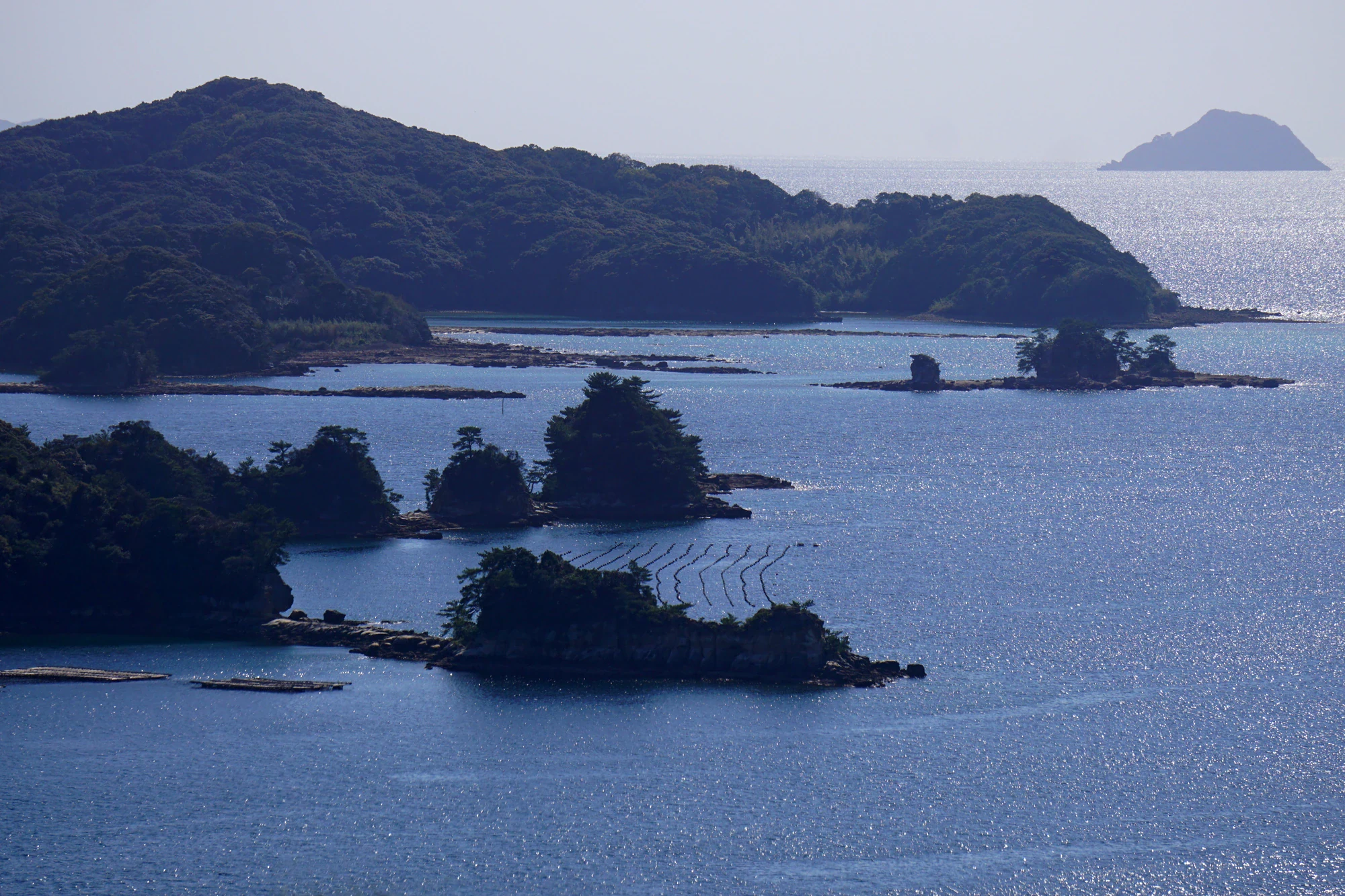
Several small wooded islands and rocky shorelines overlap across blue water, with rows of marine structures visible in one channel.

Wooded Kujukushima islands and sheltered channels seen from Funakoshi Viewpoint in Sasebo, photographed on 20 March 2020.

200320 Kujukushima Islands Sasebo Nagasaki pref Japan03s3.jpg — 663highland, CC BY-SA 4.0 (https://creativecommons.org/licenses/by-sa/4.0/). Source: https://commons.wikimedia.org/wiki/File:200320_Kujukushima_Islands_Sasebo_Nagasaki_pref_Japan03s3.jpg. Resized and recompressed as WebP; no crop or retouching. · Creative Commons

Walks and routes

Umikaze: woodland and sea-view stops

Pick up the Kashimae map and follow signs toward Umikaze Square. The official course links coastal woodland with the Iso-no-ue and Nami-no-ue viewpoints. Stop where trees frame the bay, then return by a comfortable open path. A partial walk is enough; you do not need to complete every link.

The illustrated map marks steps on the woodland course. Ask staff which approach suits a wheelchair, stroller or limited walking range; use a shorter waterfront visit if necessary.

Umikaze: woodland and sea-view stops

Nagao Peninsula: save for after reopening

When open, the peninsula offers a longer land-based look at the bay, coastal plants and viewing areas. It is about 20 minutes on foot from the visitor center and has no separate parking. Ask about the renewed layout and facilities after the works.

Before the works, the park offered a gentle wheelchair-suitable route to a viewpoint and a multipurpose toilet. Ask which facilities and paths are available after refurbishment.

Nagao Peninsula: save for after reopening

A flexible half-day during the works

About 3–4 hours on site with a cruise

Start by asking the visitor center which paths and facilities are available today. Check the return bus and choose a sailing before you wander.

Take a short Umikaze or waterfront walk. Pause for a plant detail, a waterbird or a view rather than aiming to complete a circuit.

If the sea conditions suit, take Pearl Queen. If sailing is canceled, extend the land-based visit or choose the separately ticketed aquarium.

Finish with a break near the resort and return in time for your bus. Leave Nagao Peninsula out while its construction closure remains in force.

Things to try

Take the regular Pearl Queen cruise

The approximately 50-minute trip is a useful way to see the southern island coast. Buy an individual timed ticket at the terminal. The listed fare is ¥2,200 for high-school age and older, and ¥1,100 for children aged 4 through junior high, checked on 16 October 2026. Recheck fares and departures before travel.

Try a supervised marina kayak session

The operator’s beginner experience stays in the marina practice area and lasts about 45 minutes including instruction. It runs on selected dates, rather than every day. Participants must be at least 4; solo kayaks and child-only pairs have a 130 cm height requirement, with tighter restrictions possible in wind. Book ahead and confirm suitability.

Arrange a nature-learning walk

Ask the visitor center about an Umikaze plant walk or a small nature-learning session. Discuss dates, group size, language, costs and what can run during the works before making it the centerpiece of your day.

Consider a seasonal island landing

For a future Golden Week or summer-holiday trip, check the separate island-landing cruise. The advertised experience lasts about 75 minutes and requires suitable covered-toe footwear, water and sun protection. It is for ages 4 and up; children through junior-high age cannot board alone. Weather can cancel it, and the landing islands can change.

Make it an indoor nature day

Ask what the visitor center can offer during its exhibition closure. Umi Kirara Aquarium is a separate paid indoor option with marine-life exhibits. Keep that visit distinct from wild nature watching, and check its own hours and ticket price. If the weather is severe, postpone the coast rather than treating a boat cabin as an all-weather guarantee.

Wildlife and habitats

Osprey

Watch the sky over open water for a fish-hunting bird. An osprey can hover while searching, then plunge feet first. The center has recorded this species around Umikaze and the southern islands; enjoy distant hunting behavior without approaching nests.

Grey heron

Scan the water’s edge for a large, patient bird with blue-grey wings, a pale head and a dark head stripe. Local surveys record grey herons in both the Umikaze area and southern Kujukushima. Watch from a distance rather than trying to make one move for a photograph.

Black kite

Look up when a broad-winged bird circles above the coast. Black kites are regular residents in the local survey, with a distinctive angled or notched-looking tail. Compare its silhouette with the fish-hunting osprey and keep your observations from the path.

Mallard

In the cooler months, pause over a sheltered patch of water and look for resting or feeding ducks. The center’s seasonal walking map lists mallards from November to April, and its surveys record them in the area. Use binoculars and a field guide to compare the ducks without disturbing the group.

Tobera, or Japanese cheesewood

This evergreen coastal shrub has thick, elongated leaves crowded near the ends of its shoots. Look for fragrant white-to-yellow flowers in spring and capsules opening to reveal sticky red seeds later in the year. It appears on the Umikaze walking map; enjoy the details without picking leaves or fruit.

These are birds and a coastal plant documented by the visitor center in the local area. Watch quietly, leave the plants untouched and let wildlife come into view. Seasonal timing and what you see on the day will vary.

Stories and discoveries

A name that invites you to count

Kujukushima means “ninety-nine islands,” but the local count is 208. Here, ninety-nine conveys abundance. The counting rules include land that remains above high tide and supports terrestrial plants.

The shoreline changes with the tide

The visitor center gives a tidal difference of up to about 3 meters for this coast. Water can cover or reveal shore features during your visit. Look from a safe path and do not follow an exposed strip of shore toward an island.

Forest and sea share a narrow edge

The Umikaze bird survey describes evergreen woodland supporting food for birds, while the southern-island survey follows birds using the sea and inlets. Watching both the canopy and the water can turn a short walk into two very different kinds of nature watching.

A coast shaped by flooded valleys

Saikai’s island scenery includes drowned river valleys and many inlets. From a boat, notice how wooded slopes continue down toward the water and how a turn reveals another sheltered bay.

When to visit

Spring

Look for new leaves and coastal flowers. Tobera’s fragrant flowers are usually an April–May feature. Ask about the year’s flowering and reopened routes before planning a specific plant walk.

Summer

Kanoko lilies add pink-and-white flowers in midsummer. Keep the walk modest in hot weather and carry water. Kayaking and island landings need their own date and weather checks.

Autumn

Look for ripening fruit and seed capsules along the paths. Sunset cruises are mainly a seasonal offering around Golden Week and weekends in August, September and October; choose a specific advertised date rather than assuming a daily sailing.

Winter

Bring binoculars for ducks and woodland birds, and a warm layer for sea breezes. The local walking map lists mallards from November to April. Both the center and Nagao’s usual opening hours shorten in winter, although Nagao remains closed during the current works.

Getting there and practical advice

Kujukushima Visitor Center

At 1053-2 Kashimae-cho, Sasebo. Admission is free; usual hours are 09:00–18:00 from March to October and 09:00–17:00 from November to February, with no regular closing day. Call 0956-28-7919 for current access during the exhibition works.

Cruise-terminal help

Ask at the ticket counter about boarding support and a loan wheelchair. Loans are first come, first served; strollers are not available to borrow. Pearl Queen has a multipurpose toilet. Check arrangements early if these facilities are essential for your visit.

Food and breaks

Pearl Sea Resort has places to eat and shops, making it practical to break up a walk and cruise. Bring water for the outdoor parts rather than relying on a particular shop being open.

From Sasebo Station by bus

Use bus stop 6 for Pearl Sea Resort / Kujukushima Aquarium. The operator lists a regular service roughly every hour, taking about 25 minutes, and a quicker service taking about 18 minutes. The listed one-way fare is ¥390 for adults and ¥200 for children. Check your date’s outward and return times.

By car

Use Pearl Sea Resort’s parking and follow the on-site signs. Charges depend on the lot and length of stay. Nagao Peninsula has no separate car park, and its current closure also rules out using it as a walking destination.

Plan the whole journey

Discuss bus boarding, the route from the stop or car park, current construction barriers and the boat gangway with the relevant operator. A ship’s elevator does not make every woodland path accessible. If steps are a problem, keep the walk short and agree on an accessible sea-view option with staff.

Visitor information

Check the two construction closures

As checked on 16 October 2026, the visitor-center exhibition room is scheduled to be unavailable through 10 November 2026, while the center itself remains open. Nagao Peninsula Park is closed through 26 February 2027 as planned; the end date can change. Use the center for advice, choose open waterfront paths and confirm reopening before adding either closed area.

Sources and useful links

Wildlife you might spot

5

Each card links to a full Explore page with photos, traits, and fun facts.

Snap map for this place

Start with the big picture, then zoom in to explore individual wildlife observations around this place.

Loading map…

Good to know before you go

Check both construction notices before visiting: the exhibition room and Nagao Peninsula have different closure periods. Do not enter fenced work areas.

From Sasebo Station, use stop 6 for a bus bound for Pearl Sea Resort / Kujukushima Aquarium. The regular ride takes about 25 minutes; check the return timetable before walking or buying a cruise ticket.

For Pearl Queen, choose a departure at the ticket counter and leave time for boarding. Seats are limited, so tell staff if standing for the trip would be difficult.

Bring shoes with grip, drinking water, sun protection and a windproof layer for the boat. Keep children close beside the water; avoid wet rocks and exposed shore edges.

Light rain does not automatically cancel cruises. Strong rain, wind or unsafe sea conditions can do so; follow the operator’s decision and keep a land-based alternative.

Use a supervised session for your first kayak outing. Wear a lifejacket and keep clear of tour boats, fishing gear and aquaculture rafts.

Leave plants, shells and animals in place, take litter home and watch birds quietly from the paths. Keep away from nesting birds.

Uninhabited islands can be privately owned. Do not land or walk into their interiors without the required permission; an advertised landing tour is a separate seasonal activity.

Frequently asked questions

Yes. The visitor center and Umikaze waterfront area give you a land-based introduction. During the exhibition closure, focus on staff advice and outdoor exploring. Nagao Peninsula is a future walking option only after its closure ends and reopening is confirmed.
No. The visitor center is the free nature-information facility within Pearl Sea Resort. Umi Kirara is a separately ticketed aquarium nearby. Allow extra time and budget if you want both.
Individuals normally buy a timed ticket on the day at the cruise terminal. Advance group reservations are accepted for 15 or more people. Confirm the day’s departures and weather; the Mirai pirate-style sightseeing boat is currently suspended until further notice.
Do not assume so. The regular Pearl Queen trip is a sightseeing cruise. The operator advertises a different island-landing experience during Golden Week and the summer holidays, with dates varying by year and separate booking arrangements.
Pearl Queen has useful accessible facilities, but check the whole journey, including boarding, with staff. The full Umikaze woodland circuit has steps. Nagao’s normally accessible viewpoint route cannot be used during its current closure.
Treat them as a separate trip. Saikai is a broad island-and-coast national park, and this plan stays around Kashimae and southern Kujukushima near Sasebo.

Recent snaps at this place

Recent snaps will appear here as new observations are added.

View all ›

Take the discovery with you

Exploring Saikai National Park: a Kujukushima nature day?

Identify the wildlife you spot, learn as you go, and keep a collection of the adventure.

  1. 1Spot it
  2. 2Snap it
  3. 3Keep the discovery