Snappit logo
Snappit
Get App
Generic illustration, not a photograph of this venueIllustration
ParkShikoku, Japan

Ashizuri-Uwakai National Park

Ashizuri-Uwakai National Park follows the southwestern edge of Shikoku through Kochi and Ehime, taking in islands, deeply cut bays and inland mountains.

About

Ashizuri-Uwakai National Park follows the southwestern edge of Shikoku through Kochi and Ehime, taking in islands, deeply cut bays and inland mountains. For a first visit, settle on Tatsukushi in Tosashimizu rather than trying to cover the whole park. Here, a visitor center, unusual coastal rocks and a living coral community give you several ways to enjoy the same stretch of sea. Cape Ashizuri and the Uwakai coast are separate outings.

Start at Tatsukushi Visitor Center Uminowa. A look at its landscape model and exhibits helps turn the view outside into a story: why the coast has such strange shapes, what lives underwater, and how the sea connects to the land. Much of the interpretation is available in English. Check the day's tide and water-condition information, then ask staff which shore walk or boat option suits your group. The center is also a useful place to pause if someone needs a quieter start.

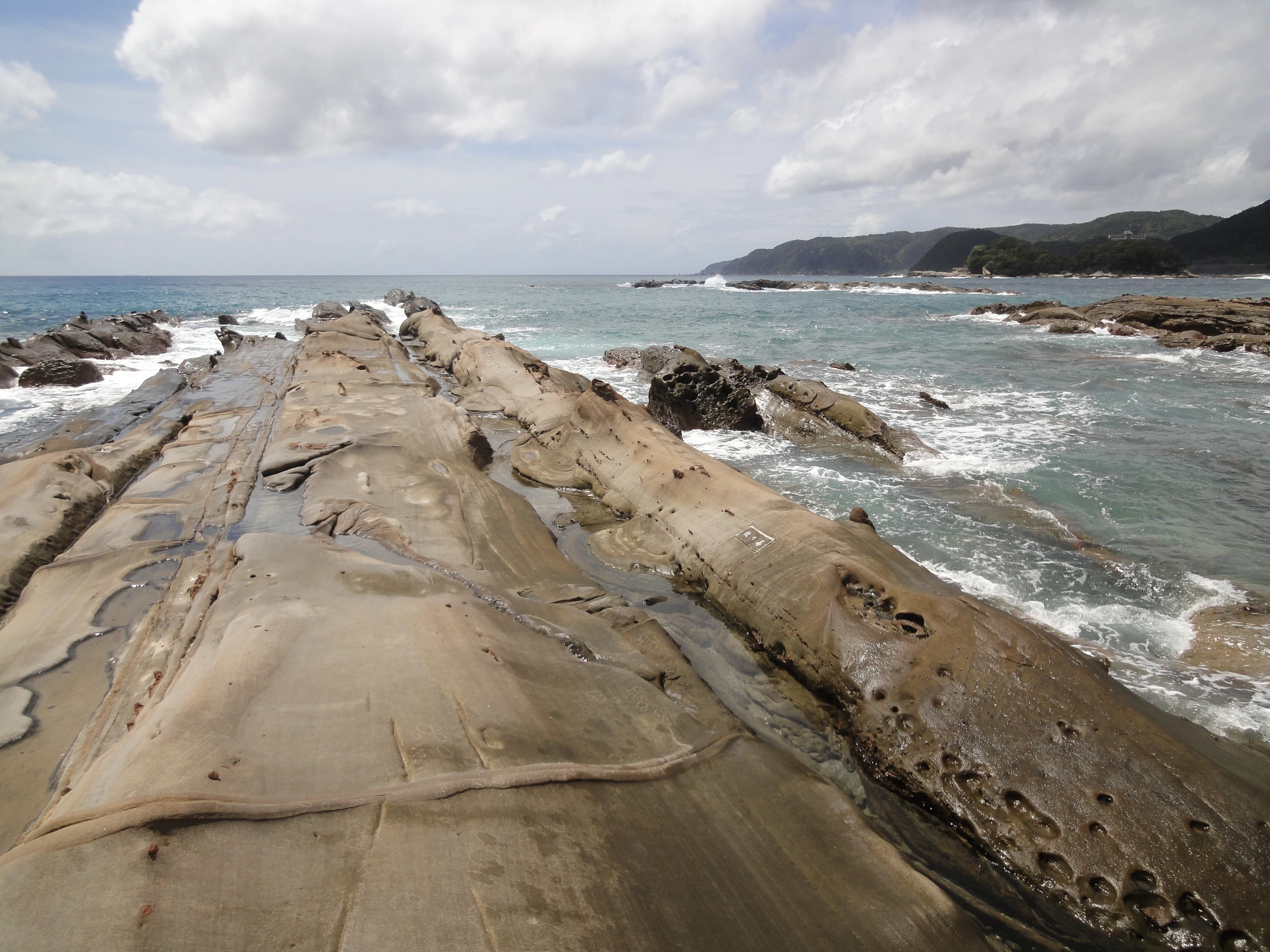
On the Tatsukushi Coast, the interest is often under your feet. Sandstone and mudstone laid down around 17 million years ago now carry ridges, folds, old ripple marks and traces of burrowing animals. Look for the long, jointed-looking rocks called Otake and Kotake, or 'large bamboo' and 'small bamboo.' They are rock formations, not petrified bamboo. A short, careful walk can be more rewarding than hurrying past every named feature. Ask at Uminowa which formations you can currently reach, and turn back when the surface or waves no longer suit you.

Coastal access needs particular care. A March 2026 notice closes the path from the Sakurahama-side entrance to Senjojiki after rockfall, and the city warned of a collapsed walkway section in June. Keep away from damaged sections and barriers. Ask staff for a currently open short walk; do not plan a complete shoreline circuit.

The water tells a different story. The warm Kuroshio Current helps support corals and fish associated with warmer seas here in temperate Japan. These are rich coral communities; they do not build the extensive reef landforms familiar from the Ryukyu Islands. A glass-bottom boat lets you look down into this habitat without swimming. In suitable conditions, a landing at Minokoshi adds another rocky coastline, known for honeycomb-like holes and sculpted sandstone. Arrange the return with the crew before stepping ashore.

SATOUMI, the nearby Ashizuri Aquarium, offers a closer, steadier look at animals in managed displays. Its sequence follows the connections between forest, river and sea, making it a good companion to the outdoor visit. An aquarium animal is not evidence that you will find the same species in the next rock pool. Outdoors, enjoy whatever the conditions reveal, leave wildlife alone and never reach into holes or pick up unfamiliar shells.

One important change affects older itineraries: the separate Ashizuri Underwater Observatory ended operations on 30 September 2026. SATOUMI is a different attraction. Make your day around Uminowa, the open shore areas, the aquarium and, when running, a boat trip. Take the ultimate field guide with you: use the Snappit app to identify birds, plants, and animals on your trip.

The area began as a quasi-national park in 1955. Tatsukushi was among Japan’s first marine park zones in 1970, and the enlarged Ashizuri-Uwakai National Park was designated on 10 November 1972. Its conservation story continues on land as well as underwater: heavy rain in 2001 carried large quantities of sediment into Tatsukushi Bay and damaged coral communities. A restoration council formed in 2006 brought residents, researchers and public bodies together around the bay and its catchment.


What to do here

Begin at Uminowa, then choose one main outdoor activity: a staff-recommended open section of Tatsukushi shore or a glass-bottom boat with an optional Minokoshi landing. Add SATOUMI if you would enjoy more marine-life time indoors. With children, try comparing a ripple mark, a burrow trace and an erosion hollow before looking for similar shapes in the exhibits.

Seasonal info

Summer brings heat, strong sun and the possibility of typhoon-related disruption; rainy spells can also reduce underwater visibility. Winter can be windy and uncomfortable on an exposed coast. Uminowa normally closes on Tuesdays, or the following day when Tuesday is a public holiday, and from 29 December to 3 January; it lists daily opening during July–September. Check current notices for each attraction.

Accessibility

Uminowa is wheelchair-accessible and advertises a free beach-wheelchair loan; ask ahead about availability and the assistance needed. SATOUMI offers a more predictable indoor visit than the natural rock shore. Tatsukushi and Minokoshi involve uneven rock, gaps and potentially slippery surfaces, so do not assume a step-free route. Ask the boat operator about boarding, transfers and wheelchair storage before buying tickets.

Don't miss

1

Uminowa's introduction to the coast, with daily tide and sea-condition information

2

Ancient ripple marks, animal traces and bamboo-shaped rocks on the Tatsukushi Coast

3

Living coral communities viewed from a glass-bottom boat, when sea conditions allow

4

SATOUMI's journey from forest and river to coastal and offshore life

Broad tan rock ribs with seams and small hollows extend toward breaking waves, with a green headland across the water.

Long sandstone ribs beside the sea on the Tatsukushi coast, photographed on 6 September 2019.

Tosashimizu 20190906115303 (49844899568).jpg — inunami, CC BY 2.0 (https://creativecommons.org/licenses/by/2.0/). Source: https://commons.wikimedia.org/wiki/File:Tosashimizu_20190906115303_(49844899568).jpg. Resized and recompressed as WebP; no crop or retouching. · Creative Commons

Walks and routes

A short Tatsukushi rock walk

After Uminowa, use a currently open approach and shore section recommended by staff. Choose a short out-and-back, pausing to compare layers, old ripple patterns and oddly shaped rocks. Allow 30–45 minutes on the shore, plus time to reach the approach. Ask for a suitable turnaround; seeing every named rock is unnecessary.

Natural rock is uneven and can be slippery. Choose the indoor visit if footing, balance or mobility makes the shore uncomfortable.

A short Tatsukushi rock walk

Glass-bottom boat and optional Minokoshi shore

Board through Tatsukushi Kanko Kisen for underwater viewing on the way toward Minokoshi. If landing is offered, agree on the return arrangement before a short look at the sculpted sandstone. Allow around 1½–2 hours for the boat-and-shore option, plus any wait to depart. You can ask about remaining aboard instead of walking ashore.

Discuss boarding, transfers, seating and any mobility equipment with the operator. The optional shore section is rocky and is not a step-free continuation of the boat.

Glass-bottom boat and optional Minokoshi shore

An easy introduction: about 2–3 hours

Begin with Uminowa’s exhibits and a conditions check. If staff can recommend a suitable open shore section, take a short rock walk and return while everyone is still comfortable. Finish with a seated break and time to revisit the displays. If you prefer to avoid rocks, make Uminowa and an unhurried SATOUMI visit your indoor version; allow more time if you like to linger at tanks.

A marine-focused half-day: about 4–5 hours

Check in at Uminowa, then organize the day around a confirmed boat departure. Choose the Minokoshi landing only if its surface and the return arrangement suit your group. Leave a generous gap for lunch and add SATOUMI afterward if energy allows. A long wait for a sailing or a leisurely aquarium visit can make this a full day; arrange the return bus first.

Things to try

Read three different kinds of marks

On a dry, safe section of shore, look for layered rock, repeating ripple patterns and branching or tube-like traces. Layers record sediment; ripples record moving water; some traces record animals burrowing through the old seabed. A guide can help distinguish these from holes made later by erosion. Photograph or sketch what you find without chipping the rock.

Try a guided tide-pool session

Ask Uminowa about a scheduled shore program and its age, language and booking requirements. Looking quietly from the edge of a pool can reveal movement that is easy to miss on a quick walk. Follow the guide’s tide limits and handling rules. Outside a supervised activity, observe without touching or collecting, and keep away from waves.

Follow water through SATOUMI

Treat the aquarium as a second chapter of the coastal visit. Start with the forest and freshwater displays, then notice how the animals and habitats change toward the bay and offshore tanks. Choose one animal to watch for a full minute: does it school, hide, hover or keep swimming? The exhibits represent several environments, including waters beyond Tatsukushi.

Let the boat be the main activity

If your group would rather avoid the rocks, a boat-only outing can give the visit a clear focus. Ask the crew to point out different coral growth forms and explain how local conservation works. Keep bags secure, follow seating instructions and allow time afterward to rest if anyone finds the motion tiring. Check whether commentary is available in a language you understand.

Rain with safe travel

Combine Uminowa with SATOUMI, allowing time to watch behavior in the tanks and compare it with the visitor-center explanations. Skip slippery shore exploration and check that both buildings are open.

Rough seas or a serious weather warning

A canceled boat is a reason to move away from the water’s edge. Do not seek a closer view from the rocks. If roads, buses or facilities are affected, postpone the visit and follow local instructions.

Wildlife and habitats

Shikoro coral

This leaflike hard coral is one of the bay’s distinctive living structures. If the crew can show it clearly, compare its upright, folded sheets with other coral shapes. The large communities have faced bleaching and other stresses, so ask about current condition rather than expecting an older photograph to match the view.

Green turtle

A green turtle would be a welcome extra on a boat trip. The local operator has reported them on its route, but the visit is better planned around the coastal habitat than a turtle encounter. Stay with the organized viewing activity and give any animal space to continue what it is doing.

Moray eels

The boat operator has also recorded a moray among the marine life seen on a local outing. Let the crew help with identification; an eel-shaped glimpse is not enough to name a species. From shore, never investigate a hole with your hand or offer food to bring an animal out.

Schooling sardines at SATOUMI

The aquarium’s sardine display offers a simple observation challenge: follow the shifting school, then watch one fish briefly without losing the wider pattern. These are aquarium animals in a managed exhibit. They are a chance to look closely at schooling behavior, rather than a promise of the same view in the bay.

Wildlife comes and goes, and underwater visibility changes. The aquarium entry below describes captive animals; the others concern life in the bay.

Stories and discoveries

The ground was once a seabed

Tatsukushi’s old ripple marks and animal traces let you read activity that took place before these sediments became rock. A trace fossil preserves something an animal did, such as making a burrow, rather than the animal’s body.

Coral does not always mean a tropical reef island

The Kuroshio brings warmth to this coast, but Tatsukushi remains a temperate setting. Its varied coral communities grow without forming the extensive reef structures seen around the Ryukyu Islands. Looking at different shapes is more revealing than expecting one continuous, brightly colored reef.

A healthy bay also needs a healthy catchment

The 2001 rain disaster showed how sediment arriving from land could damage life underwater. Tatsukushi’s restoration work links the bay with its rivers, surrounding land and local livelihoods. Uminowa and a conversation with a boat guide help make that connection tangible.

Two coasts, two kinds of rocks to notice

Tatsukushi is known for soft sedimentary rocks shaped by weathering and erosion. Cape Ashizuri, on a different outing, is famous for its granite cliffs. They belong to the same national park, but they tell different geological stories.

When to visit

Spring

Choose a mild day for the rock walk, but check tide times rather than expecting the same shoreline access every afternoon. Bring a windproof layer and leave the boat decision flexible.

Summer

Keep exposed walking short in strong heat and take water and sun protection. Uminowa lists daily opening in July–September, but typhoons or rough water can still cancel sea activities.

Autumn

Milder weather can make a longer geology stop pleasant. Check swell and boat status even on a clear day, and keep an indoor alternative for unsettled weather.

Winter

Use a shorter outdoor visit with warm clothing and a sheltered break. Uminowa closes over New Year; check each attraction separately if traveling during the holidays.

Getting there and practical advice

Uminowa: the starting point

Published hours are 09:00–17:00, with free general entry. Toilets, indoor seating, a nursing room and a children’s play area make it a practical first stop. Showers and some activities are separate from entry. Contact the visitor center on +81 880-87-9500 for programs, mobility needs and current shore advice.

SATOUMI: an optional paid indoor visit

Published hours are 09:00–17:00, with last entry at 16:30 and no regular weekly closing day. Ordinary admission checked in October 2026 is ¥1,200 for adults, ¥600 for elementary through high-school students, and free for preschool children. Check the aquarium’s notices for temporary closures and today’s programs; do not rely on older observatory combination tickets.

Tatsukushi Kanko Kisen: boat tickets and boarding

The ticket office is at 19-10 Tatsukushi, in the Tatsukushi parking area. The published standard return fare checked in October 2026 is ¥2,000 for adults and ¥1,000 for children aged 6–12. Ask about younger children and the day’s departure and landing arrangements. Contact +81 880-85-0037; the office’s business hours are longer than the published sailing timetable.

By train and local bus

Nakamura and Sukumo are useful rail gateways, with Kochi Seinan Kotsu providing the regional buses. For Uminowa and the aquarium area, use the SATOUMI-mae stop. From Nakamura, check connections through the Shimizu area; do not assume the Cape Ashizuri bus itself takes you to Tatsukushi. Consult the operator’s timetable for your date and save the return options before leaving.

By car and between attractions

SATOUMI gives about 45 minutes by car from either Nakamura or Sukumo using Route 321, before traffic and stops. Uminowa and SATOUMI provide visitor parking. Use each attraction’s named access point: the boat ticket counter and the rocky Tatsukushi shore approach are separate stops. Ask at Uminowa for the easiest way between them rather than crossing an unfamiliar shore.

A center-led visit

Uminowa has an accessible building and advertises a beach wheelchair. Call before travel to discuss your chair, companion assistance and whether the loan is available. Start indoors and decide on an outdoor section only after talking with staff.

Inside the aquarium

Kochi’s accessibility guide describes generally flat floors and wide passages at SATOUMI, while warning that wet areas can be slippery. Confirm the facilities and assistance you need directly with the aquarium, especially if transferring or using specialized equipment.

Rock coast and boat boarding

Uneven rock, shore gaps and slippery patches make the natural coast a different proposition from the visitor center. Boat boarding may also require assistance or a transfer. Ask about your specific needs before paying; there is a worthwhile indoor day if these parts do not suit you.

Sources and useful links

Wildlife you might spot

3

Each card links to a full Explore page with photos, traits, and fun facts.

Snap map for this place

Start with the big picture, then zoom in to explore individual wildlife observations around this place.

Loading map…

Good to know before you go

The Sakurahama-side entrance–Senjojiki path has a rockfall closure notice, and a separate city notice warns of walkway collapse. Ask Uminowa which sections are open, respect barriers and check tide, swell and boat operation before heading out.

Wear grippy, closed shoes on the rocks. Keep children close, avoid wet or wave-washed ledges and turn back before a rising tide narrows your return.

Carry water, a hat and sun protection. Shorten the outdoor part in strong heat; wind and spray can make winter visits feel much colder than the town forecast.

Leave shells, animals and rock fragments in place. Do not touch corals or reach into crevices: this coast has venomous and stinging marine life.

For Minokoshi, agree on your return boat and meeting point before leaving the landing. Follow the crew’s boarding and lifejacket instructions.

Choose your return bus before choosing activities. Services are limited, and the boat ticket office is separate from Uminowa and SATOUMI.

Learn the signed tsunami escape route when you arrive. After strong or prolonged shaking, leave the shore immediately for high ground or a designated evacuation building; do not wait to photograph the sea.

Skip the closed Ashizuri Underwater Observatory. Older combination-ticket pages and sightseeing descriptions may still include it.

Frequently asked questions

The day-out focus is Tatsukushi, around Uminowa in Kochi. Cape Ashizuri has its own lighthouse and cliff scenery; the Uwakai coast and inland areas are farther away and need separate travel plans.
Yes. Uminowa and SATOUMI work well together, and a glass-bottom boat can show underwater life when conditions are suitable. The rocky shore is optional; there is no need to make swimming or scrambling part of the visit.
General entry is free and the published hours are 09:00–17:00. It normally closes on Tuesdays, moving to Wednesday when Tuesday is a public holiday, and over 29 December–3 January. July–September has no regular weekly closure. Paid programs and showers are separate.
For ordinary small parties, the tourism association says advance booking is normally unnecessary, but the 08:30 departure requires at least three adults and a request by the previous day. Groups of 15 or more should book. Contact Tatsukushi Kanko Kisen for the day’s departures, arrive at the ticket office at least 15 minutes before your agreed sailing and check the final return before going ashore.
No. SATOUMI is the land-based aquarium with tanks and exhibits. The separate offshore Ashizuri Underwater Observatory ended operations on 30 September 2026 and is not a visit option.
Visibility, light and coral condition change. The geopark reported extensive bleaching in 2024, so older photographs are no promise of present color or health. Ask the boat crew what they have been able to see recently, and enjoy the shapes and relationships as well as the colors.
Build the visit around Uminowa and SATOUMI, then ask staff about a suitable outdoor section. Natural rock paths are not a reliable stroller or wheelchair route, and boat boarding needs an individual check. A beach wheelchair is specialized equipment, not a guarantee of access across rocky shore.
Keep Uminowa and SATOUMI as the main visit if you can travel there safely and they are open. Do not replace a canceled sailing with a closer look from wave-washed rocks. In severe weather, postpone the coast altogether.

Recent snaps at this place

Recent snaps will appear here as new observations are added.

View all ›

Take the discovery with you

Exploring Ashizuri-Uwakai National Park?

Identify the wildlife you spot, learn as you go, and keep a collection of the adventure.

  1. 1Spot it
  2. 2Snap it
  3. 3Keep the discovery