





Aardwolf
Proteles cristata
The aardwolf is a small, shy mammal that looks like a mix of a hyena and a fox. It's mostly nocturnal, meaning it's active at night, and loves to eat termites.
Habitat: Grasslands
The Aardwolf has a distinctive shaggy mane running along its back, which it can raise to appear larger. Its yellowish-brown coat is marked with several vertical black stripes, making it look like a slender, striped hyena. They also possess large, pointed ears and a long, bushy tail.
Category
MammalsRarity
Rare
Danger
2/5 · Low
Snaps
Be the first to snap!
Aardwolves eat almost only termites, sometimes over 200,000 in one single night!
Despite their hyena-like appearance, Aardwolves are shy, gentle, and solitary creatures.
The name Aardwolf means 'earth wolf' in Afrikaans, referring to their burrowing habits.
They never destroy termite mounds, carefully licking them clean instead of digging them up.
Aardwolf has a tall mane on its back that helps them look bigger and scarier to predators when threatened.
Aardwolf can mark its territory with a strong-smelling liquid from a gland, letting other animals know it's their space.
Aardwolf has excellent night vision because of specialized eyes that help them forage for termites in the dark.
Aardwolves are insectivores, mostly eating termites with their long, sticky tongues!
Hodotermes mossambicus
Primary food source, licked from the surface.
Trinervitermes trinervoides
Another key termite species in their diet.
Panthera leo
Lions are apex predators in the Aardwolf's habitat.
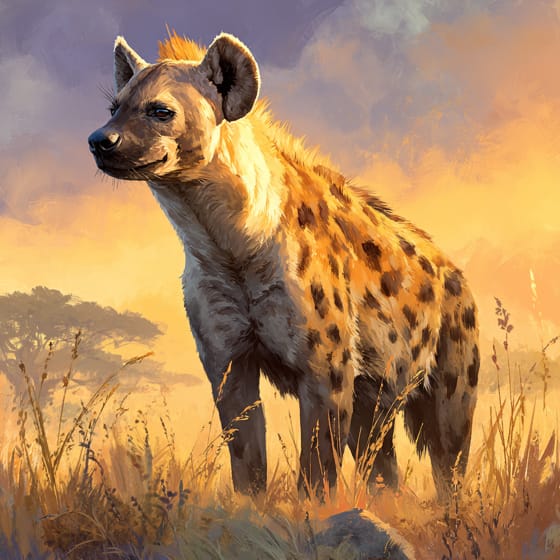
Crocuta crocuta
Hyenas opportunistically prey on smaller carnivores.
Furry describes animals possessing a dense covering of soft hair or fur.
Solitary animals live alone for most of their lives, only interacting with others for mating or parental care.
Burrowing animals dig tunnels and chambers in the ground, using these subterranean structures for shelter, hunting, or breeding.
Grassland habitats are terrestrial biomes dominated by grasses and herbaceous plants, supporting a variety of grazing animals.

This trait identifies organisms whose diet primarily consists of insects and other small invertebrates.

This trait describes organisms that manipulate external objects to achieve a specific goal.

This trait signifies organisms belonging to a very old evolutionary group with ancestors dating back millions of years.

Nocturnal animals are primarily active during the nighttime hours, typically resting or sleeping during the day.
No aliases listed yet.
Danger
2/5 · Low
If you ever see an aardwolf in the wild, admire it from a safe distance and never try to touch or chase it.
The easiest way to identify Aardwolf is to use the Snappit nature identifier app.
80-100 cm
7-10 kg
8-15 years
40 km/h
Aardwolves are insectivores, mostly eating termites with their long, sticky tongues!
Grasslands
Foraging
Zoom in to split clusters and explore where this object has been snapped.
Recent snaps will appear here as new observations are added.
Take the discovery with you
Snap it with Snappit to identify it, learn what makes it special, and add the discovery to your collection.




.jpg&width=800)




.JPG&width=800)

.jpg&width=800)
