.JPG&width=800)





Eastern Cottontail
Sylvilagus floridanus
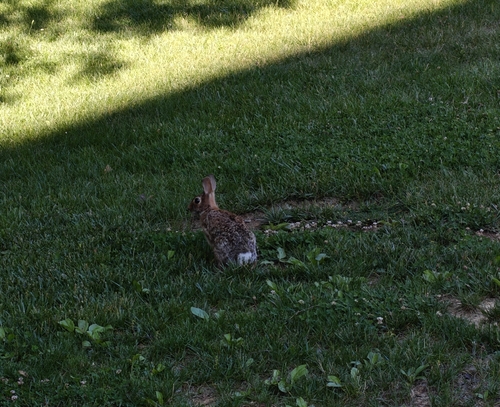
The Eastern Cottontail is a fluffy rabbit with big ears and a cute cotton-like tail. They love to hop around in gardens and fields, munching on grass and veggies!
Habitat: Grasslands
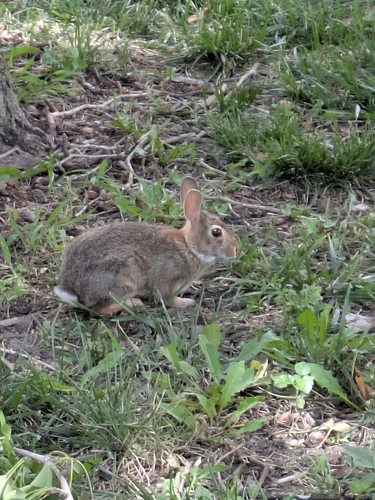
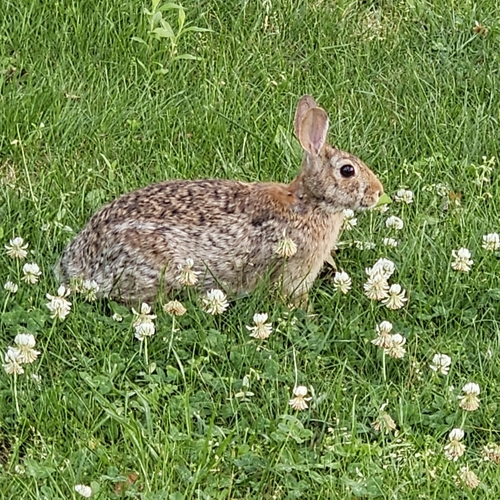
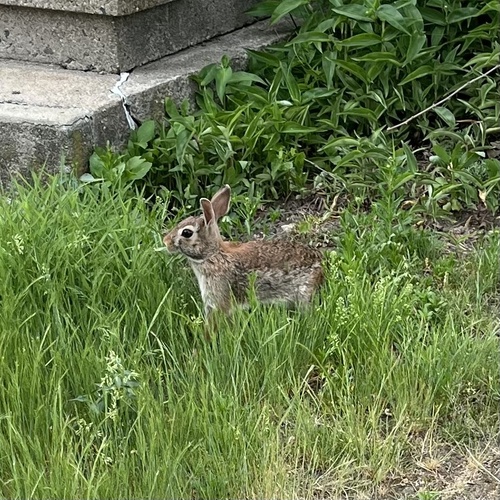
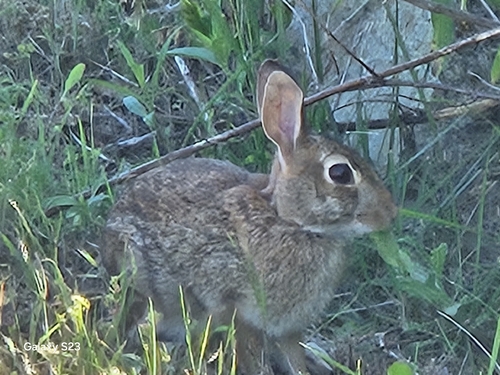
The Eastern Cottontail has soft, brownish-gray fur with a distinctive fluffy white tail that resembles a cotton ball. Its underside is light gray to white, and it possesses large eyes and prominent ears. Its earth-toned coat helps it blend into natural surroundings.
Category
MammalsRarity
Common
Danger
1/5 · Very low
Snaps
244
Wow! A cottontail can jump an impressive 15 feet in a single powerful bound!
Wow! Cottontail teeth never stop growing, so they constantly gnaw to keep them short!
Wow! Each year, a female cottontail can have up to seven litters of baby bunnies!
Wow! They eat their own special poop, called cecotropes, to get extra nutrients!
Eastern Cottontails can run in unpredictable zigzags that help them confuse and escape from chasing predators.
Eastern Cottontails have large, swiveling ears that help them pinpoint predator sounds from a distance.
Eastern Cottontails have earth-toned fur that helps them blend perfectly into their habitat, avoiding detection.
These herbivores munch on various plants, like grasses, leaves, and twigs, to get all their energy.
Age differences: Young kits drink mother's milk, then slowly transition to solid plant foods.
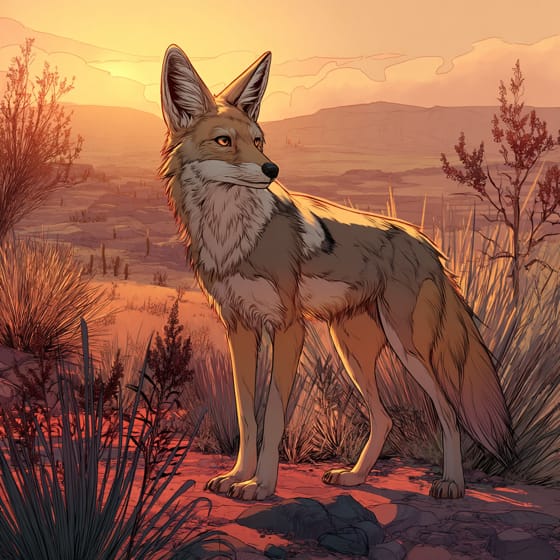
Canis latrans
Coyotes actively hunt cottontails for food.
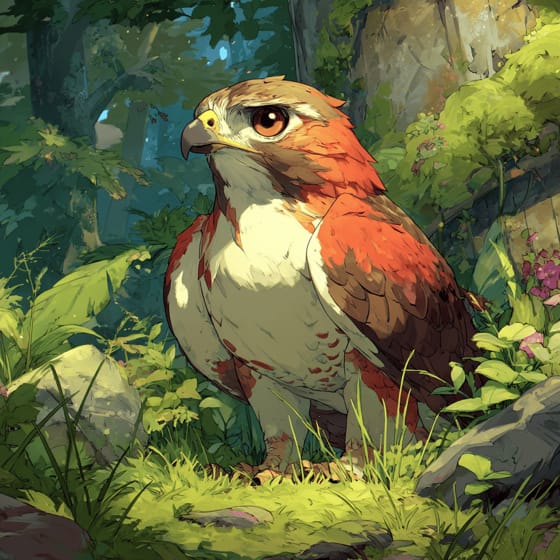
Buteo jamaicensis
Hawks spot and capture cottontails from above.
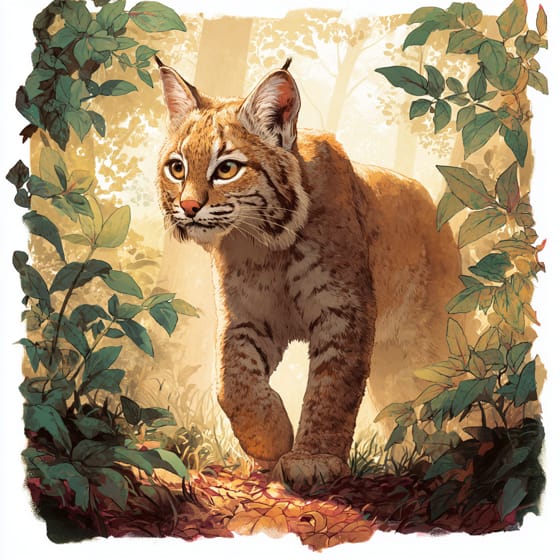
Lynx rufus
Bobcats are skilled predators of cottontail rabbits.
_Clock_-_Tennessee%2C_USA_-_May_31%2C_2014.jpg&width=800)
Taraxacum officinale
Cottontails frequently consume dandelion leaves.
Furry describes animals possessing a dense covering of soft hair or fur.
Social animals live in organized groups, cooperating for survival benefits such as foraging, defense, and raising offspring.
Burrowing animals dig tunnels and chambers in the ground, using these subterranean structures for shelter, hunting, or breeding.
Grassland habitats are terrestrial biomes dominated by grasses and herbaceous plants, supporting a variety of grazing animals.

This trait characterizes organisms whose diet consists entirely or primarily of plant material.

This trait identifies organisms that exhibit exceptional swiftness in movement for hunting, escape, or travel.

Nocturnal animals are primarily active during the nighttime hours, typically resting or sleeping during the day.
Danger
1/5 · Very low
If you see a rabbit, watch quietly from a distance. Don't try to touch or chase them.
The easiest way to identify Eastern Cottontail is to use the Snappit nature identifier app.
38-48 cm
0.8-1.5 kg
2-5 years
29 km/h
These herbivores munch on various plants, like grasses, leaves, and twigs, to get all their energy.
Grasslands
Foraging
Zoom in to split clusters and explore where this object has been snapped.
Jun 17, 2026
Haskell-Baker WetlandsPhoto attribution
(c) Lydia Dexter, some rights reserved (CC BY)
License: CC BY 4.0 ↗
Image may be shown cropped inside the card frame.
Jun 17, 2026
Rockdale Common Housing DistrictPhoto attribution
(c) Betsy Lambert, some rights reserved (CC BY)
License: CC BY 4.0 ↗
Image may be shown cropped inside the card frame.
Jun 14, 2026
Mystic River ReservationPhoto attribution
(c) frogspotter, some rights reserved (CC BY)
License: CC BY 4.0 ↗
Image may be shown cropped inside the card frame.
Jun 4, 2026
Plant Collections NetworkPhoto attribution
no rights reserved
License: CC0 1.0 ↗
Image may be shown cropped inside the card frame.
Jun 3, 2026
Blacksburg Historic DistrictPhoto attribution
(c) Ansil B.R., some rights reserved (CC BY)
License: CC BY 4.0 ↗
Image may be shown cropped inside the card frame.

New Jersey, US
You might spot Garlic Mustard, Sensitive Fern, and Common Mugwort.
View guide →

Ohio, US
You might spot Eastern Fox Squirrel and Spotted Lanternfly.
View guide →

Massachusetts, US
You might spot Eastern White Pine and Common Eastern Bumble Bee.
View guide →

Illinois, US
You might spot Common Eastern Bumble Bee and Brown-Belted Bumble Bee.
View guide →

Massachusetts, US
You might spot Eastern Cottontail and American Robin.
View guide →

Arkansas, US
You might spot Eastern Gray Squirrel and Asian Lady Beetle.
View guide →
Take the discovery with you
Snap it with Snappit to identify it, learn what makes it special, and add the discovery to your collection.




.jpg&width=800)



.jpg&width=800)