.jpg&width=800)





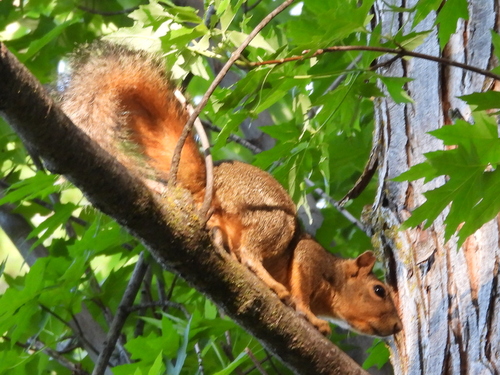
Eastern Fox Squirrel
Sciurus niger
The Eastern Fox Squirrel is a large, bushy-tailed squirrel found in many areas. They are known for their playful nature and love to climb trees and gather nuts.
Habitat: Forests
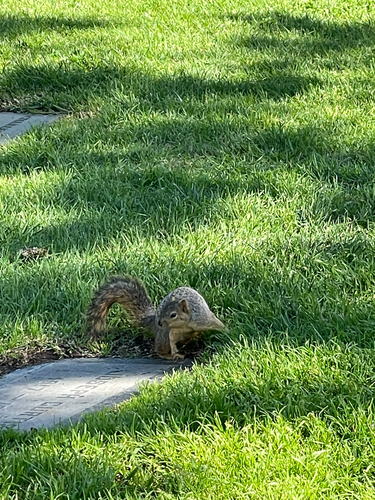
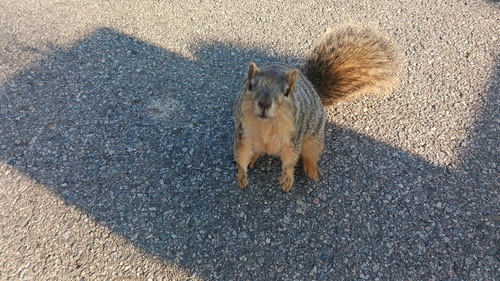
The Eastern Fox Squirrel is the largest tree squirrel in North America, boasting a stocky body and a long, bushy tail. Its fur color is highly variable, ranging from grizzled gray to reddish-brown, often with a distinctive rust-colored or orange underside.
Category
MammalsRarity
Common
Danger
1/5 · Very low
Snaps
125
Eastern Fox Squirrels can live up to 18 years, often outliving many smaller rodents!
Fox squirrels fake burying nuts to trick other animals!
Their bushy tail acts like a parachute to help them glide during long leaps!
Their super strong front teeth never stop growing, so they must chew constantly!
Eastern Fox Squirrels can remember thousands of buried nut locations because their excellent spatial memory helps them find food later.
Eastern Fox Squirrels can leap and climb with incredible agility because their strong claws and balanced tail help them navigate trees safely.
Eastern Fox Squirrels use their large, bushy tail for balance while climbing and as a sunshade, helping them communicate warnings.
They love to eat nuts, seeds, and fruits, but also munch on fungi and insects.
Furry describes animals possessing a dense covering of soft hair or fur.
Social animals live in organized groups, cooperating for survival benefits such as foraging, defense, and raising offspring.
Camouflaged describes organisms that possess coloring or patterns that allow them to blend into their environment.
This trait characterizes organisms whose diet consists entirely or primarily of plant material.

This trait describes organisms that manipulate external objects to achieve a specific goal.

Forest habitats are terrestrial environments dominated by dense tree cover, supporting a high diversity of plant and animal life.

Diurnal animals are primarily active during daylight hours, typically resting or sleeping at night.

Describes a species whose presence and role have a disproportionately large effect on its environment.

This trait identifies organisms that exhibit exceptional swiftness in movement for hunting, escape, or travel.
Danger
1/5 · Very low
Watch squirrels from a distance and don't try to touch them, as they can be scared.
The easiest way to identify Eastern Fox Squirrel is to use the Snappit nature identifier app.
45-70 cm
0.5-1.3 kg
8-18 years
24 km/h
They love to eat nuts, seeds, and fruits, but also munch on fungi and insects.
Forests
Foraging
Zoom in to split clusters and explore where this object has been snapped.
Jun 1, 2026
Julia Davis ParkPhoto attribution
(c) Sam Kieschnick, some rights reserved (CC BY)
License: CC BY 4.0 ↗
Image may be shown cropped inside the card frame.
Feb 13, 2026
Hollywood Forever CemeteryPhoto attribution
(c) Max, some rights reserved (CC BY)
License: CC BY 4.0 ↗
Image may be shown cropped inside the card frame.
Jan 23, 2026
Hollywood Forever CemeteryPhoto attribution
no rights reserved
License: CC0 1.0 ↗
Image may be shown cropped inside the card frame.

Ohio, US
You might spot Eastern Fox Squirrel and Spotted Lanternfly.
View guide →

Oregon, US
You might spot Duck, Pacific Trillium, and Wood Duck.
View guide →

Iowa, US
You might spot Common Eastern Bumble Bee and Eastern Cottontail.
View guide →

Colorado, US
You might spot Eastern Fox Squirrel, Bee, and Duck.
View guide →

Ohio, US
You might spot Spotted Lanternfly and Eastern Fox Squirrel.
View guide →

Texas, US
You might spot Eastern Fox Squirrel and Great-Tailed Grackle.
View guide →
Take the discovery with you
Snap it with Snappit to identify it, learn what makes it special, and add the discovery to your collection.






.JPG&width=800)


.jpg&width=800)